Esmé Hofman’s Exhibition and the World of Fine Basketry—Germany Business Trip Journal 14 エスメ・ホフマンさんの展示と細編みの世界 ― ドイツ出張記 14
Hello. This is Tomotake Ichikawa.
During my business trip to Germany in September 2025,
I had the opportunity to meet another maker who left a strong impression on me.
In this journal, I would like to introduce her work.
*
At the basketry festival held in the town of Lichtenfels,
there was an opening event held at a special venue separate from the main square,
where the works of a certain maker were exhibited.
I was eager to see it for myself, and made my way to the venue.
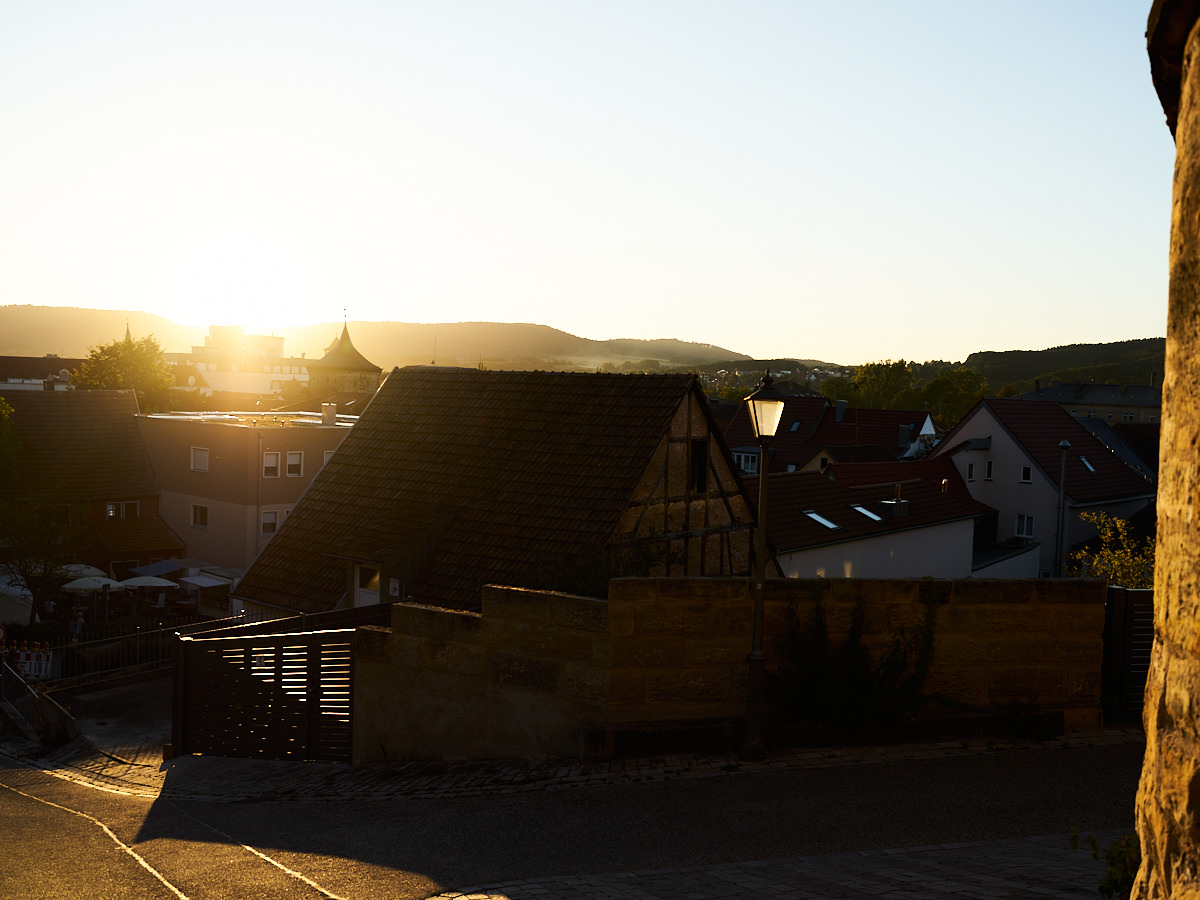
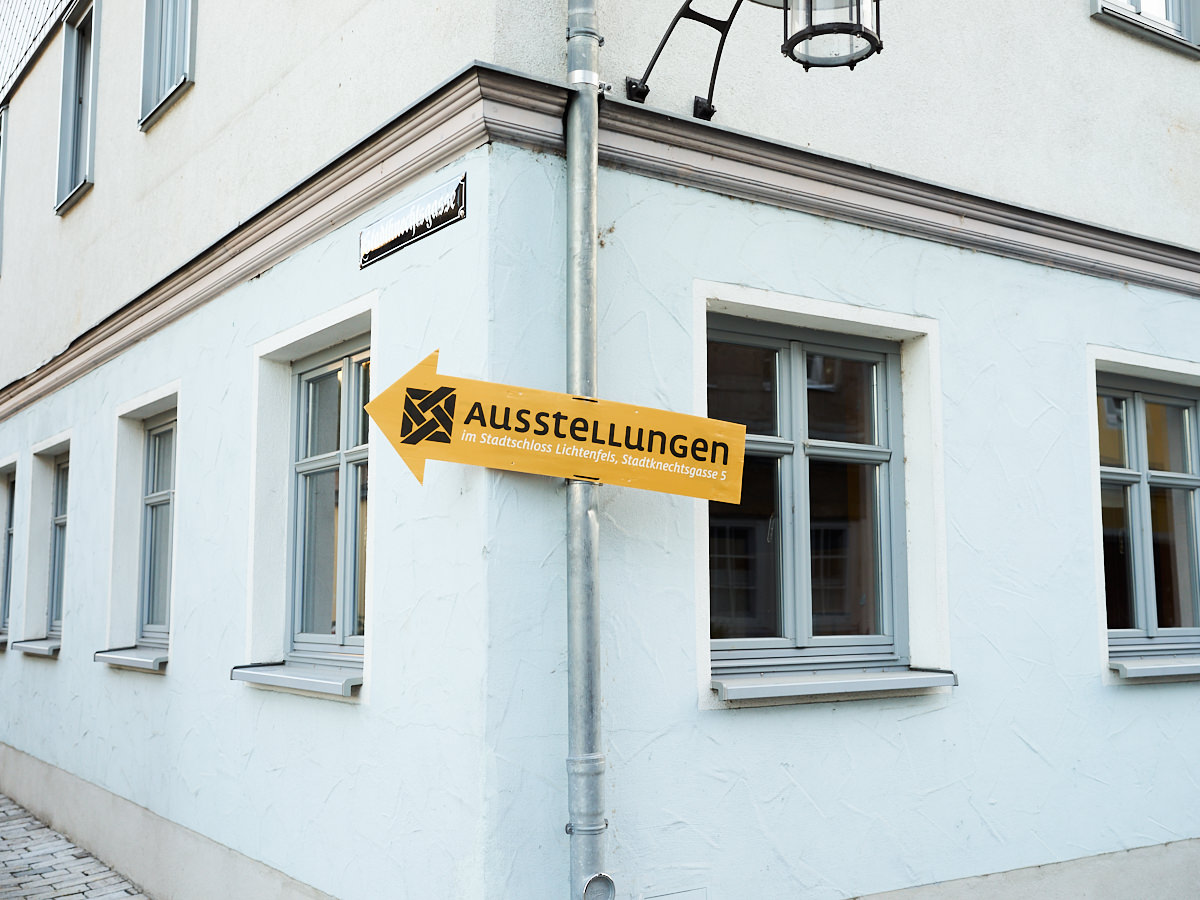
Leaving the lively main venue, I made my way to the site, following a map and signboards. As the directions were only in German, I felt a slight sense of unease along the way. Climbing a steep hill, I saw the sun just about to set along the distant ridgeline, and found myself pausing to take in the view for a while. 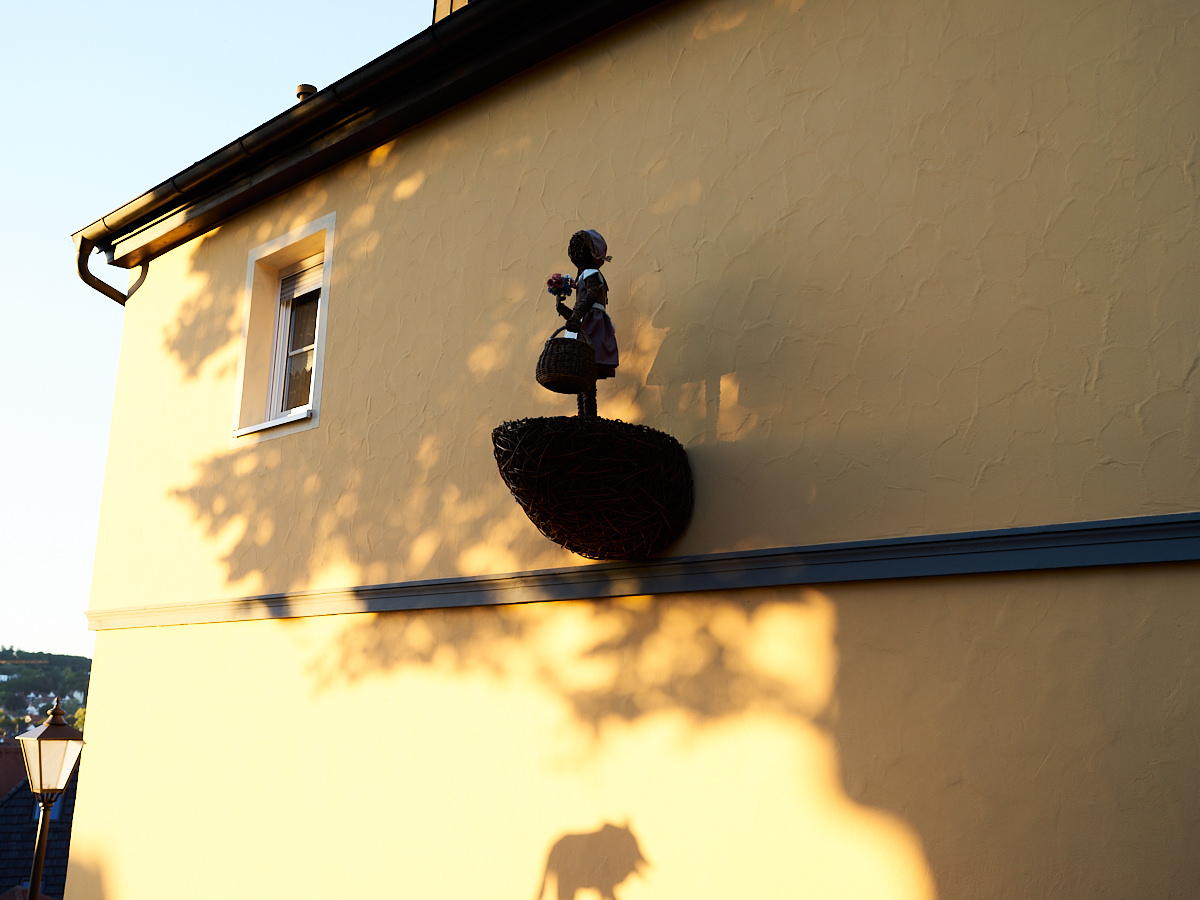
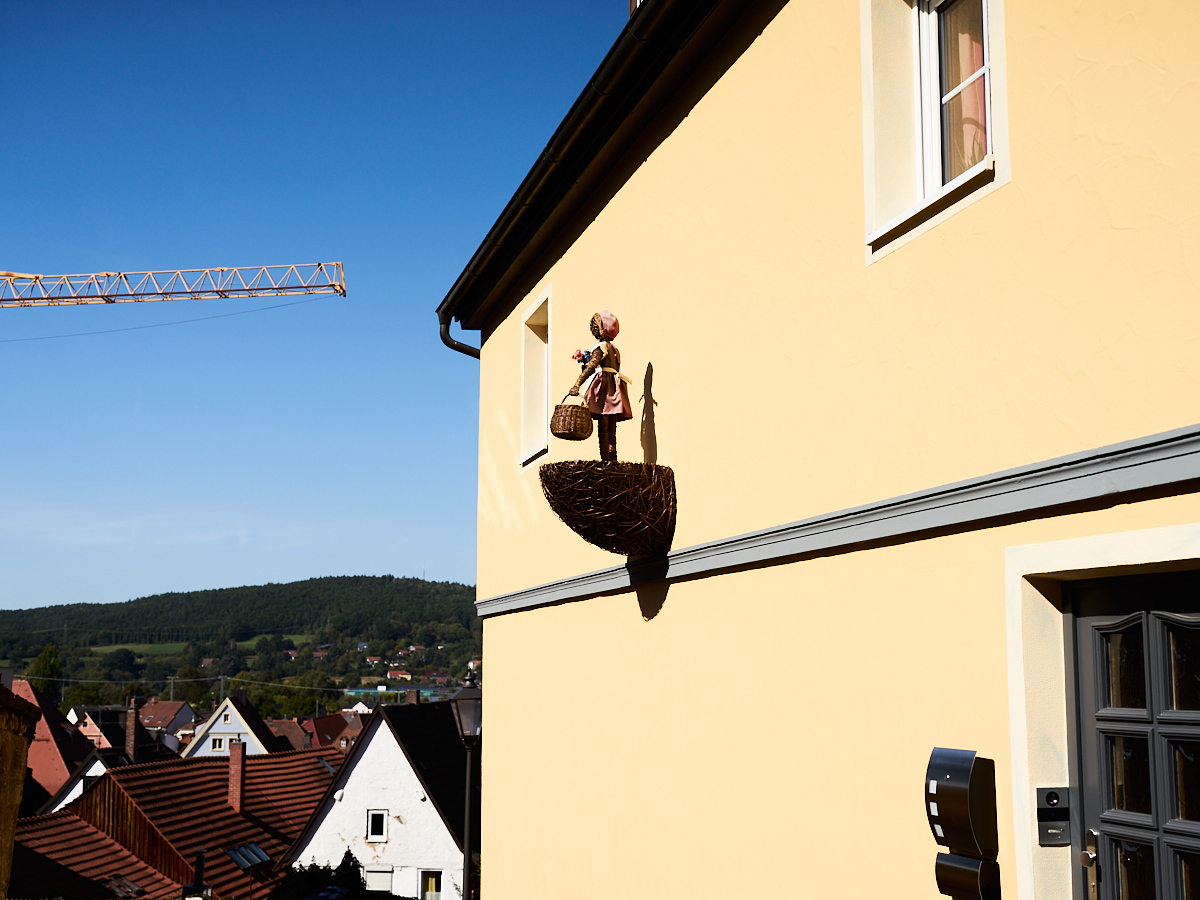
Along the way, I noticed a willow-woven figure of a girl displayed on the exterior wall of a house. Seeing such basketry work here and there is one of the small pleasures unique to this town. 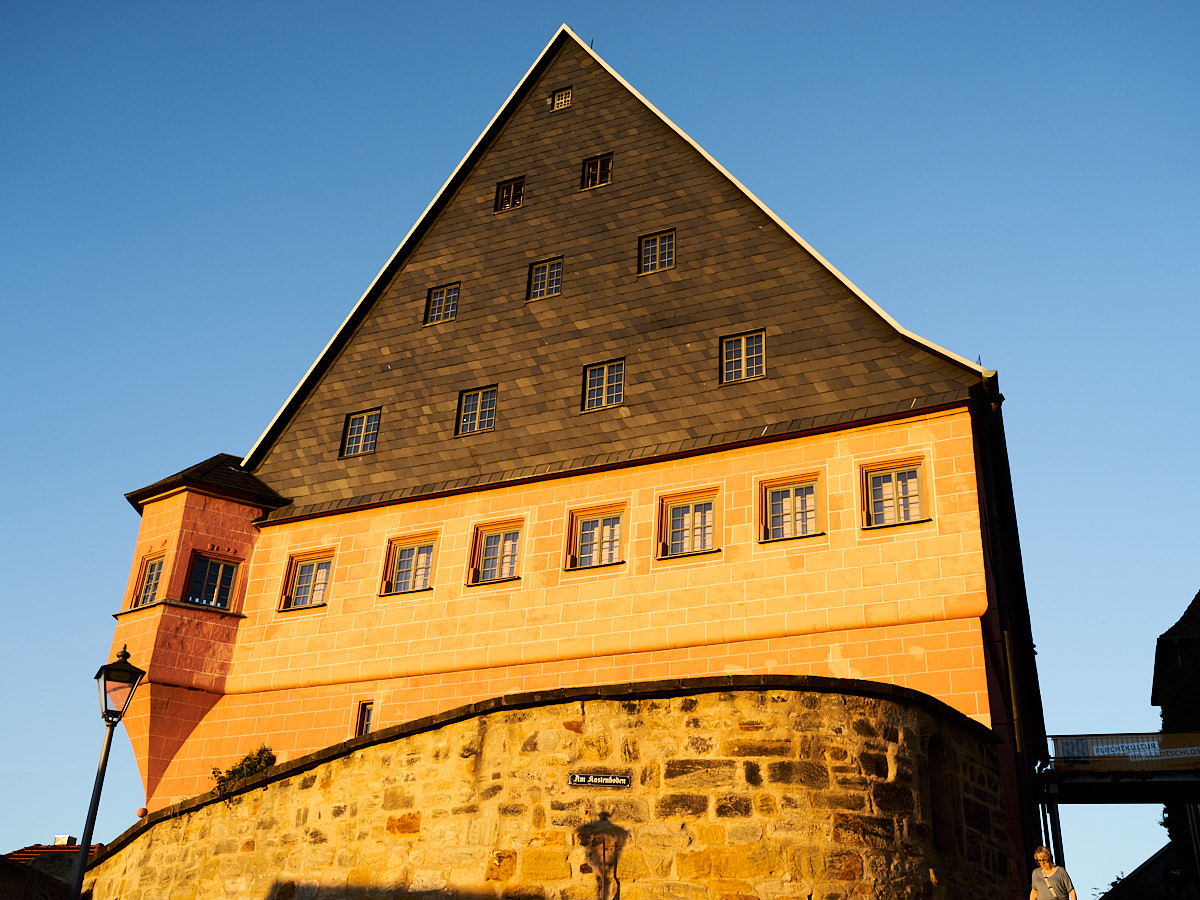
This building, glowing in the evening light and tinted in shades of crimson, is the venue. I was told that it stands on the site of a former castle and is now used as a place for exhibitions and events in the town. That explained the steep climb. 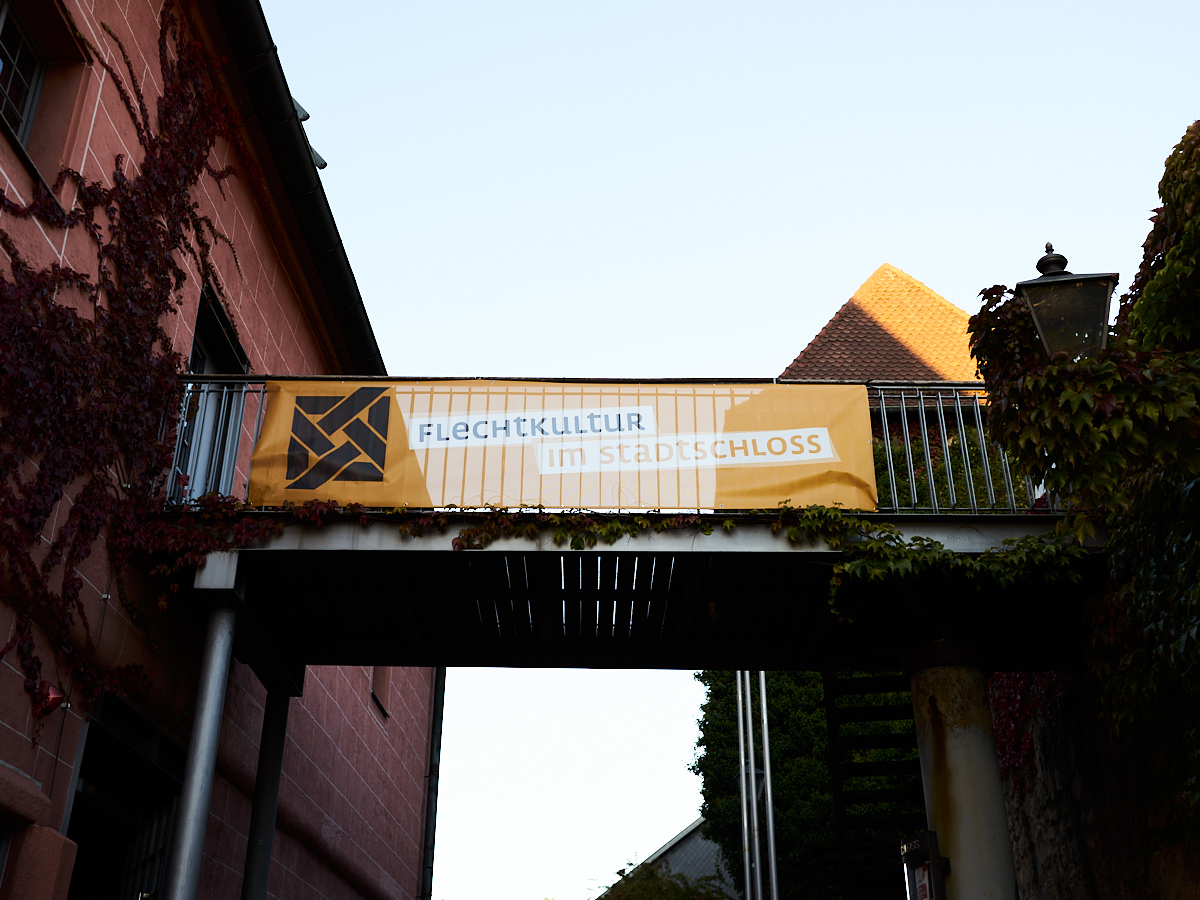
As this was my first time visiting the festival, the venue felt quite removed from the lively main square, and I found myself feeling a little uncertain. But then—I saw it. A banner for the basketry festival.
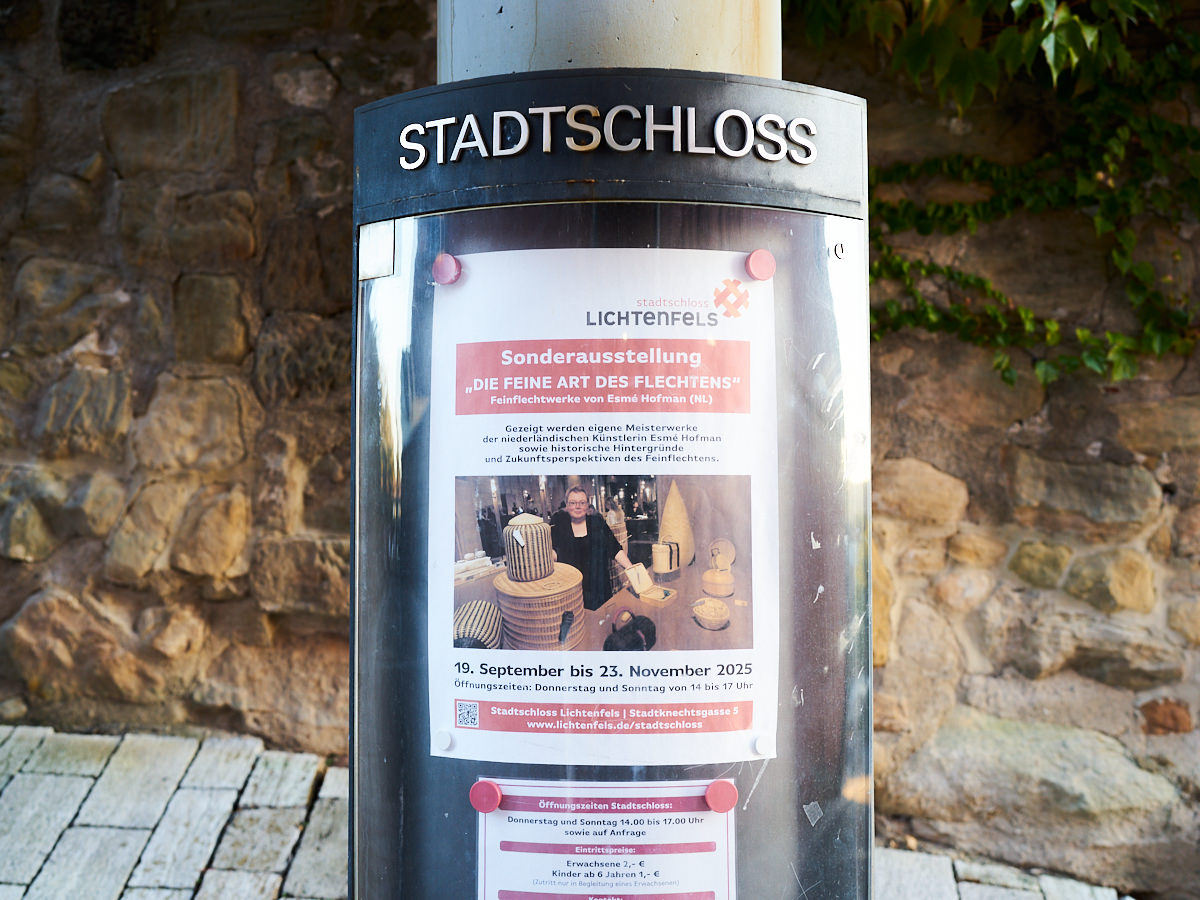
And the baskets exhibited here in this former castle were created by Esmé Hofman from the Netherlands.
The title of the exhibition is
“Die feine Art des Flechtens” (The Art of Fine Basketry).
Esmé is a maker known for her fine willow basketry,
and as this was a rare opportunity to see a wide range of her work gathered in one place,
I had been looking forward to it.
She is also the teacher of Jeanny and Jefke from Belgium,
whose baskets we currently carry in our shop.
An opening ceremony was held to mark the exhibition in this historic setting.
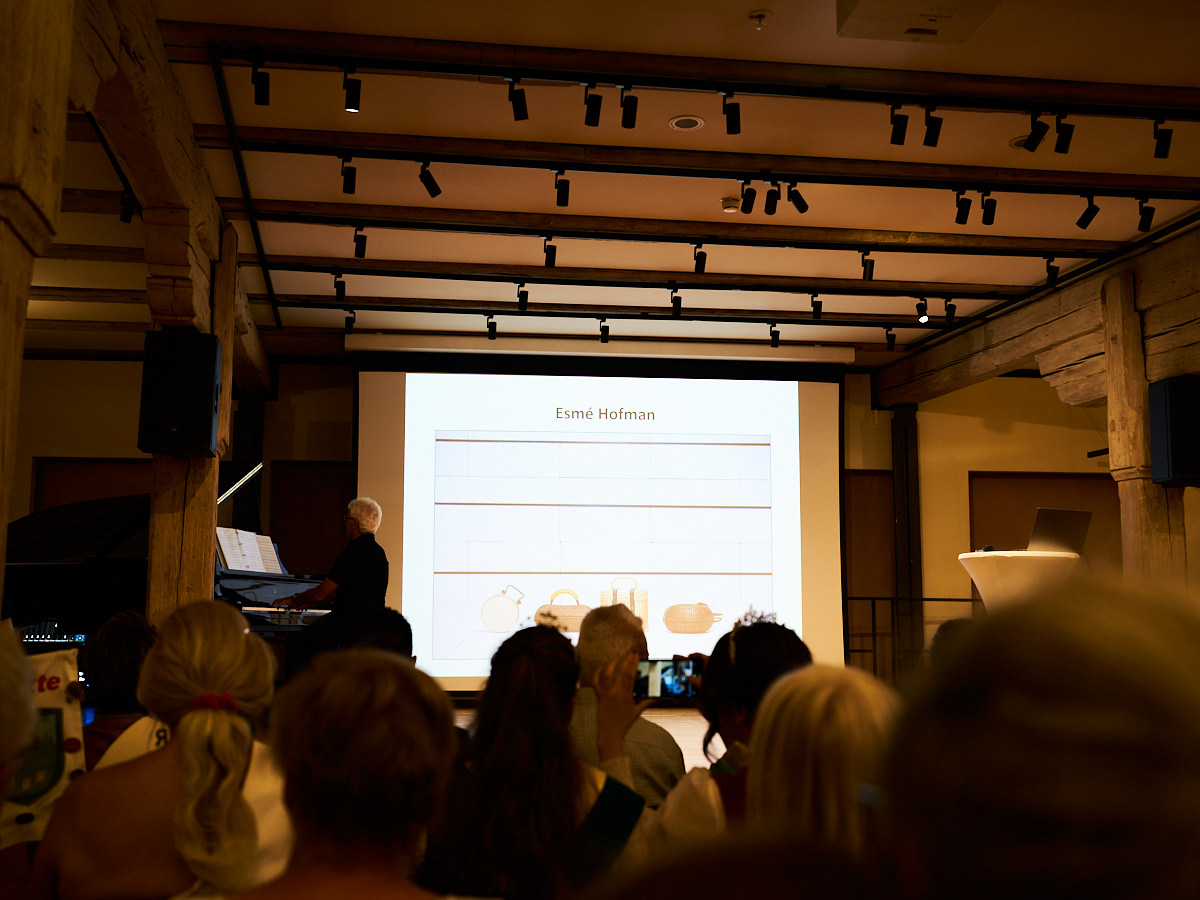
The large hall of the former castle retained traces of its historic architecture,
yet was equipped with a projector, and a slightly raised stage with a piano,
giving it the feel of a small performance space.
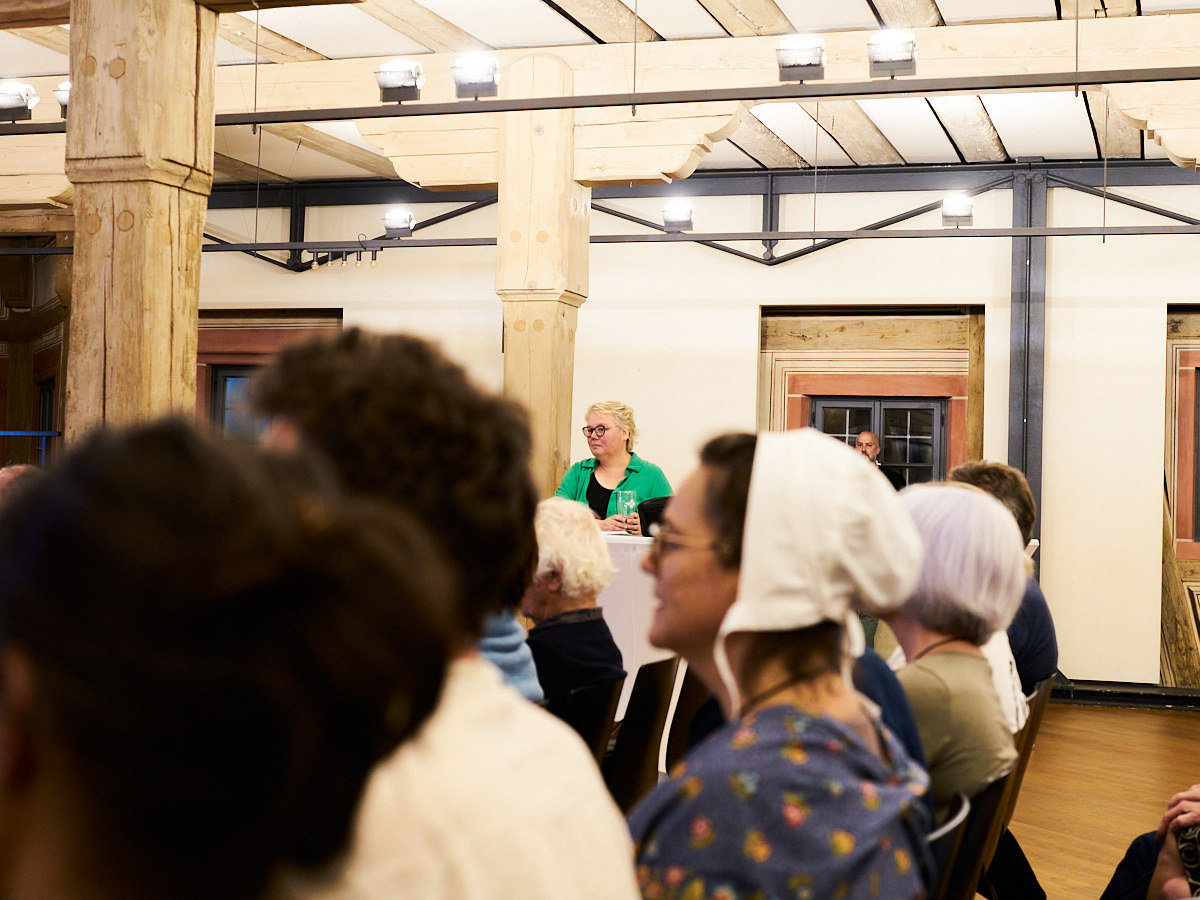
The person in green is Esmé.
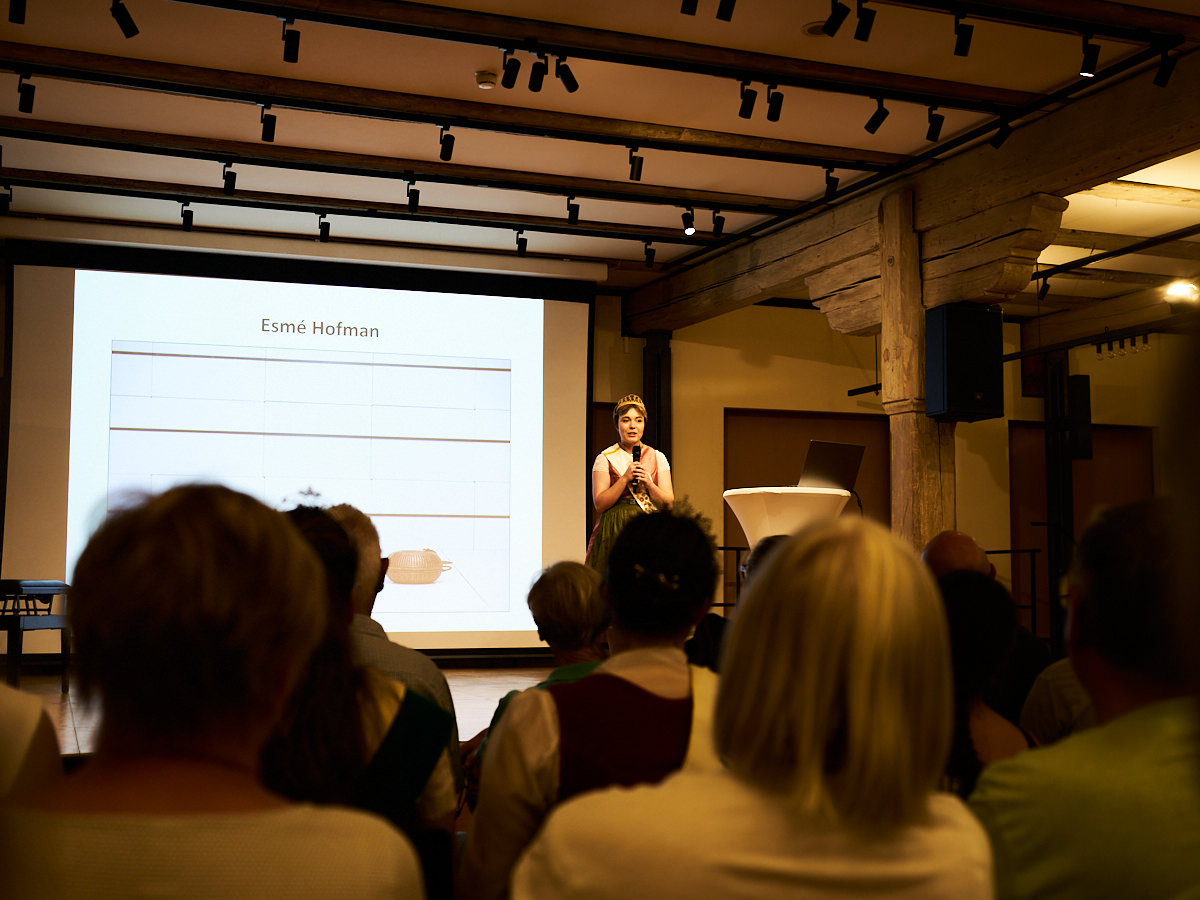
An address by the Basket Queen, 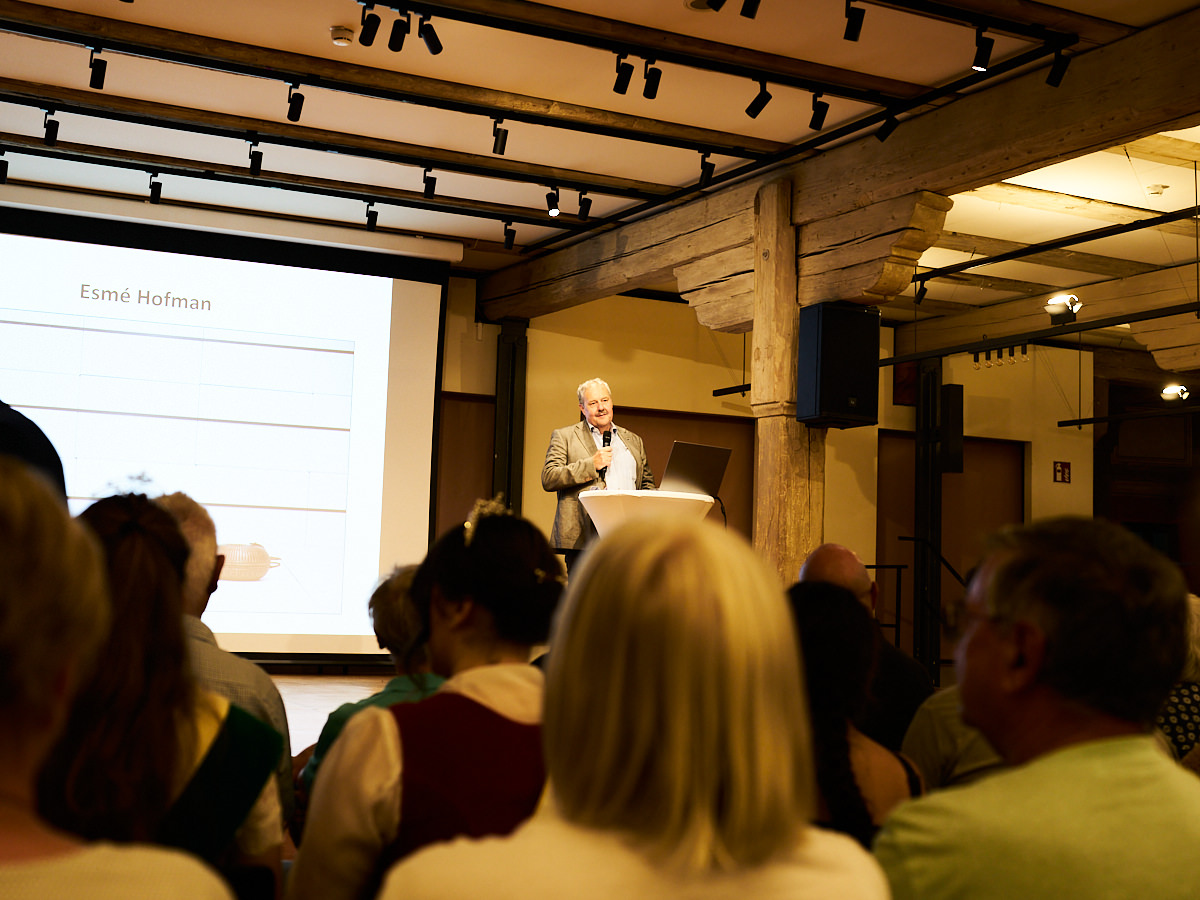
A speech by Manfred, one of the festival organizers. 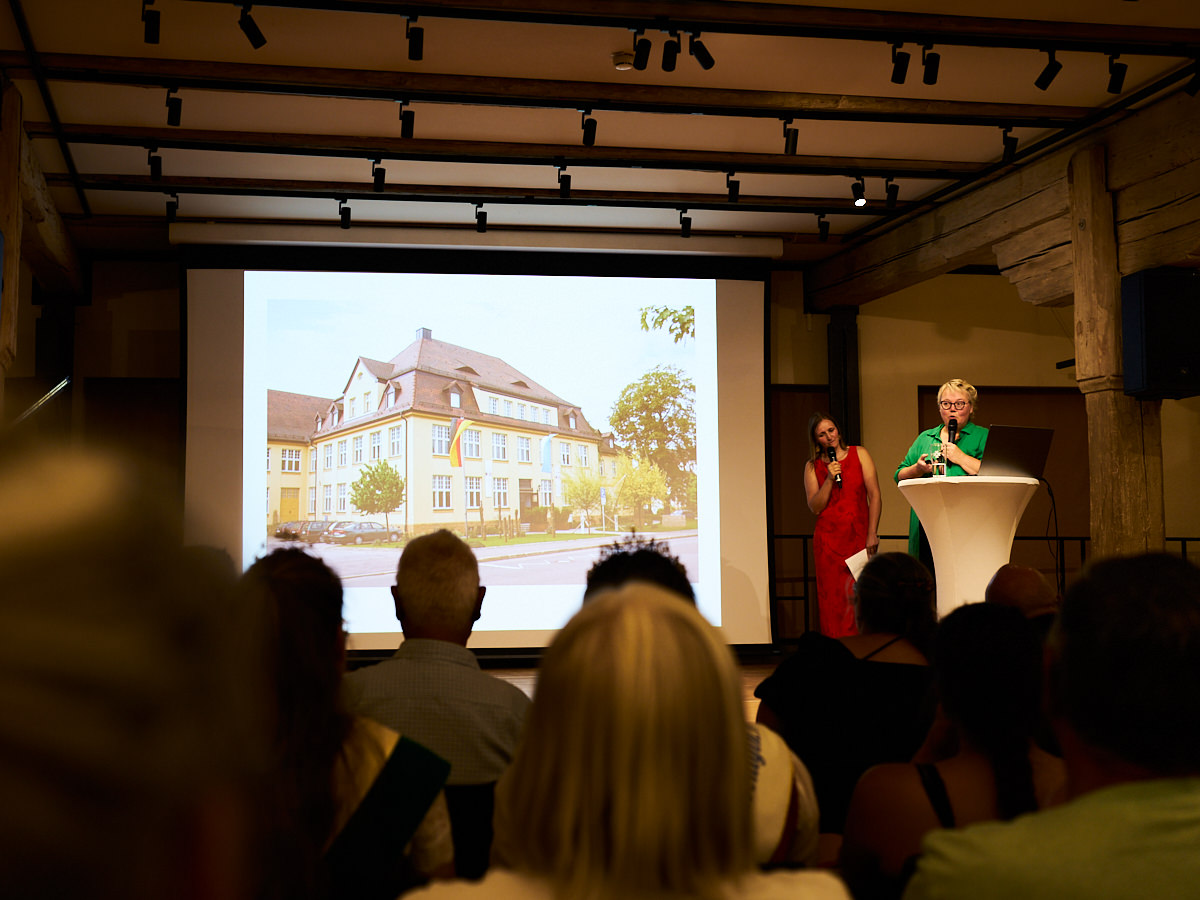
Then the speech by the guest of honor, Esmé, began. Although she is from the Netherlands, I was told that she studied basketmaking here in Lichtenfels, Germany. 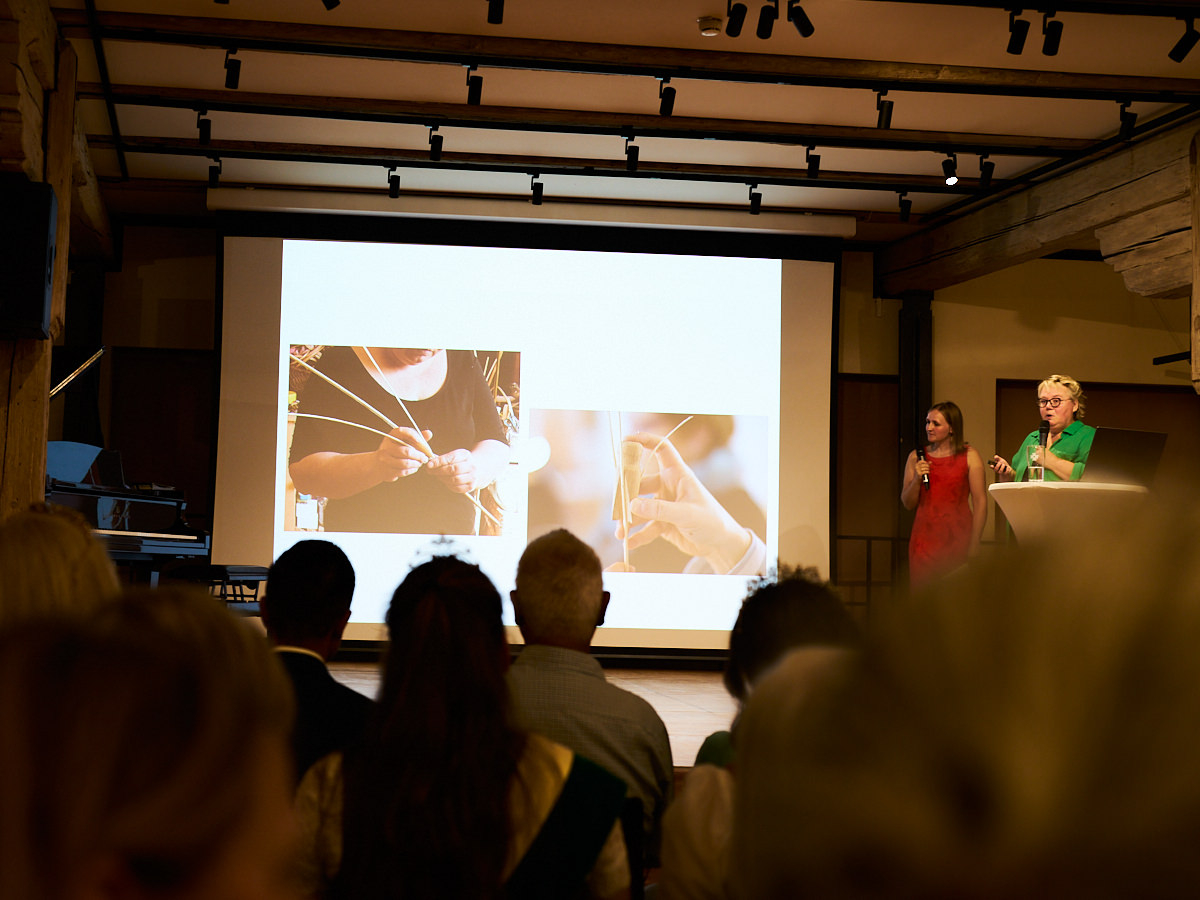
The basketry school in Germany has a three-year program, with a curriculum structured year by year. Over the course of those three years, students typically study general basketry, furniture making, and fine basketry techniques, each for one year. However, Esmé seemed to have a clear understanding of her own strengths, and, after making a special request to the school, she focused solely on fine basketry techniques throughout all three years. 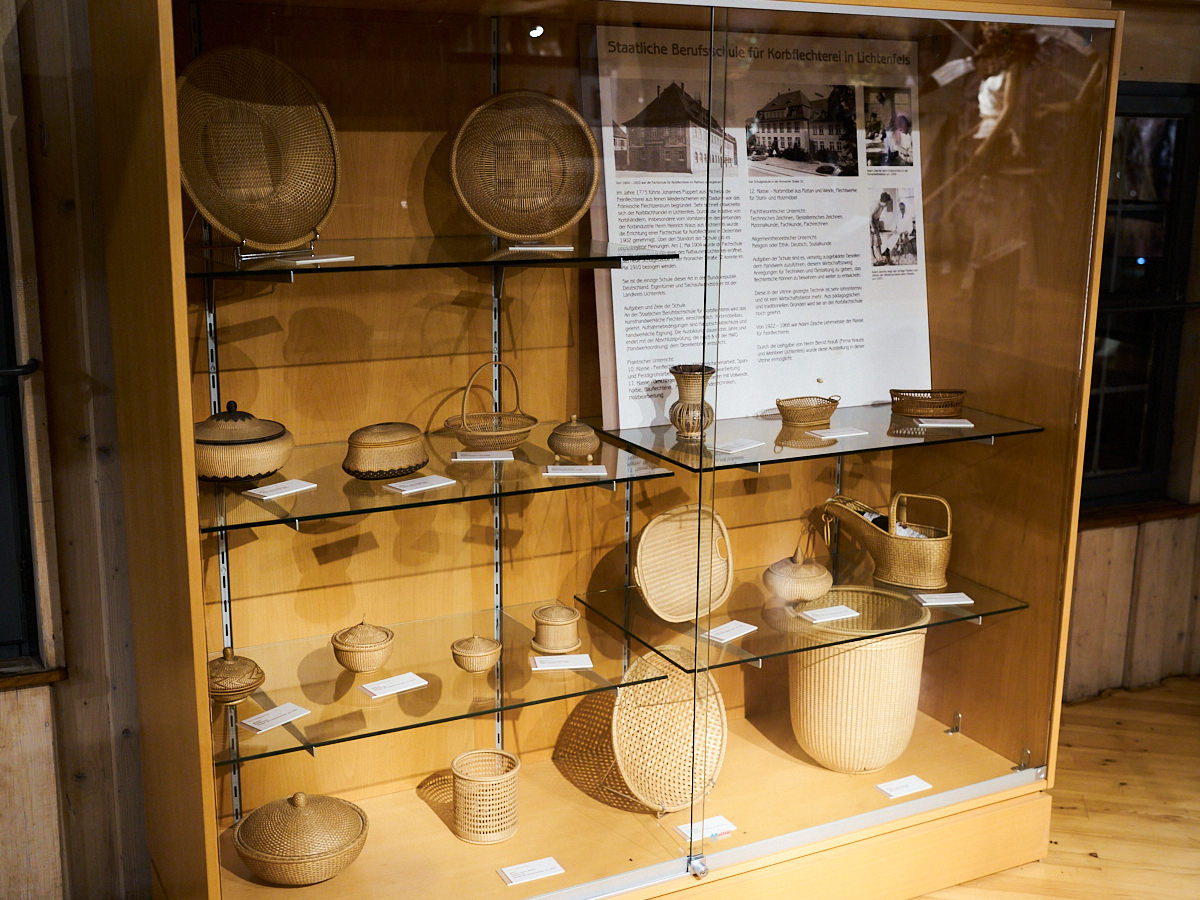
I had not known this before, but Lichtenfels is a place where fine basketry has developed as a distinctive tradition, and where many makers skilled in this technique have worked over time. The photograph above shows a corner of the gallery adjoining the hall of the former castle. 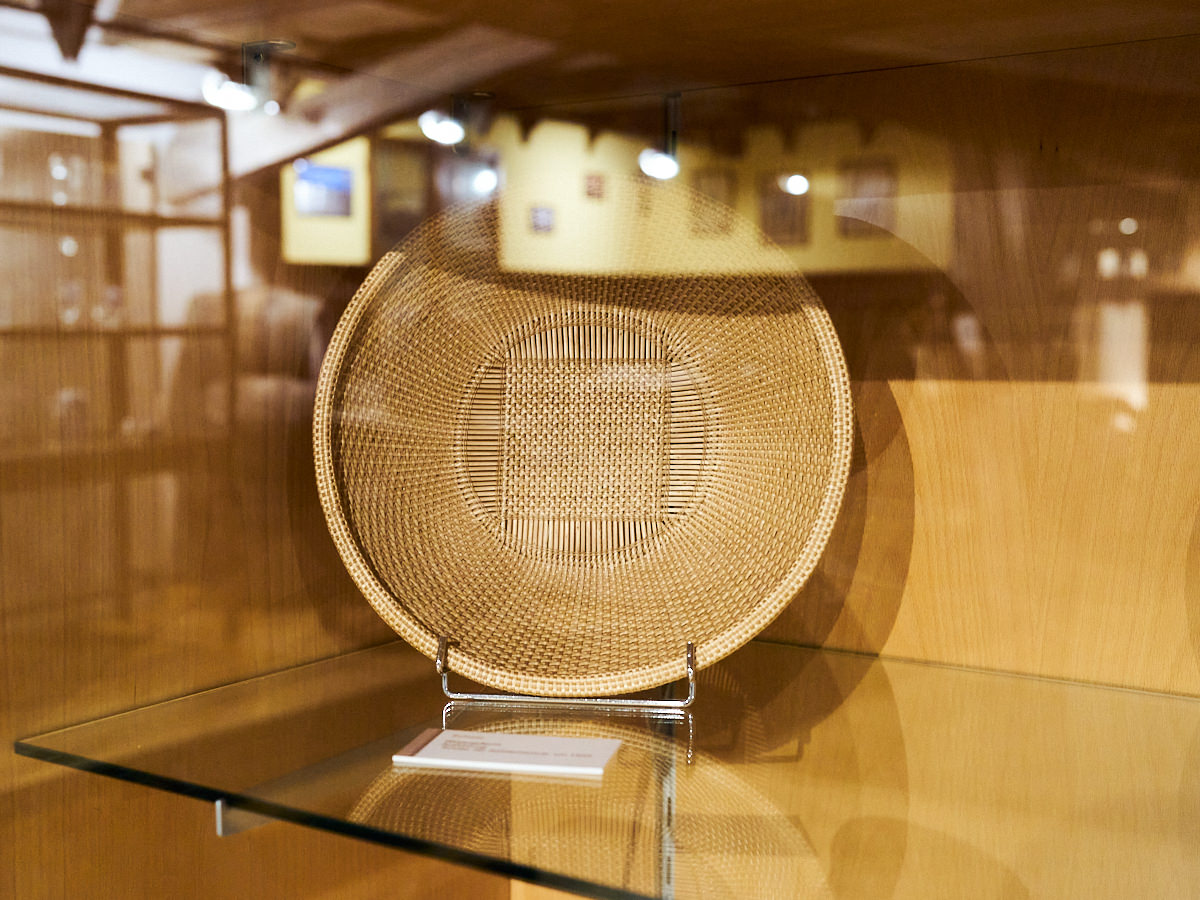
Each piece was finely woven and carefully finished. 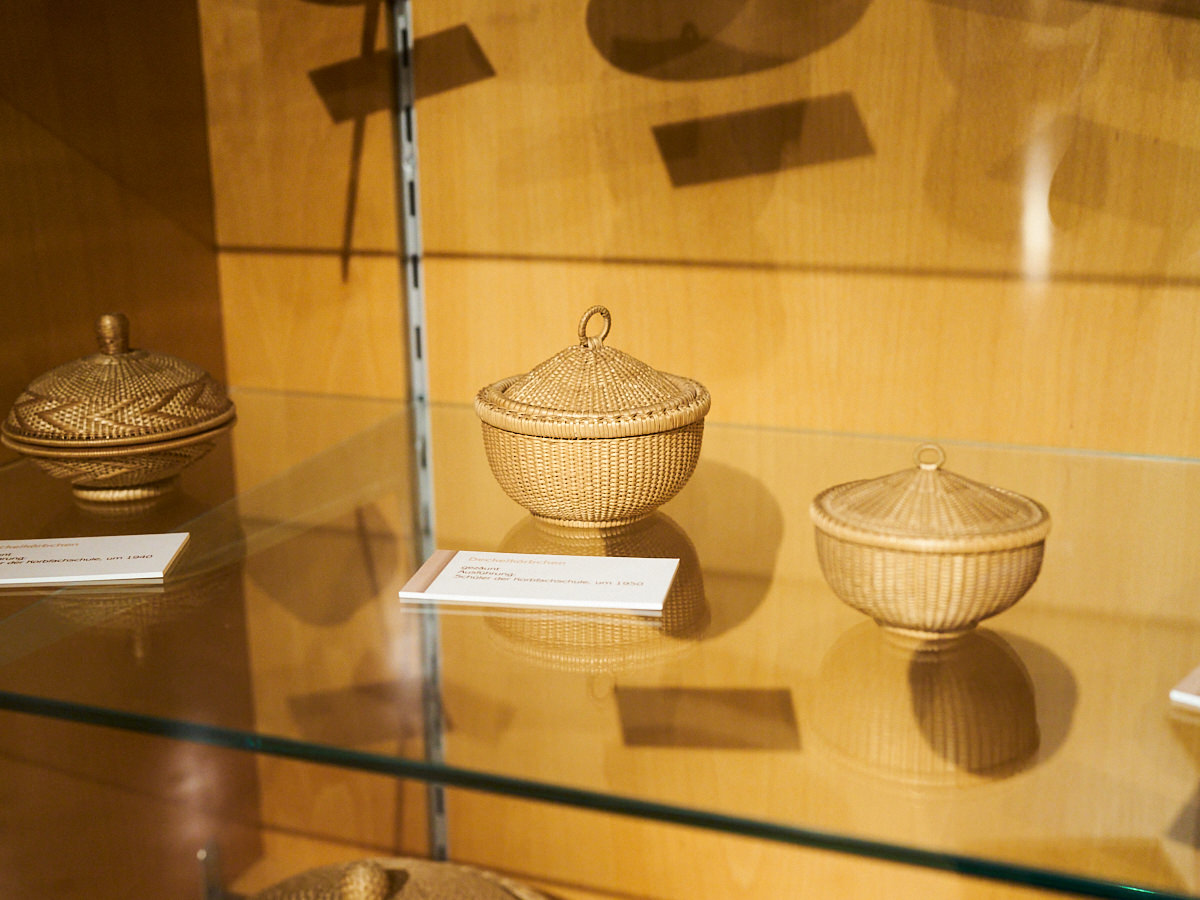
Please take a moment to look through this collection of fine basketry from Lichtenfels. 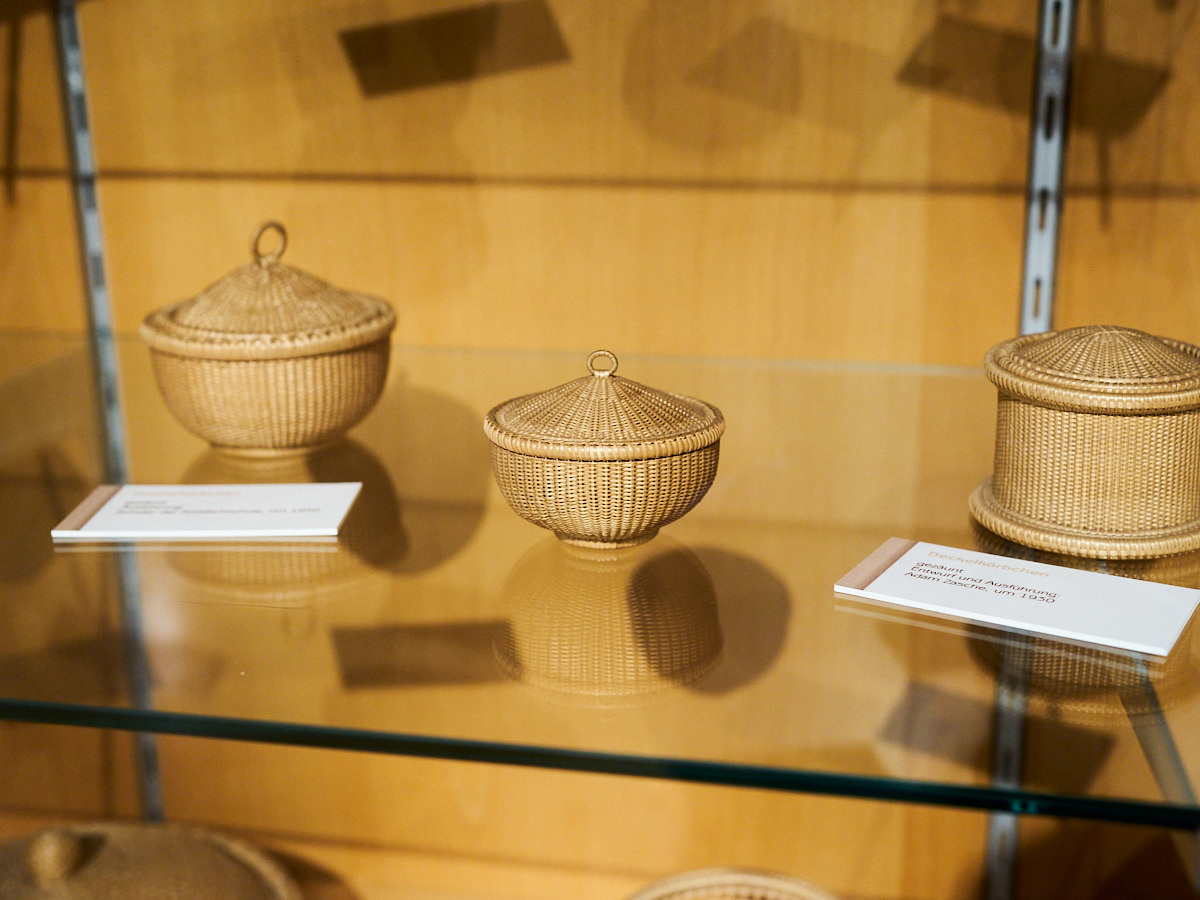
Each caption included the year of production and the maker’s name. 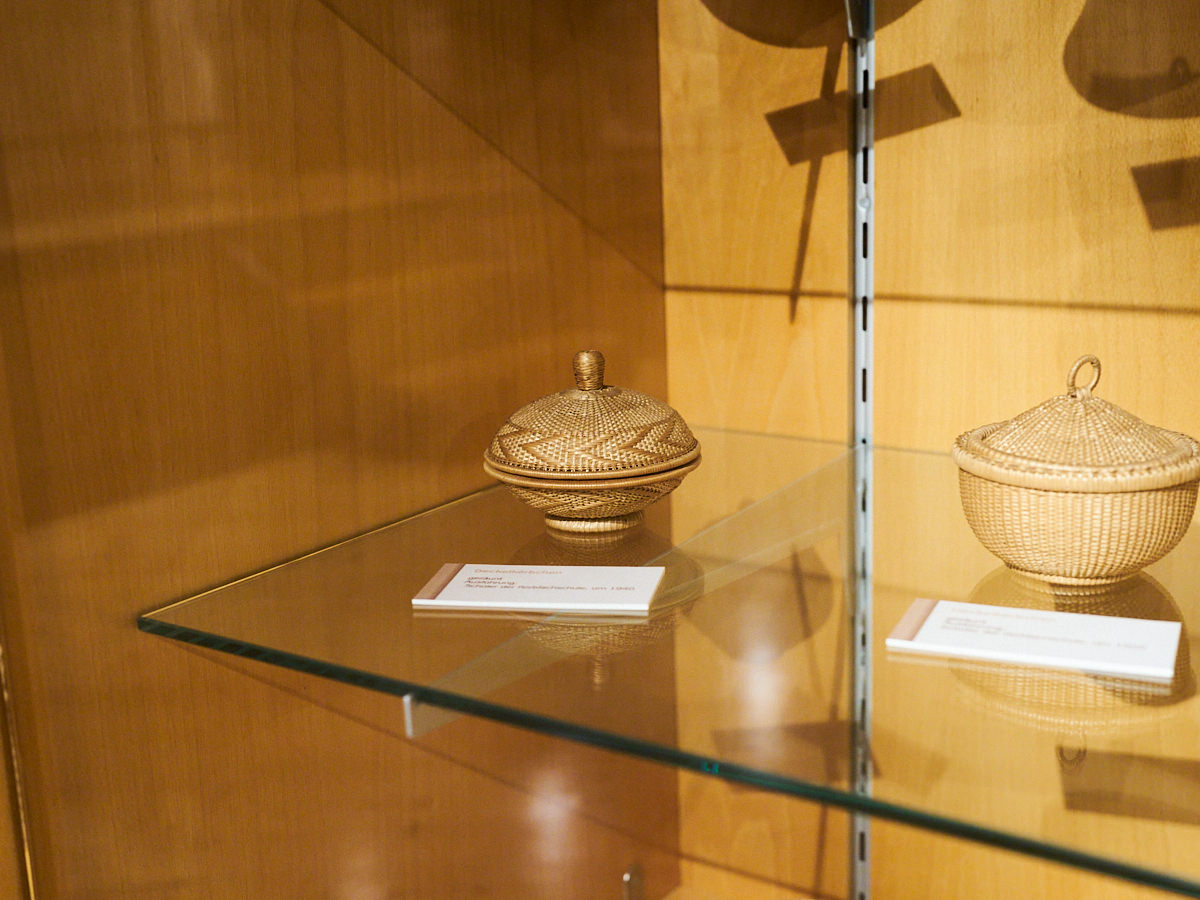
Many of the pieces were made between around 1925 and 1930, and the baskets on display date back roughly a hundred years. 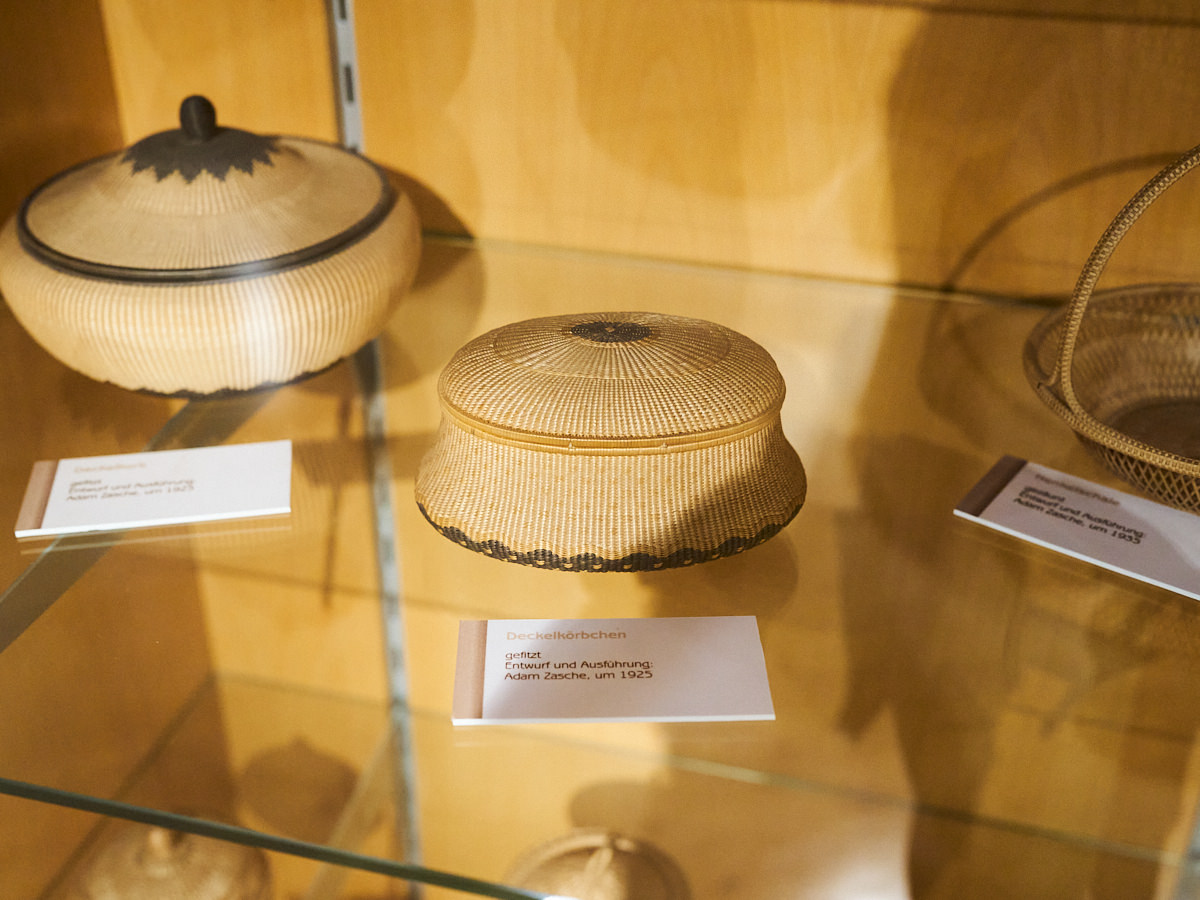
There were many different forms, 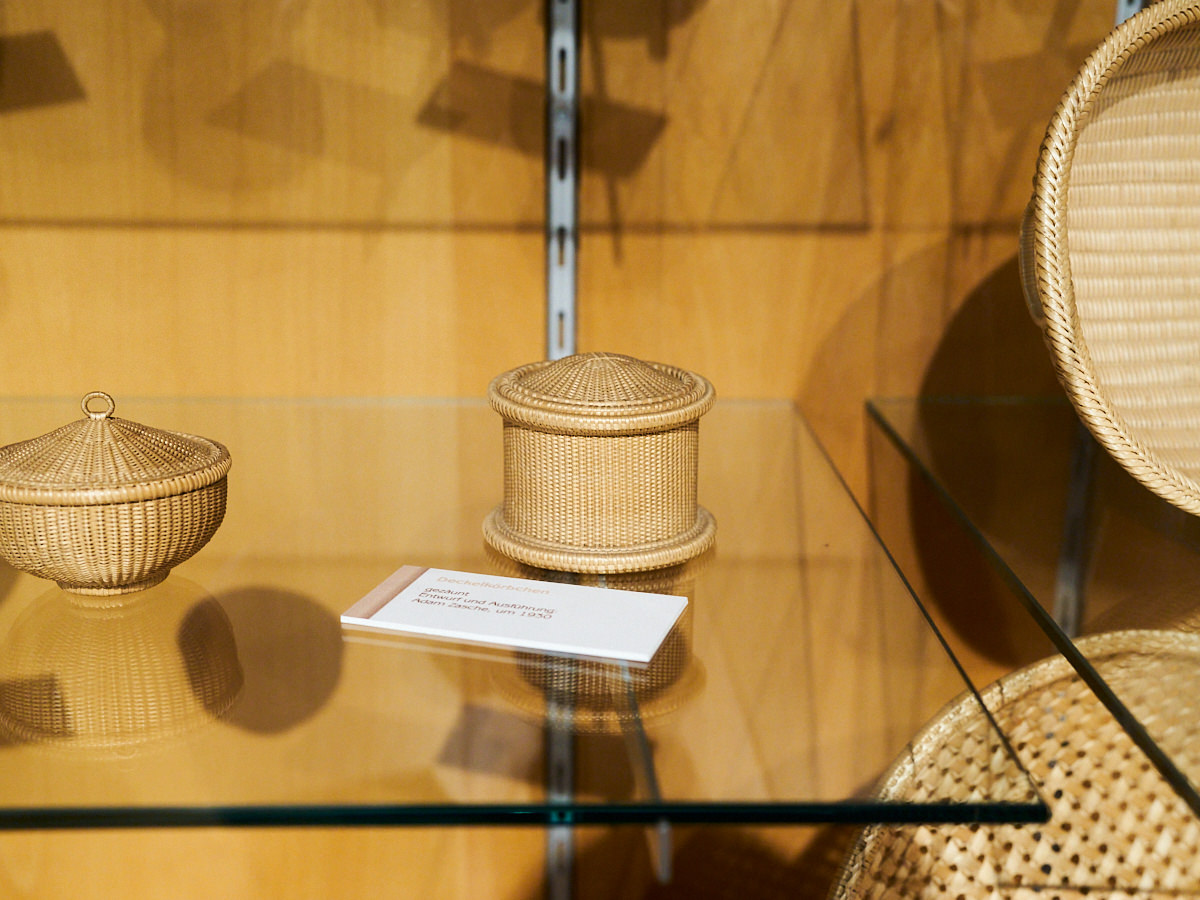
including finely patterned pieces and lidded baskets. 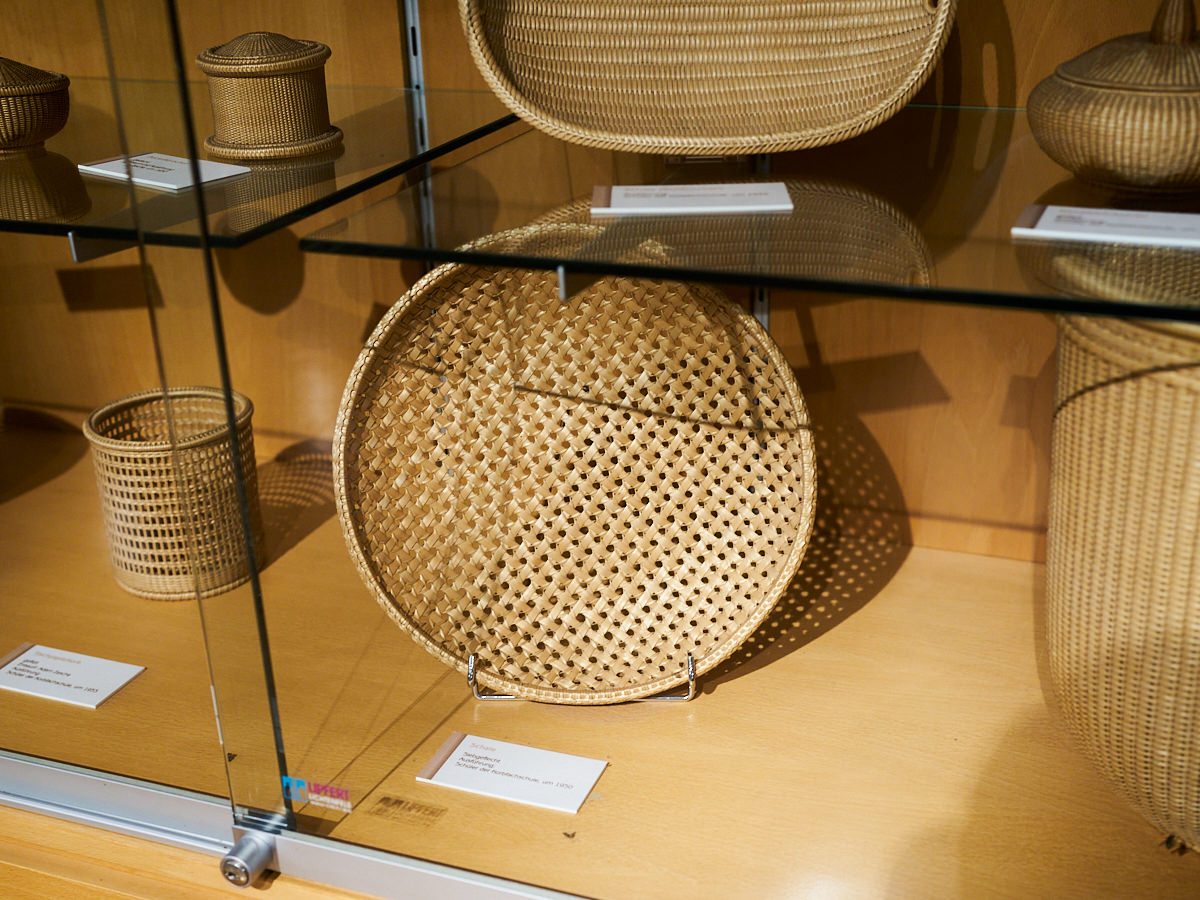
Some pieces even evoked Japanese bamboo craftsmanship. 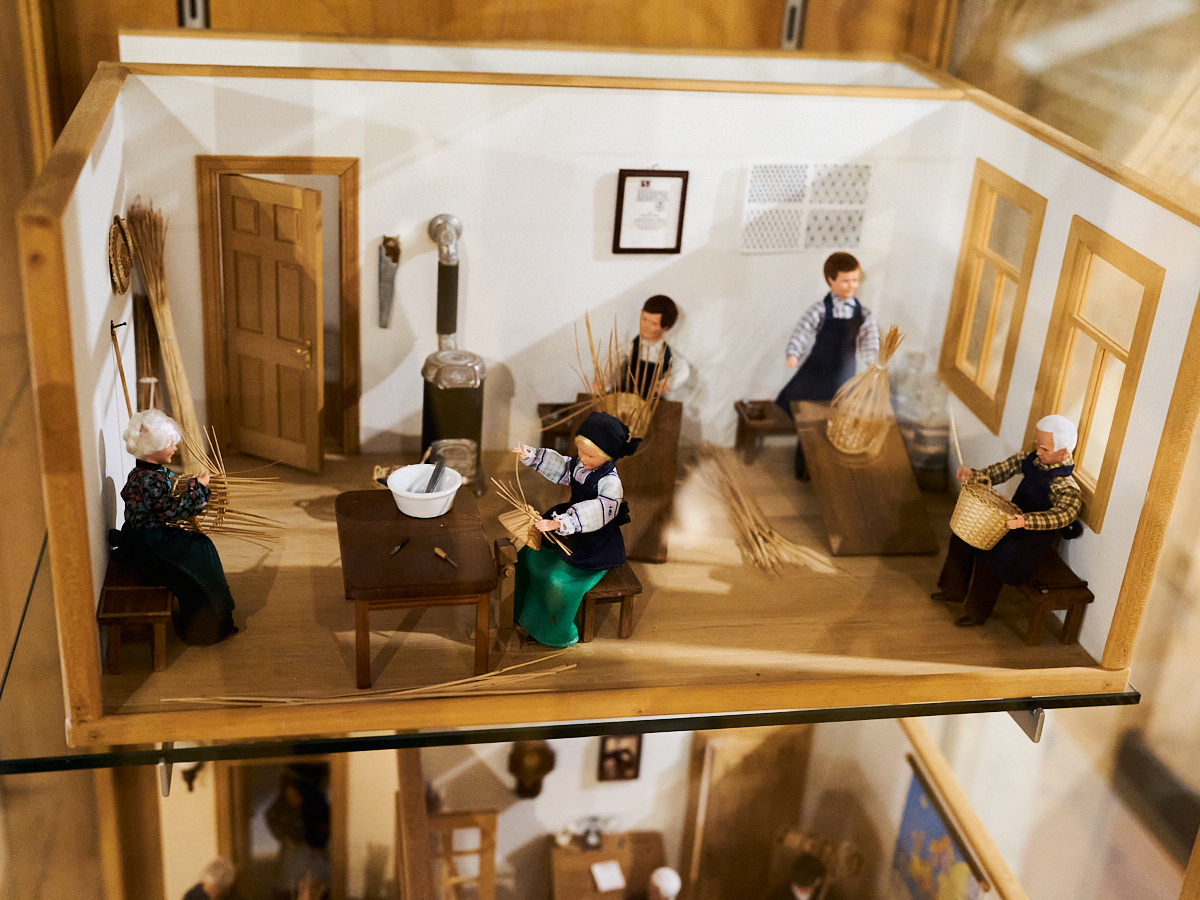
There were even charming miniature models that seemed to capture scenes of traditional basketmaking. Even the small, in-progress baskets were carefully woven. 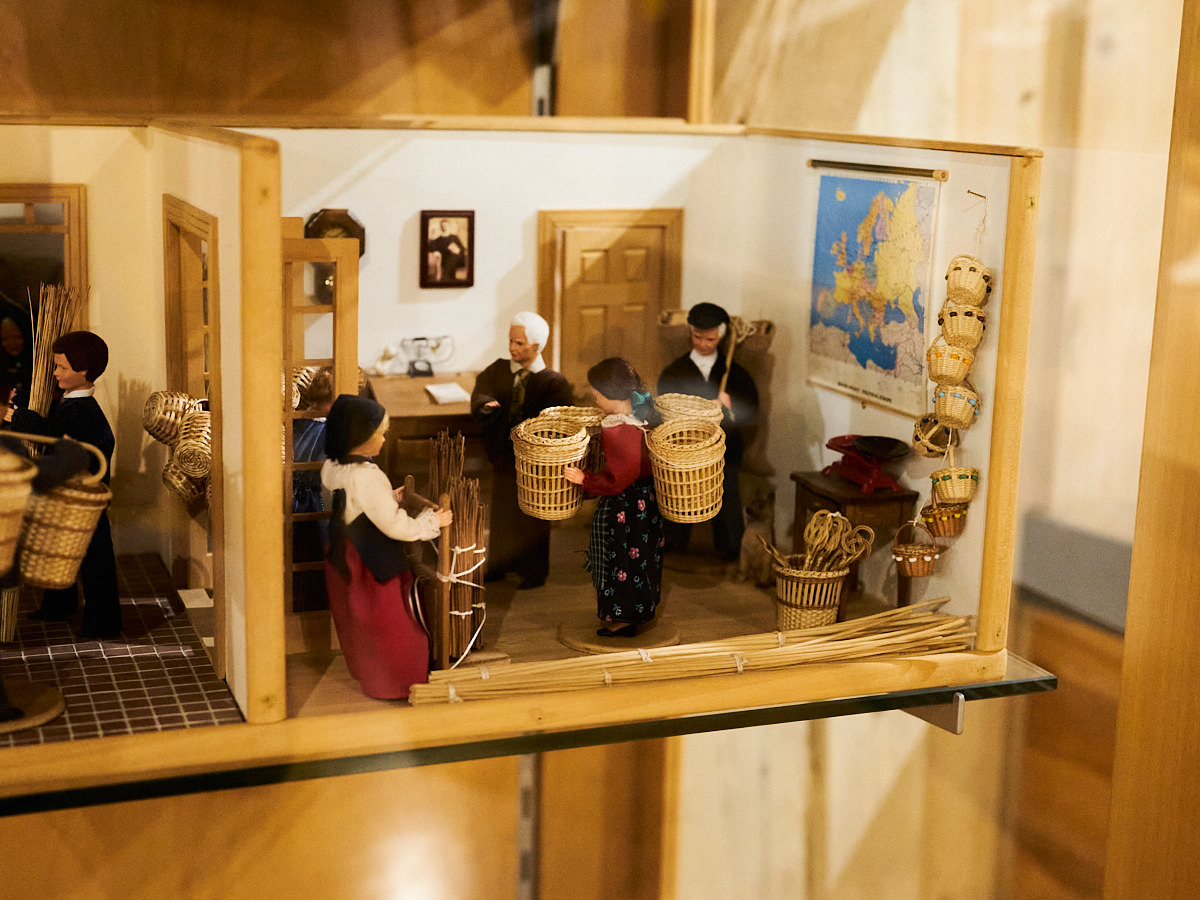
Even in these miniature models, great care was taken in every detail—from the texture of the willow and the fine expressions of the weave to the maps on the walls. Such careful craftsmanship also suggests that this is a place where fine basketry has long been cultivated. 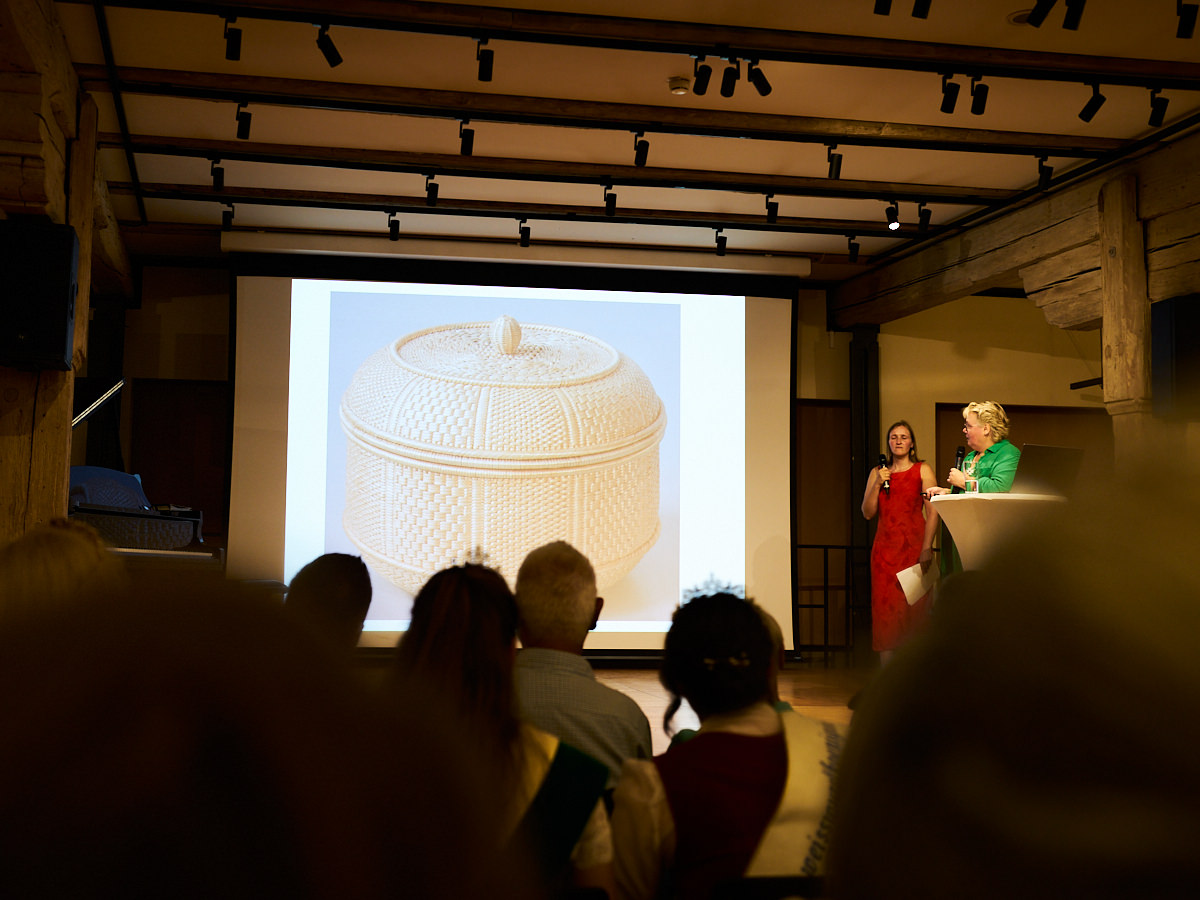
Returning to Esmé, I was told that she focused her studies on fine basketry techniques at the school in Lichtenfels, where this tradition has long been cultivated. The image projected on the screen shows one of her own works—a lidded basket with delicate woven patterns. 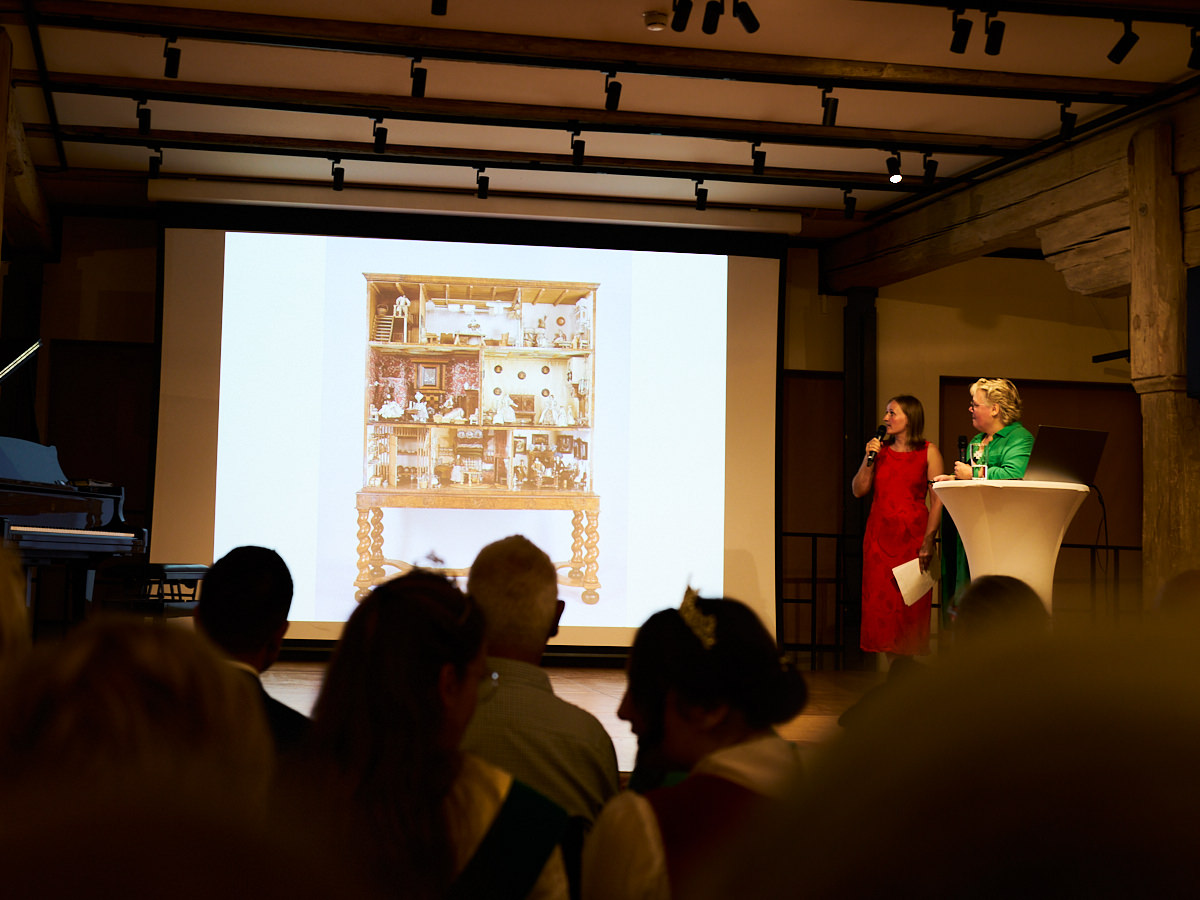
As shown in this photograph, Esmé has also created works like the miniature models seen earlier. 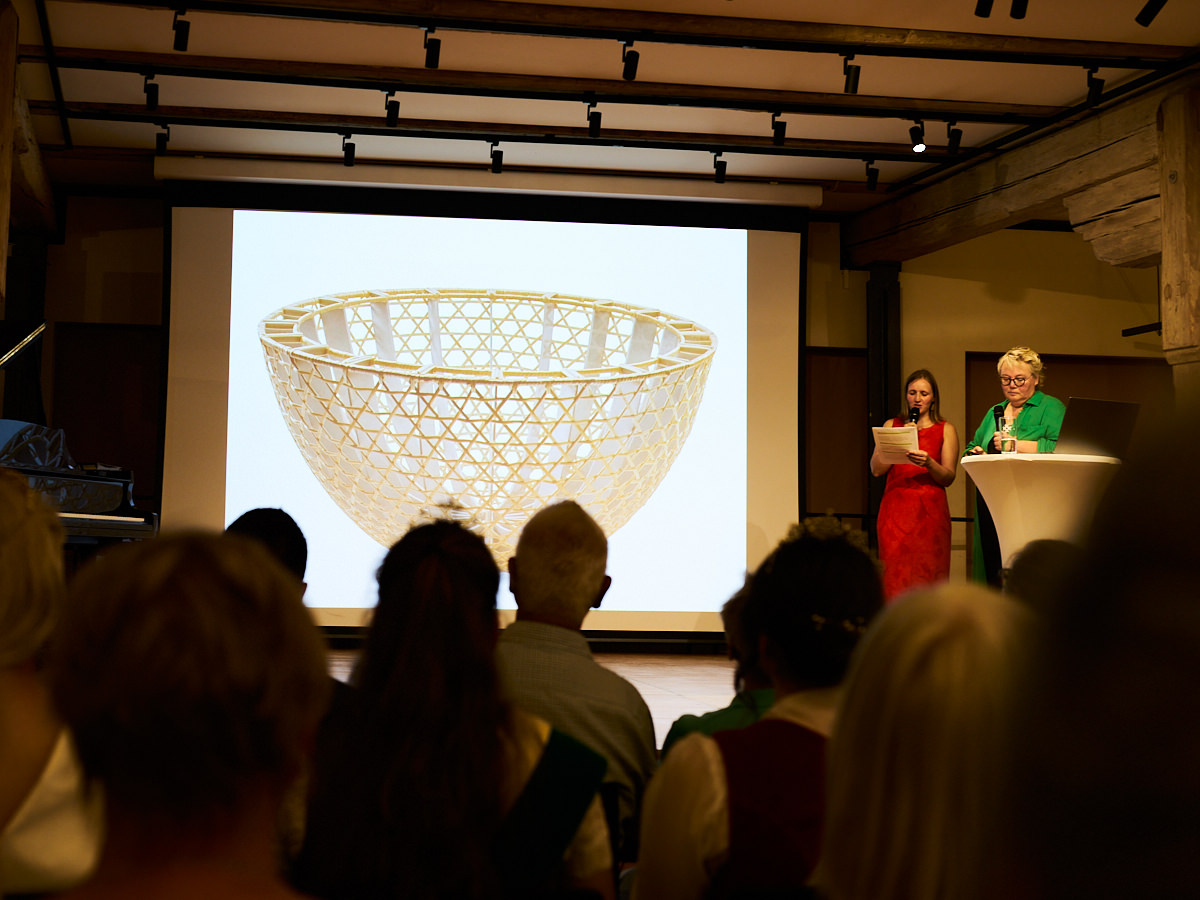
There were also baskets made with mutsume weave, a pattern often seen in Japanese bamboo work. 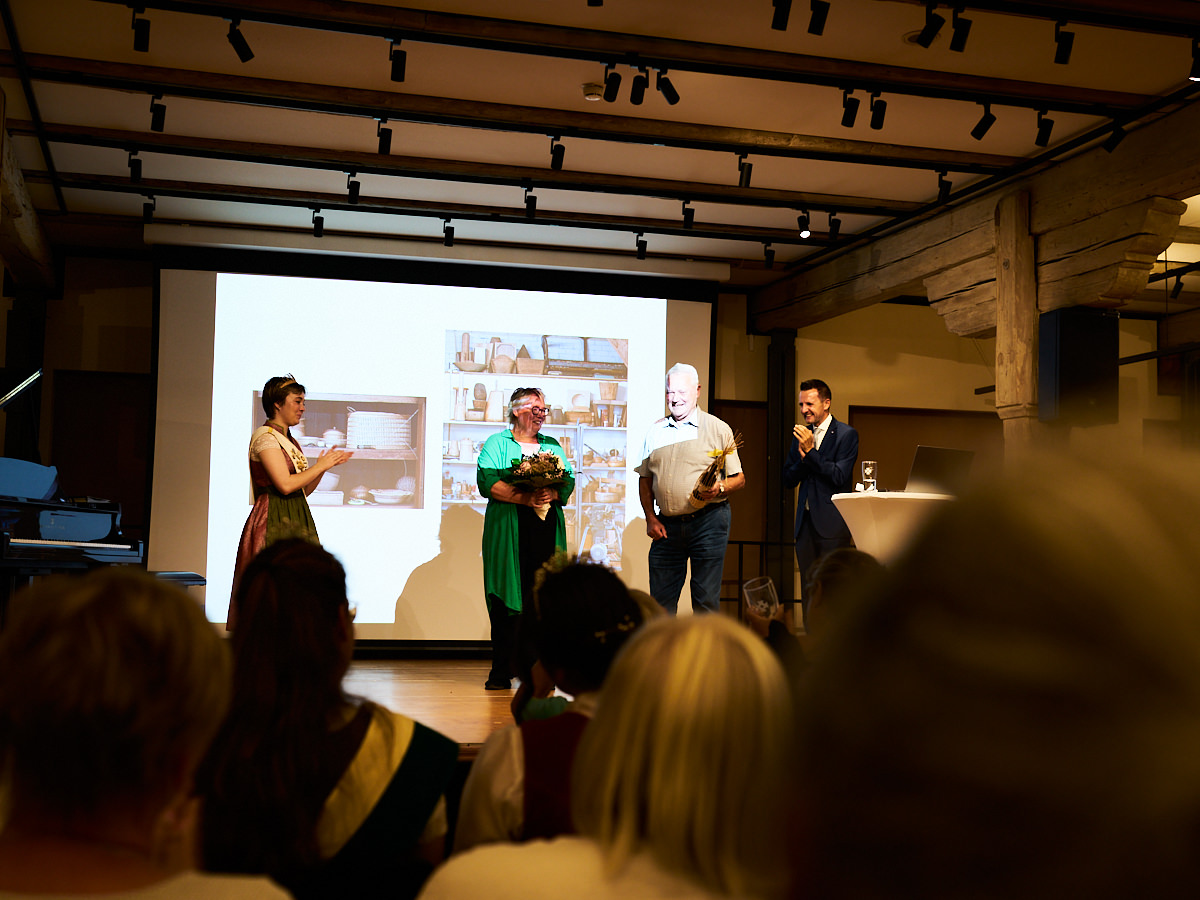
At the end of the speech, the teacher who had guided Esmé in fine basketry also came forward. There was a moment when he seemed to lose his words as he stood before her growth, and it became a very warm and memorable ceremony.
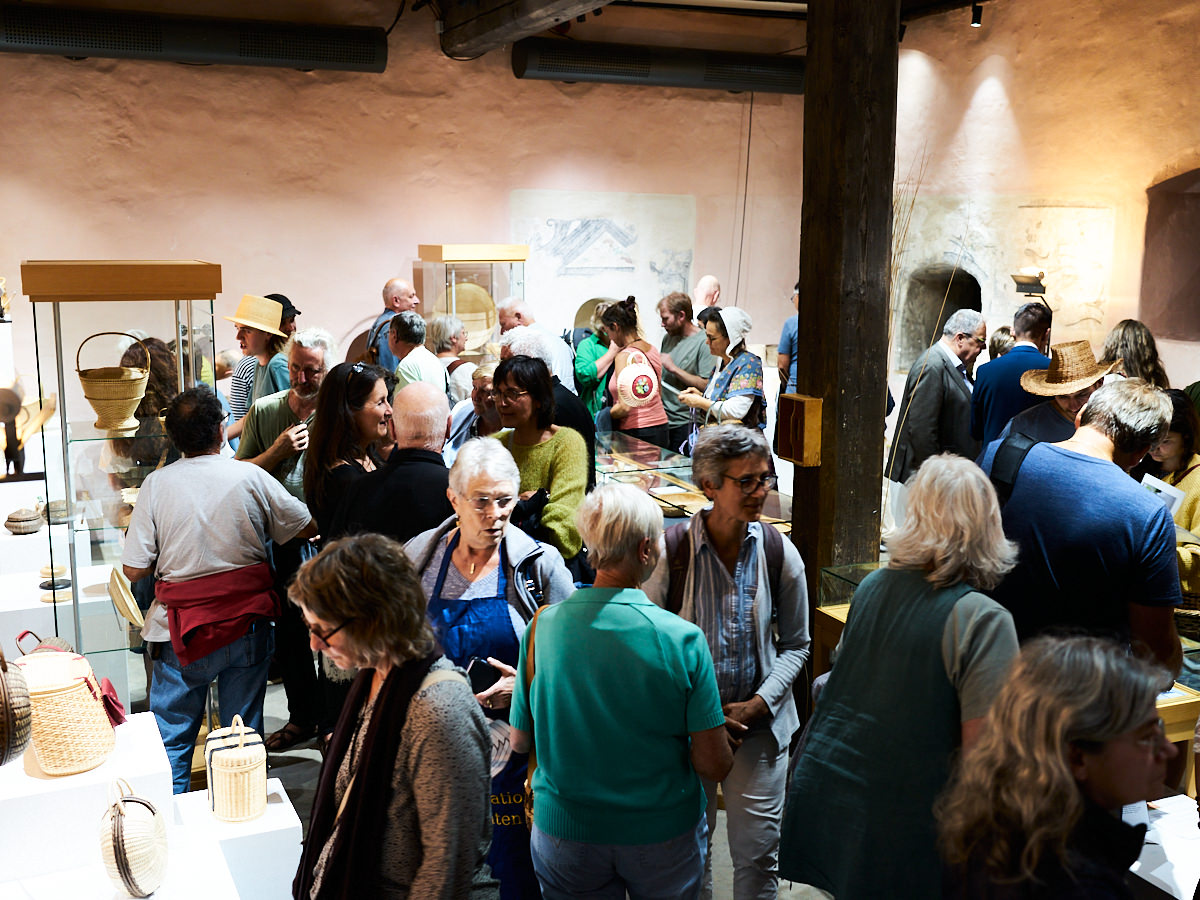
After the ceremony, the visitors were guided into the exhibition space,
where each person took their time viewing Esmé’s works.
In the back left of the photograph, you can also see Jefke wearing a hat.
She seemed to be quietly taking in her teacher’s work.
As the space was quite crowded at this time,
I decided to return later during the exhibition to view the works more carefully.
Now, I would like to take a closer look at Esmé’s works.
This is only a selection, but I hope you enjoy a glimpse of her work.
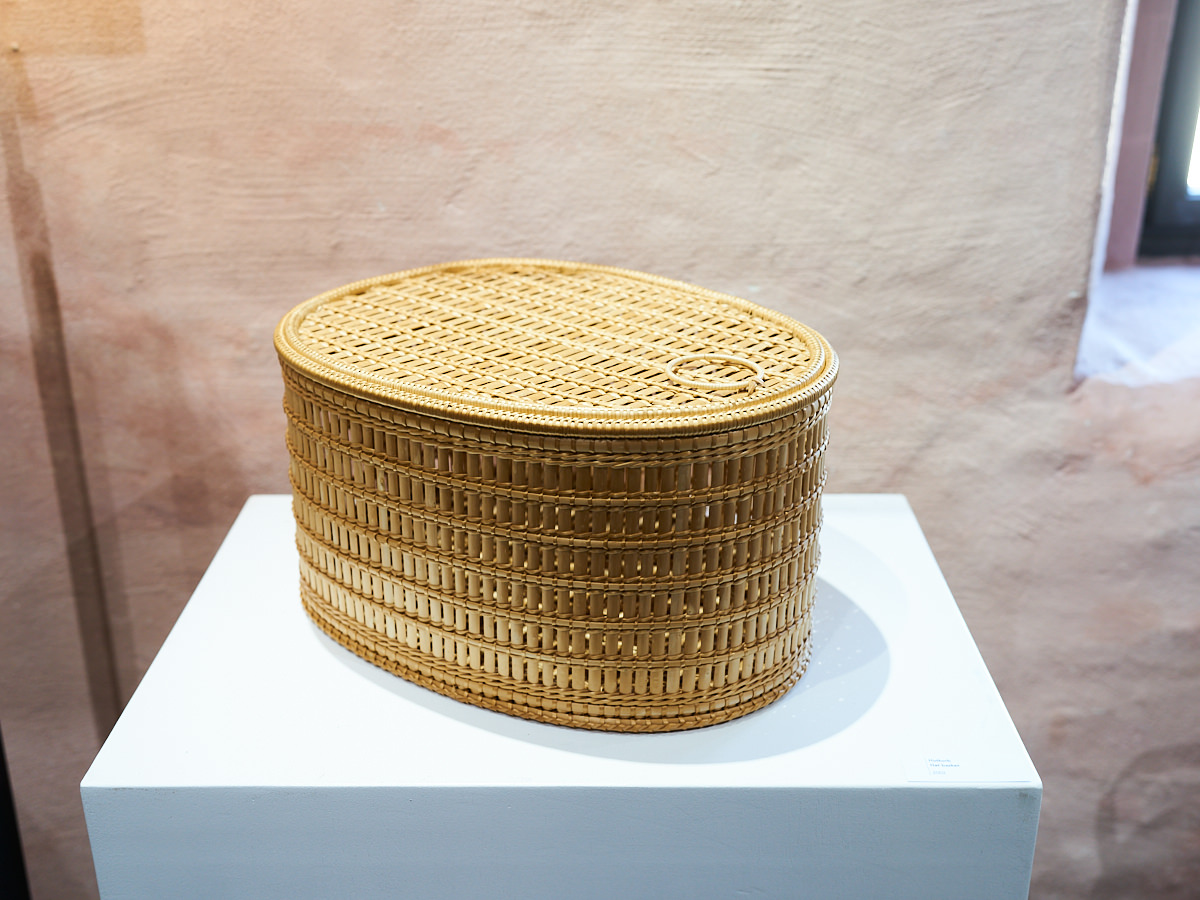
A lidded basket with an openwork weave resembling a fine lattice. 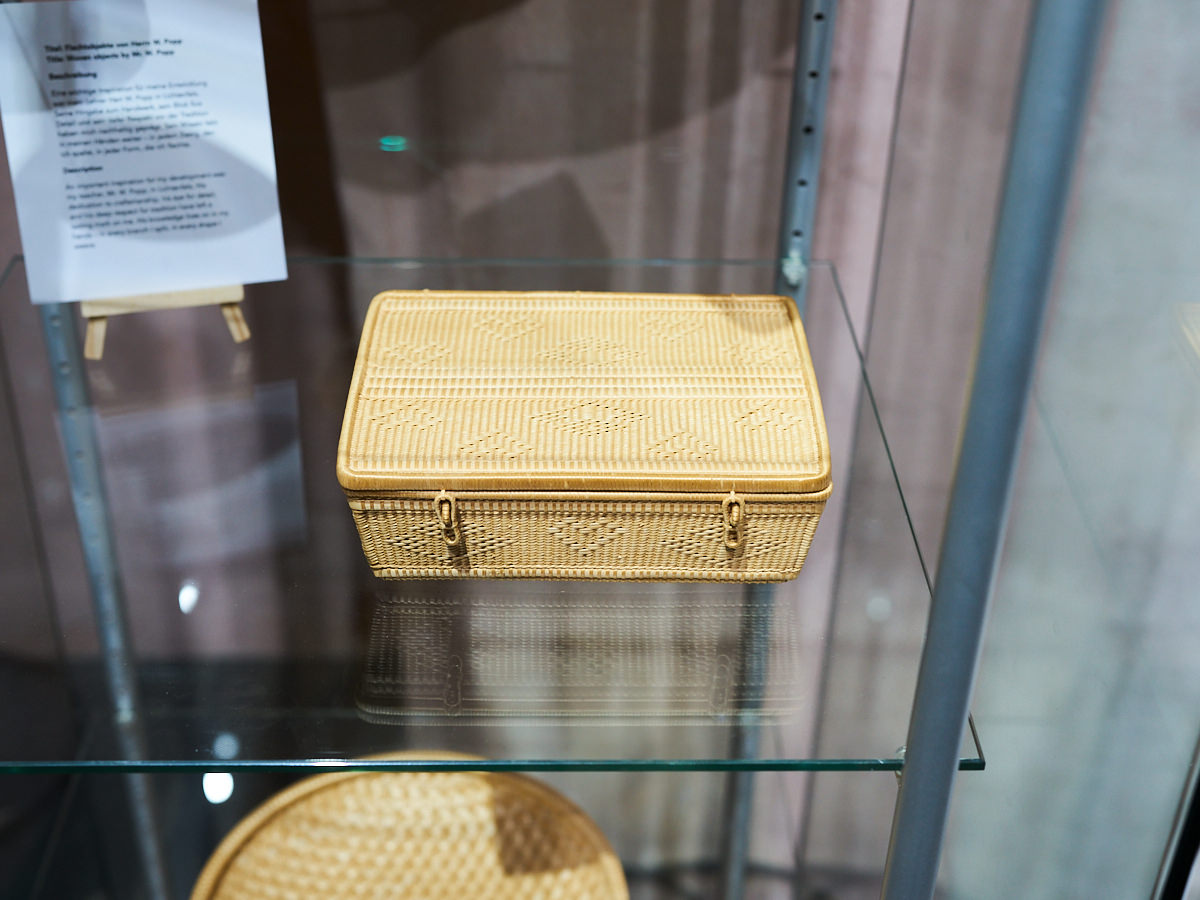
A lidded basket with a clasp, featuring a weave where patterns gently emerge. 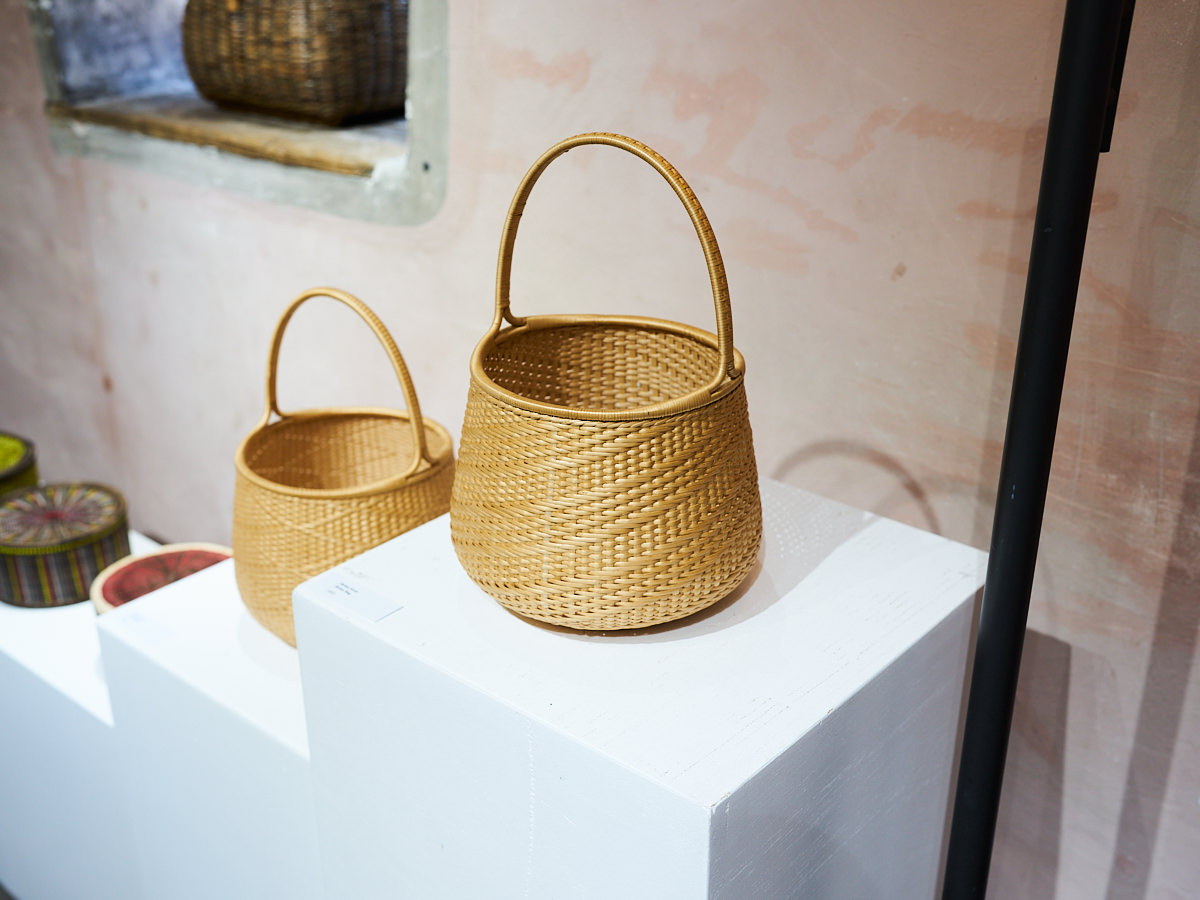
This is also a work by Esmé. We have had a piece of the same form made for us by her student, Jefke. 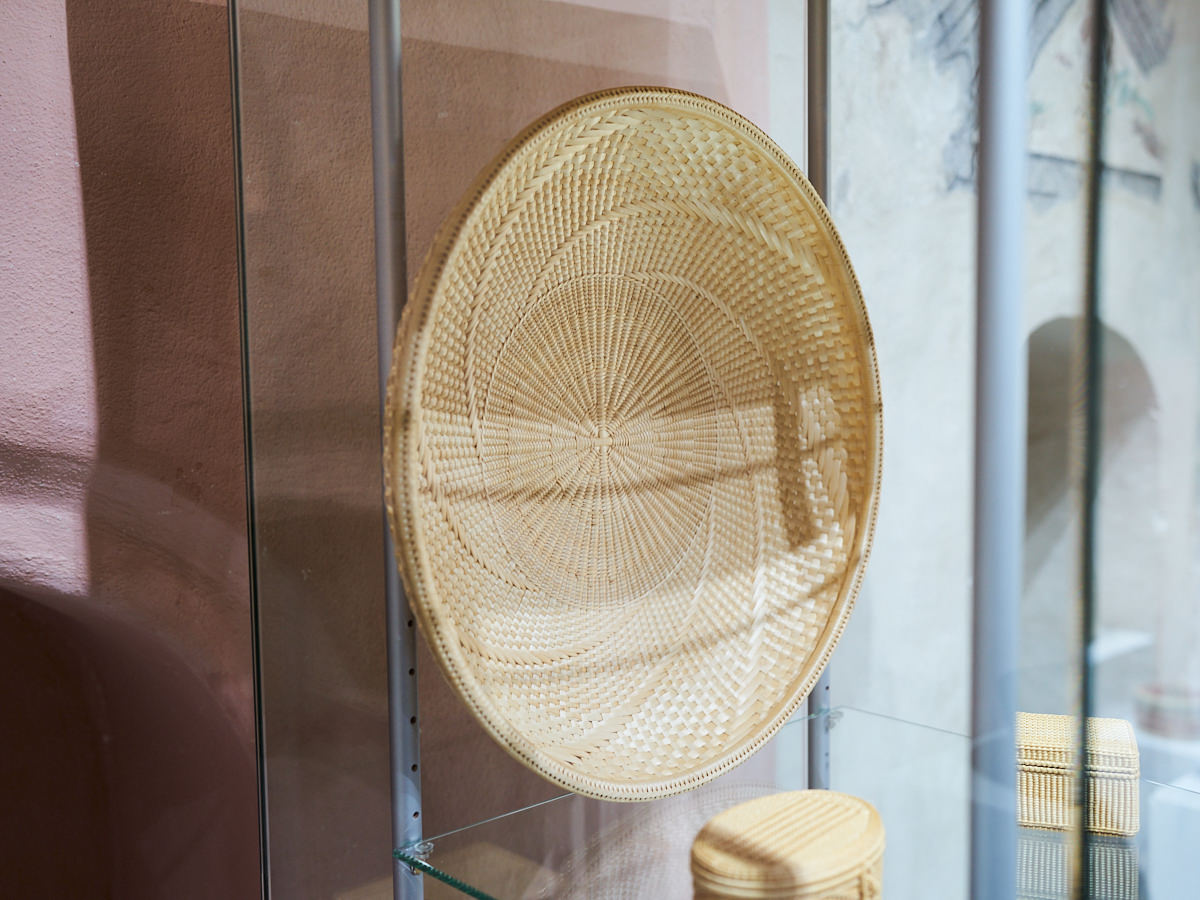
This wall basket was also made by Esmé. We have also had a similar piece made for our shop by Jefke. Its craftsmanship is truly remarkable. 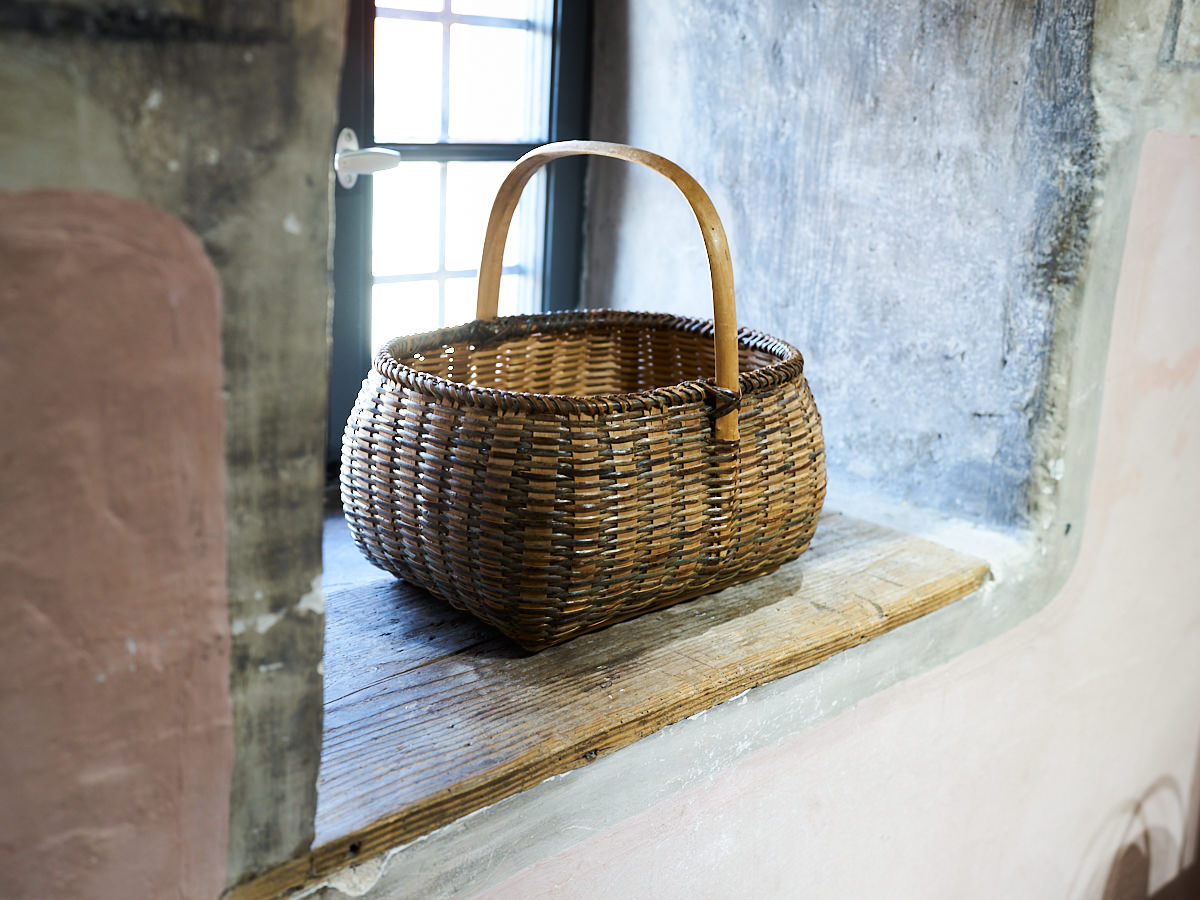
There was also a piece here of a form we had previously commissioned from Jefke’s mother, Jeanny. Jeanny and Jefke studied together under Esmé. It was a truly meaningful moment to be able to see the work of their teacher, Esmé, in person. 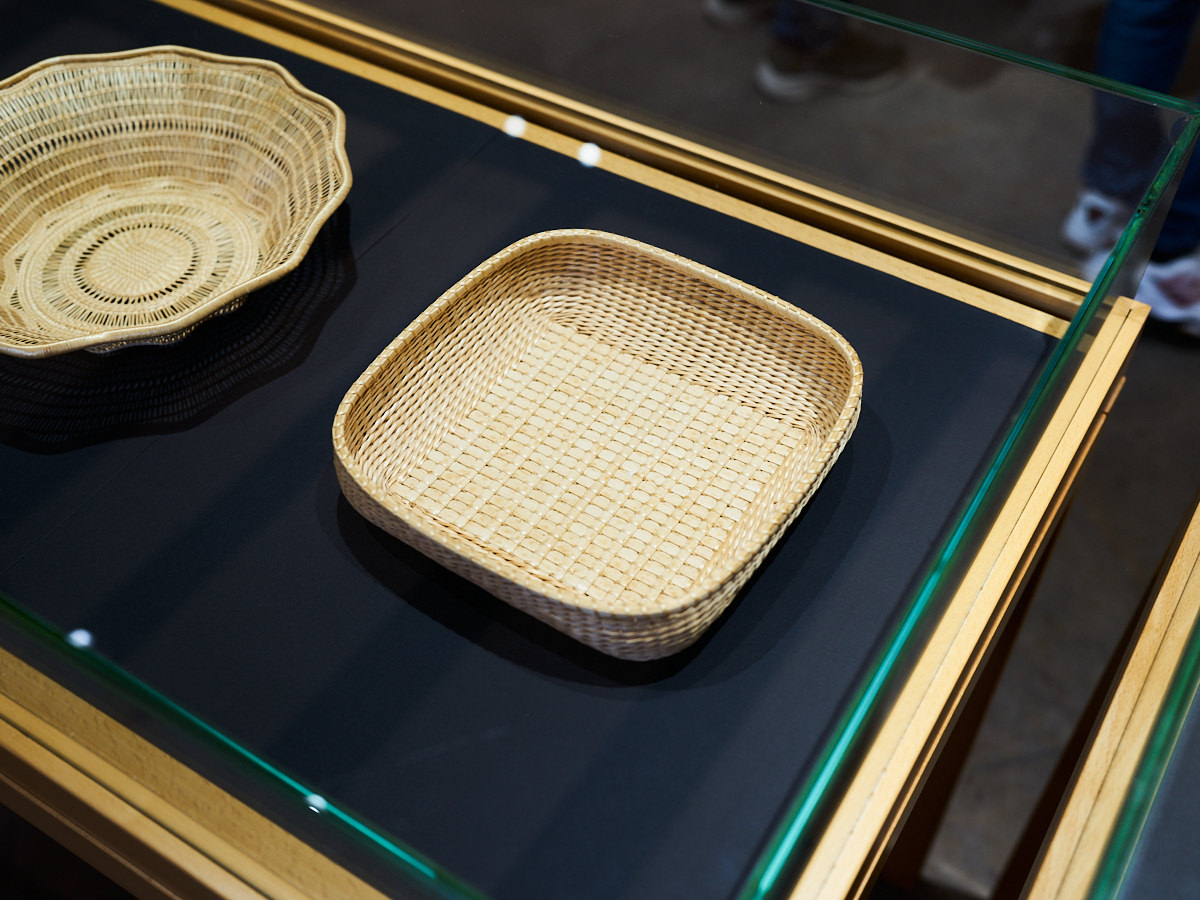
A square tray with a refined weave, 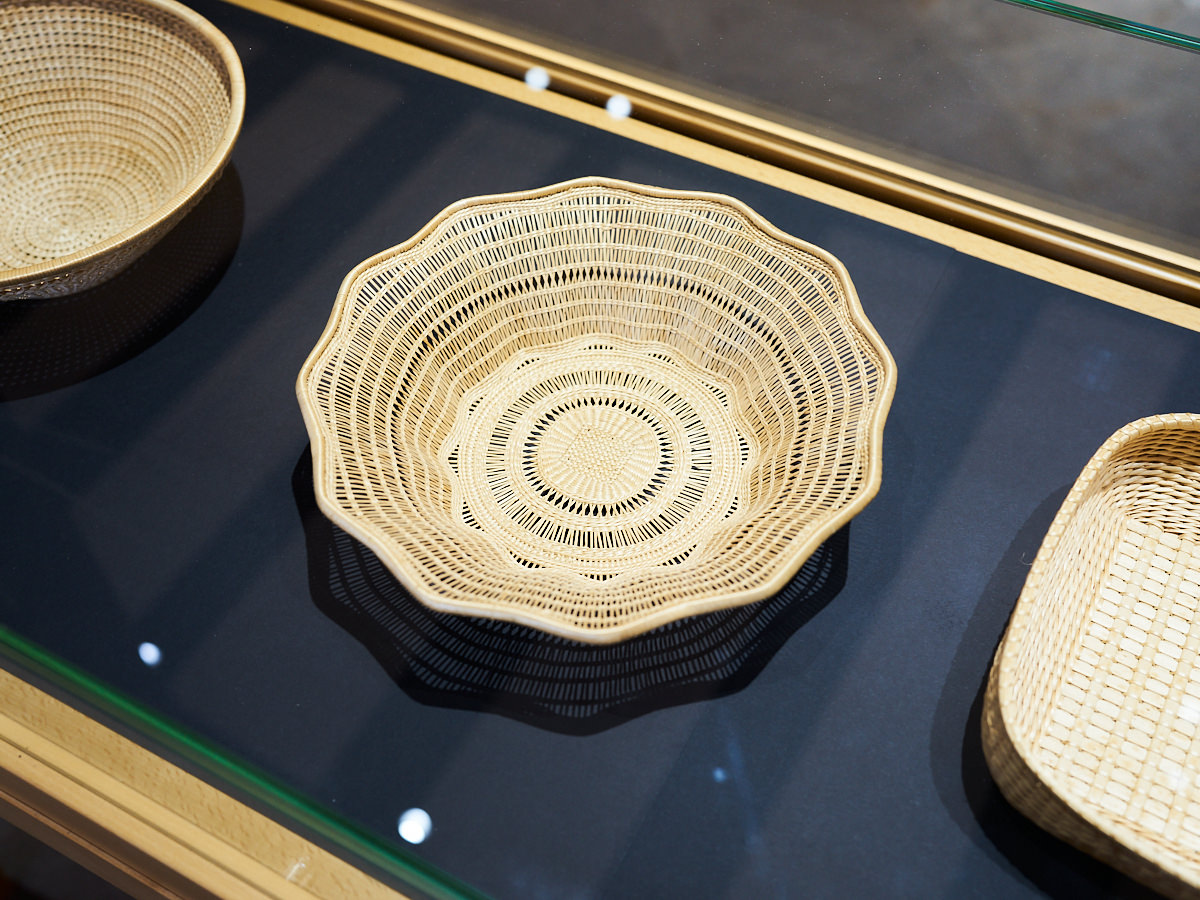
and light, openwork trays. 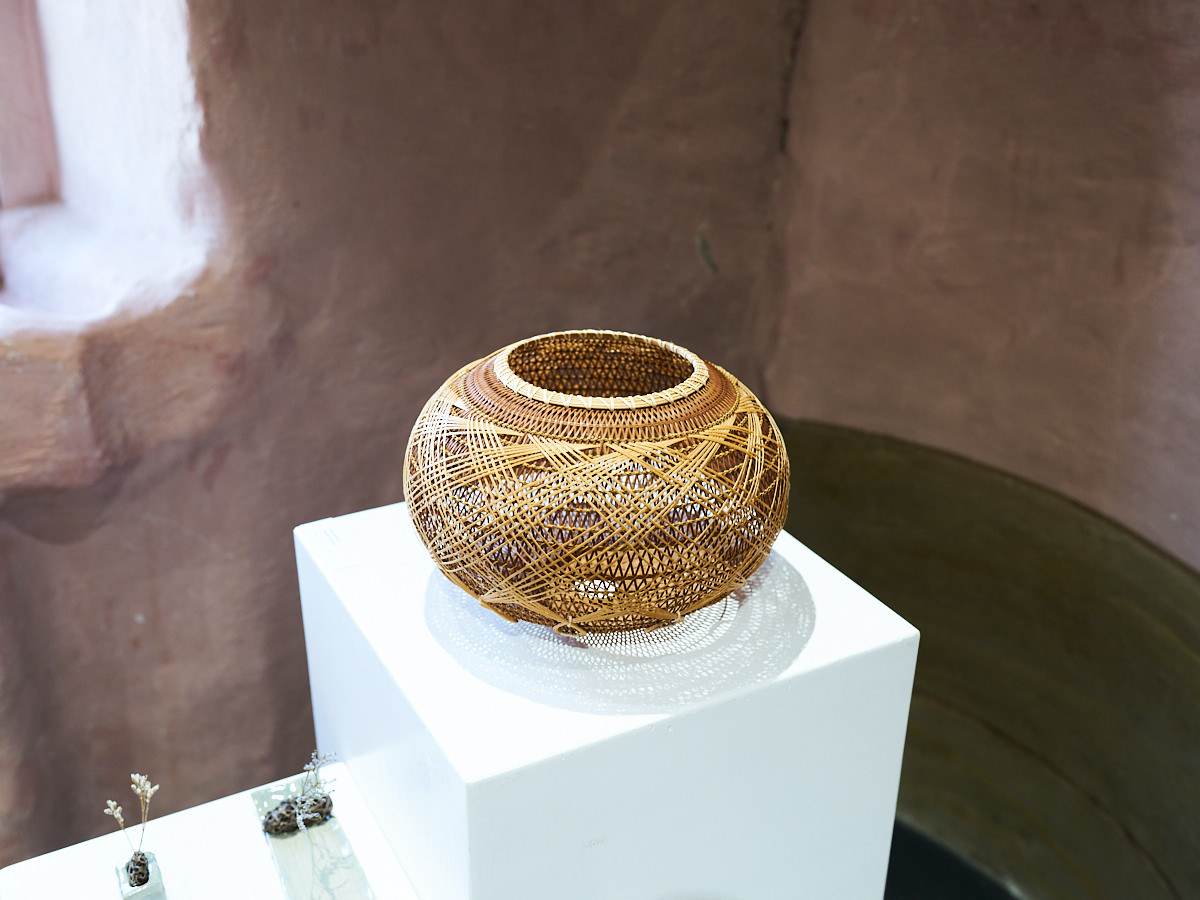
This basket carries a sense of closeness to Japanese bamboo craftsmanship. 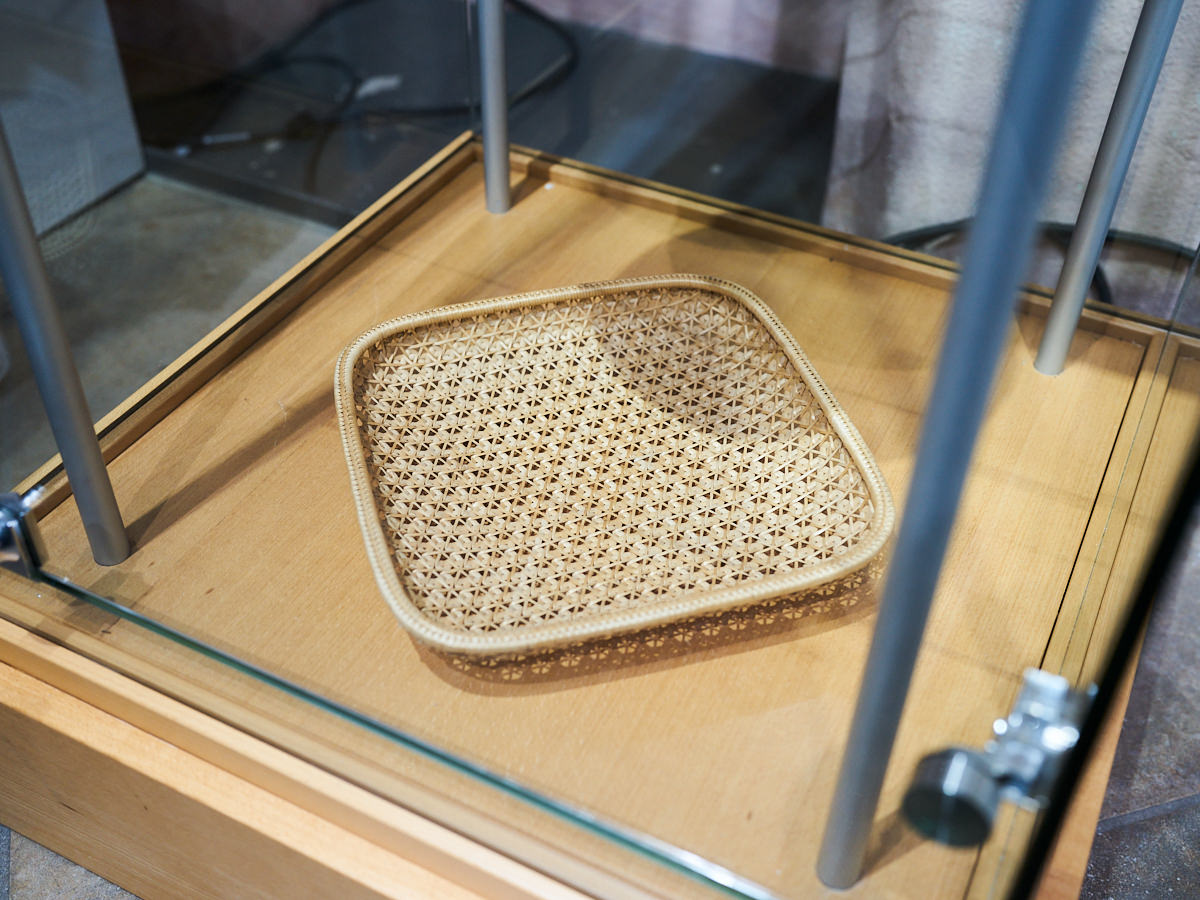
This piece carries a similar impression. 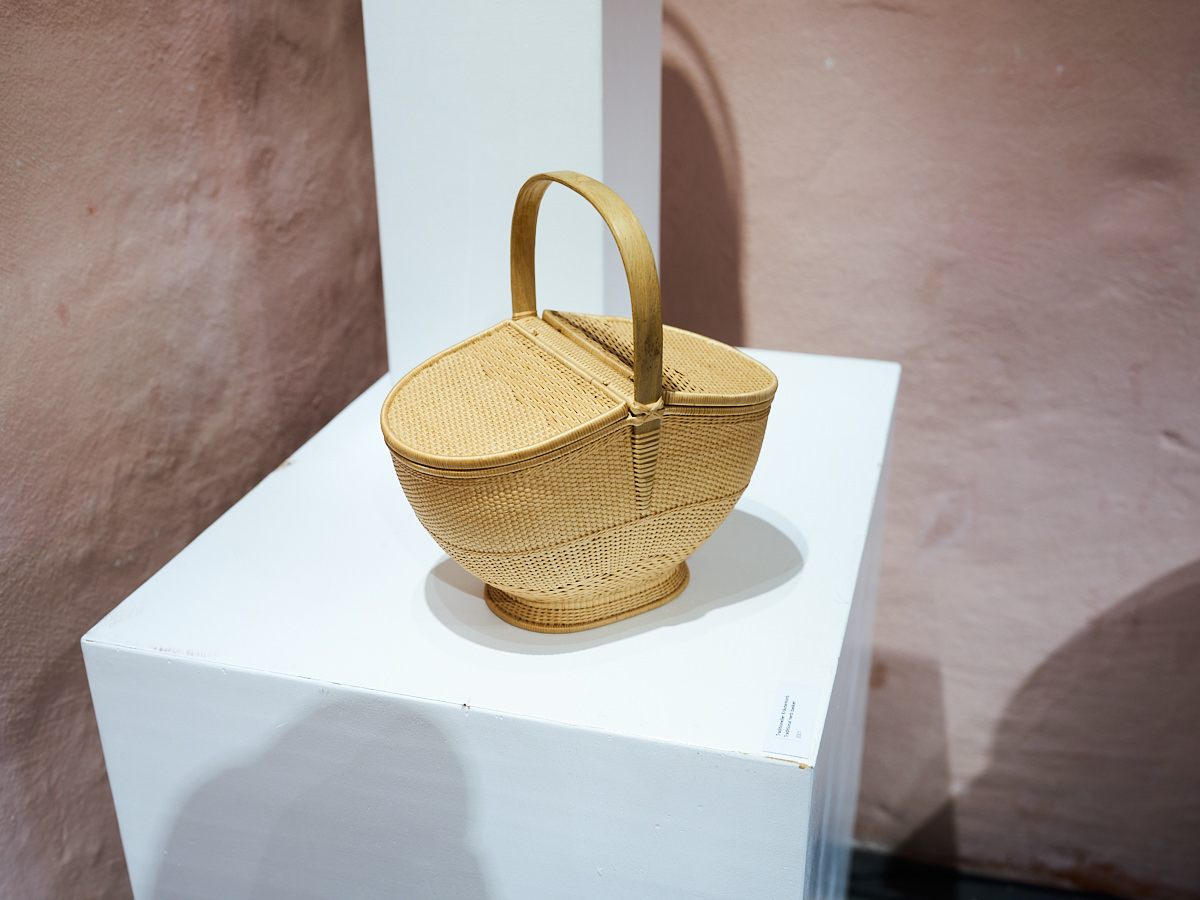
A handled basket with a well-balanced form. 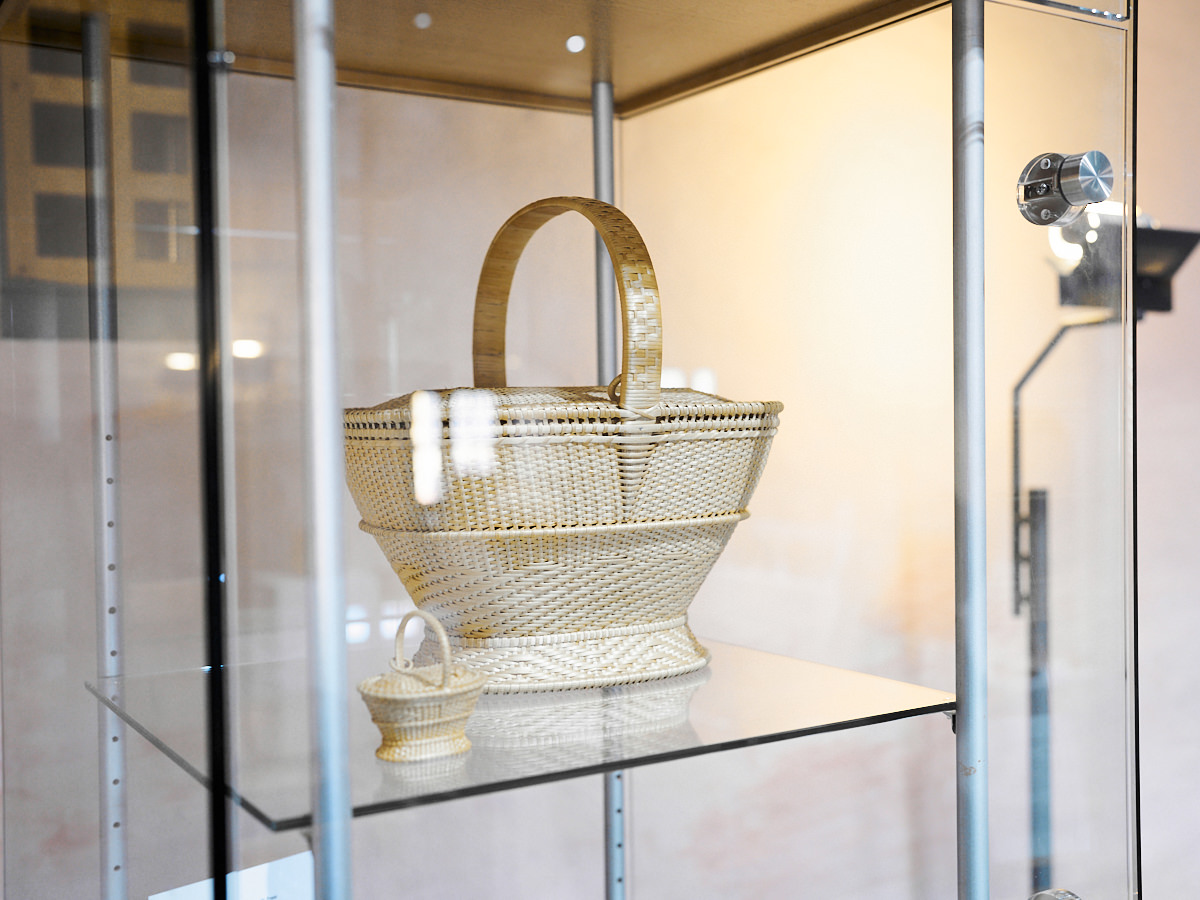
Even charming miniature baskets. 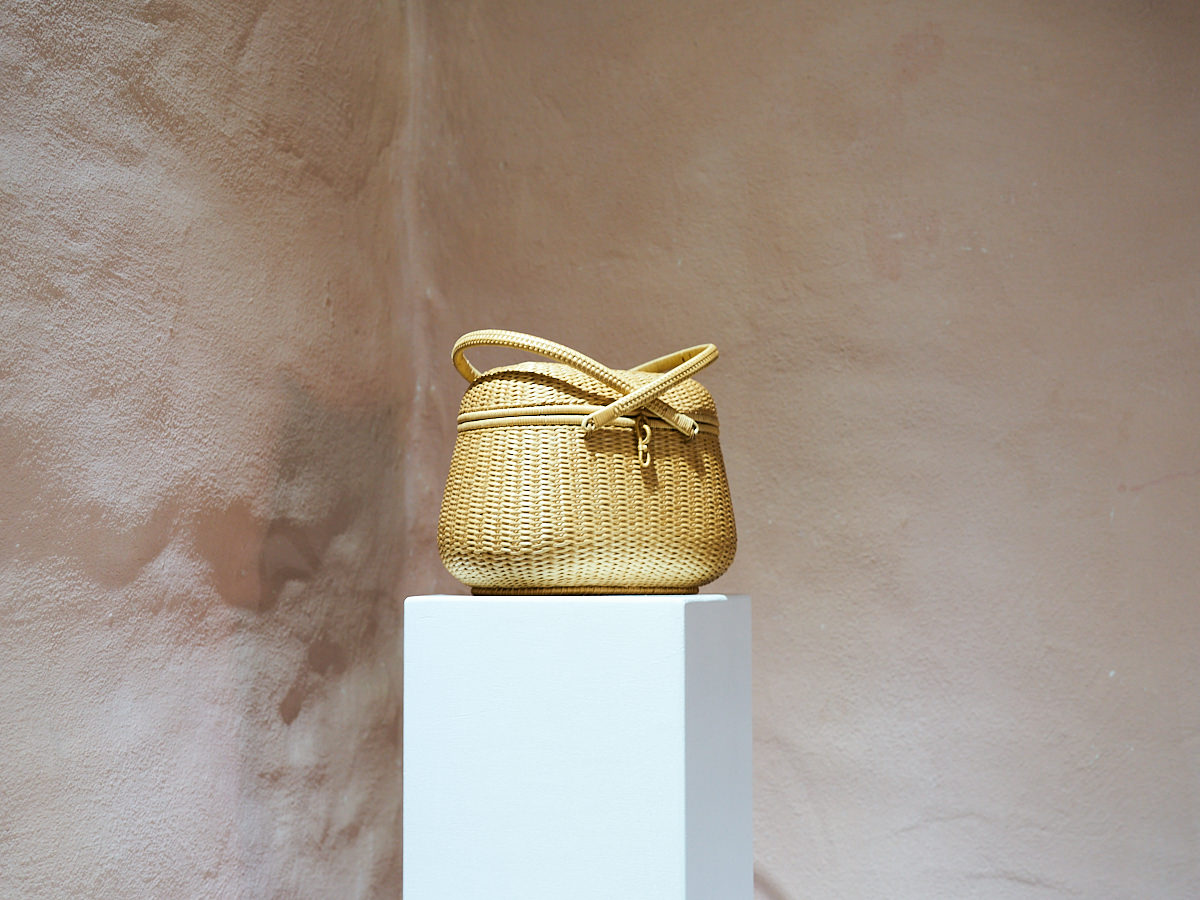
Each piece drew the eye, and I lingered over them for a while.
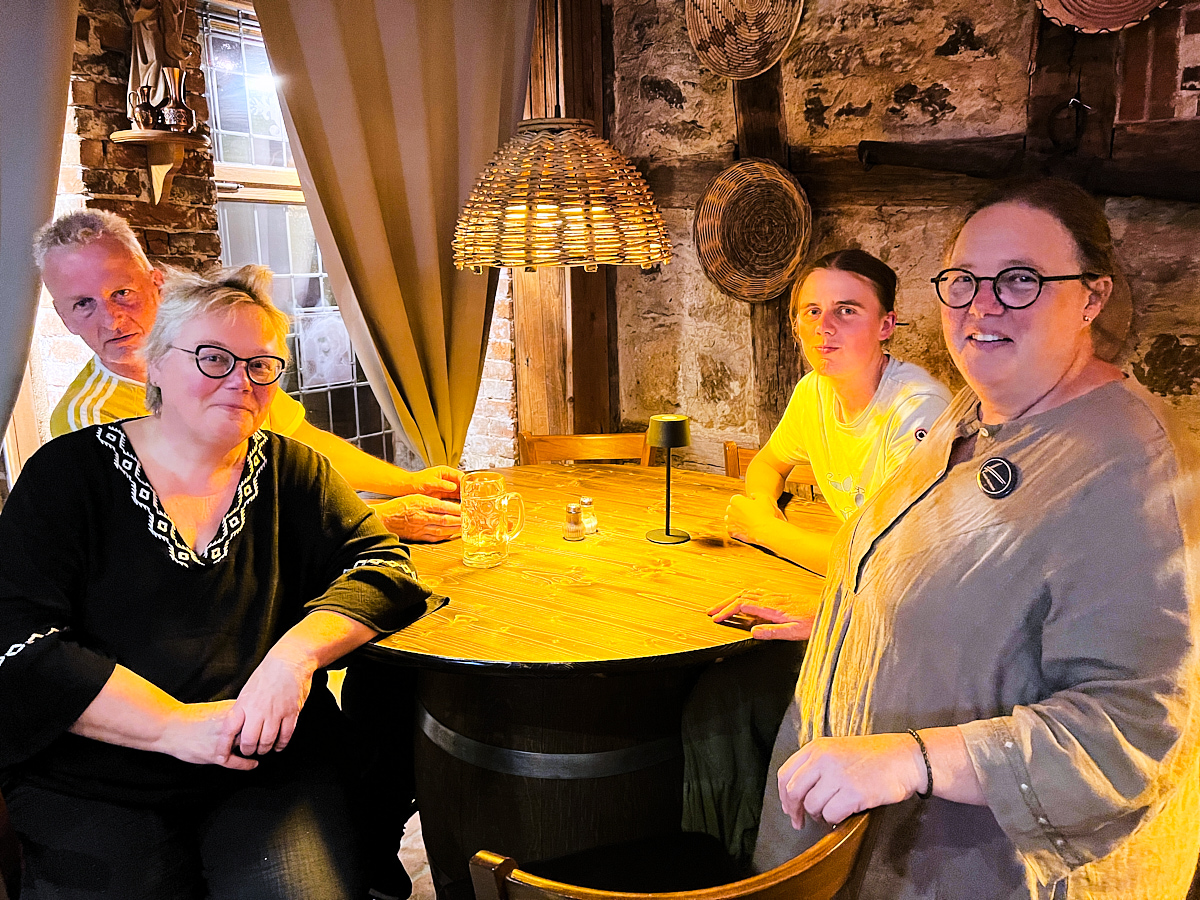
This is a photograph taken when I happened to meet them in Lichtenfels.
From left: Esmé’s partner, Esmé, Jefke, and Jeanny.
I had known of Esmé’s name for quite some time,
and had also heard from Jeanny and Jefke that she was their teacher.
I was glad to have come across them all together like this,
and asked if I might take a photograph.
During this visit to Lichtenfels, I did not have the chance to speak with Esmé at length,
but I hope to do so one day and to introduce her baskets to you in the future.
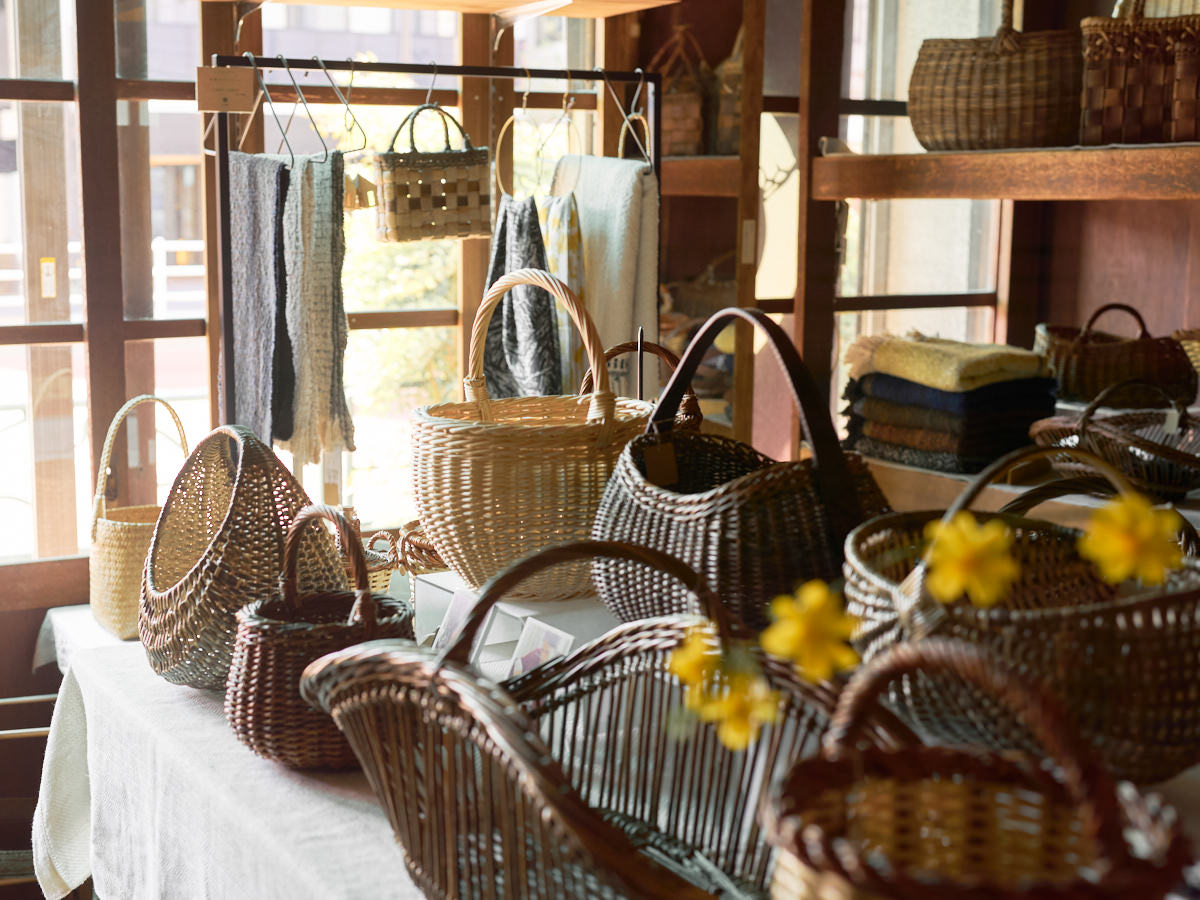
In our recent “The One Table” Special Exhibition
European Baskets We Discovered in Germany
we introduced the work of Belgian makers,
Jeanny and her son Jefke.
Both trained under Esmé Hofman,
and continue to produce baskets grounded in a high level of craftsmanship.
Here we present the baskets they kindly prepared for this exhibition.
Please follow the links to view each item.
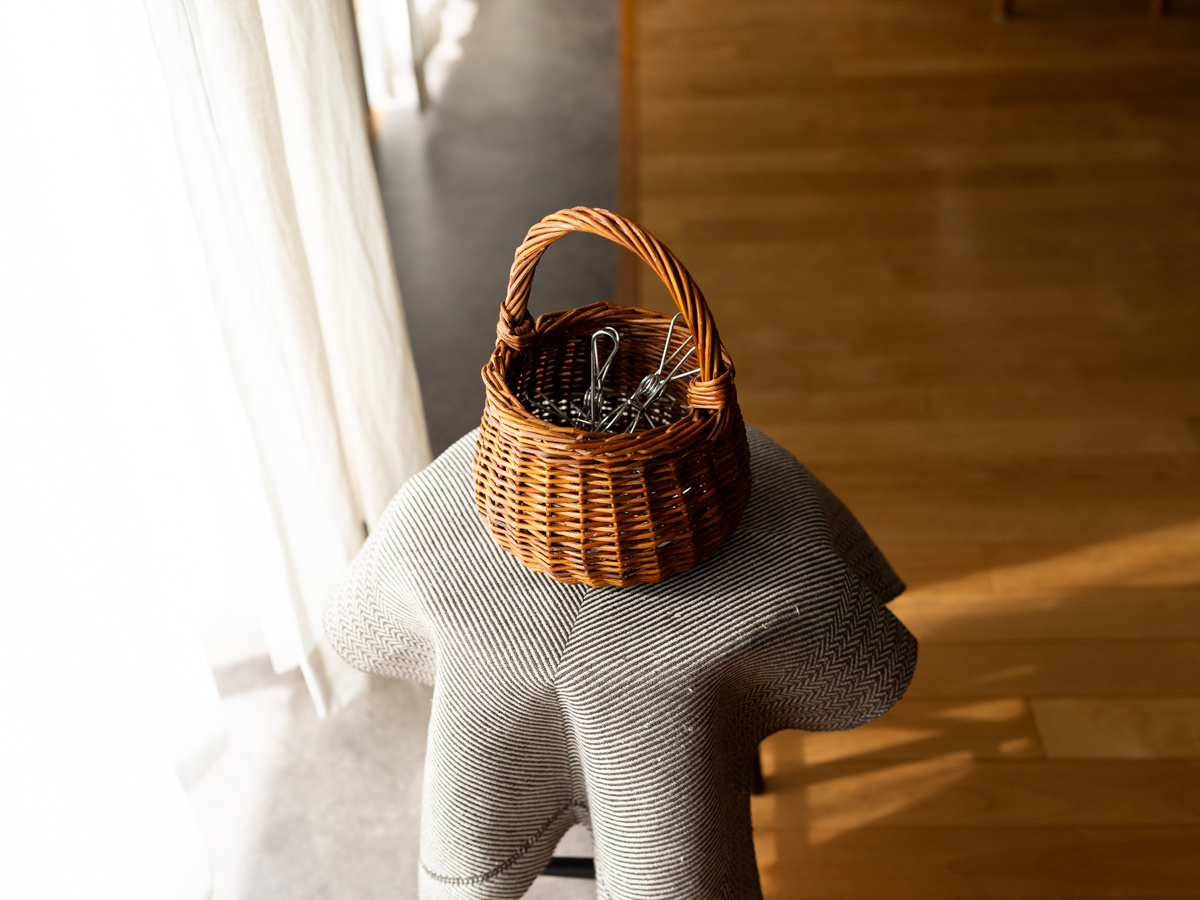
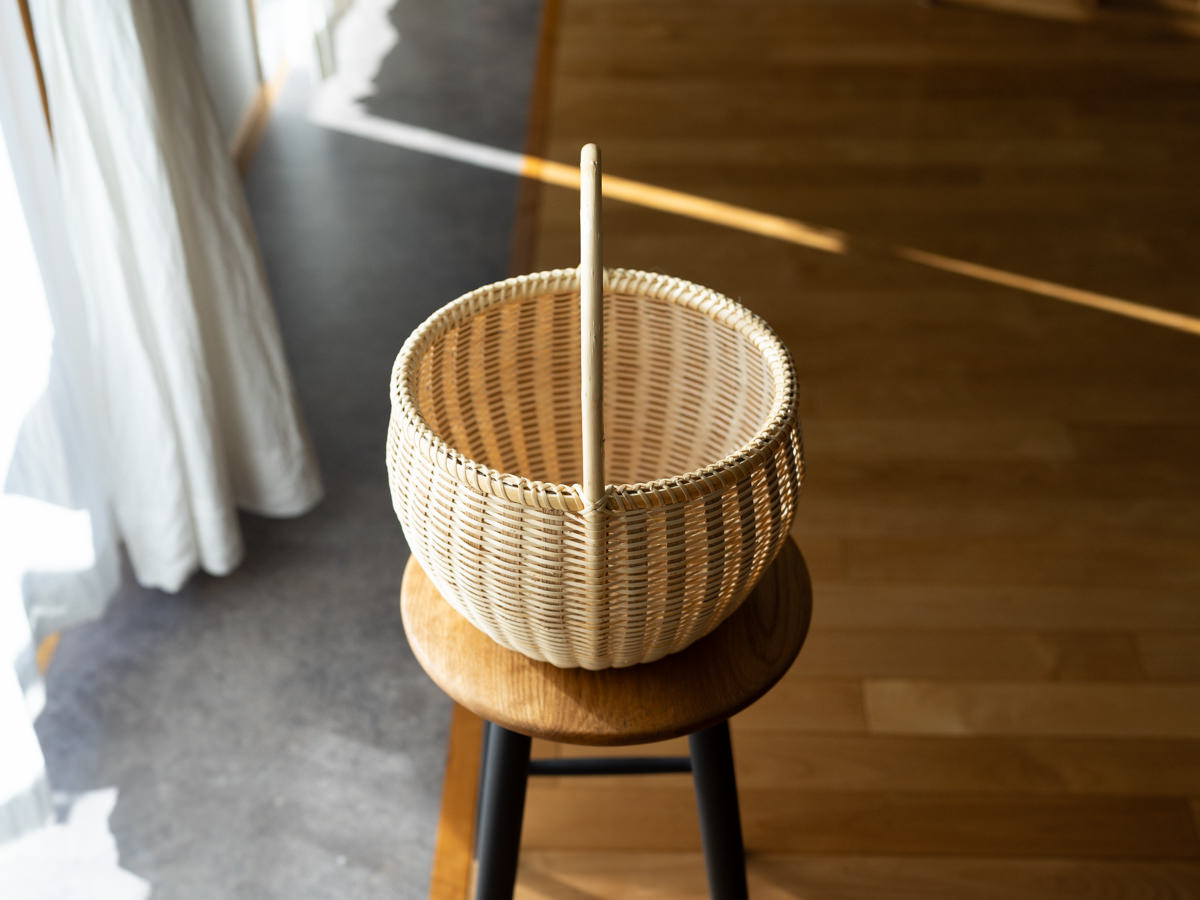
Pinch Basket / S, M 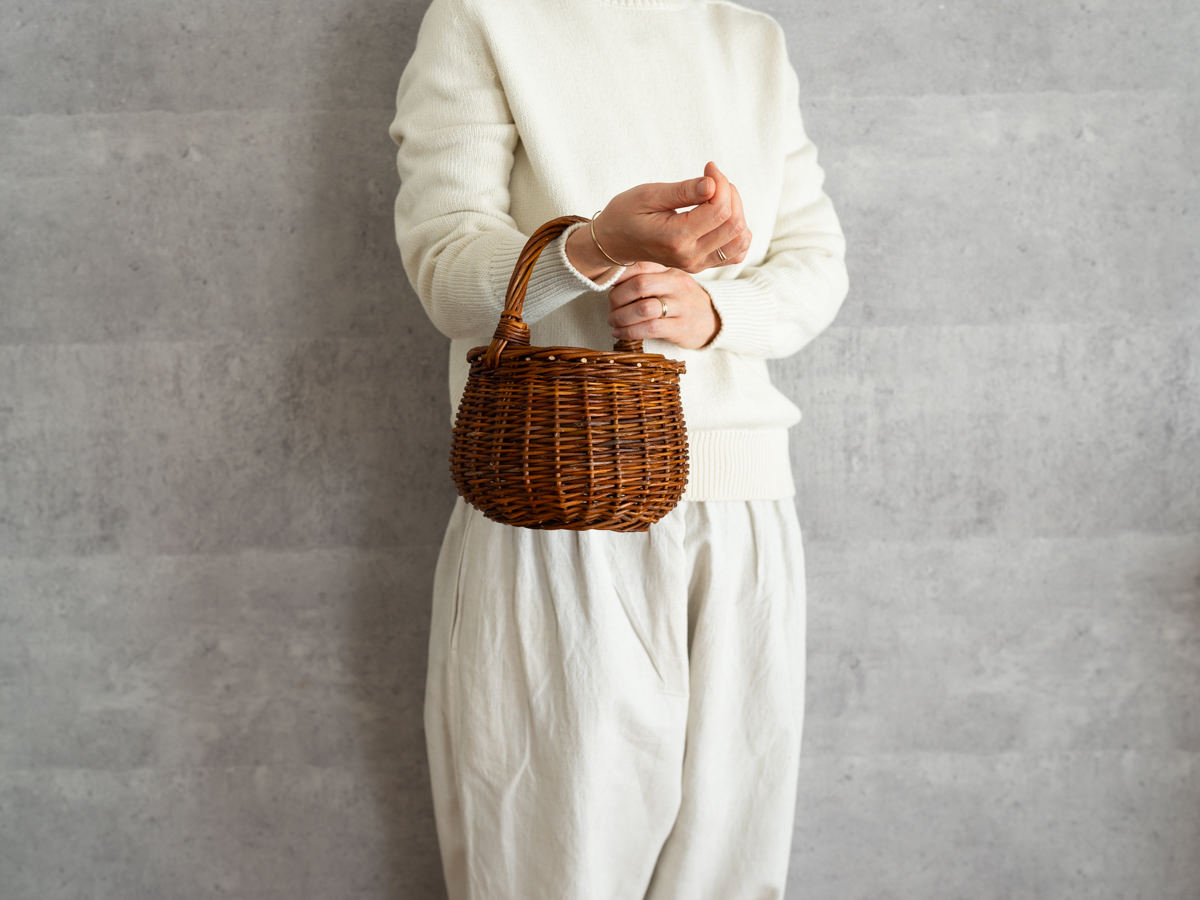
Also suitable for outings with just the essentials. 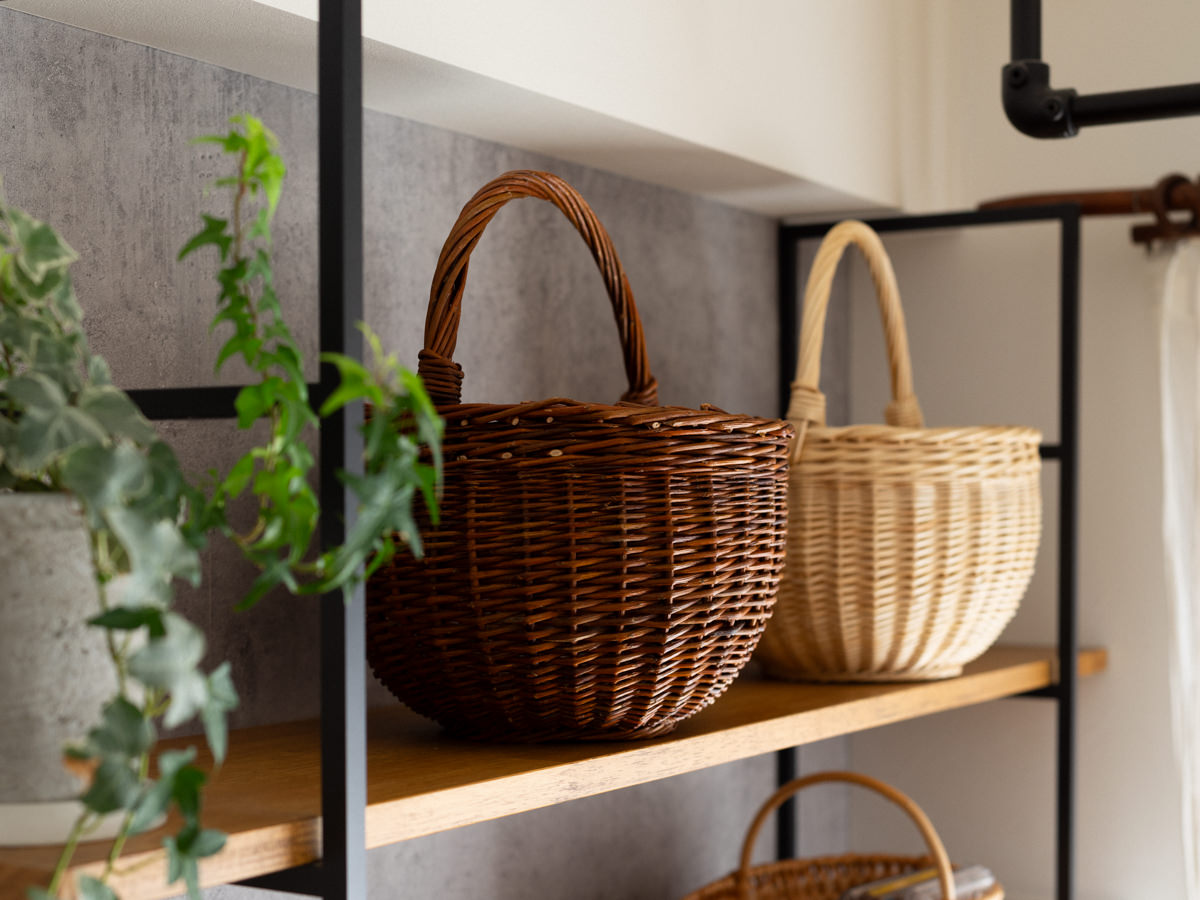
Round Basket / Natural, White 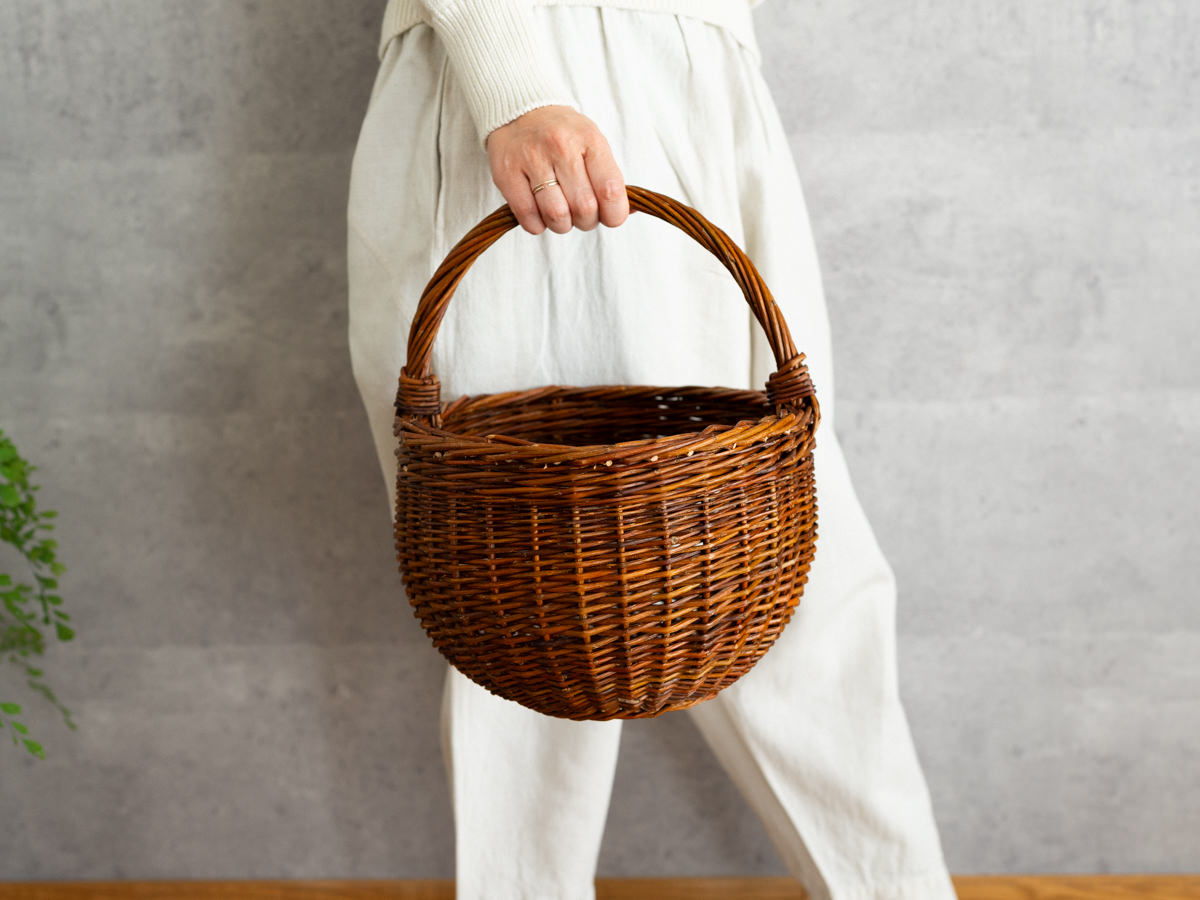
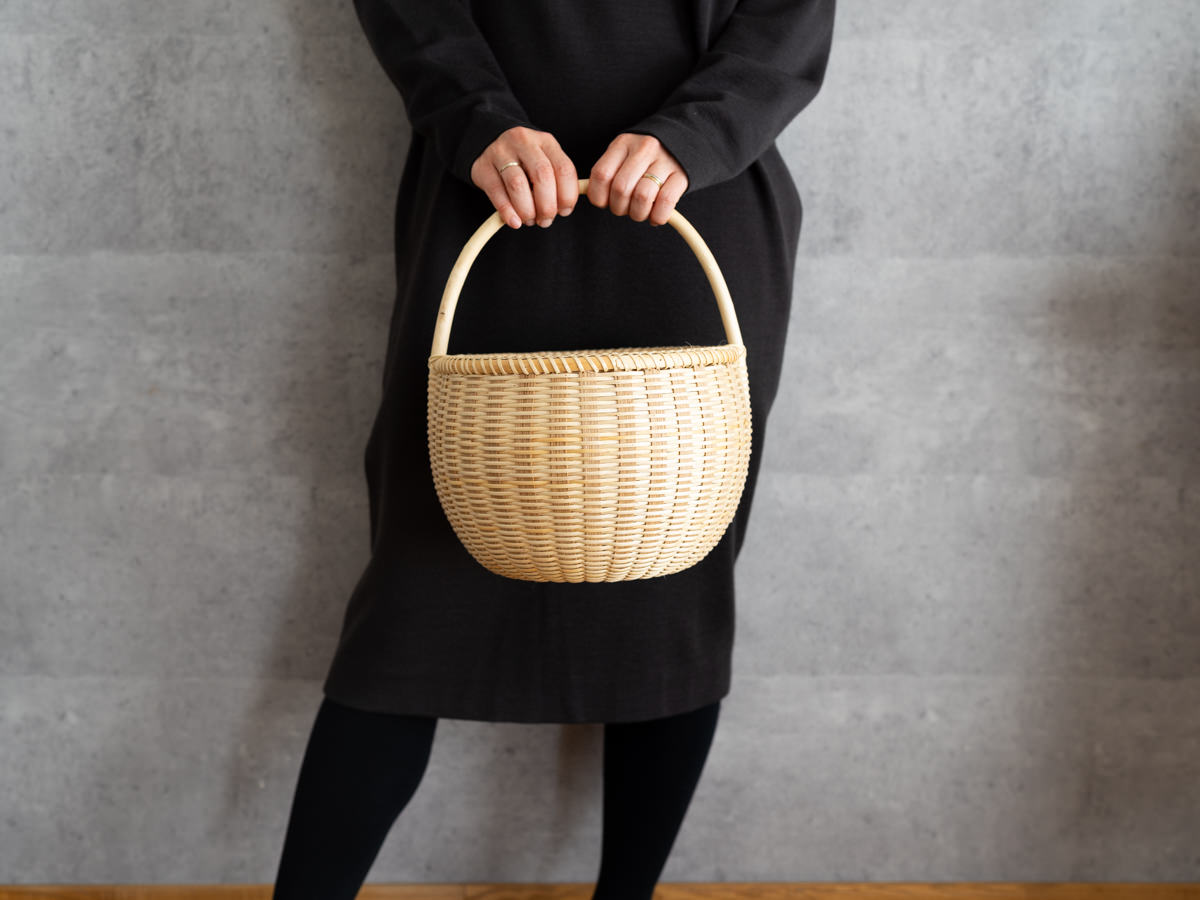
Round Basket “Sphere” / Willow × Oak 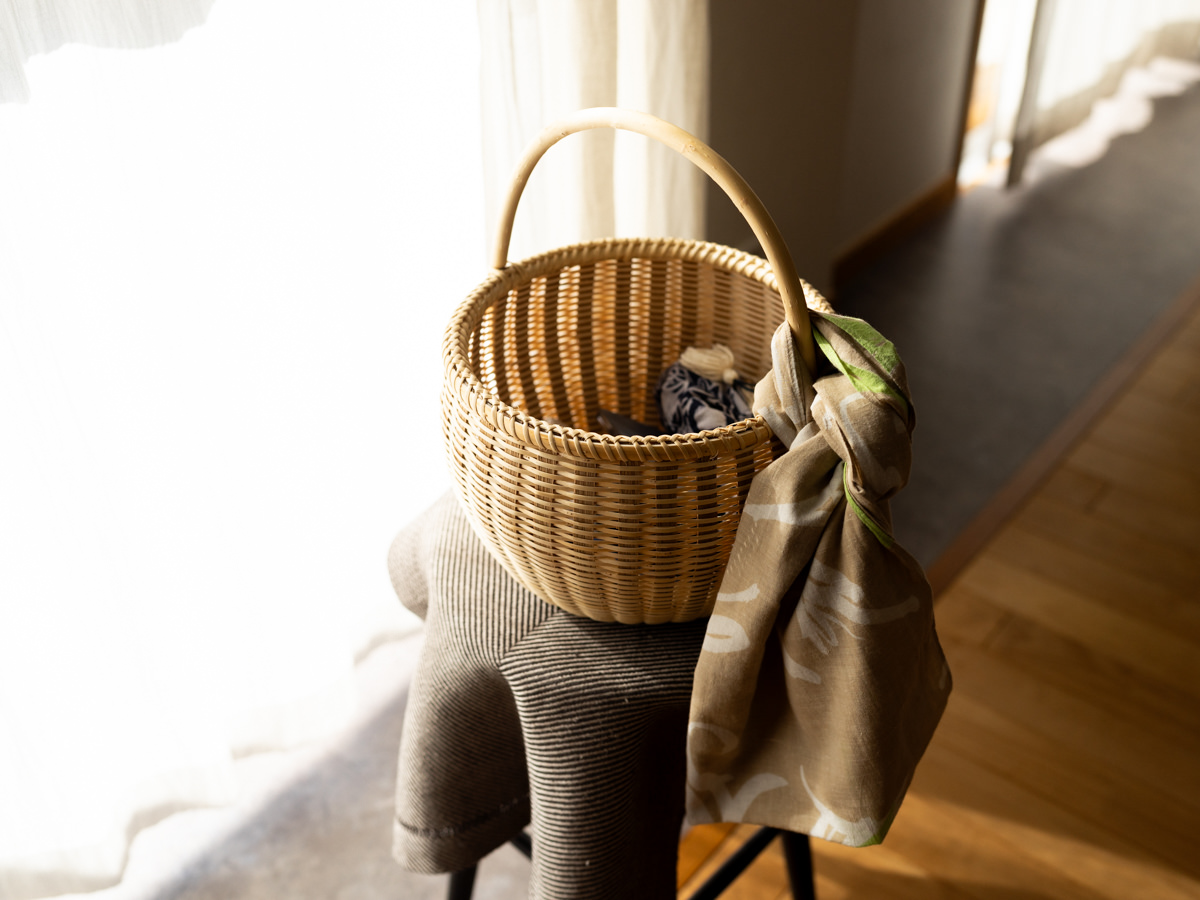
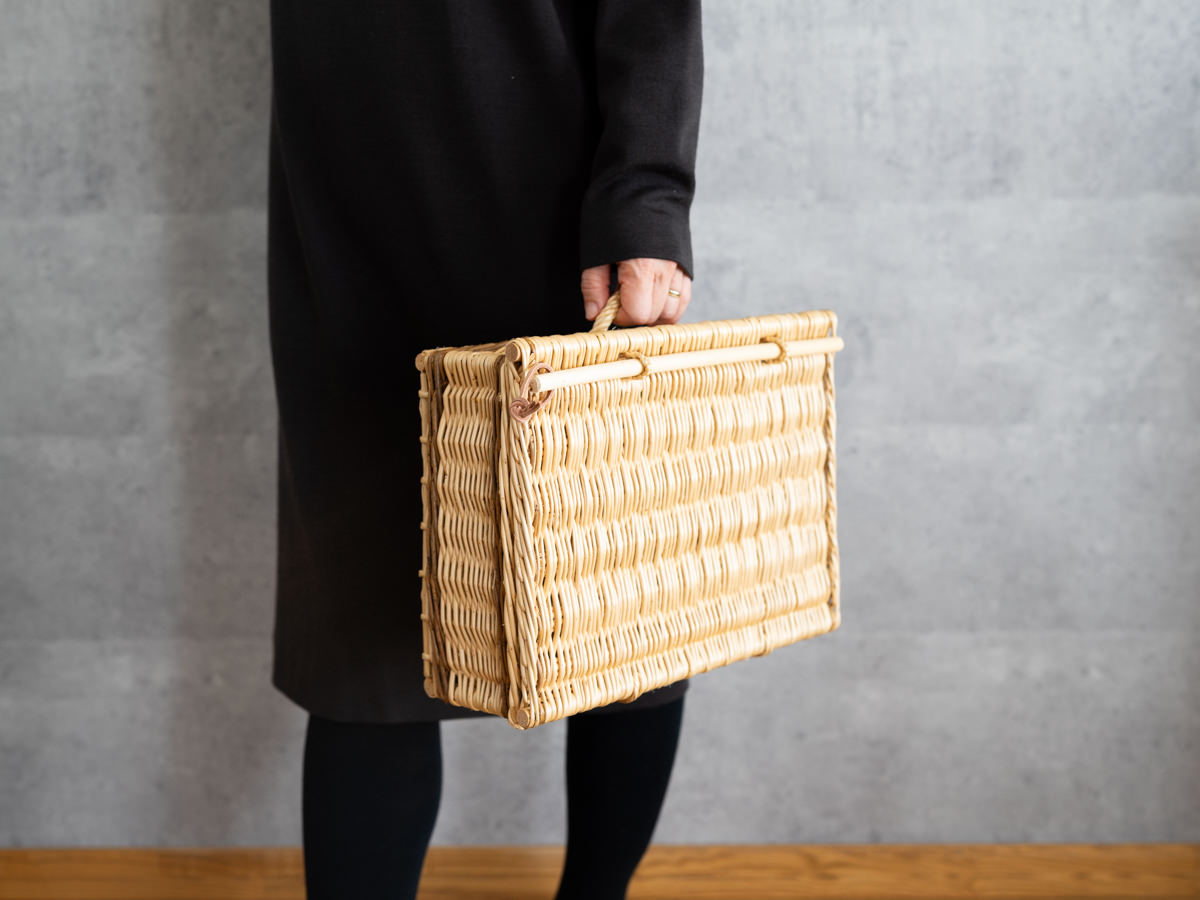
Carry Case Basket / Willow*SOLD OUT 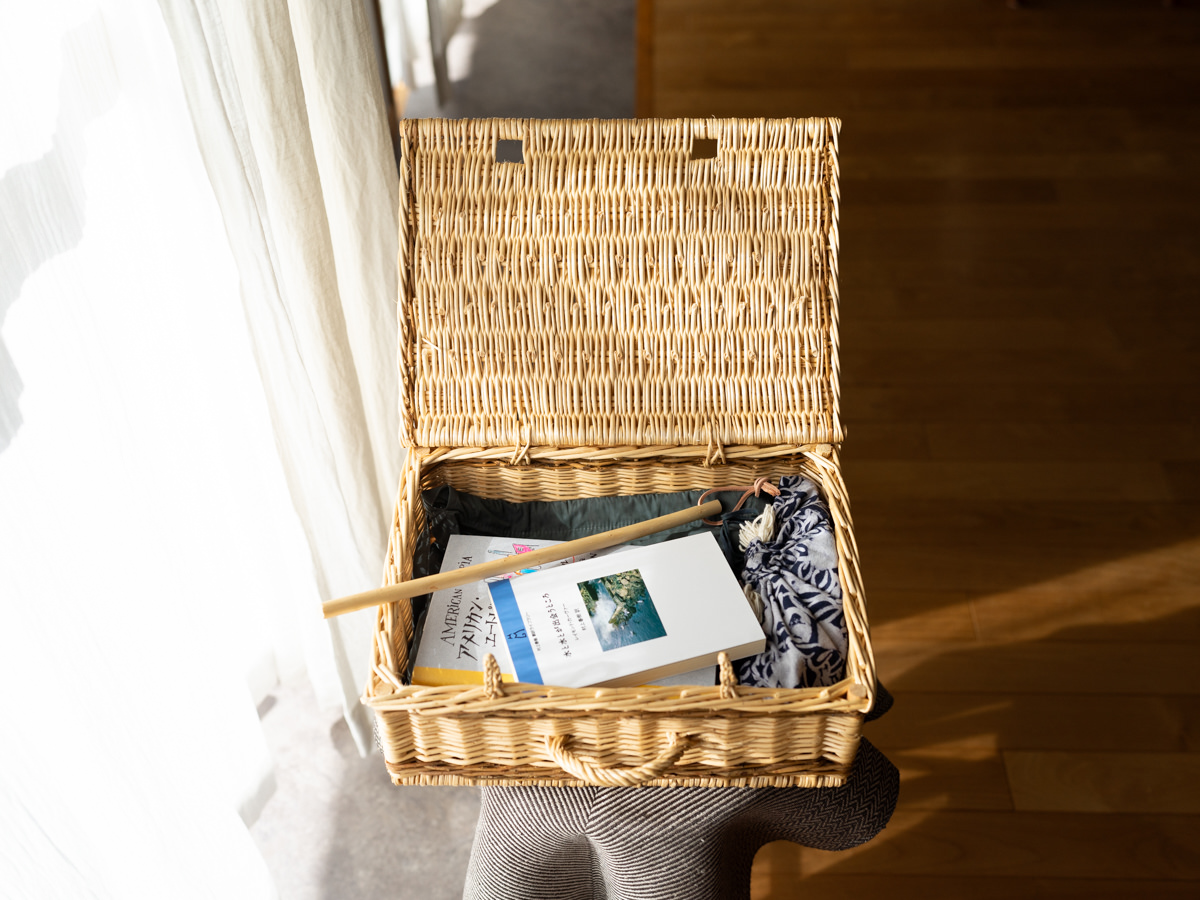
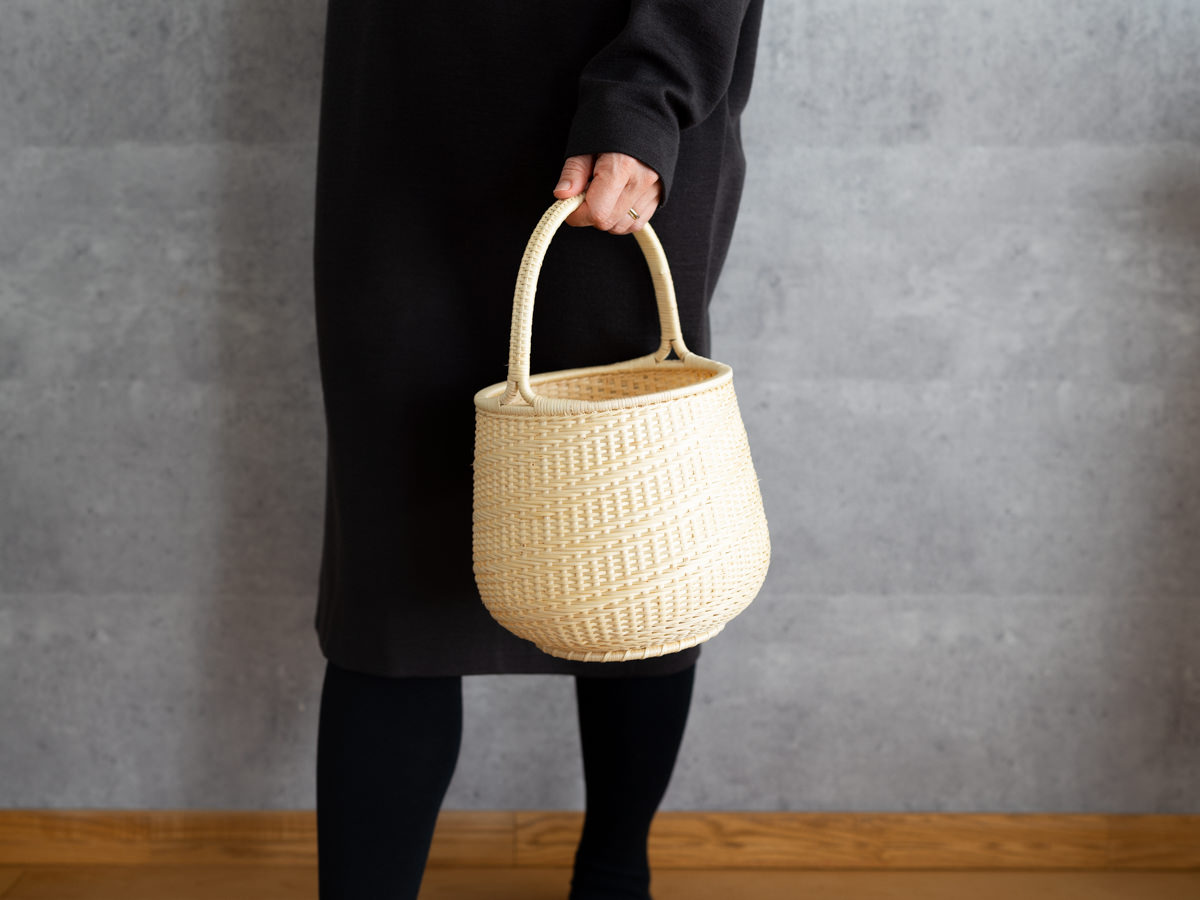
Fine Weave Round Basket “Spiral” / Willow*SOLD OUT 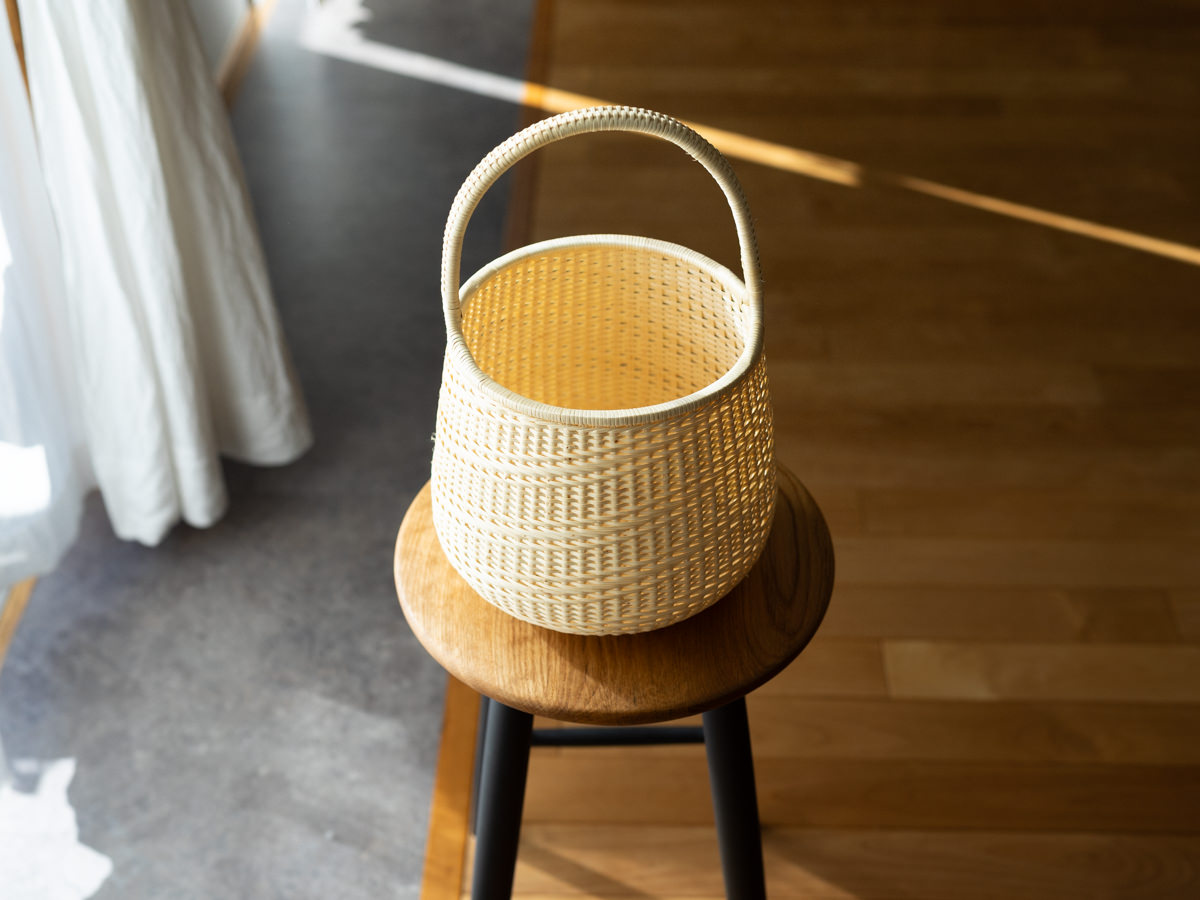
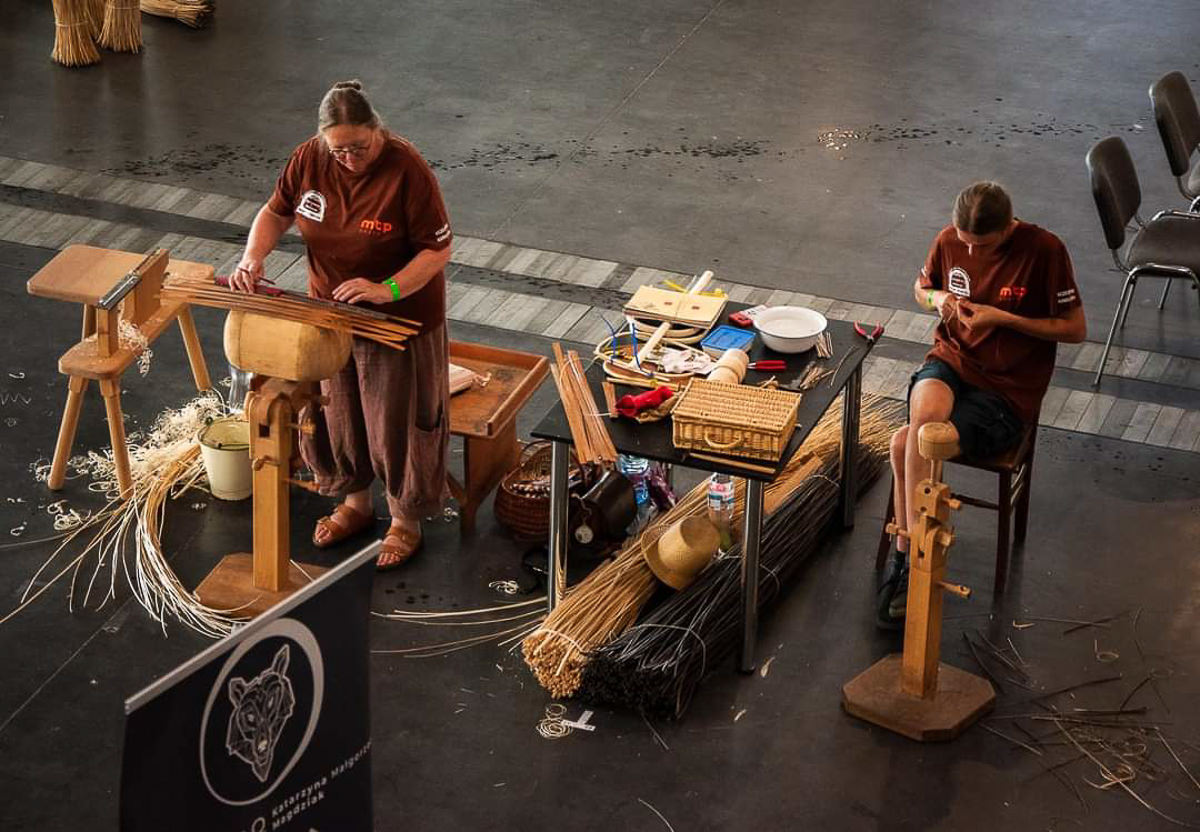
Jeanny and her son Jefke work together under the name
“de Ratelaar” (a Dutch word meaning “one who makes a rattling sound”).
Jefke studied fine basketry techniques under Esmé,
and continues to create a variety of finely woven baskets, with a particular strength in this method.
As a unit, they produce a wide range of baskets,
from traditional willow forms found across Europe
to custom-made pieces commissioned by their clients.
As Jeanny once said,
“from cradle to coffin,”
they respond to a broad variety of requests through their work.
You can explore their baskets in our store and online shop.
The Germany Business Trip Journal is now approaching its final chapter.
To be continued
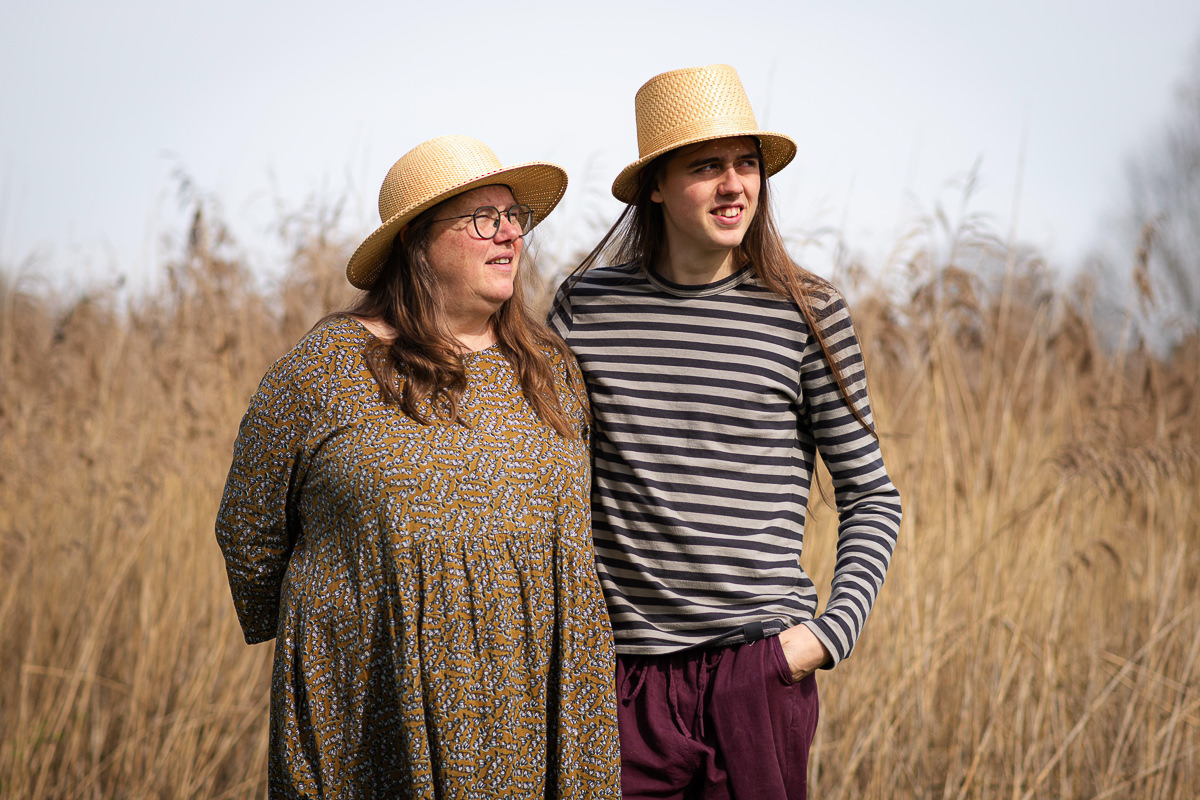
You can also learn more about Jeanny and Jefke from Belgium in the following journal entries.
Please take a look.
An Encounter with Jeanny and Jefke from Belgium (Part 1)
Jewel-Like Baskets from Belgium: Jeanny and Jefke (Part 2)