At the Height of Basketmaking – Dalhausen Museum (3) | Germany Business Trip Journal 6 かご作りが最も盛んだったころ ダルハウゼン博物館(3) ― ドイツ出張記 6
Hello. Continuing from the previous entry,
this is Tomotake Ichikawa, still at the Dalhausen Basketmakers’ Museum.
Basketmaking here began around the 18th century (the 1700s).
As production gradually increased, one cannot help but wonder how these baskets were sold and distributed—
a question that is particularly close to us as a shop that sells baskets ourselves.
This time, I would like to look at the history of Dalhausen
by focusing on the circulation and sales channels of baskets.
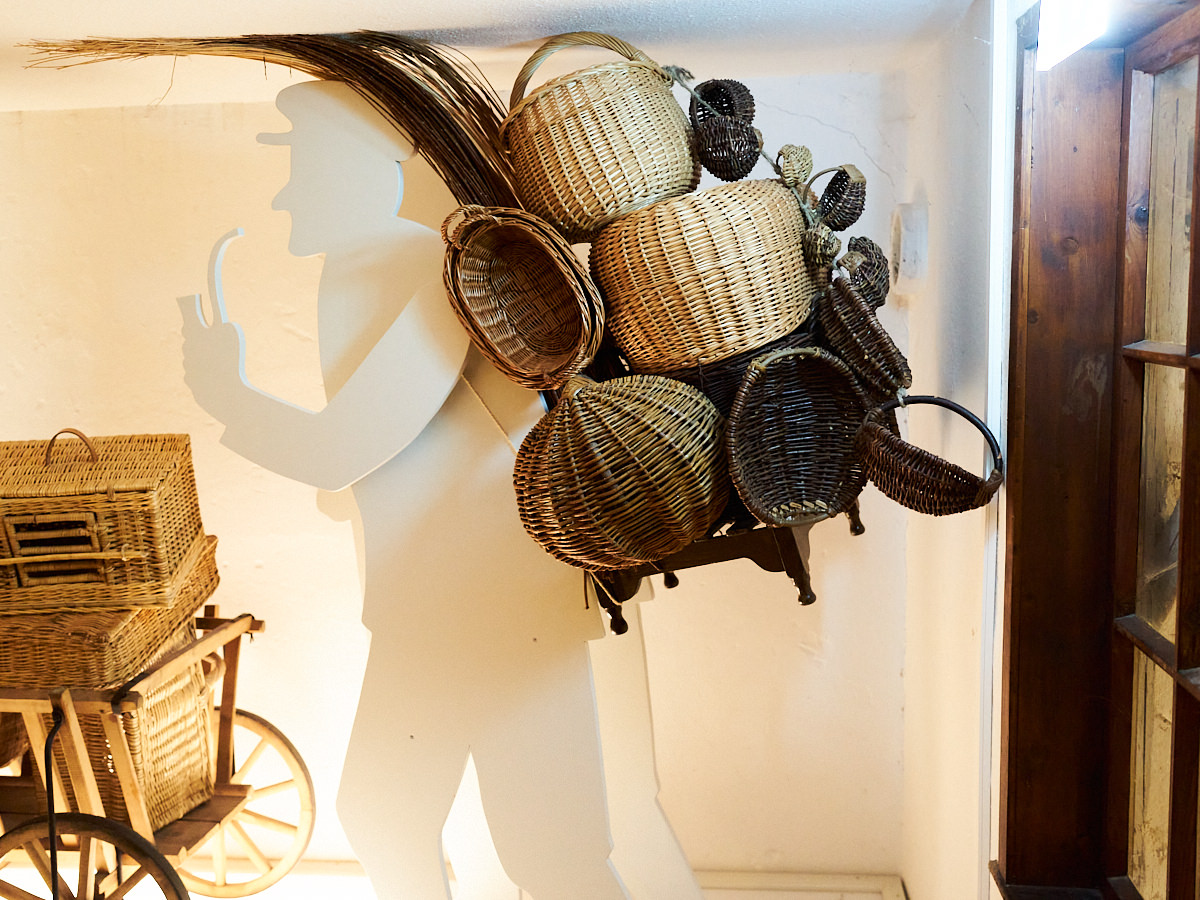
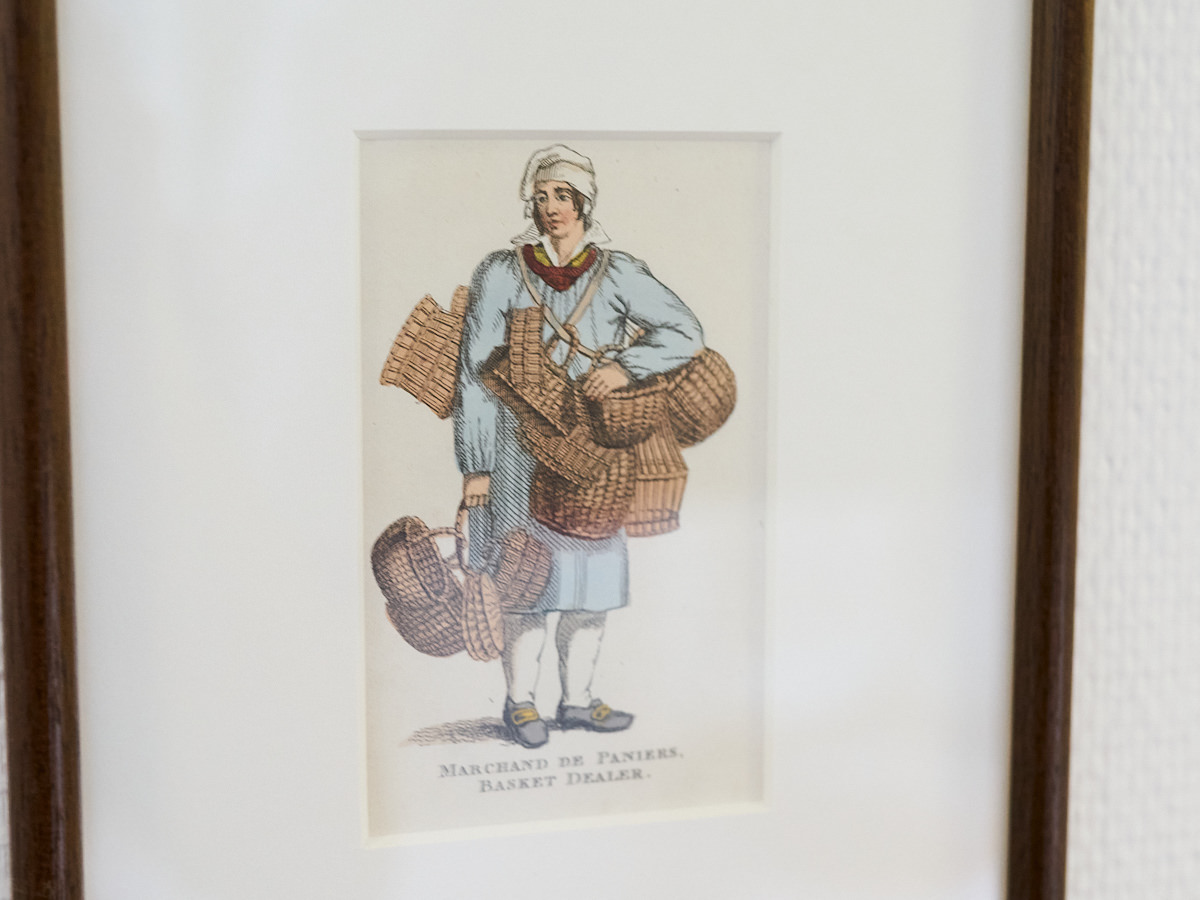
This display presents an image of a basketmaker setting out as a peddler, carrying on his back the baskets made by himself and his family. Along with the baskets, he also carries willow rods. They were likely materials brought along in preparation for repairing baskets previously sold to buyers, should such requests arise. 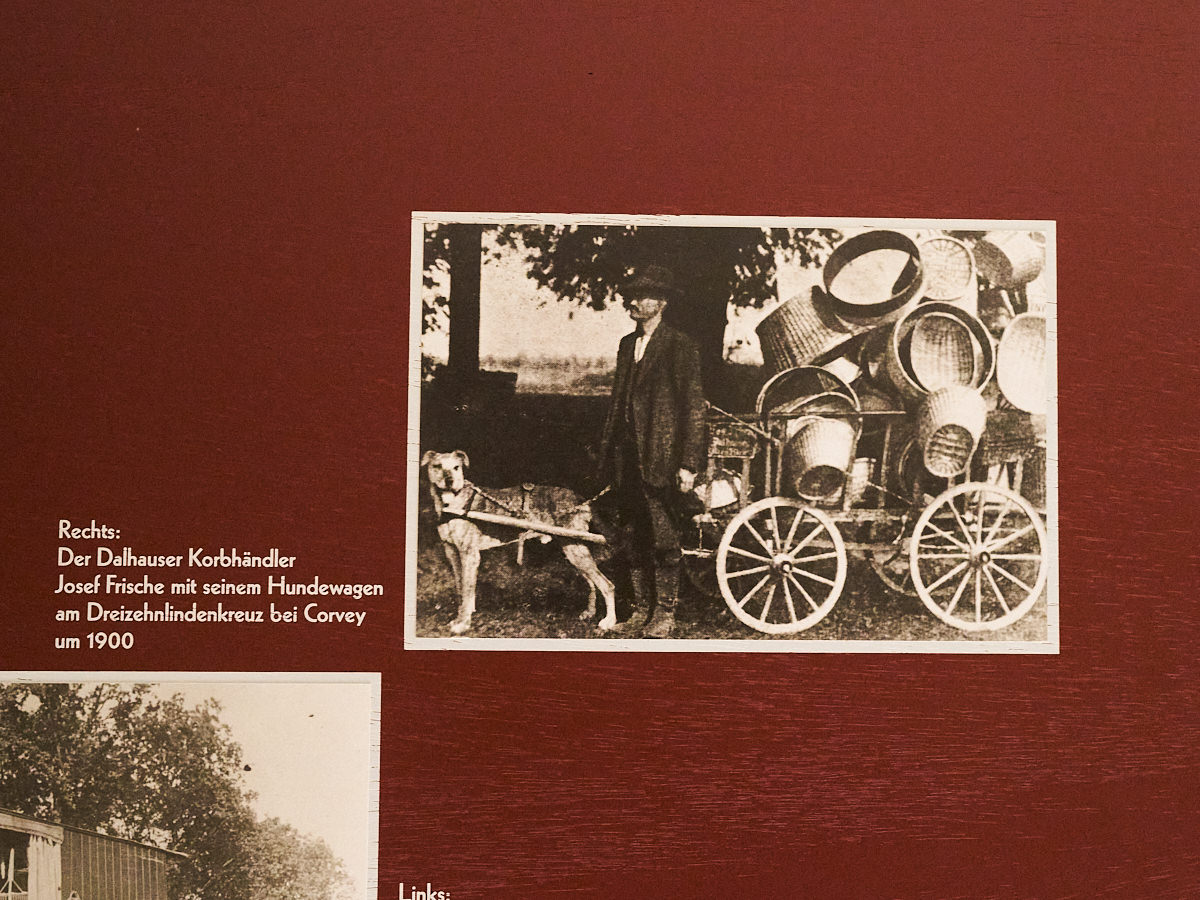
This image, dating from around 1900, shows numerous baskets loaded onto a cart pulled by dogs, on their way out for peddling. 
This photograph, taken in 1930—thirty years after the previous image—shows a similar scene. In addition to large baskets, chairs are also loaded onto the cart. And the animal pulling the load has changed—from dogs to horses. 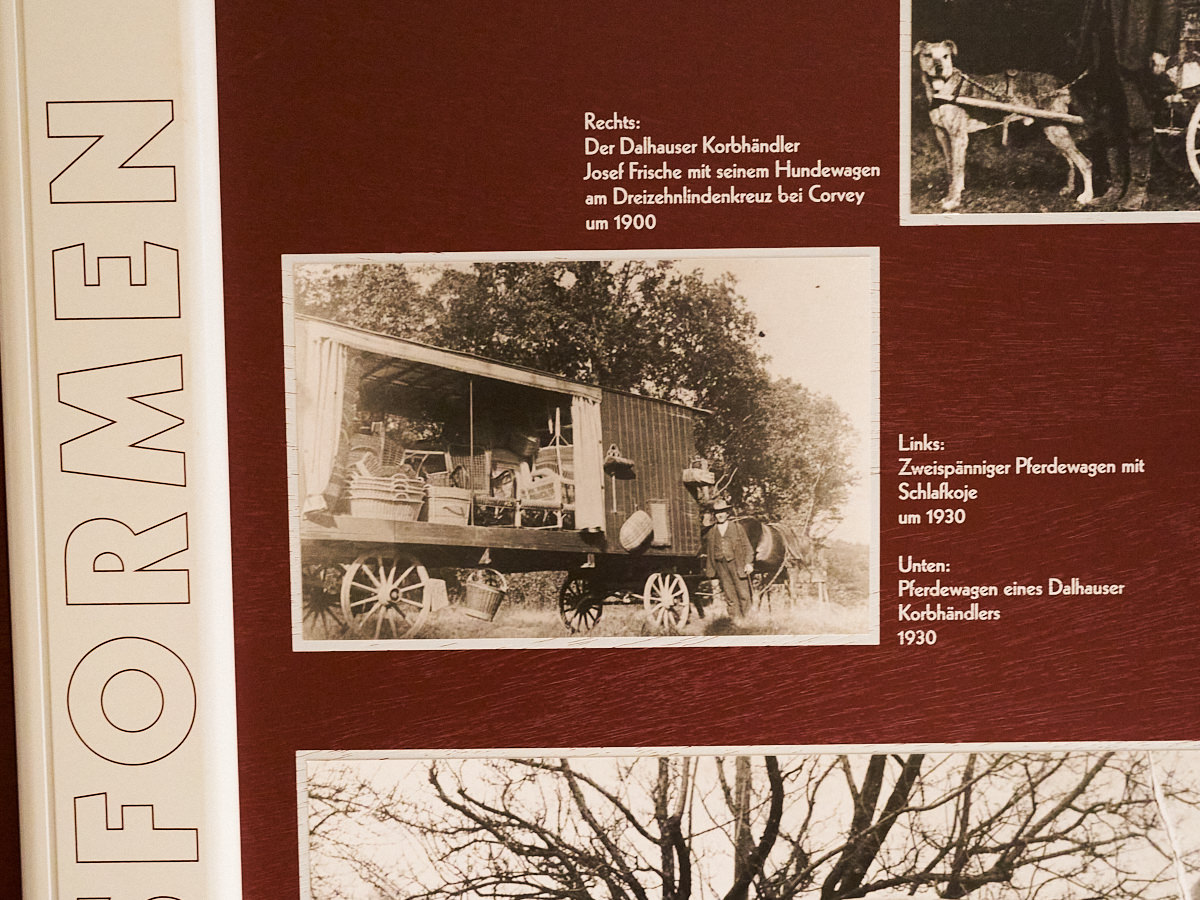
This is another photograph from around 1930. Here we see a carriage drawn by two horses. The carrying capacity has become even greater, and it is said to have been equipped with a sleeping berth. Did they travel across distant parts of Europe to sell their baskets, living and sleeping in this very carriage? From my perspective, it feels almost like a dream. 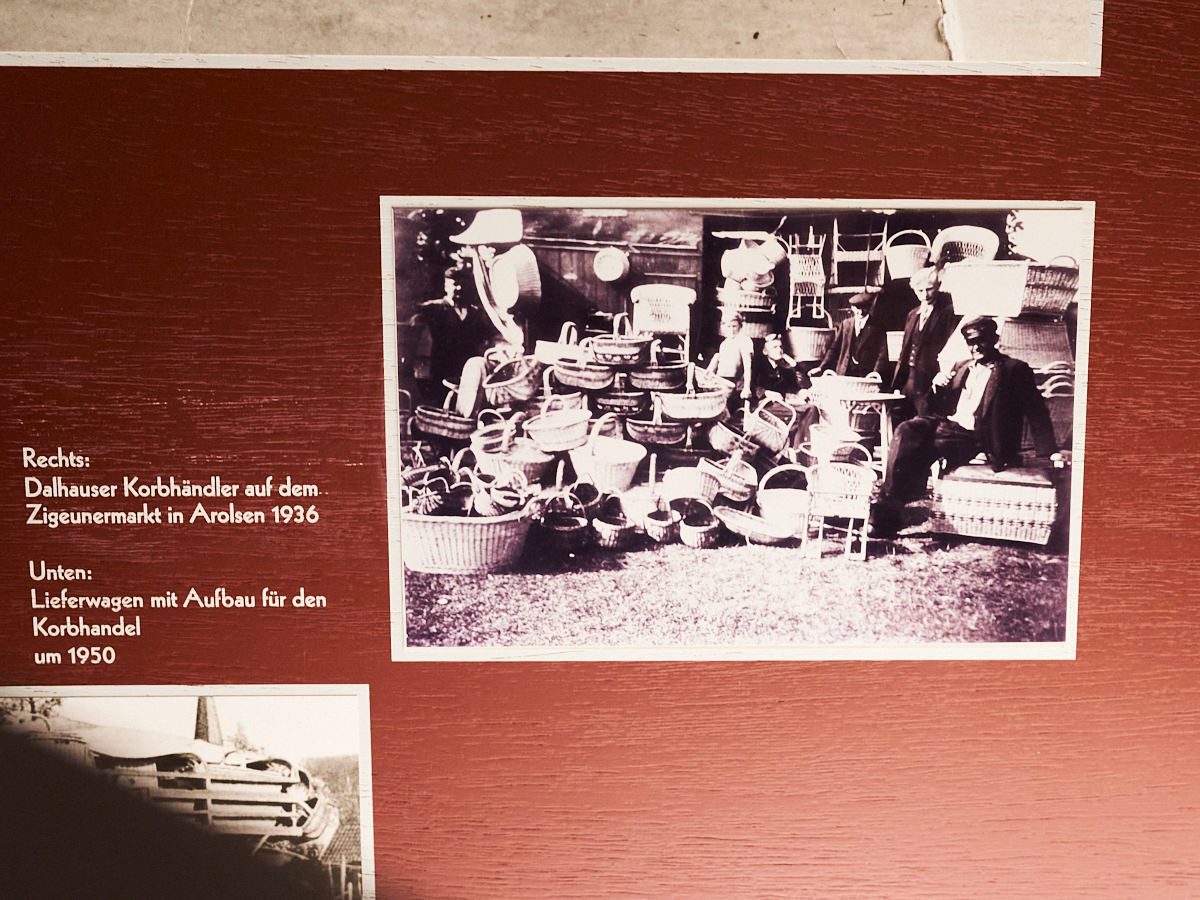
This photograph from 1936 shows a basket merchant selling his goods at a place called the Arolsen Market. A wide variety of baskets can be seen in the image, suggesting that the merchant may have purchased products made by multiple makers and then resold them. By this time, the division of roles between “those who make” and “those who sell” may already have been well established. 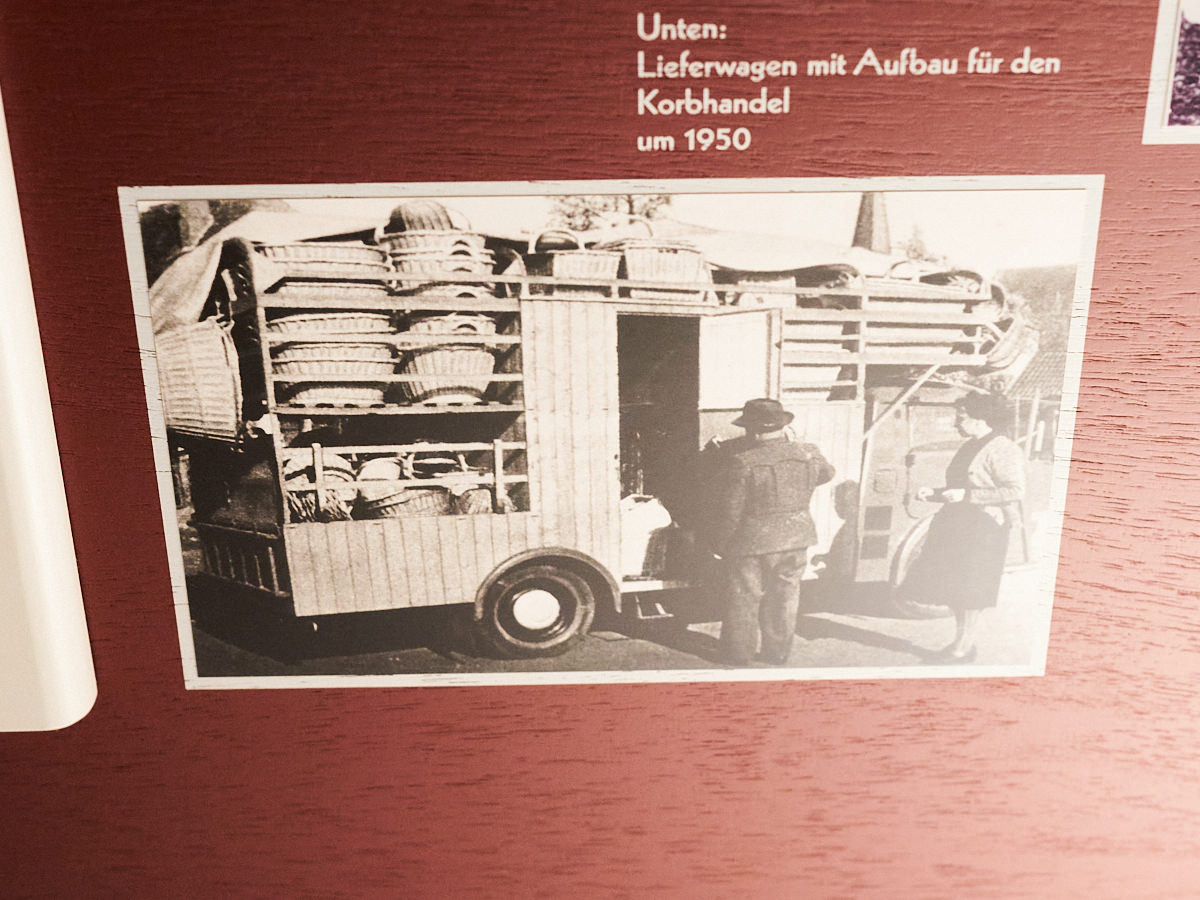
In a photograph from around 1950, a truck makes its appearance.
The baskets are arranged with clear attention to how many can be packed efficiently into a limited space. Remarkable, indeed.
Alongside the expansion of overland trade routes, water transport also developed.
Following the Weser River north from near Dalhausen, one eventually reaches the major port city of Bremen.
Through this waterway as well, numerous baskets were shipped out.
The Weser River that flows through the port city of Bremen continues onward to the North Sea.
Baskets made in Dalhausen and transported to Bremen then crossed the sea and were exported to America.
In the 1800s, as the population increased, fellow townspeople and family members who had emigrated to America
received these goods locally and took on the role of selling them.
This overseas trade became a major driving force that elevated basketmaking in Dalhausen into a large-scale industry.
At the same time as willow basketmaking flourished, furniture production using “rattan,” imported from Southeast Asia, also became increasingly active. 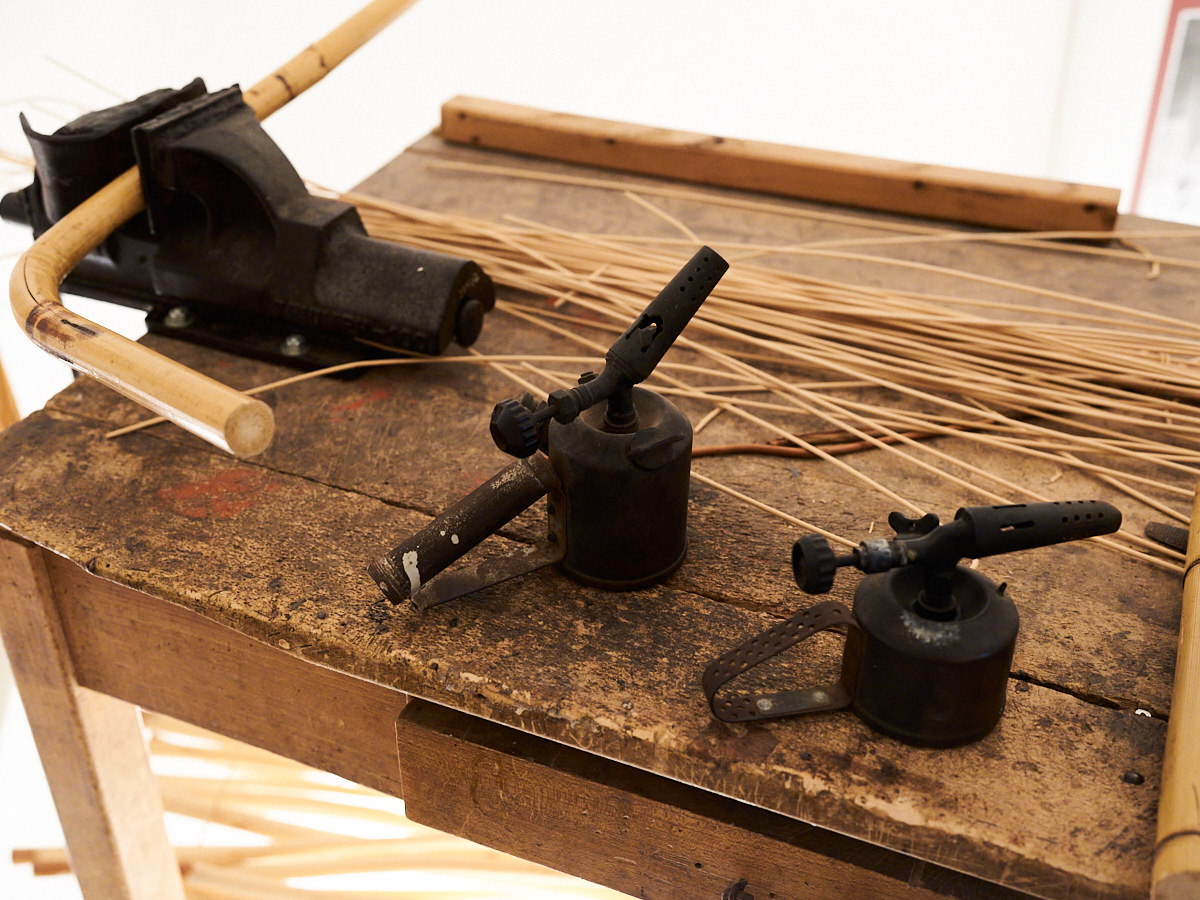
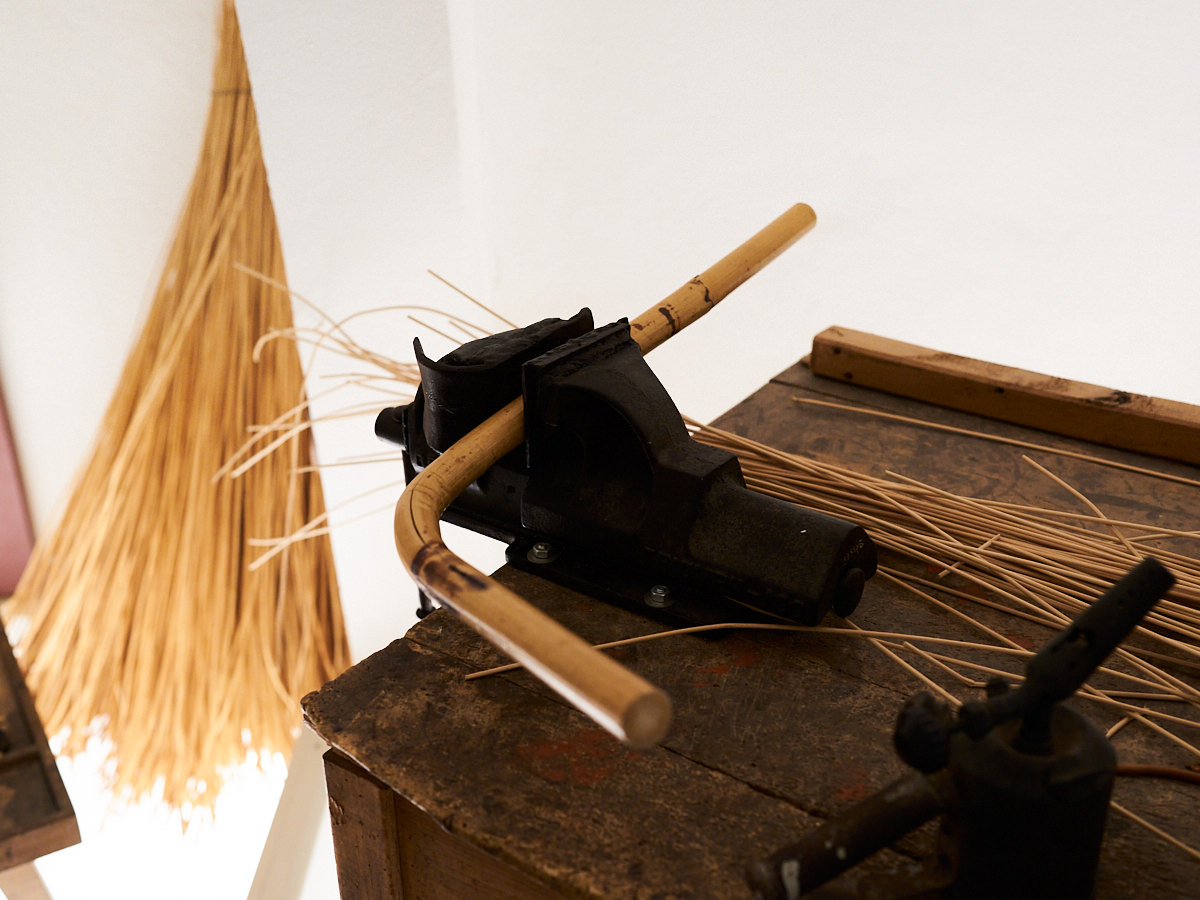
Tools such as burners were used to apply special processing to rattan—heating and bending it to form the arms and structural frames of chairs and shelves. 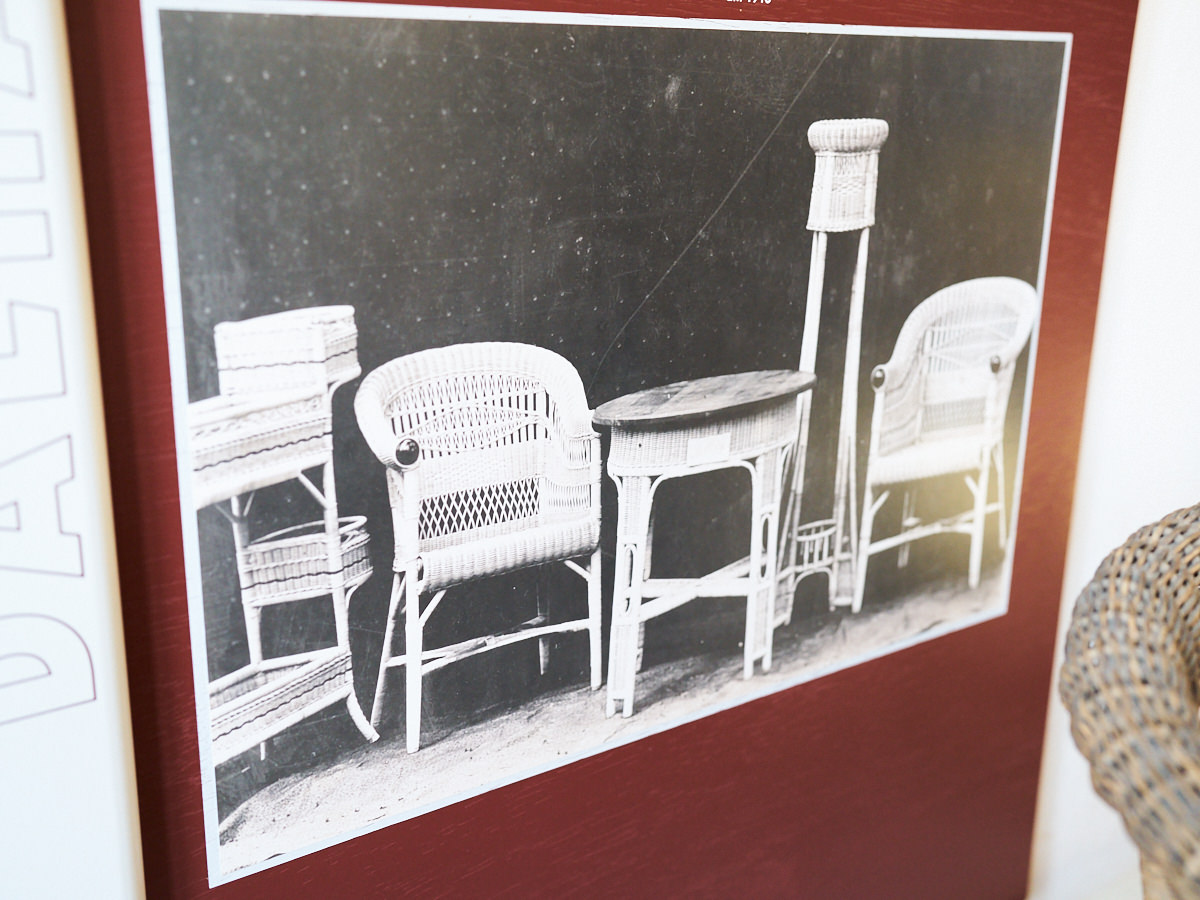
In Dalhausen, the making of rattan baskets and furniture gradually became one of the town’s principal industries. 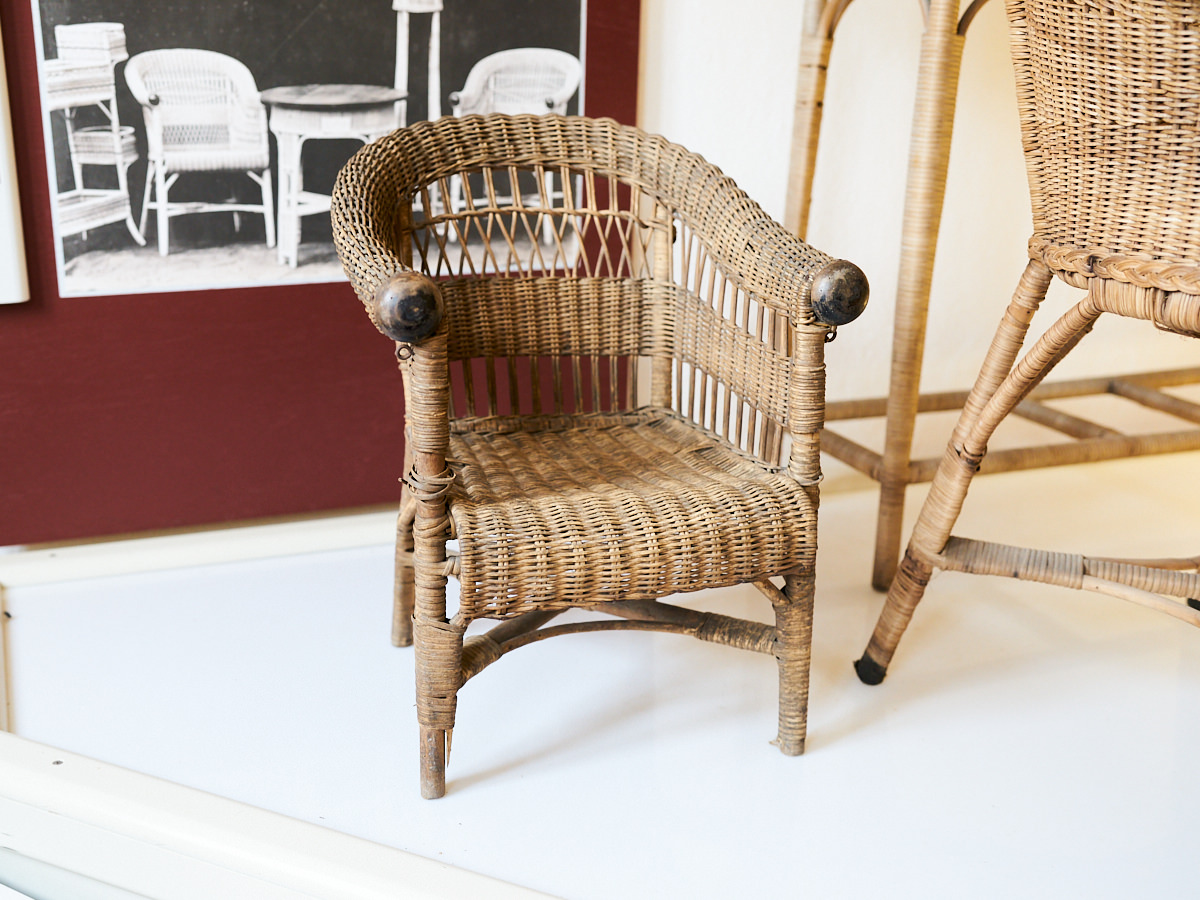
This is a child’s chair made of rattan. 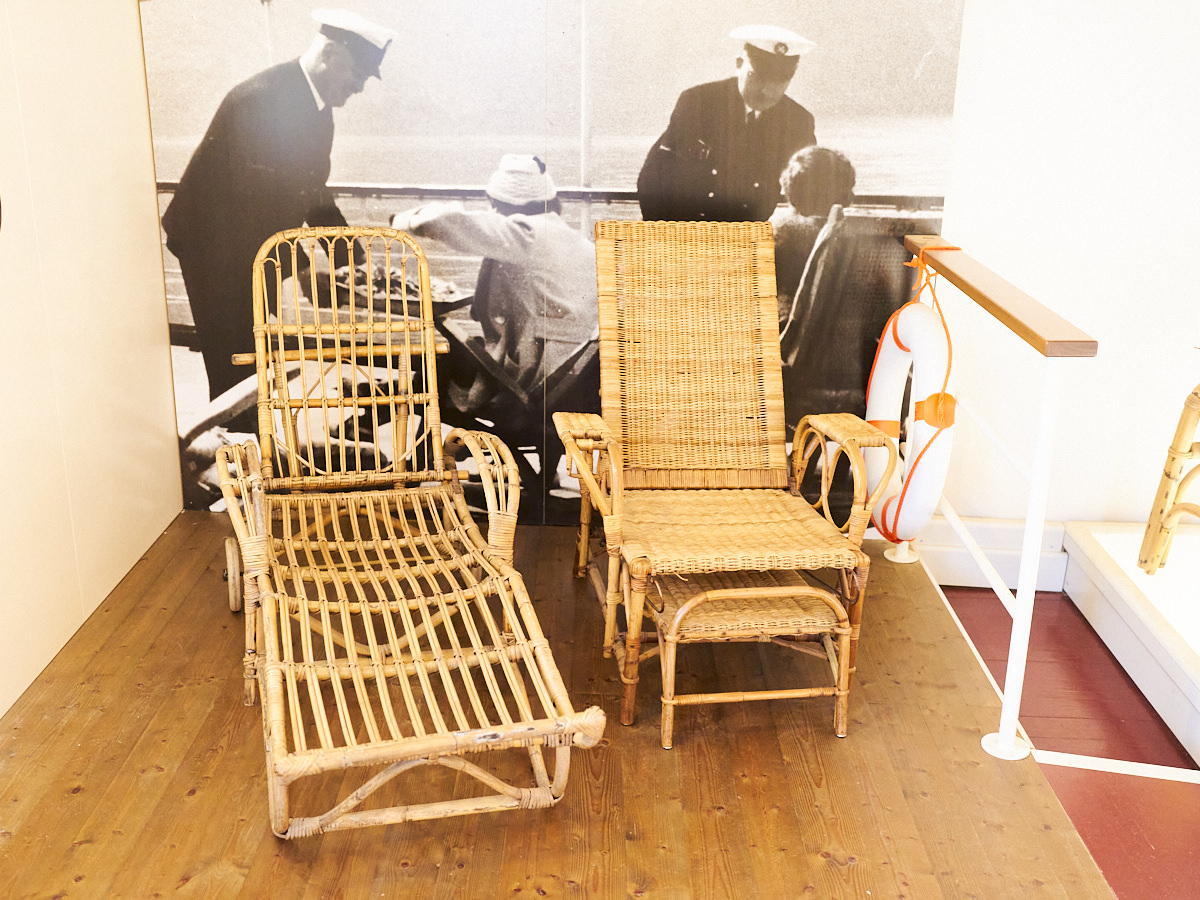
This is a deck chair that was used on ships. Because the outer skin of rattan repels water and is resistant to mold, it was likely well suited for use on board. 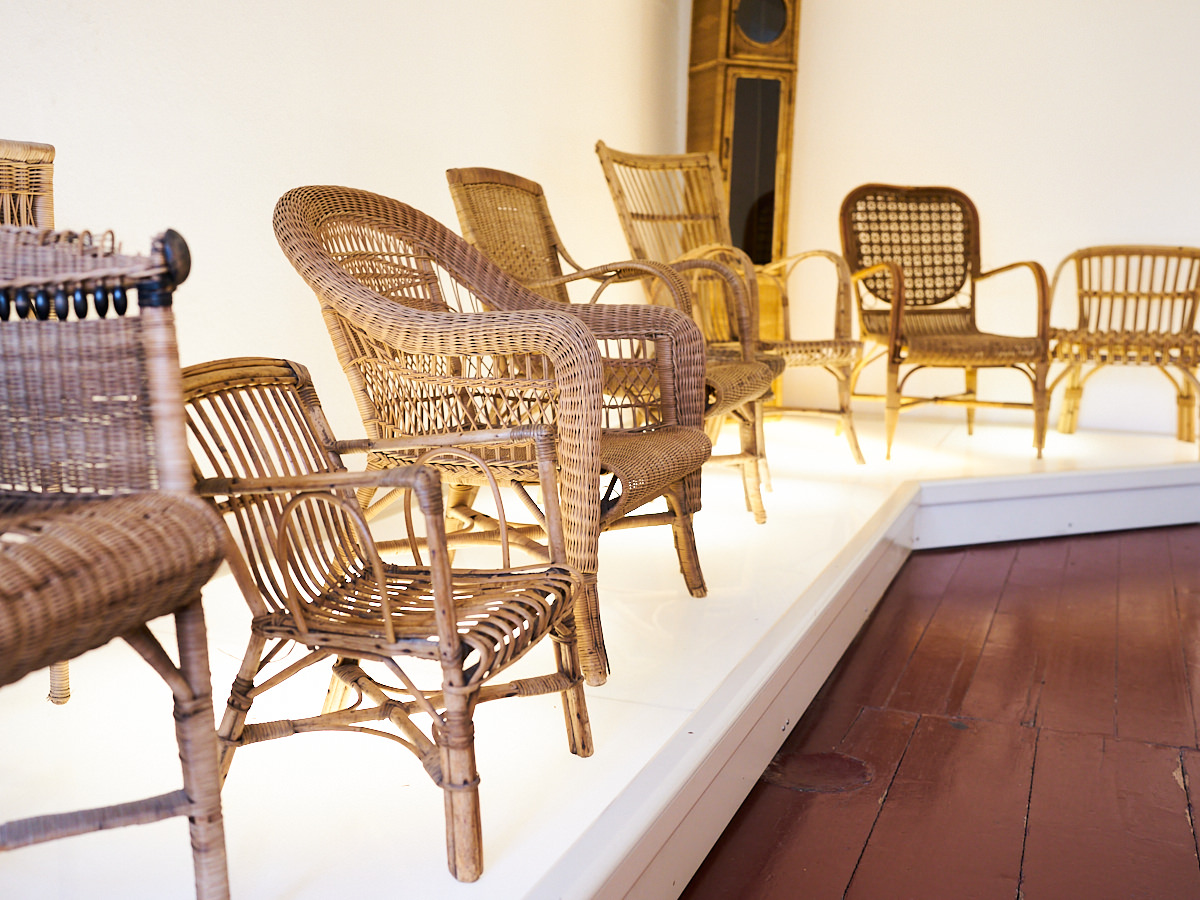
Among the various types of furniture, chairs appear to have been produced in particularly large numbers. Although none of the exhibits can be touched, they look so finely crafted and solidly built that they seem as if they could still be used today. 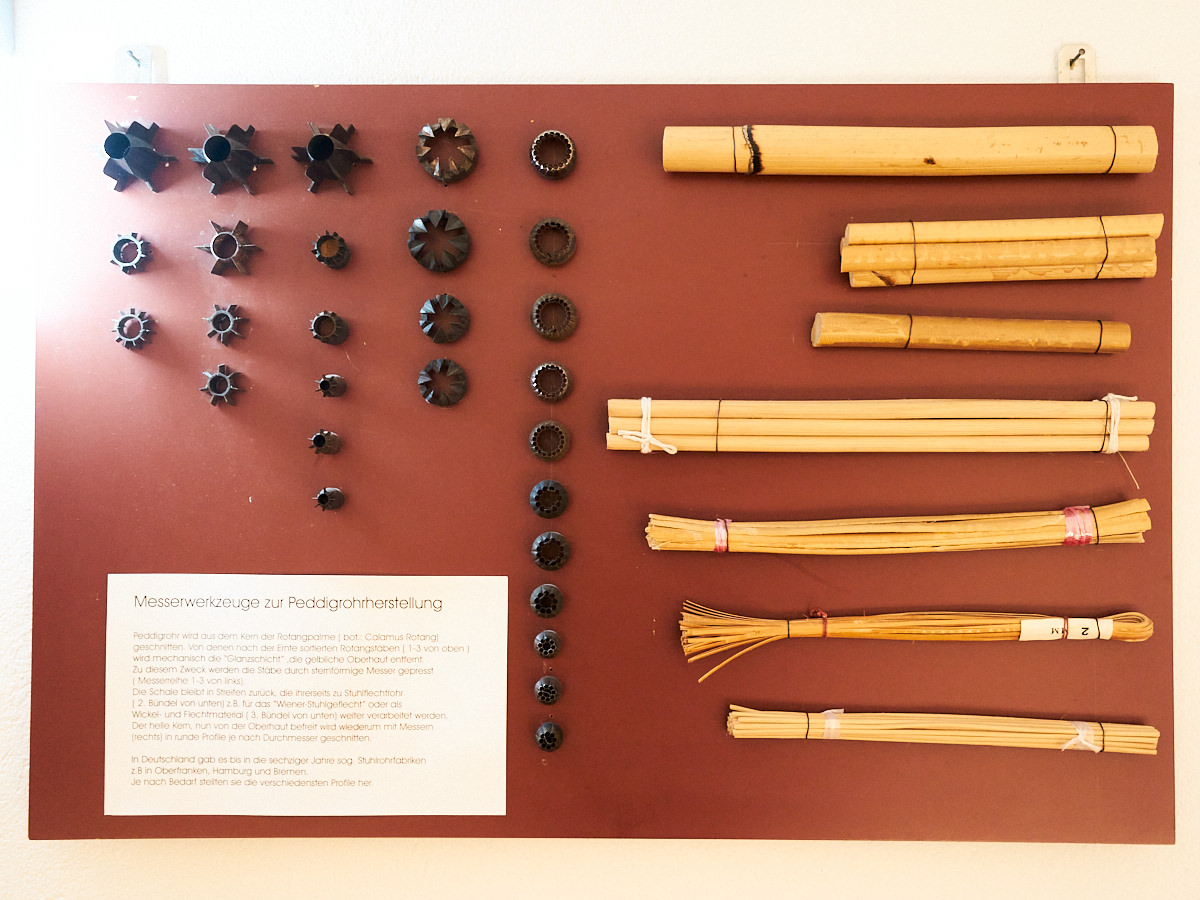
On the left are tools used to process rattan, and on the right are samples of rattan materials. Even within the same rattan, different parts and thicknesses were selected and used to produce a variety of materials. For example, the outer skin was used for wrapping edges, while the core (the thicker inner cane) was used for chair backs and structural frames of furniture. At the height of the industry, there were even factories specializing in the production of such rattan materials. 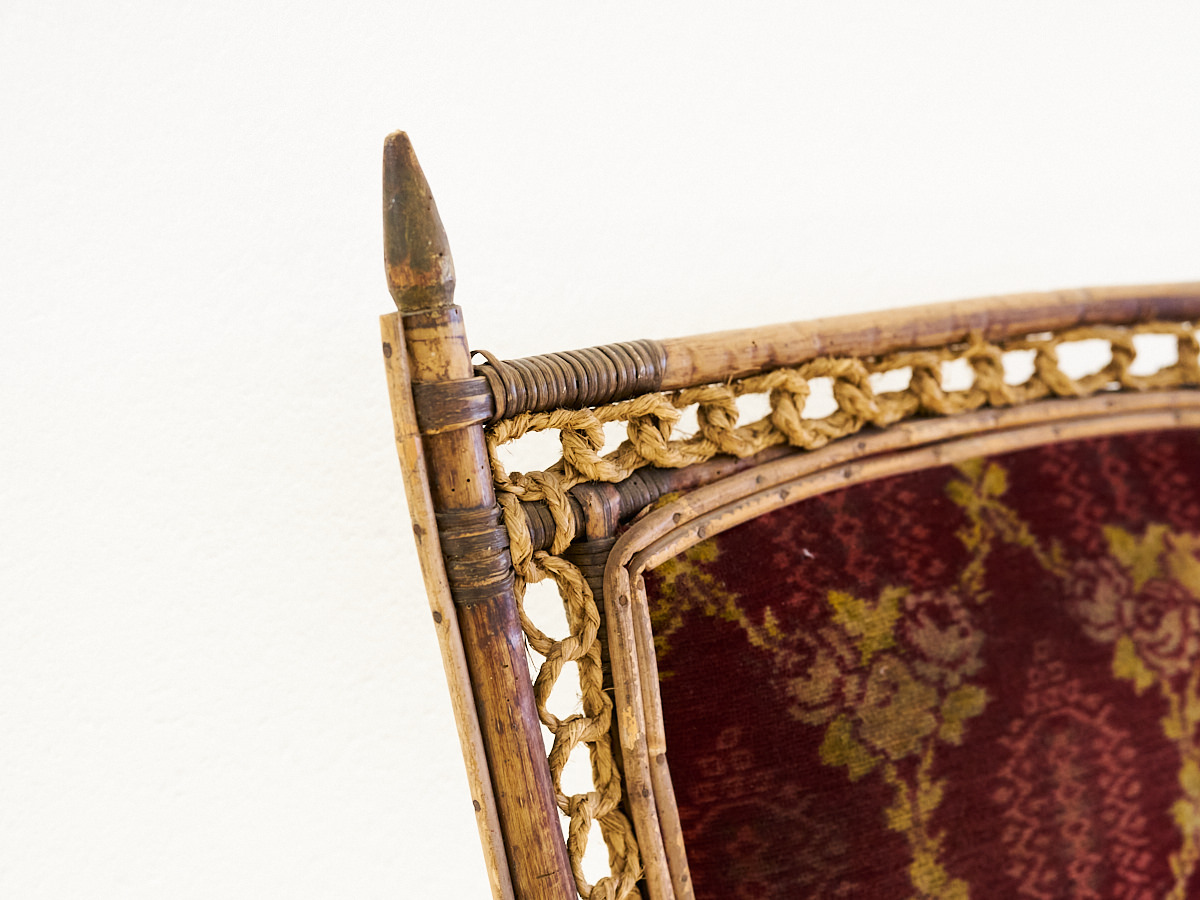
As seen in the photograph, the thick core forms the structural frame of the backrest, while the outer skin is wrapped around the joints and combined to secure the connections. 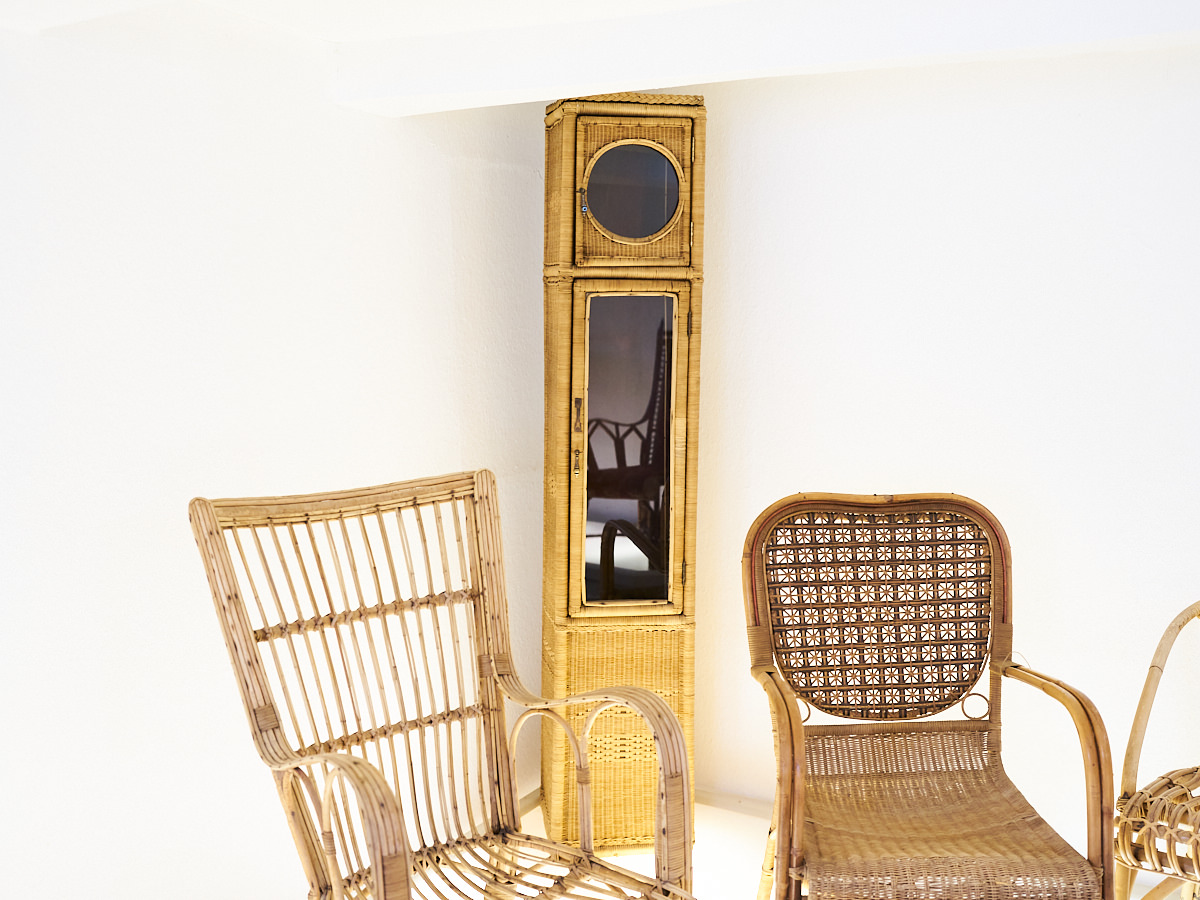
The cabinet in the center…! Although it lacks the clock face and pendulum, could it be the frame of a grandfather clock—like the one in “My Grandfather’s Clock”? This, too, is made of rattan. 
There are also pieces resembling bottle baskets. 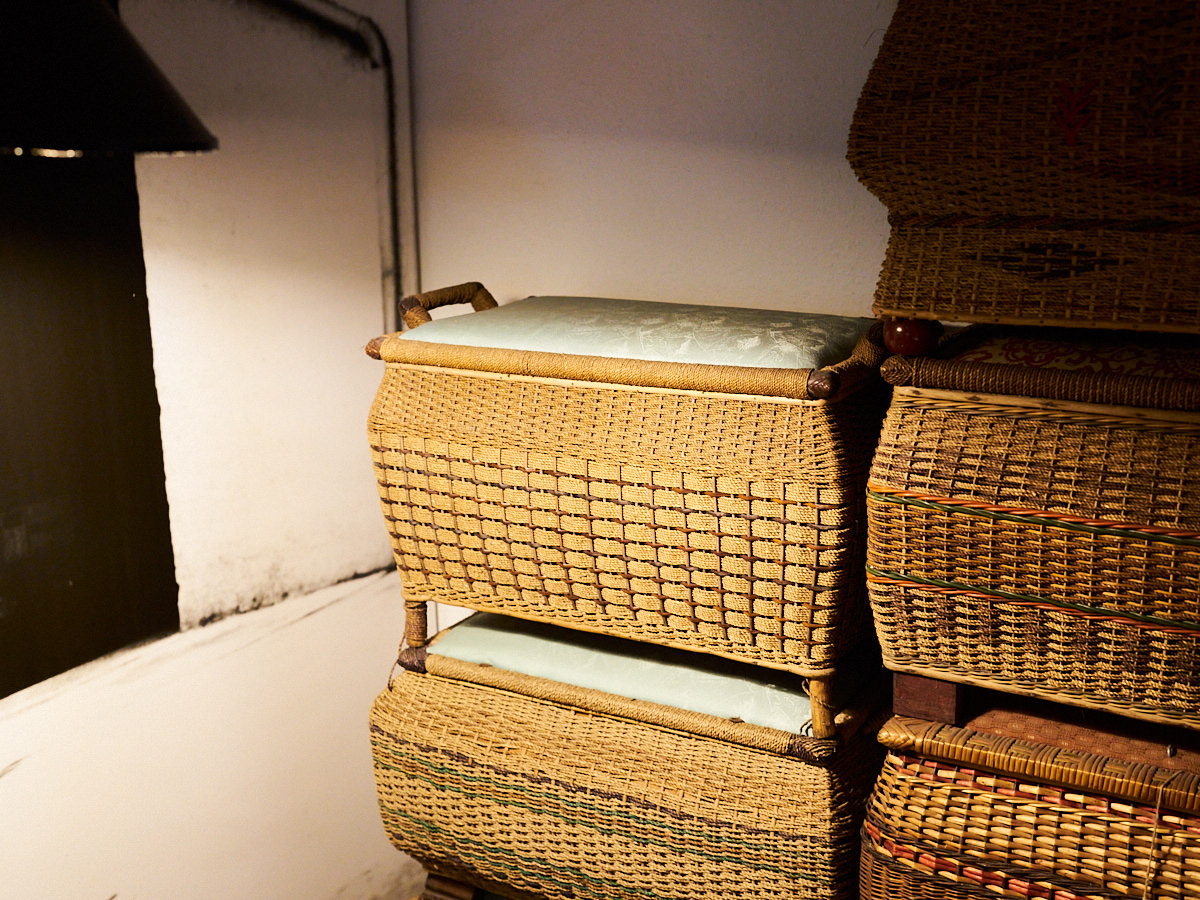
This is a storage stool with a cushioned seat. 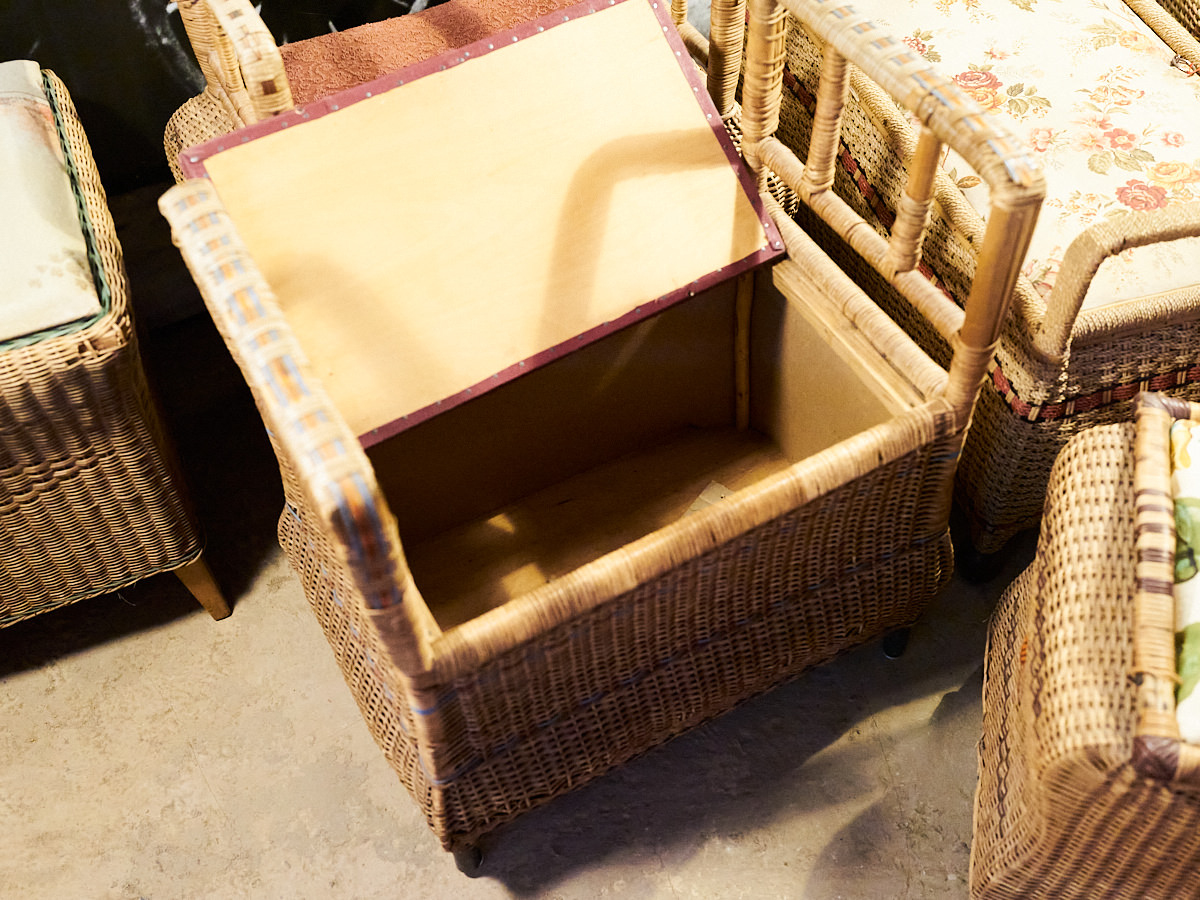
The seat of the stool also functions as a lid, and when opened, reveals a storage compartment inside. 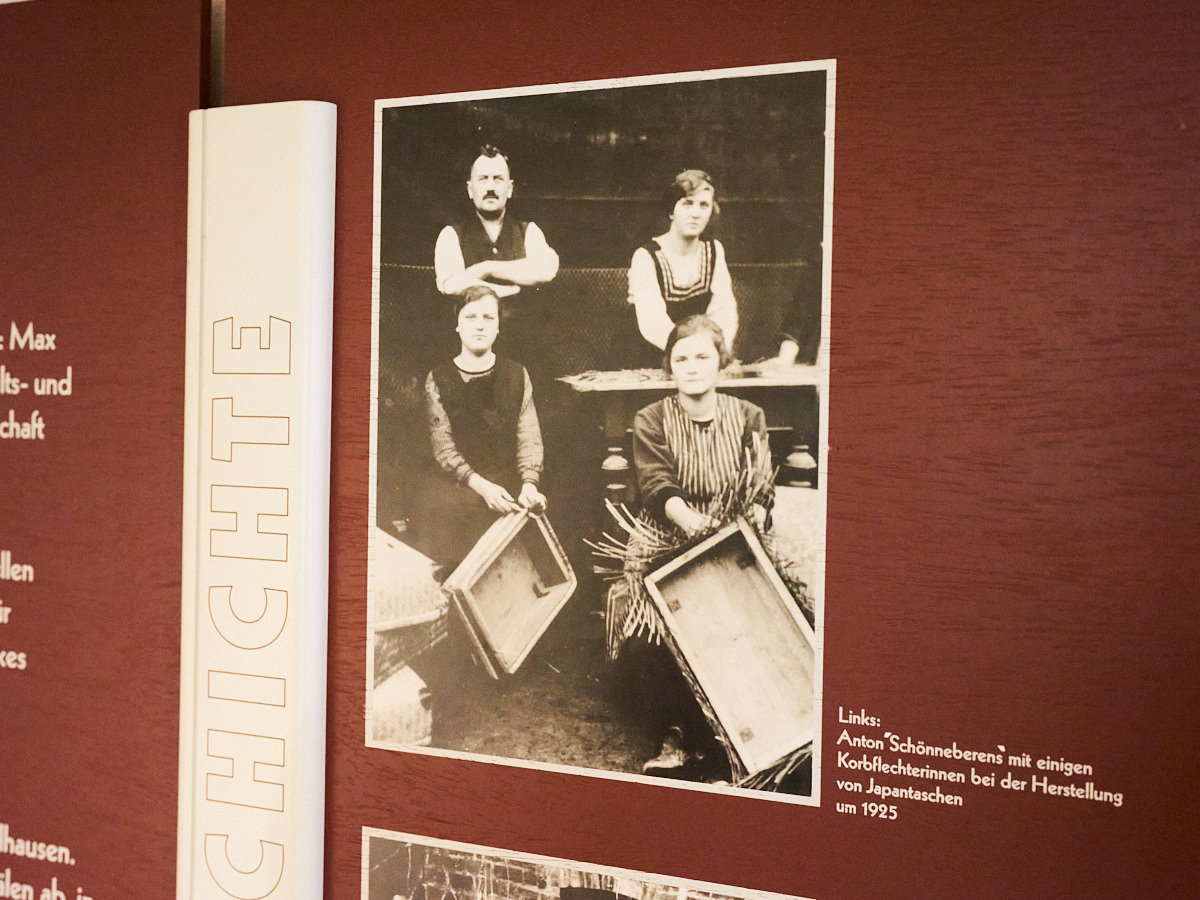
As mentioned in “Germany Business Trip Journal 4,” this rattan was also used to produce what were called “Japan bags,” which resemble Japanese suzutake wicker trunks. 
As I continued through the exhibition, it became clear that, much like willow, rattan was also treated as an important material for basketmaking.
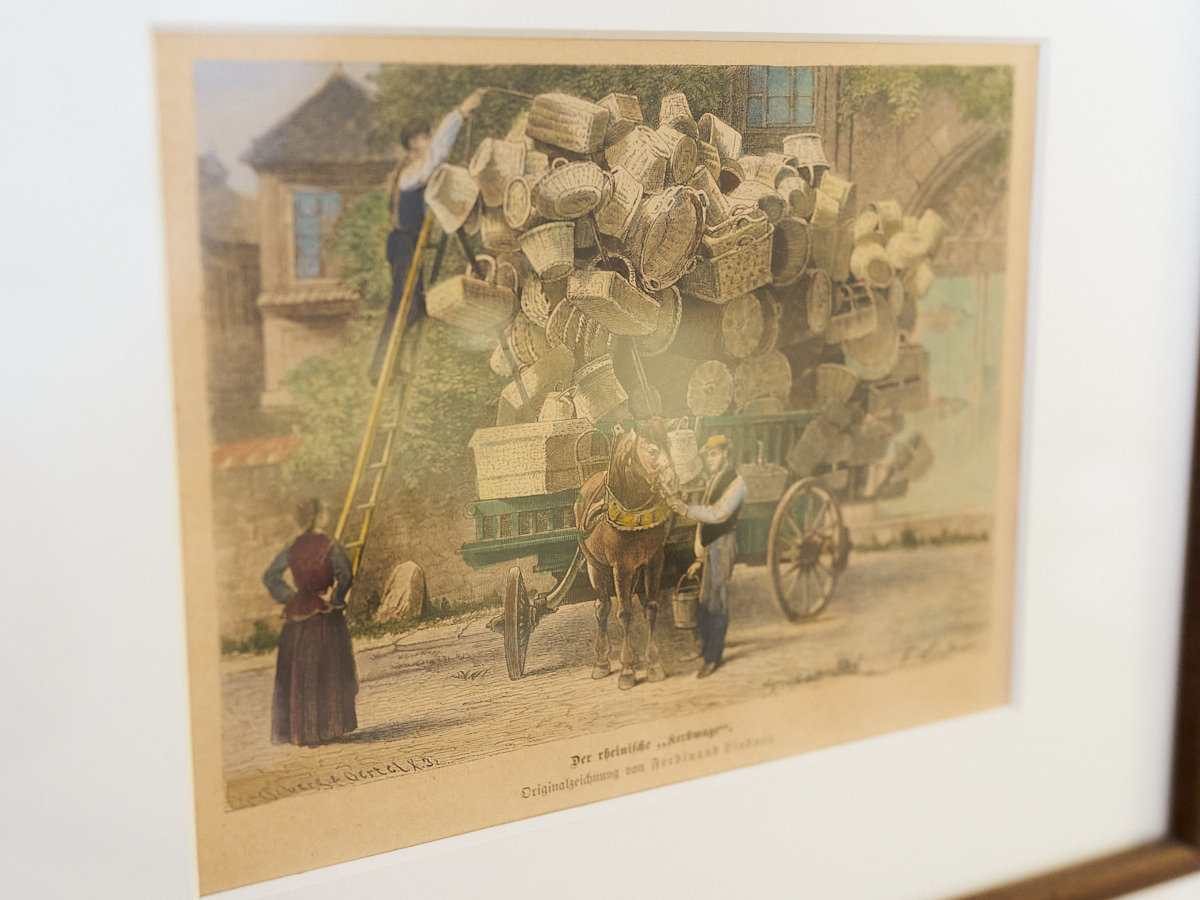
In this way, Dalhausen reached its peak from the 1800s through the first half of the 1900s.
Behind this development lay not only the skill and dedication of the makers themselves,
but also the presence of wholesalers who served as the vital link in distribution.
In the early 1800s, the transition from cottage industry to a wholesaler-based putting-out system progressed.
As sales routes expanded from the 1840s onward, a structure became established in which basket wholesalers employed and coordinated large numbers of craftsmen in order to meet bulk orders.
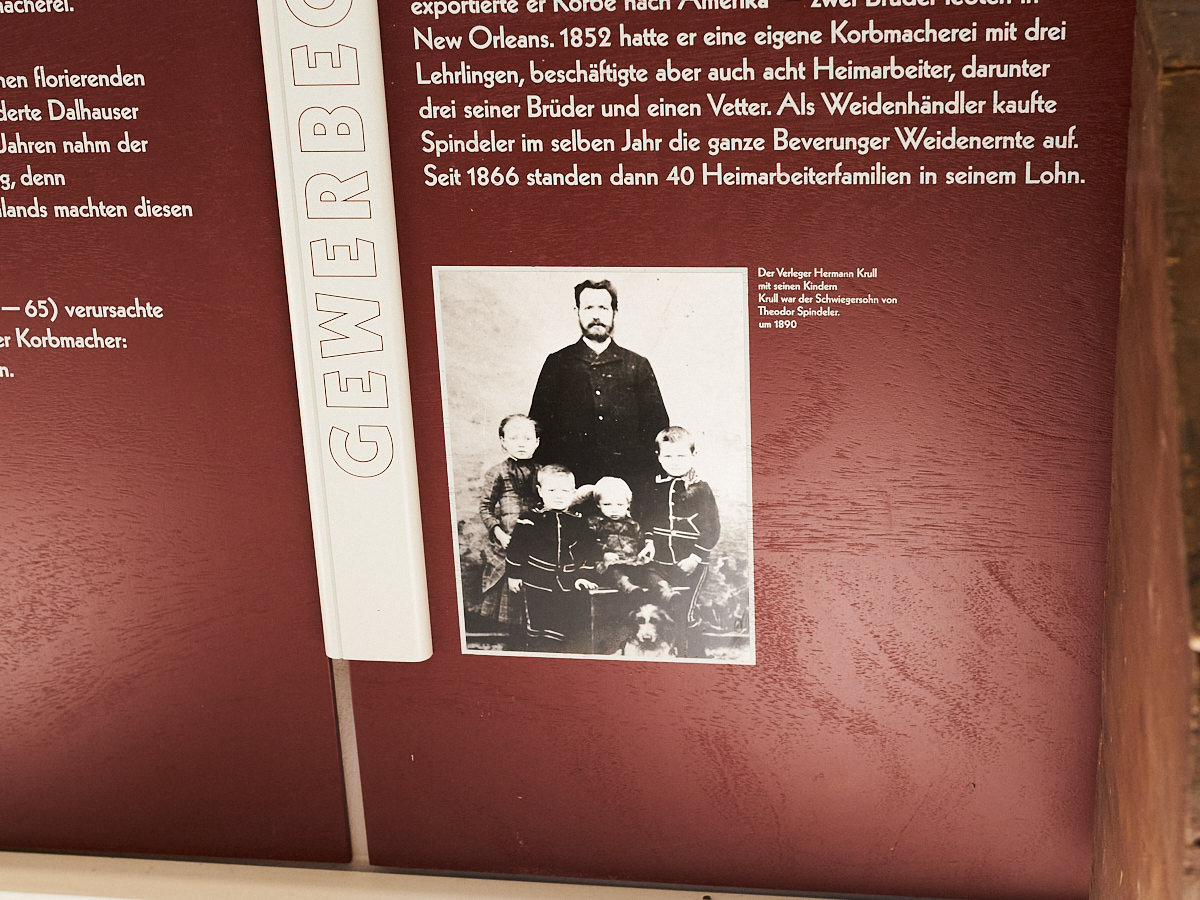
This is Theodor Spindeler (1822–1889), who operated as a wholesaler. With two of his brothers living in New Orleans, he relied on that connection and is recorded as having begun exporting baskets to America in 1846. By 1852, he had established his own workshop, employing three craftsmen while also engaging eight additional workers as home-based outworkers. He was also active as a willow merchant, and records show that in the same year he purchased willow in bulk from the region along the Bever River that flows through Dalhausen. 
By 1866, it is said that forty households of home-based workers were working under him. In many ways, his role corresponds to what we in Japan would call a “production-area wholesaler” or “primary wholesaler.” The role of such a wholesaler begins with securing raw materials. These are then distributed to craftsmen, and once the products are completed, they are gathered again for shipment and export. This system continues in parts of Iwate and on Sado Island even today. Long-established wholesalers in regions such as Aomori and Miyagi, with whom our shop has worked for many years, operated in much the same way. 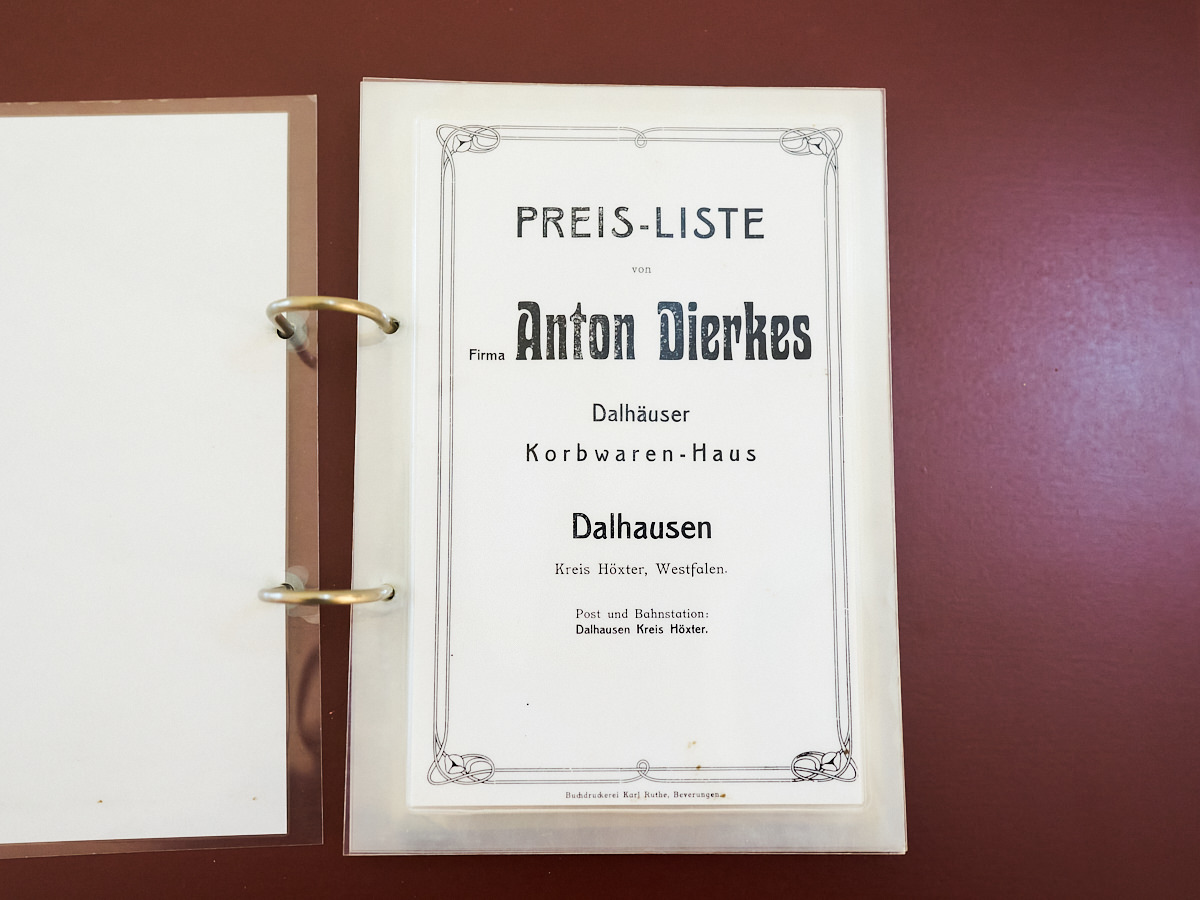
Wholesalers also created price lists—essentially catalogs—detailing the shapes and sizes of baskets, allowing them to receive orders from outside without customers having to visit Dalhausen in person. 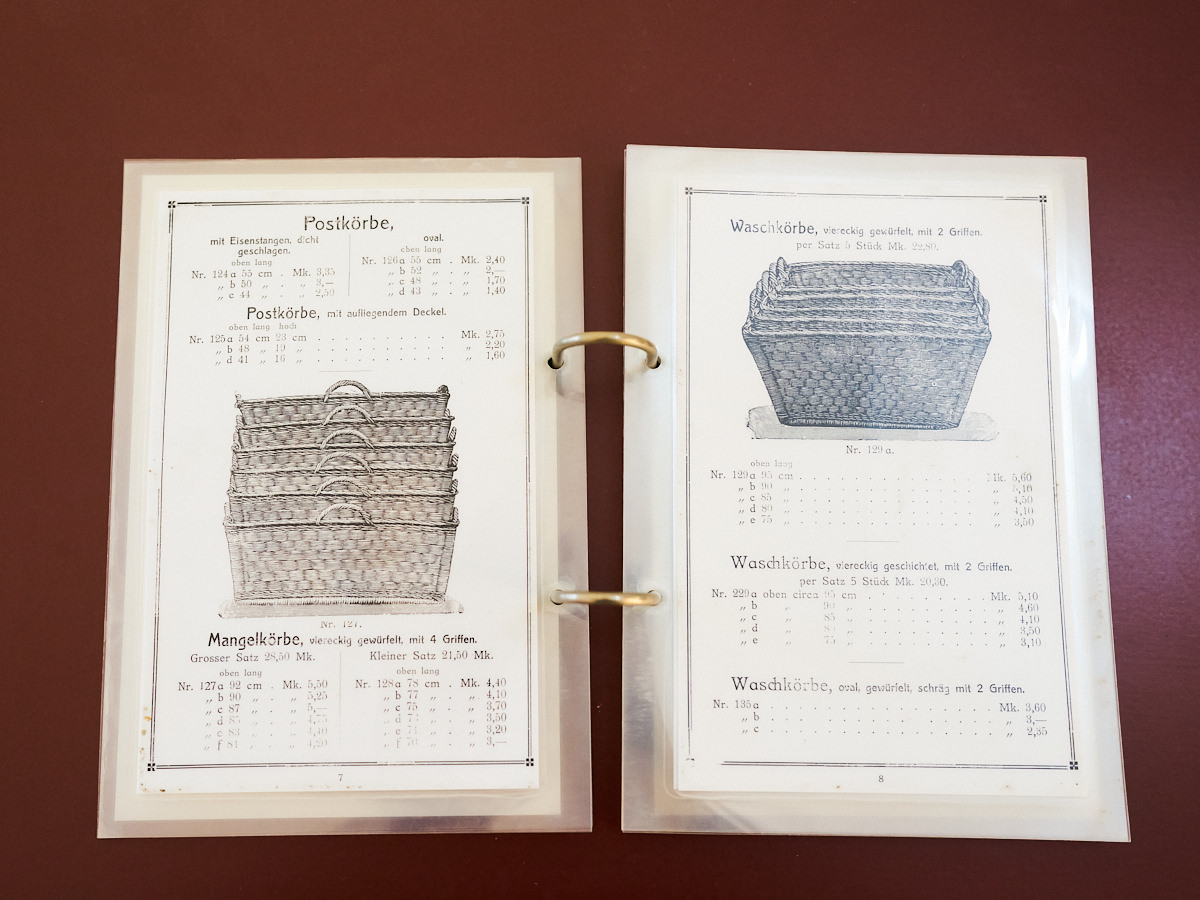
On the left are six sizes of postal baskets, with prices listed in the German currency of the time, the Mark. On the right are five sizes of laundry baskets. Both serve as truly valuable documents that vividly convey the conditions of that era. 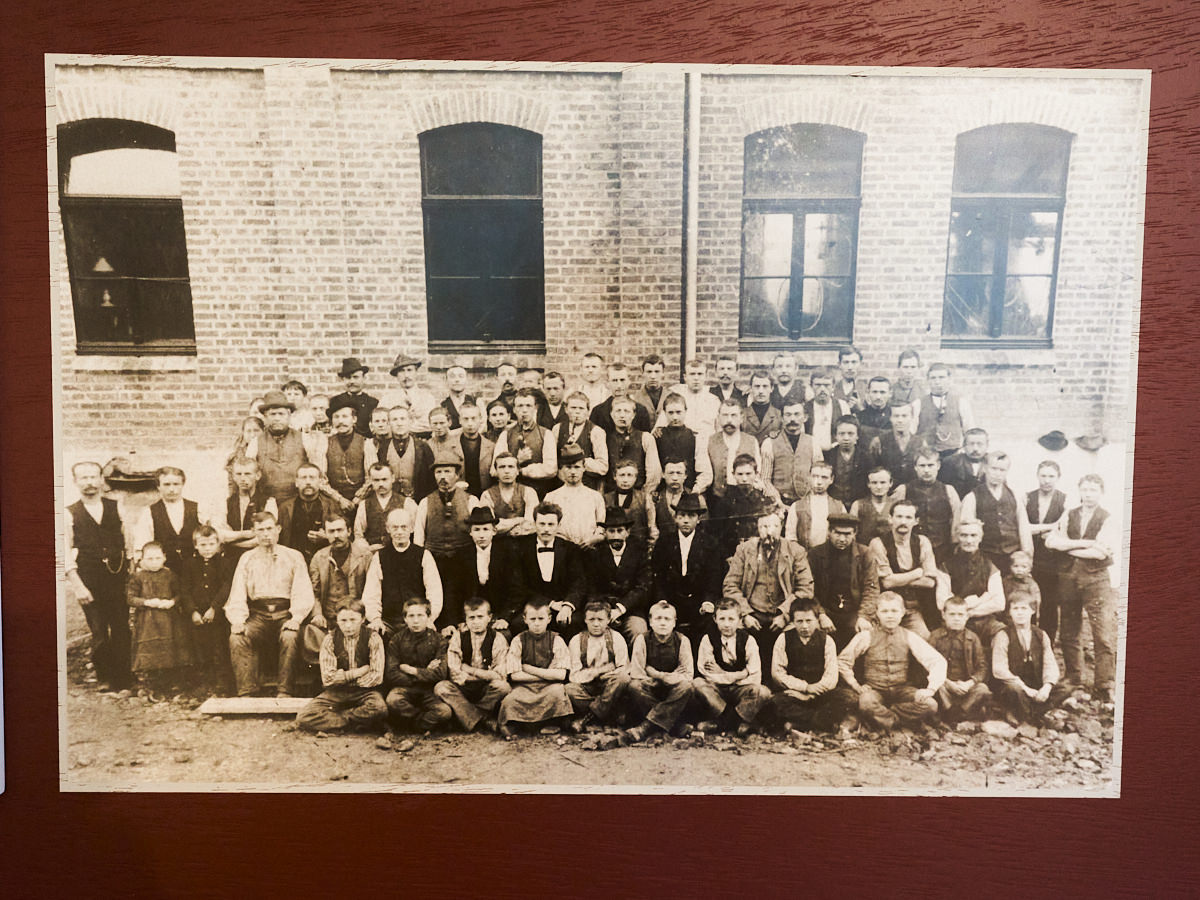
Records from around 1897 indicate that a single wholesaler employed as many as 180 craftsmen. In other words, one wholesaler supported not only 180 craftsmen but also a considerable number of households when their families are taken into account. It suggests that such a wholesaler was a major presence, sustaining a significant part of the town’s economy. 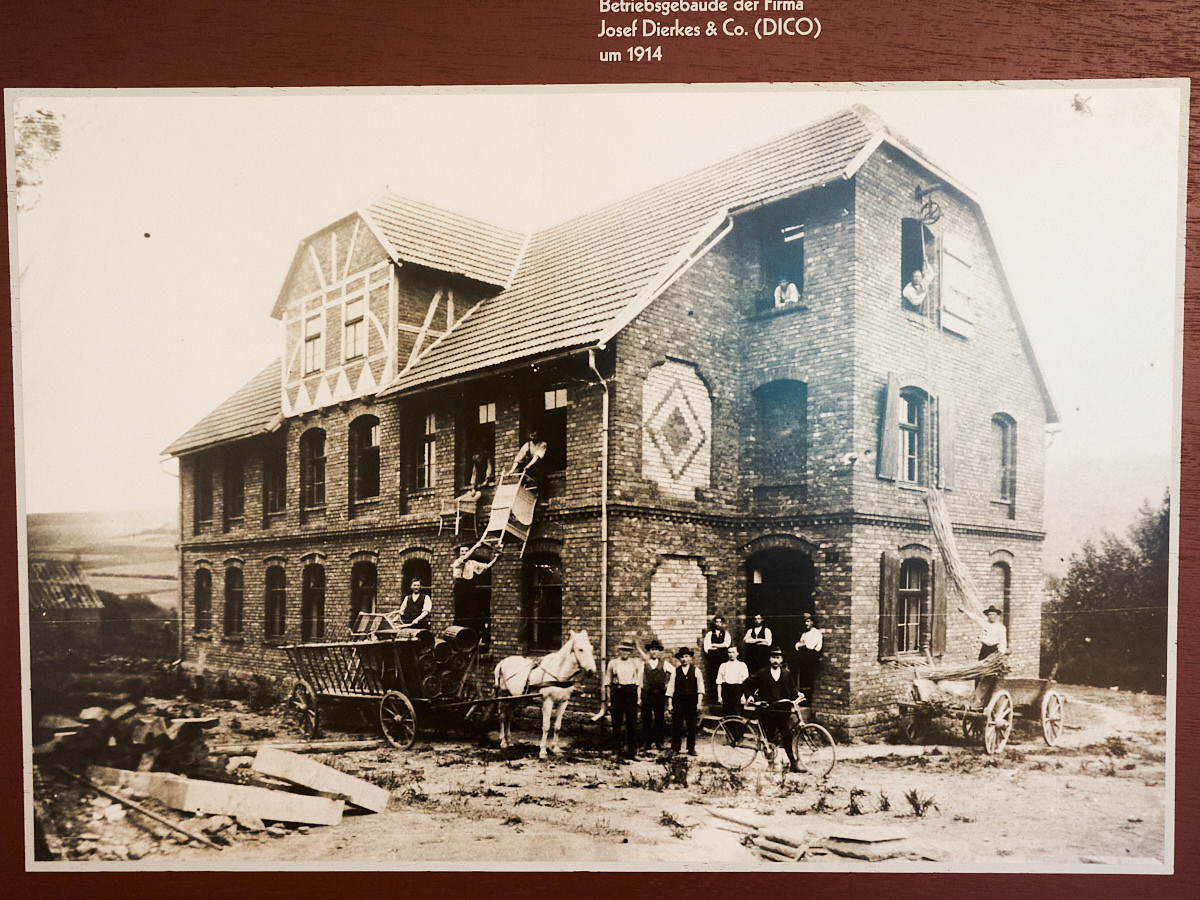
This photograph from around 1914 captures a wholesaler in the process of transforming into a factory. Materials are brought in from the right side of the building, while finished products appear to be shipped out from the front. 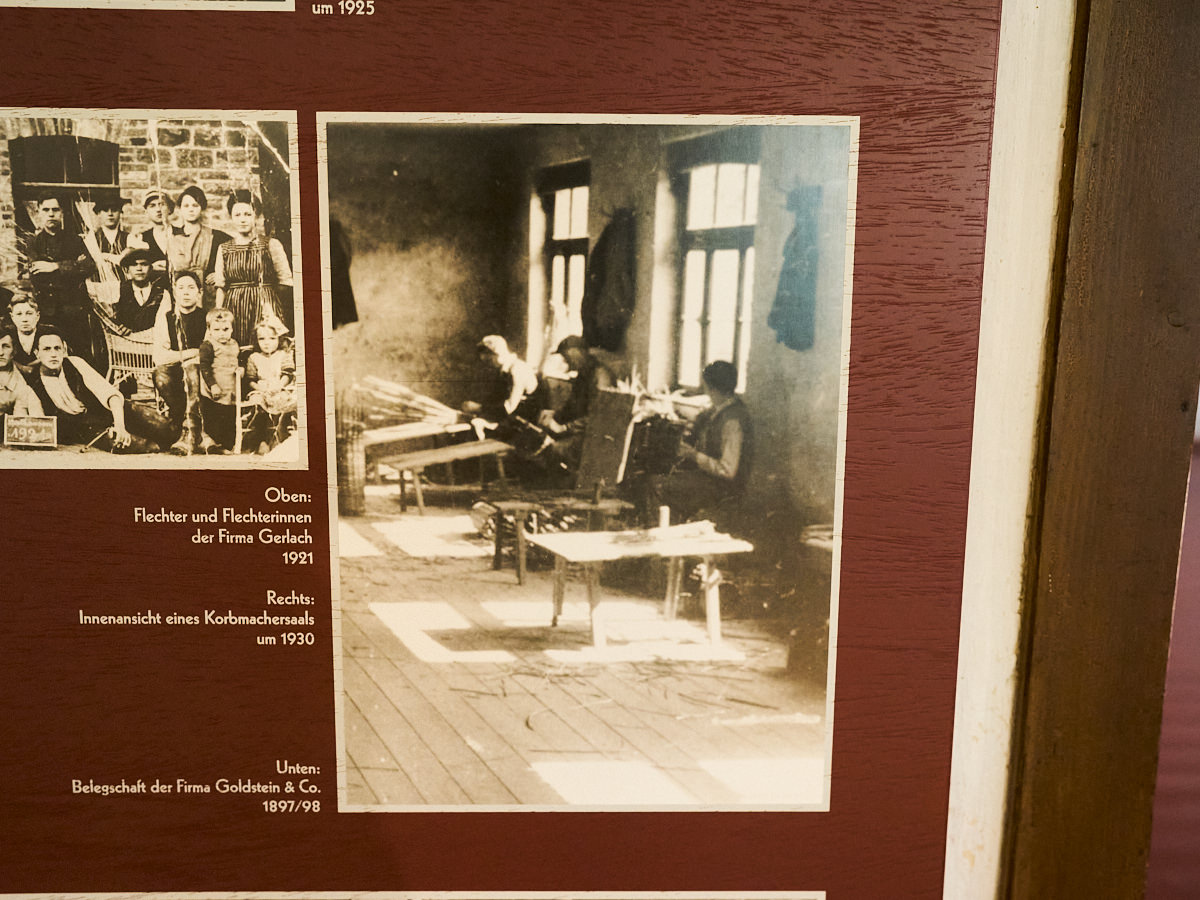
By the 1920s to 1930s, some operations had moved beyond individual enterprise and progressed toward incorporation, and we begin to see people working as “employees” weaving baskets in factories. In this way, Dalhausen’s basketmaking began as a sideline for farming households and as individual peddling, then evolved through organization under the wholesaler system, and eventually reached full factory production under corporate structures. Over the course of roughly one hundred years, basketmaking thus transformed into a true “industry.” 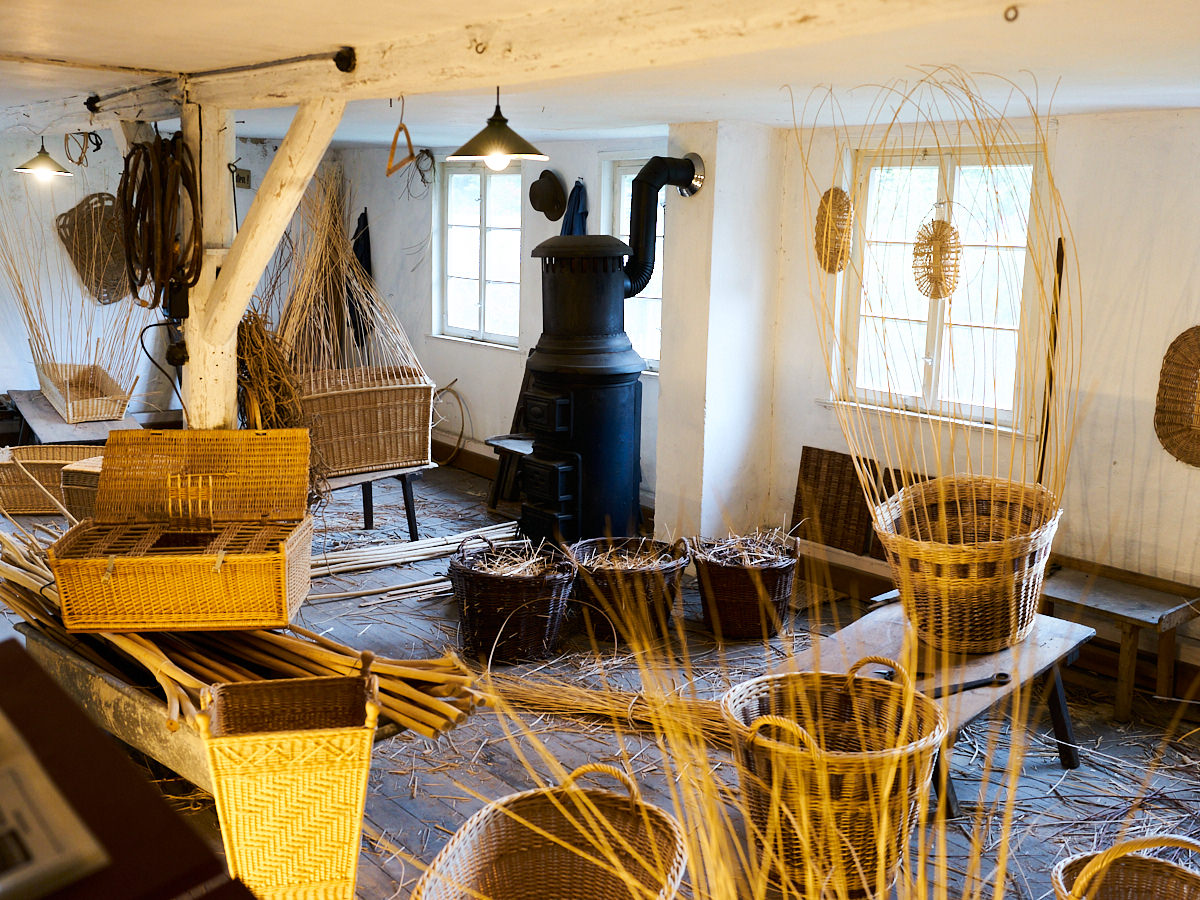
There was also an exhibition recreating a basketmaking factory from that period. 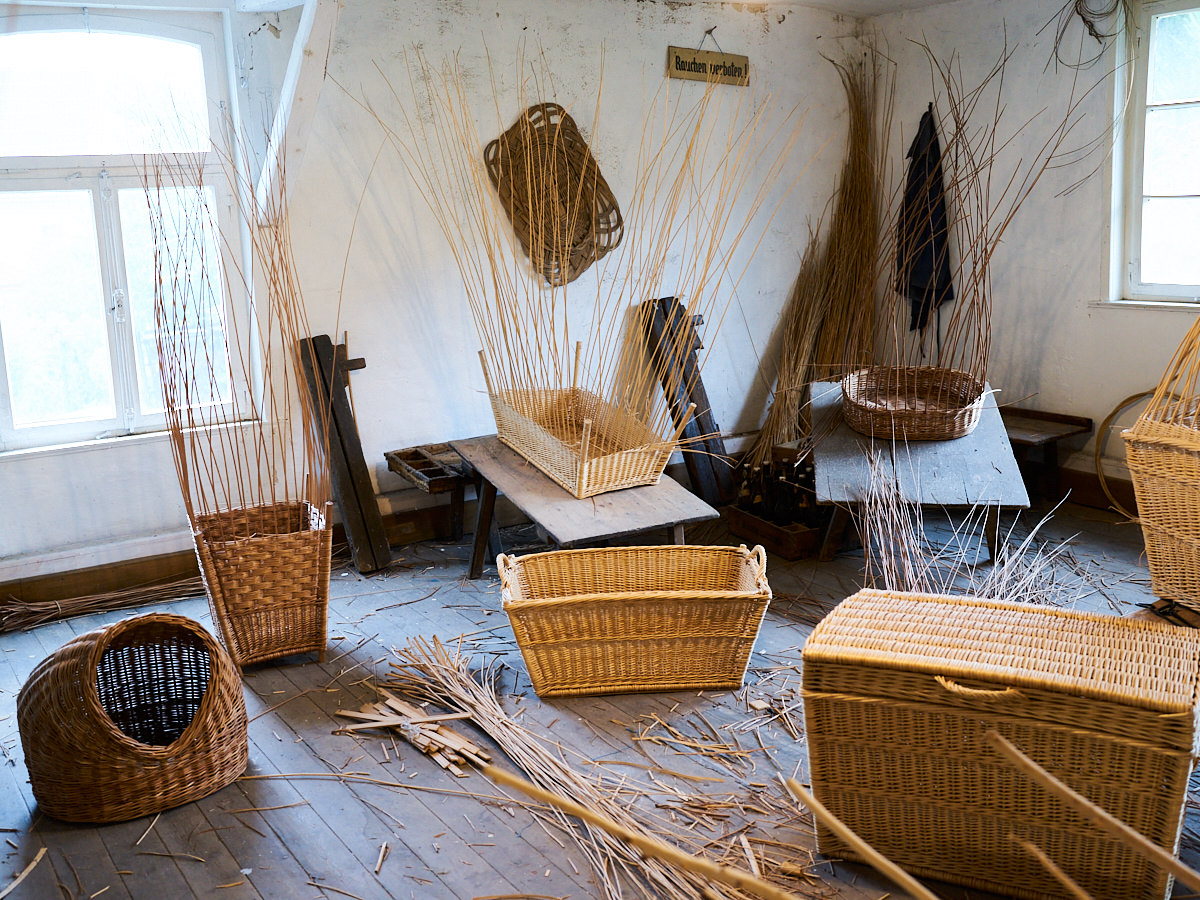
Across the spacious floor, numerous Dalhausen-style worktables with slanted surfaces and chairs were arranged, with partially finished baskets placed here and there. 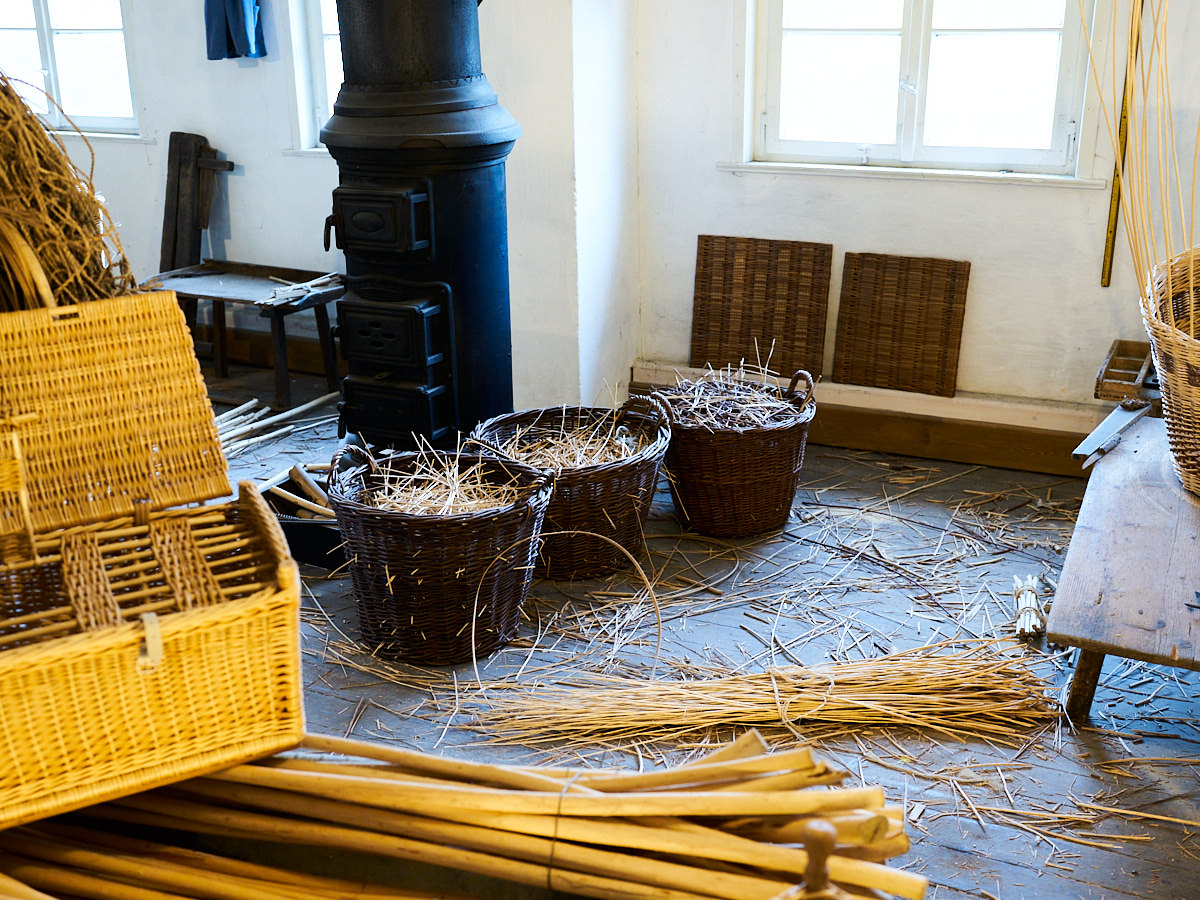
The scene unfolds as if the craftsmen had been working there only moments ago. 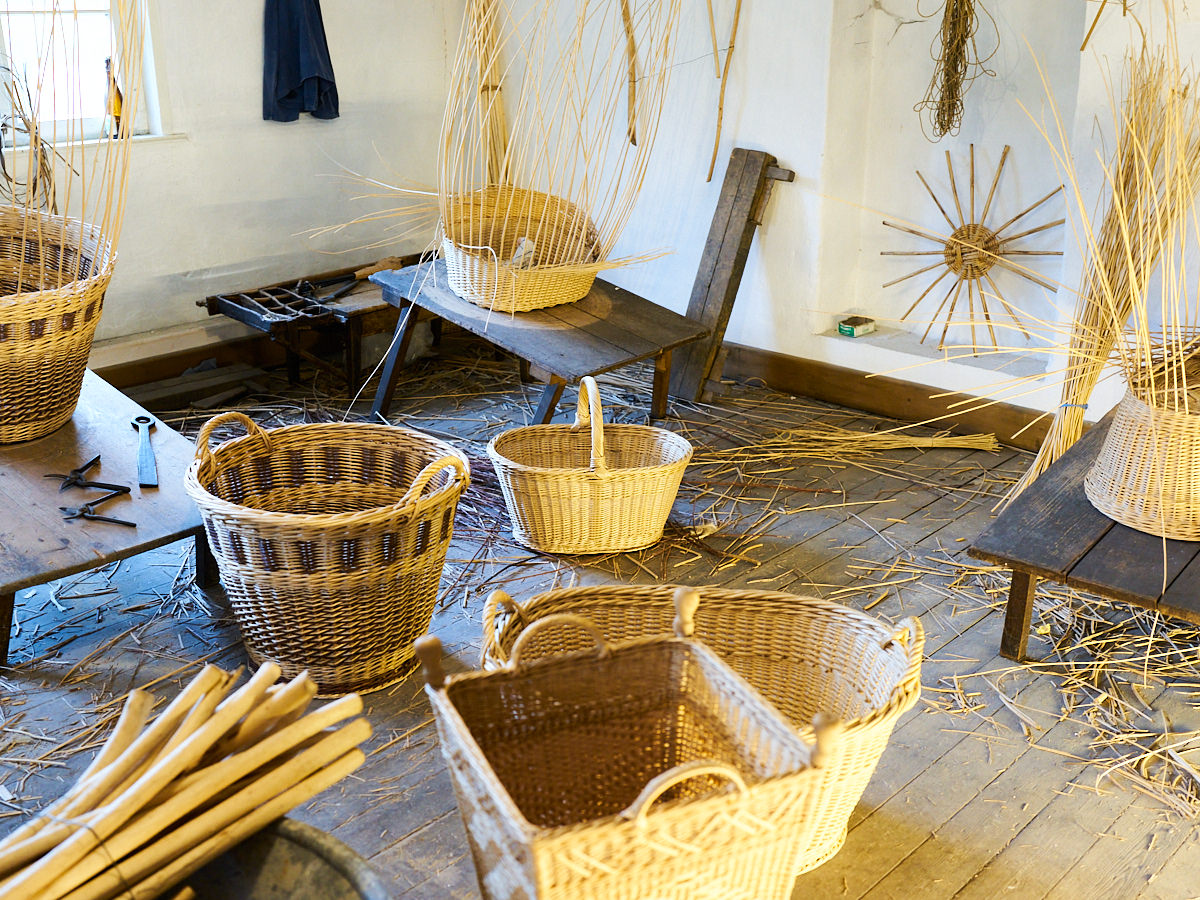
White baskets made from willow with the outer bark removed.
Each one possesses a quiet and beautiful presence.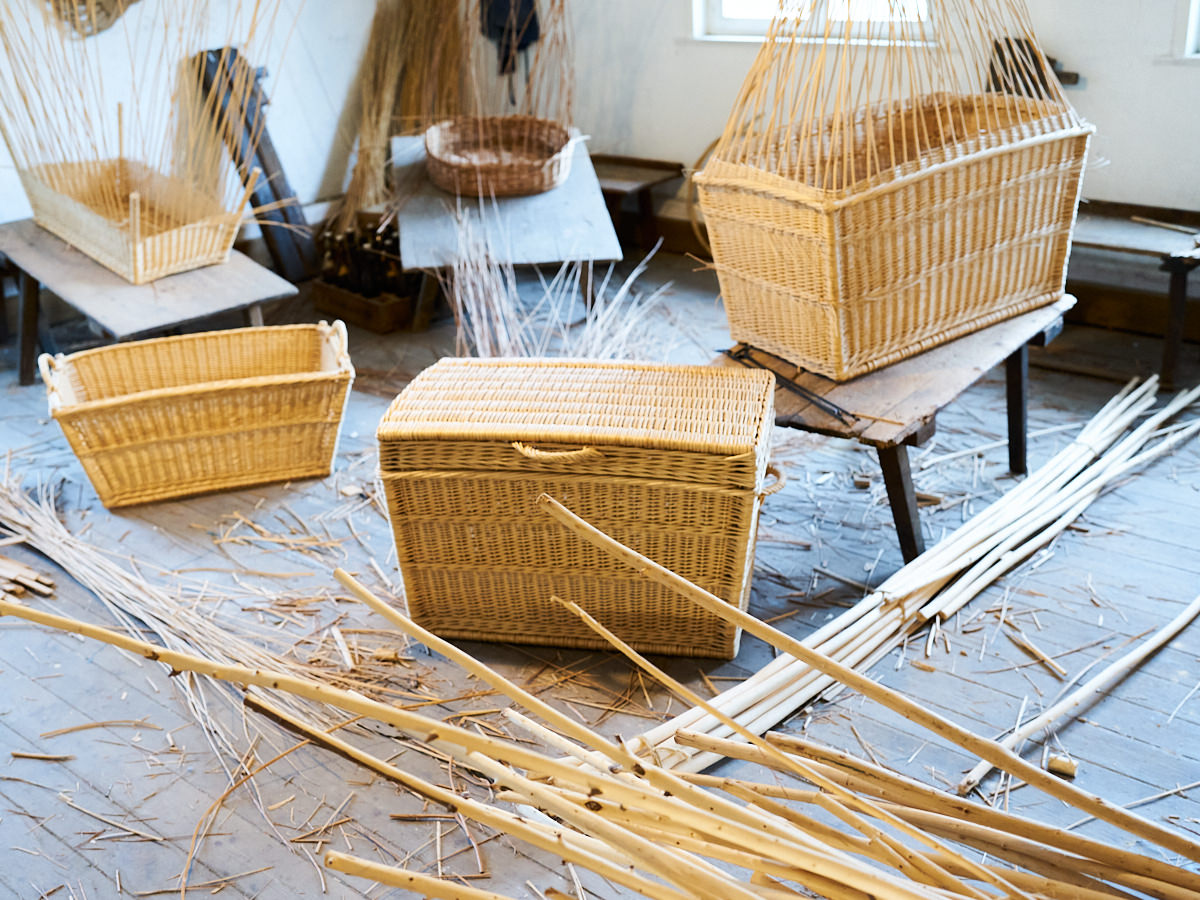
These are Dalhausen-style baskets—strong and practical in character—that would likely still find ample demand even today.
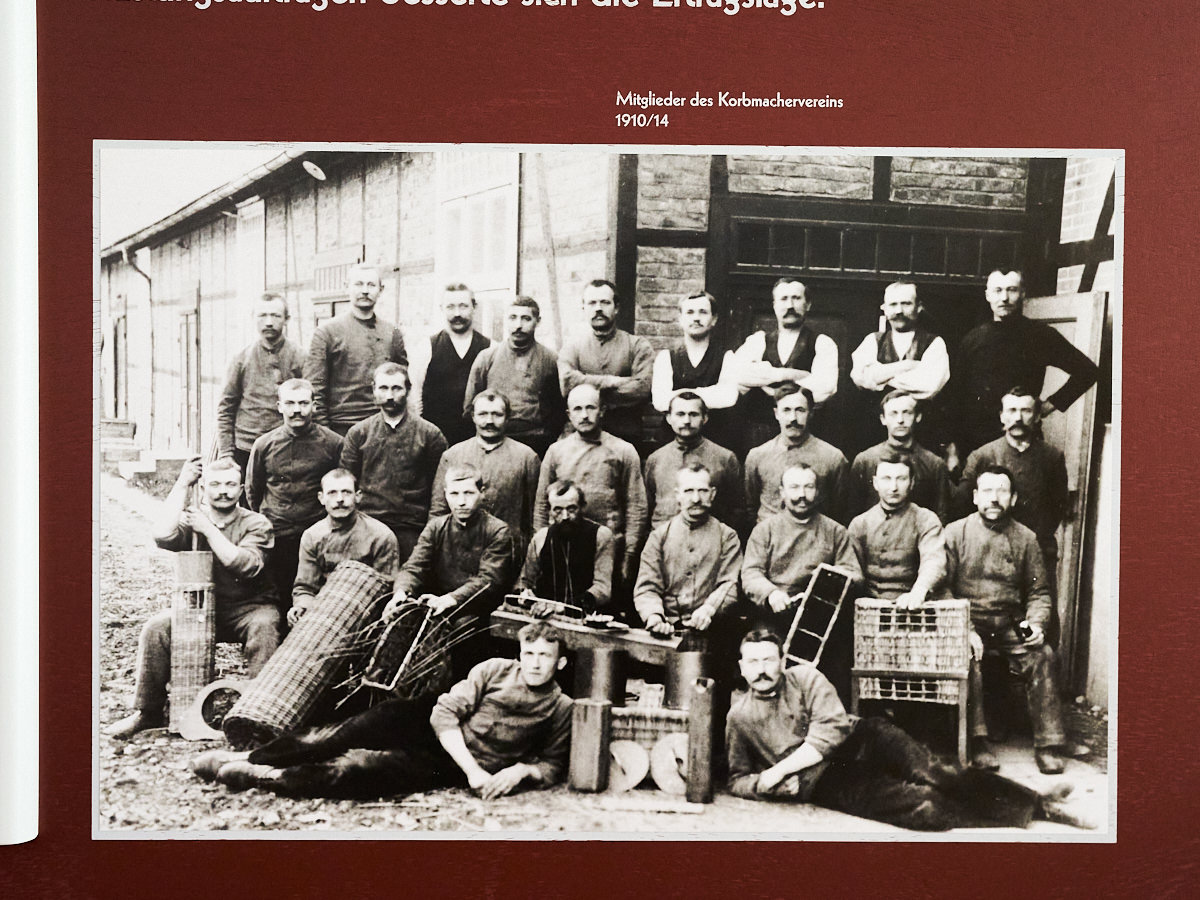
The world then stepped into an era of war.
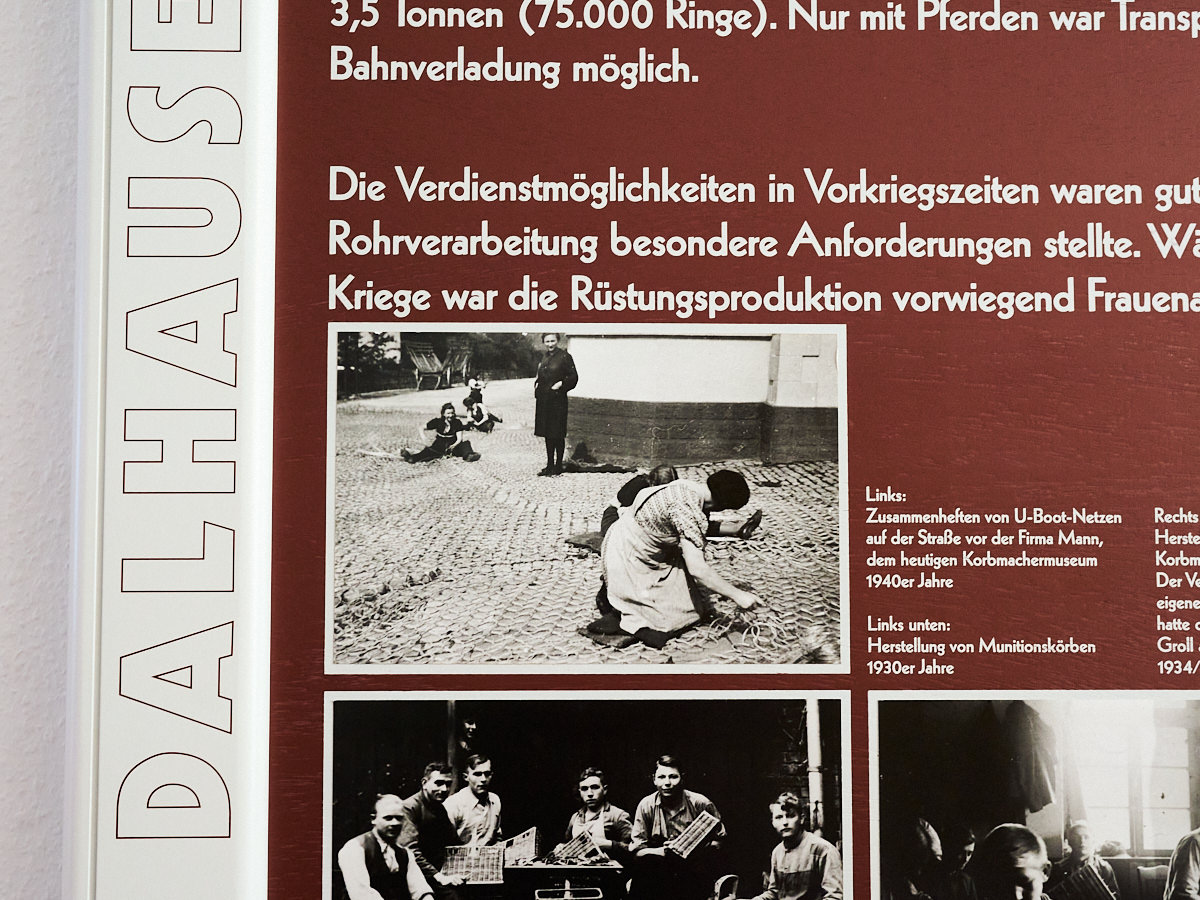
This image shows weavers in Dalhausen producing military anti-submarine nets designed to prevent enemy submarines from entering. 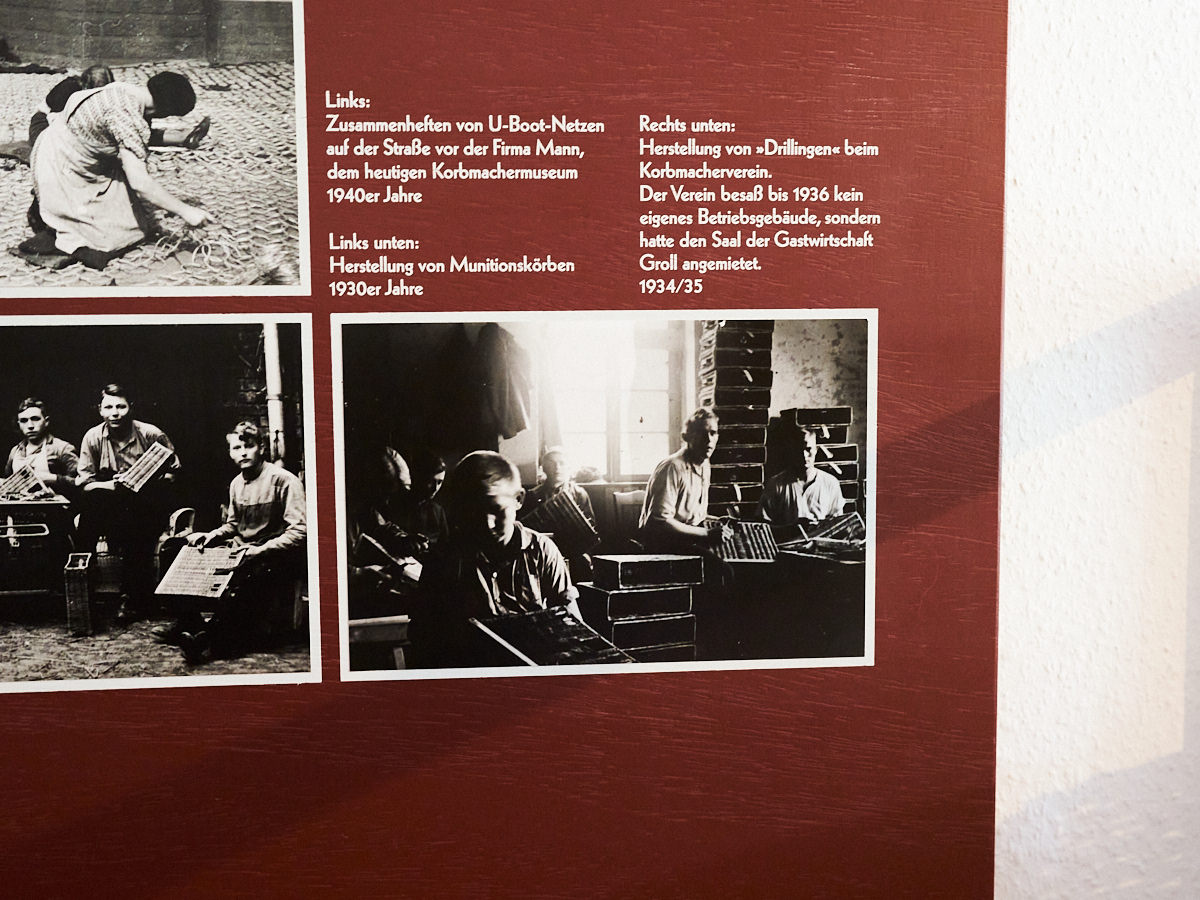
This scene shows members of the cooperative working together to produce baskets for military use. 
This is a basket used for transporting ammunition. 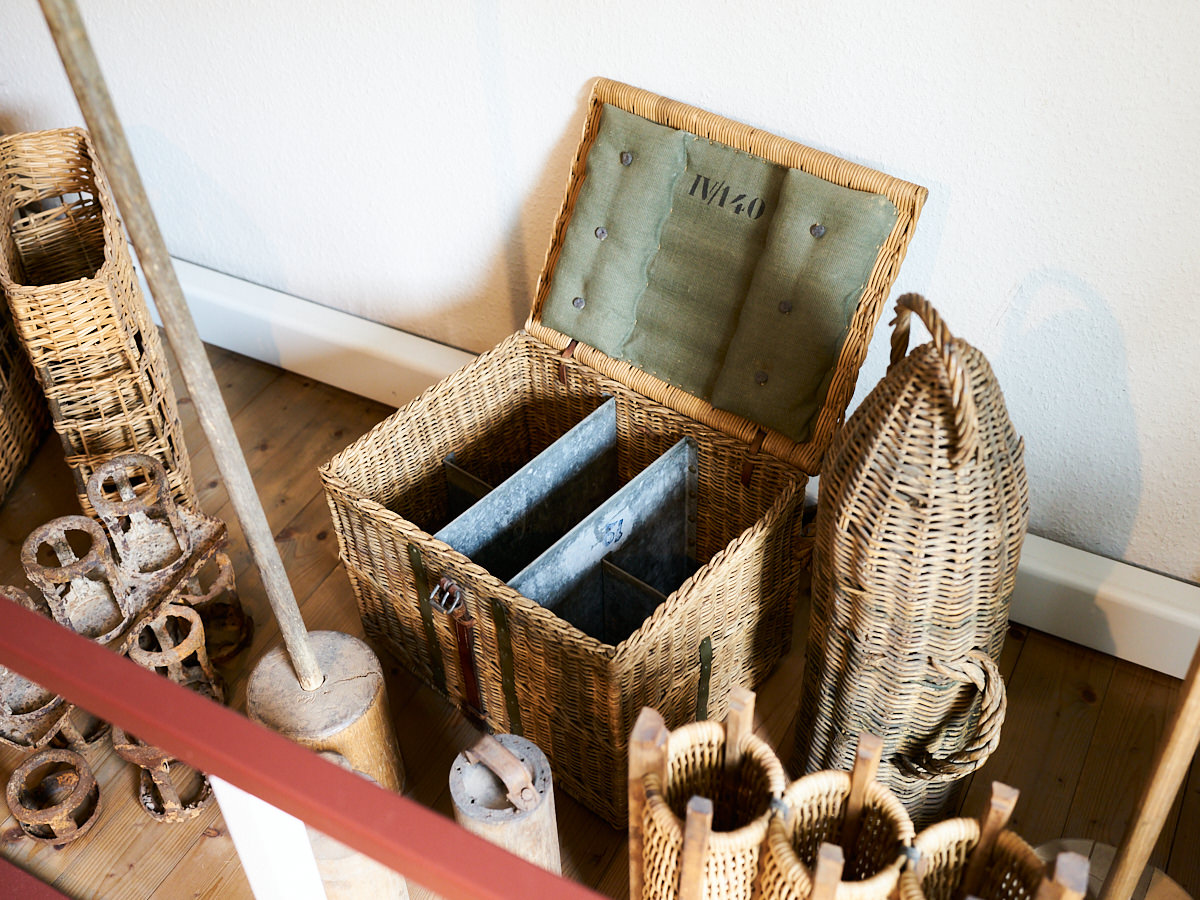
It appears that a wide range of products for transporting military supplies were also produced.
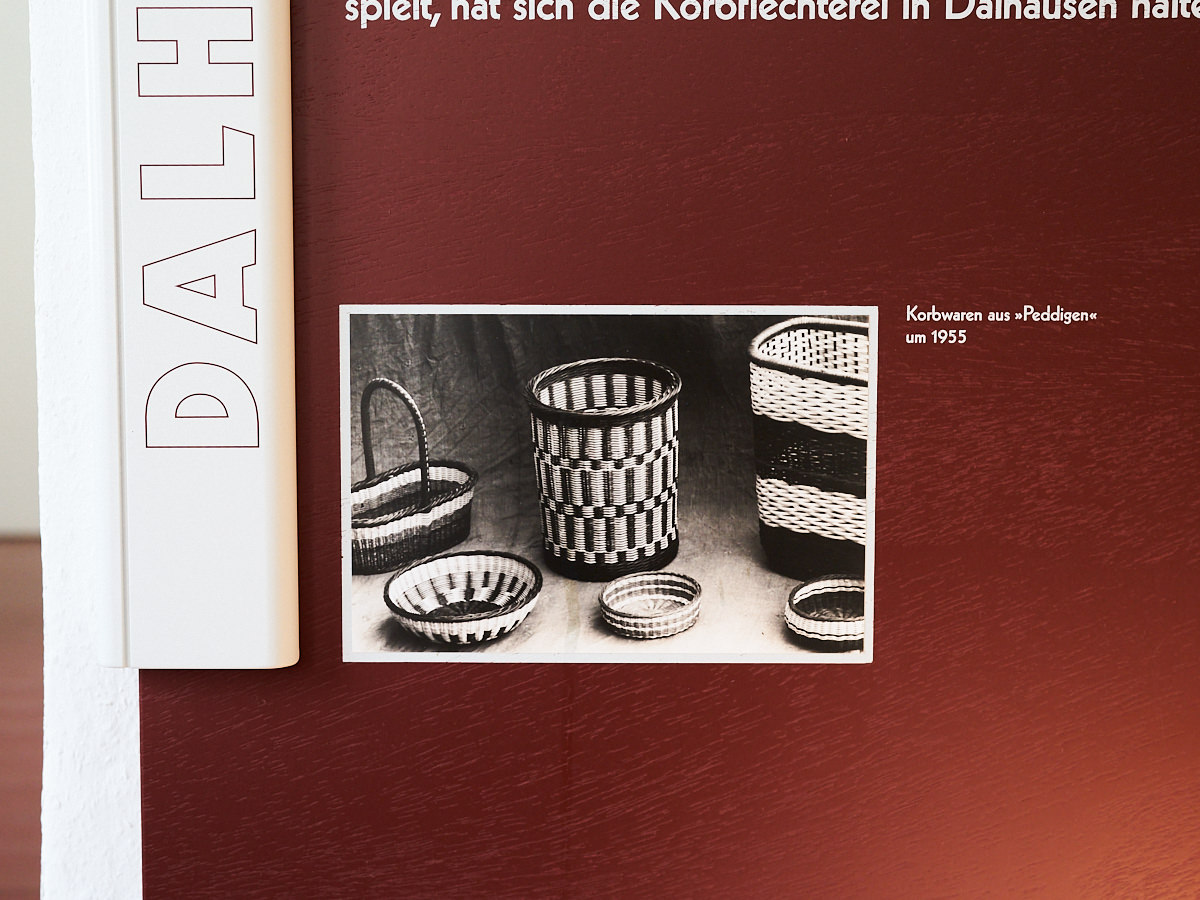
This postwar photograph from around 1955 shows many baskets made not from willow,
but from rattan imported from Southeast Asia.
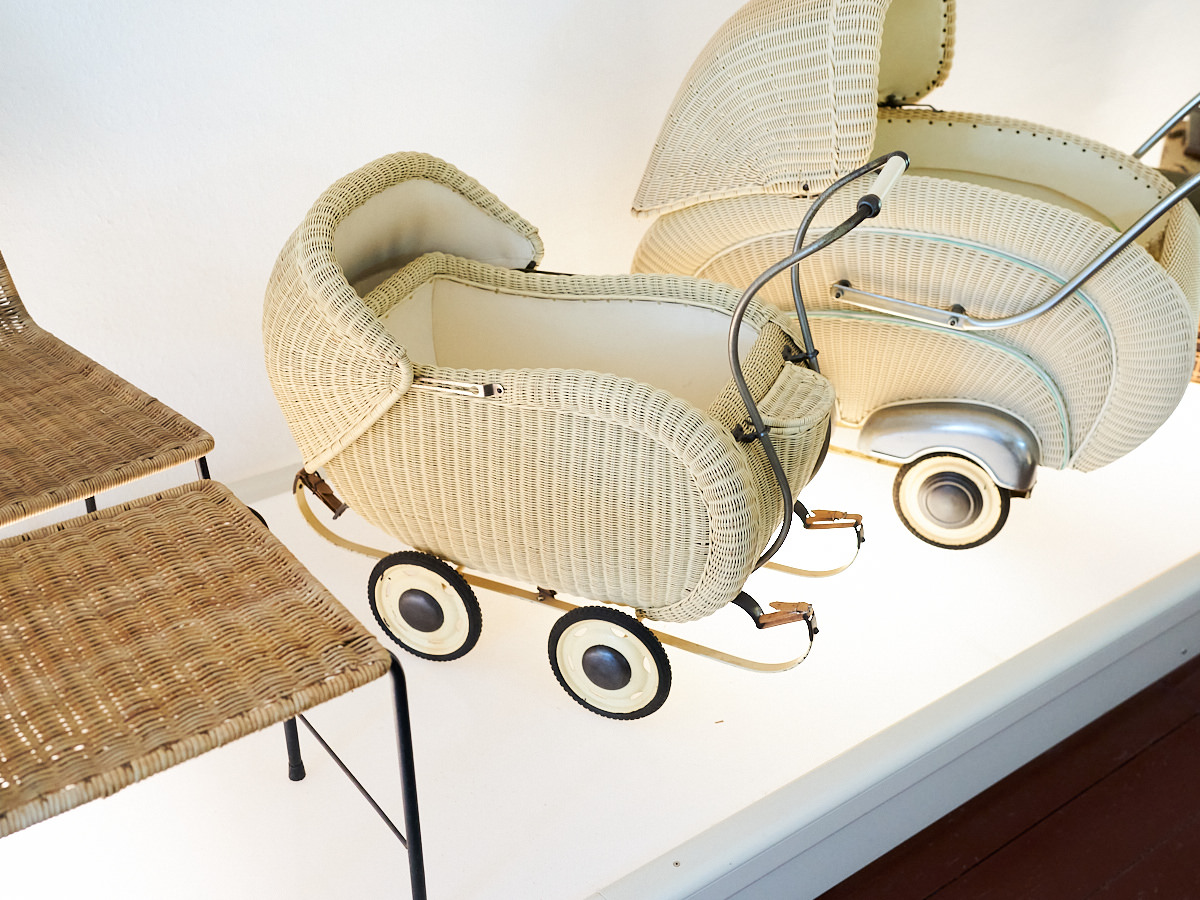
Further on, there is even a baby carriage made not of rattan, but of a resin-like material. Without the natural nodes and subtle variations in color seen in willow or rattan, the weaving appears neat and uniform, beautifully finished—yet it leaves a somewhat less textured impression. 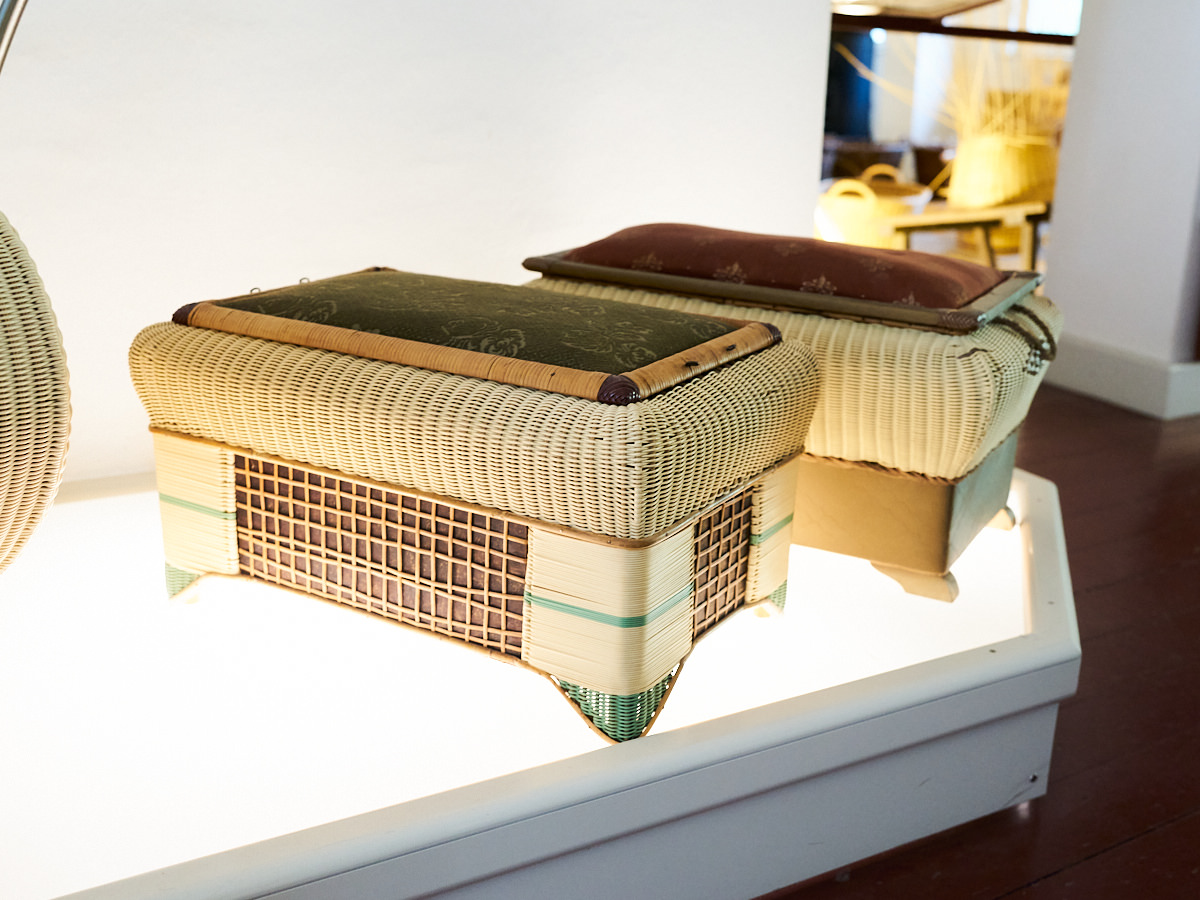
This piece, also made of resin, appears to be a substitute for the cushioned storage stool that was once produced in rattan. 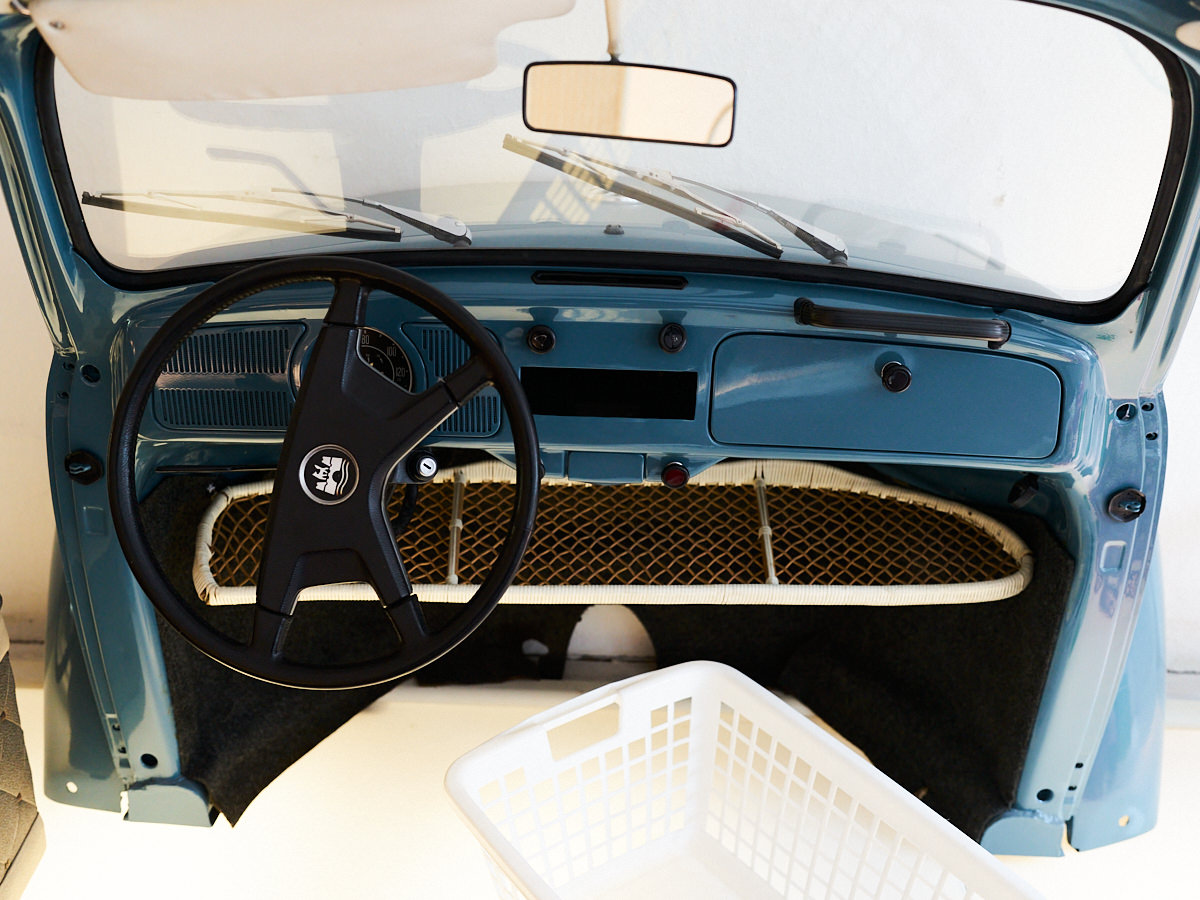
A luggage net placed at the footwell of an automobile. This, too, was woven from resin. 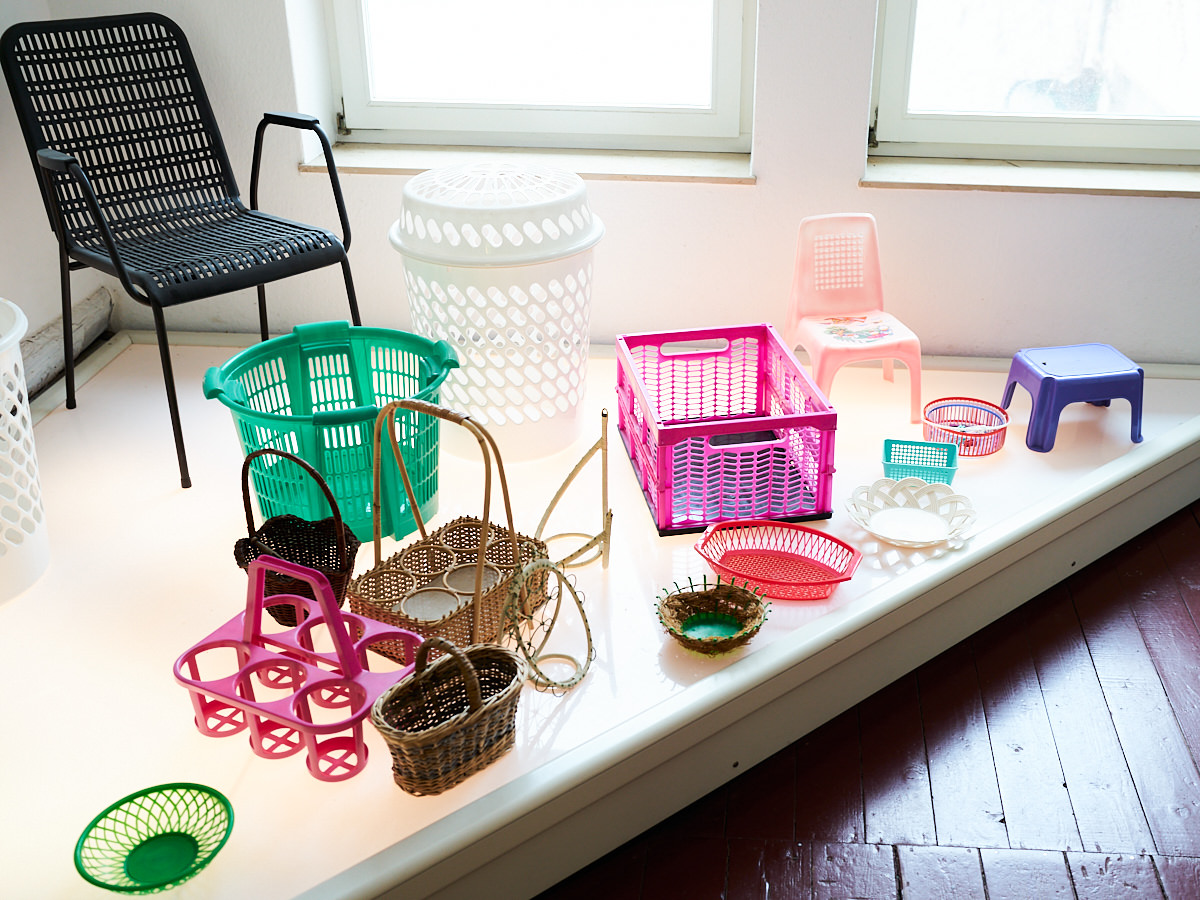
In the final room of the museum, colorful plastic baskets and chairs were displayed. Each piece demonstrates how forms once made of willow or rattan gradually shifted in material, transforming into plastic. This transition of materials was a trend seen not only here, but commonly across the world—including Japan.

Standing before the history of how the town of Dalhausen has walked hand in hand with basketmaking,
I was deeply moved by the many points of connection and shared history with basketmaking in Japan.
Baskets that were made with sincerity and strength, created to support the daily lives of people.
True to its name, this is not merely a “museum of baskets” where a variety of forms are displayed,
but a place where one can sense the breath of the craftsmen who lived in their time and continued weaving—
a museum by basketmakers, for basketmakers.
Finally, please take a moment to watch a short video capturing the atmosphere of the Dalhausen Basketmakers’ Museum.
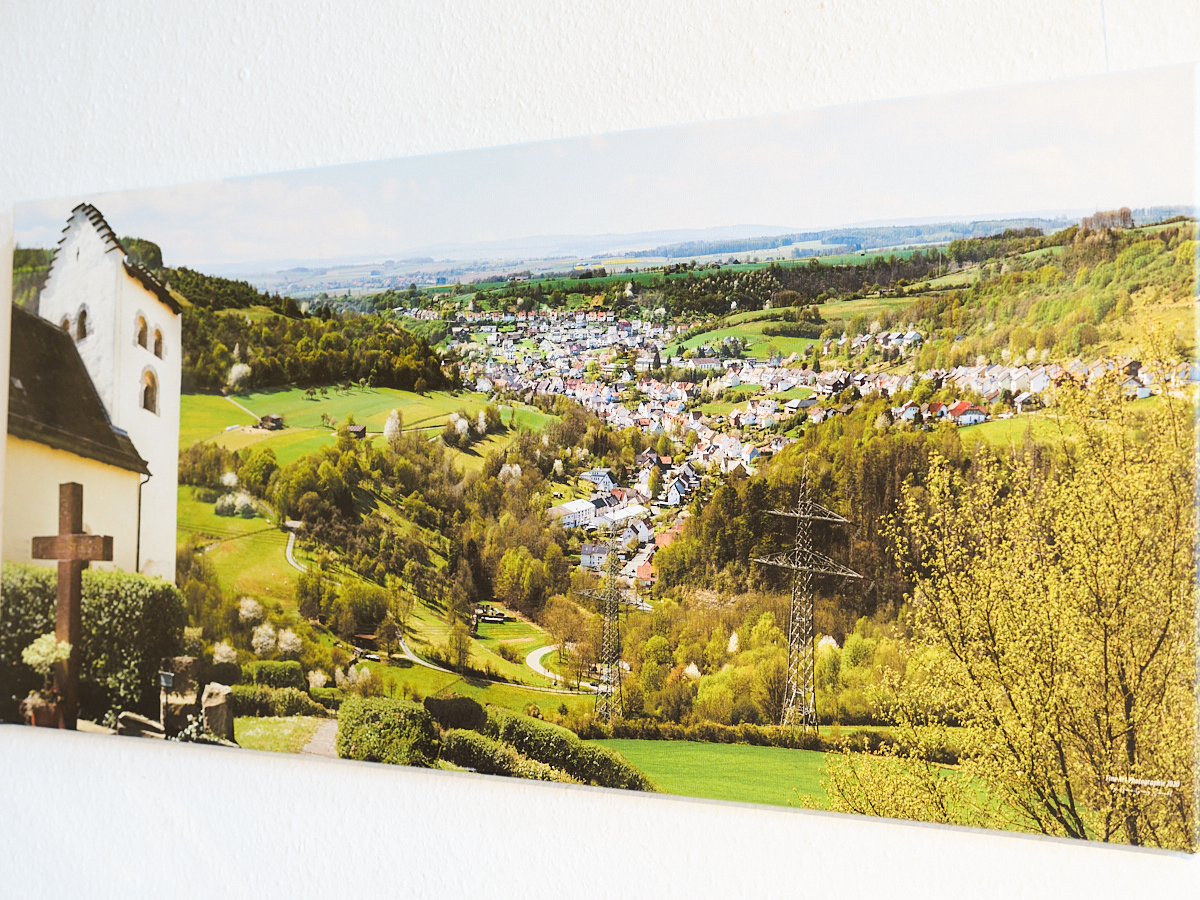
This is a view of Dalhausen, photographed in 2020.
According to Hansgert, sadly, there are now very few people in this town who are engaged in basketmaking.
He is likely one of the rare craftsmen who still weaves baskets and makes a living here in Dalhausen.
For this special exhibition, we had hoped to introduce Hansgert’s baskets,
and he had kindly given his consent in advance.
Unfortunately, however, various circumstances did not come together in time,
and we were unable to present his work on this occasion.
Although we could not feature his baskets in this exhibition,
he has promised to create baskets for us.
We would be most grateful if you could kindly wait with patience.
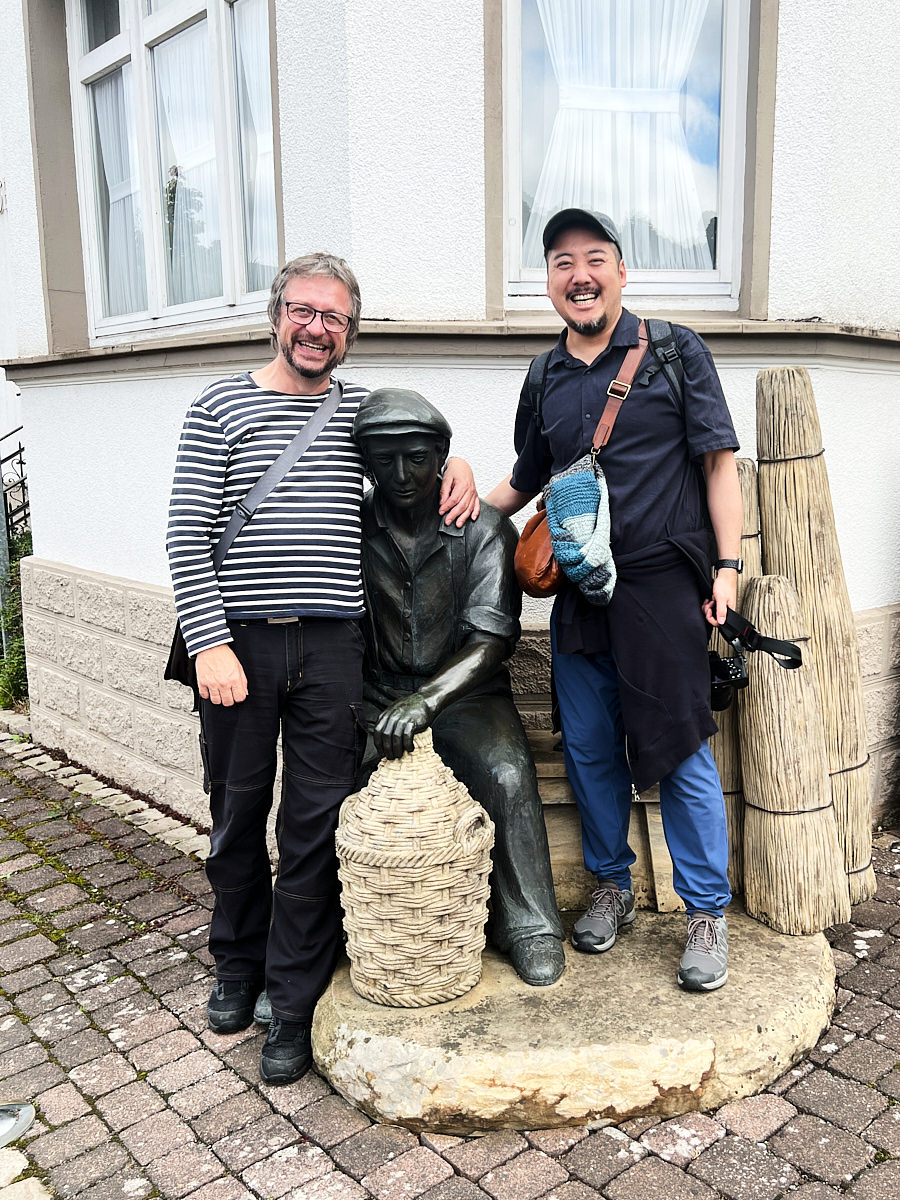
A commemorative photo with Hansgert in front of the long-admired statue, “The Basketmaker.”
Bitte lächeln! (Please smile!)
Well then—
let us head at last to Lichtenfels, where the basket festival takes place!
To be continued.
___________________________________________
“The One Table” Special Exhibition
European Baskets We Discovered in Germany
2026
February 19 (Thu), 20 (Fri), 21 (Sat), 22 (Sun), 23 (Mon, Holiday)
26 (Thu), 27 (Fri), 28 (Sat)
March 5 (Thu), 6 (Fri), 7 (Sat)
Open | 11:00–16:00
In-store | 1basketry, Minami-Senju, Tokyo