Dalhausen — A Village Shaped by Baskets (2) — Germany Business Trip Journal 5 / かごの谷の村 ダルハウゼン博物館(2) ― ドイツ出張記 5
Hello. This is Tomotake Ichikawa.
Continuing from the previous journal,
Until then, I had thought of Dalhausen as a distant land—foreign in culture and custom, entirely different from my own.
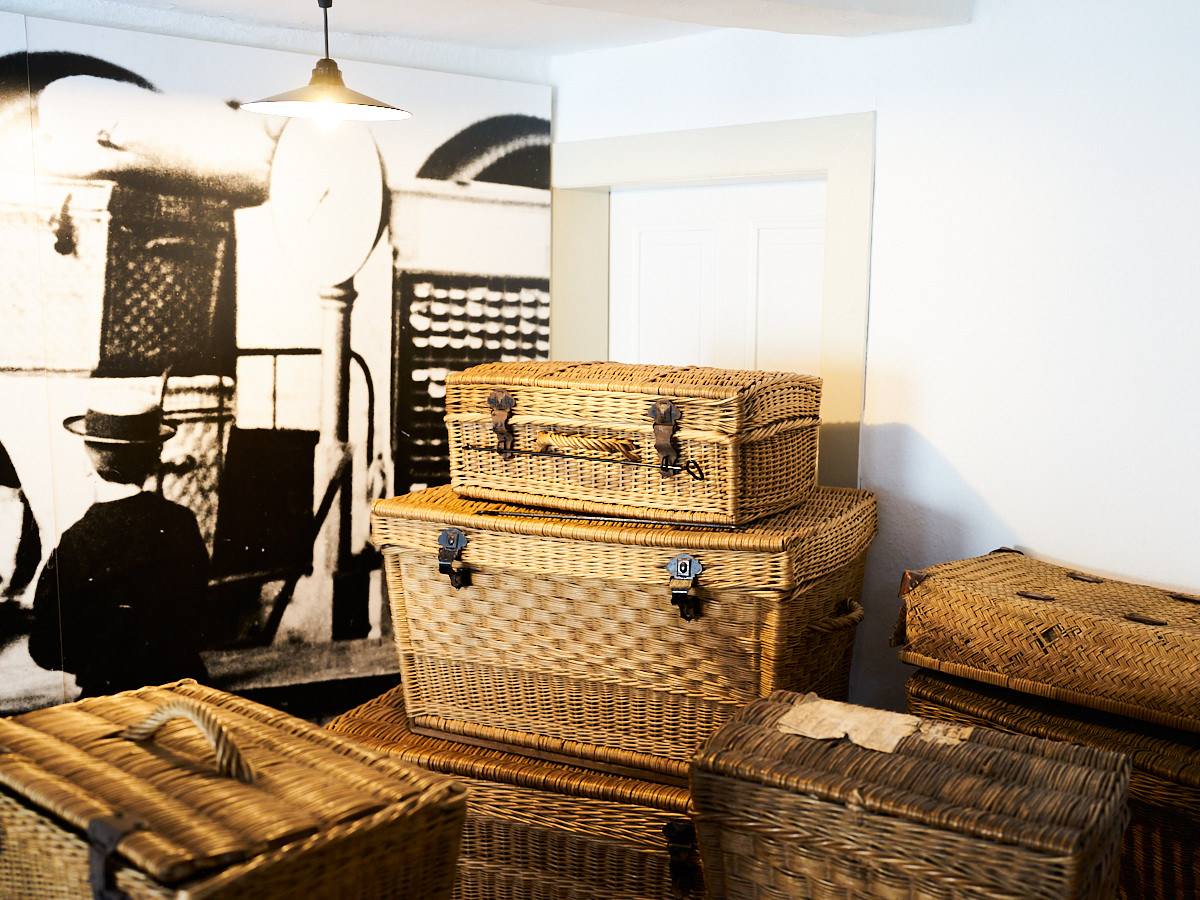
Yet through the exhibitions at the Korbmacher-Museum Dalhausen,
I discovered an unexpected connection between this town, its history, and Japan.
Feeling a growing sense of familiarity, I found myself stepping further into the museum’s interior.
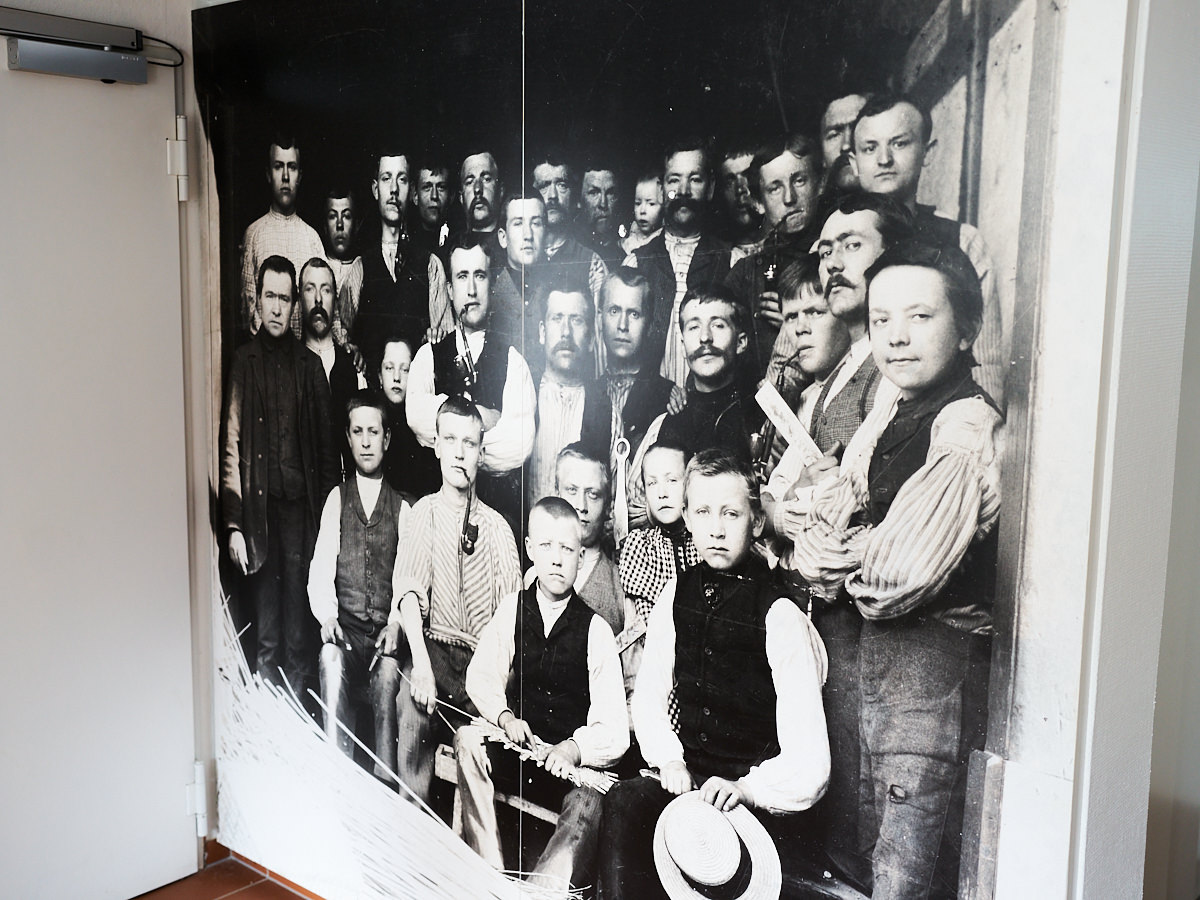
Dalhausen is located in North Rhine–Westphalia in western Germany, a small village nestled in a valley through which the River Bever flows. The presence of the River Bever made it possible to cultivate willow—the essential material for basket making—
and to expand sales routes through river transport along the wider river system. In this way, basket making gradually developed and flourished in the region.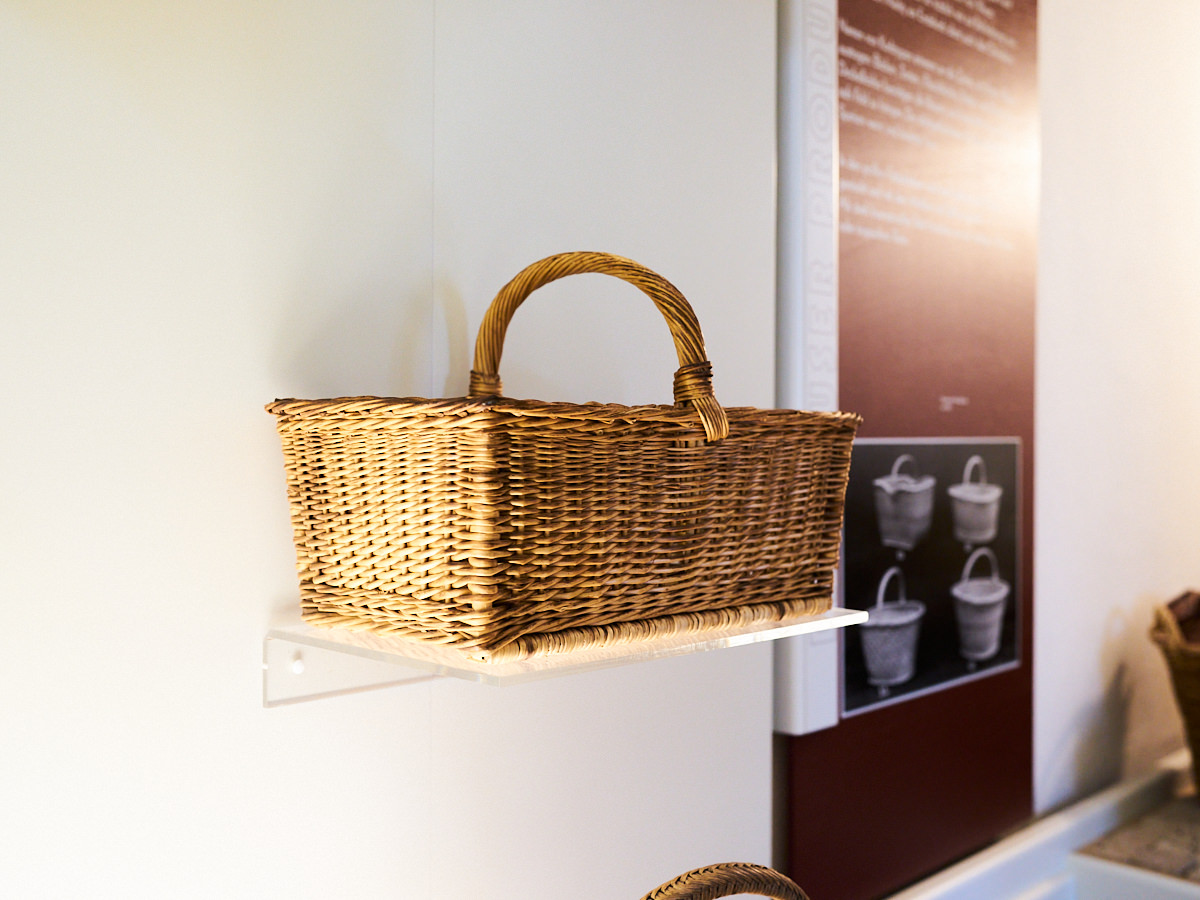
Basket making in Dalhausen began to emerge as an industry around the eighteenth century (roughly corresponding to the mid to late Edo period in Japan). Until then, the village had been primarily centered on agriculture. However, as food distribution became more stable and advances were made in medicine and sanitation, the population gradually increased during this time. 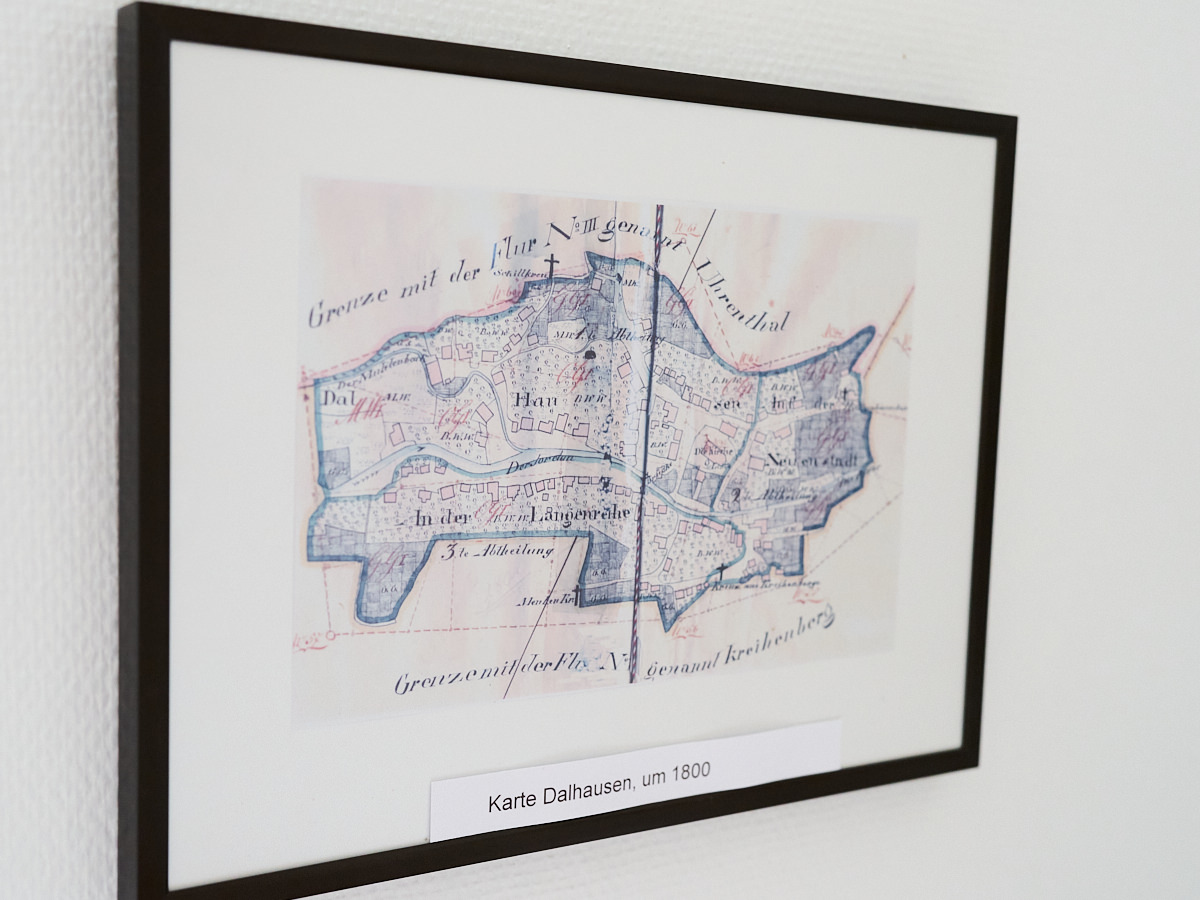
This is a map of Dalhausen around the year 1800. At that time, there were only a small number of households—just enough to count individually. The population is said to have been around 200 people. 
This is the map from 1855. Over the span of fifty-five years, the land had been subdivided, and the number of houses had increased significantly. By this time, the population had grown to around 900 people. As the population continued to rise, farmland was divided into smaller and smaller plots, and more and more people found it difficult to make a living through agriculture alone. 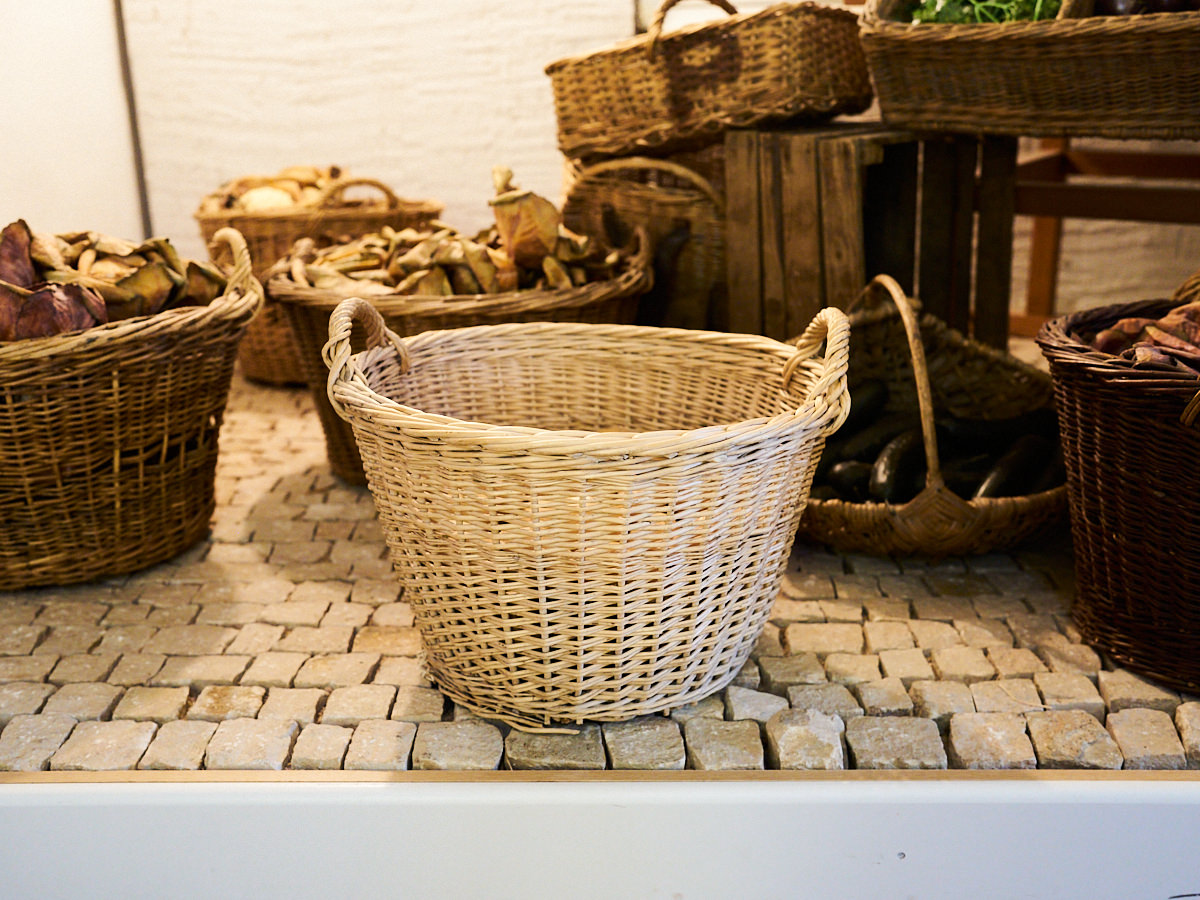
As a result, some people emigrated to America, while many others left the village as seasonal laborers in search of work elsewhere. 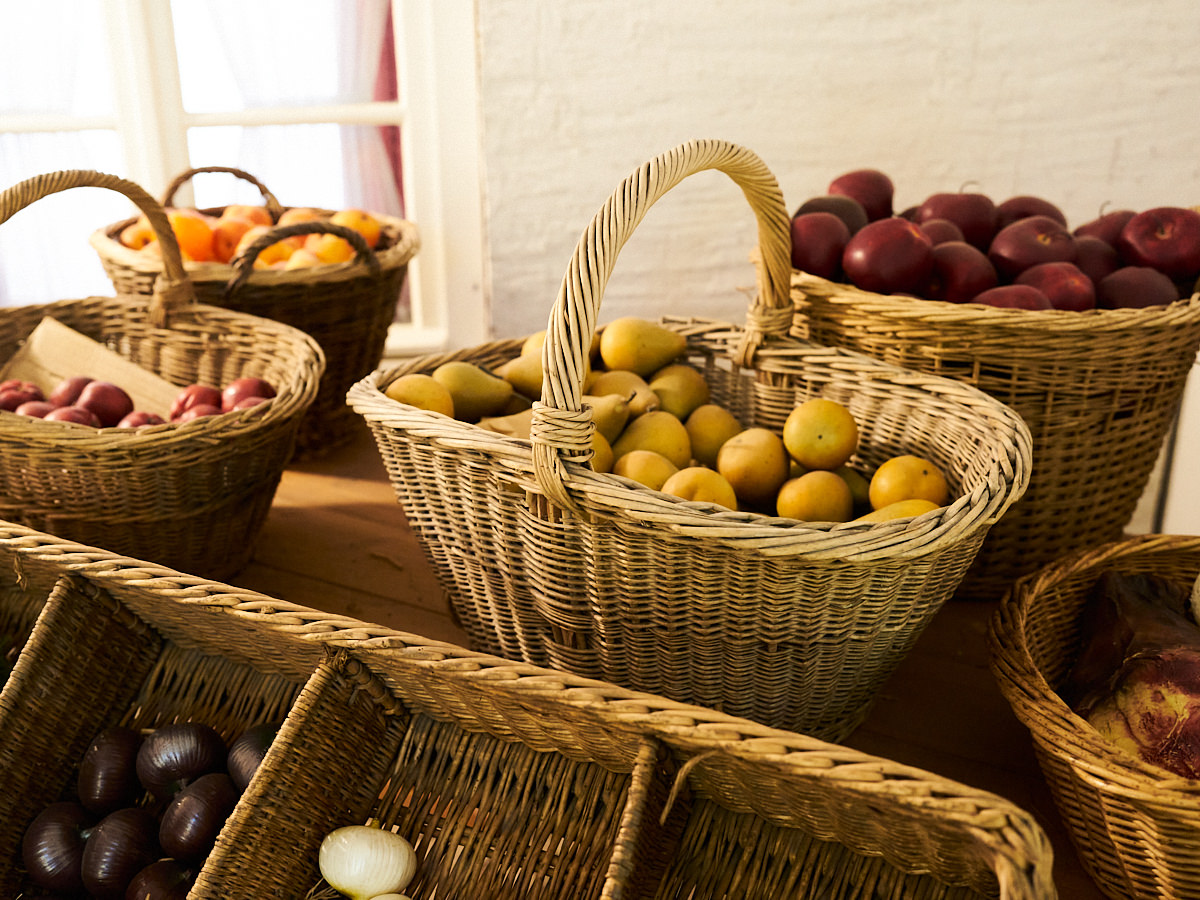
It was also around this time that basket making began in earnest as a secondary occupation for farming families. 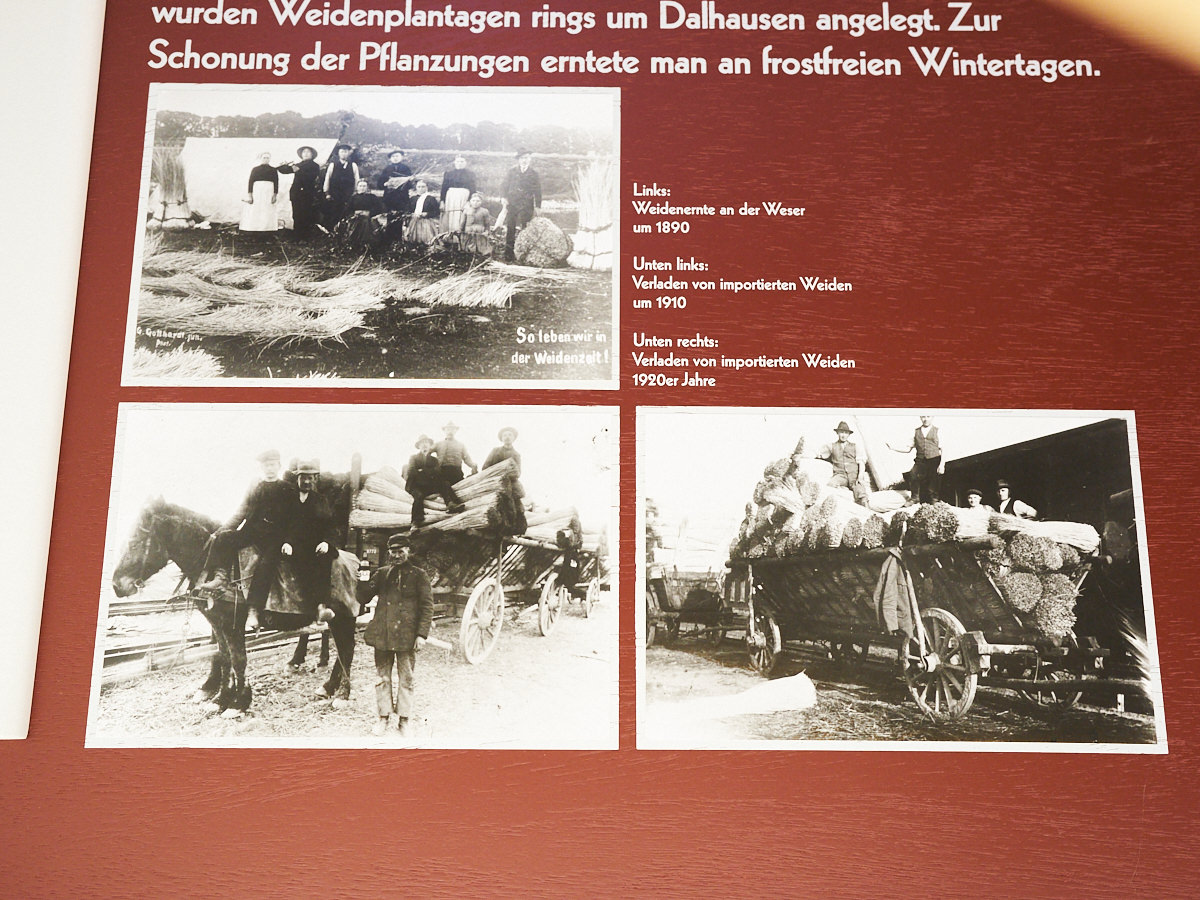
The willow used as material for basket making was harvested along the Bever River, which flows through Dalhausen, as well as
along the basin of the Weser River, into which the Bever flows. It is said that, at that time, the people of Dalhausen held the rights to harvest willow in the Weser River basin. Each year, for about six weeks between July and September, the men of the village would travel to the Weser region to gather willow, bundling the cut rods and carrying them back to Dalhausen.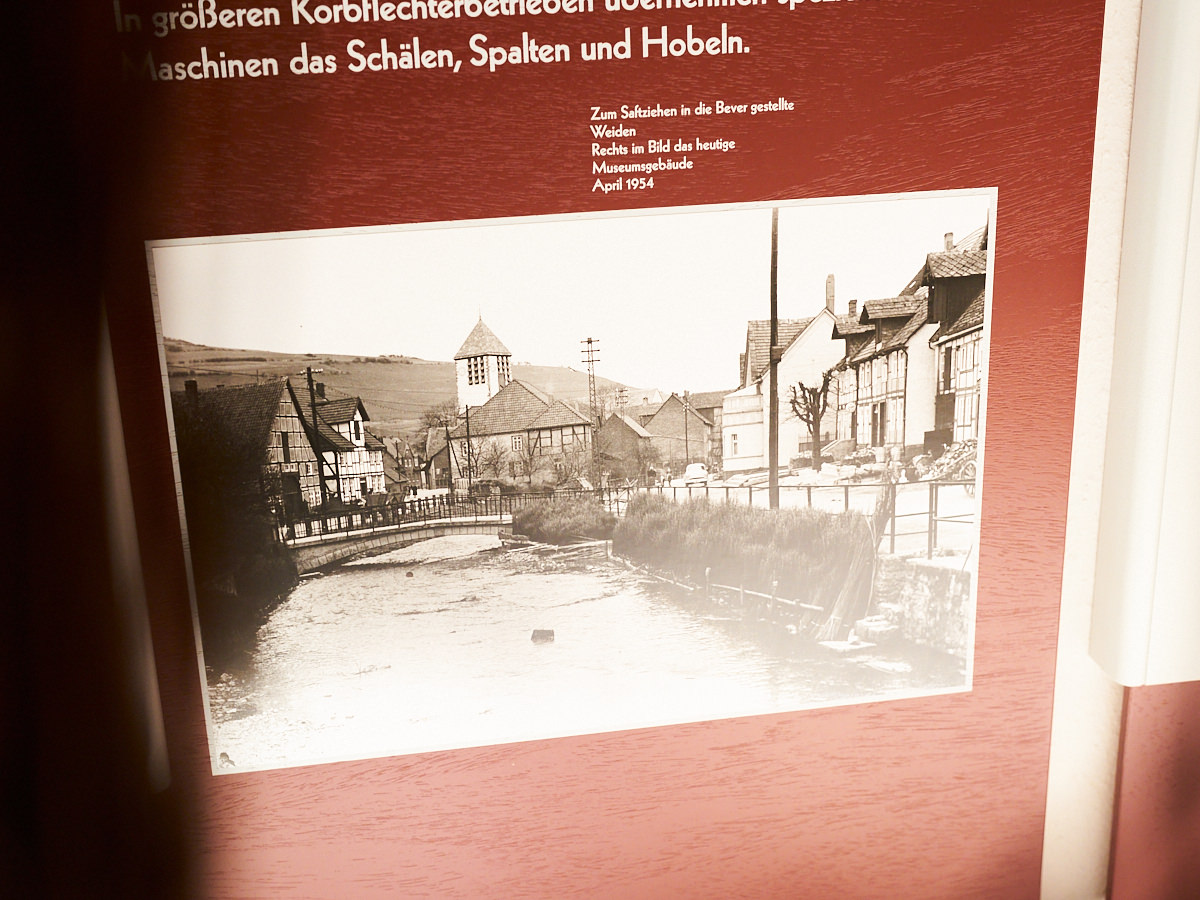
After being cut, some willow rods were simply dried, while others were immersed in the waters of the Bever River to make the bark easier to remove before further processing. This photograph, taken in 1954, shows willow being soaked in the Bever River. The building visible on the right is what is now the Dalhausen Basket Maker Museum. 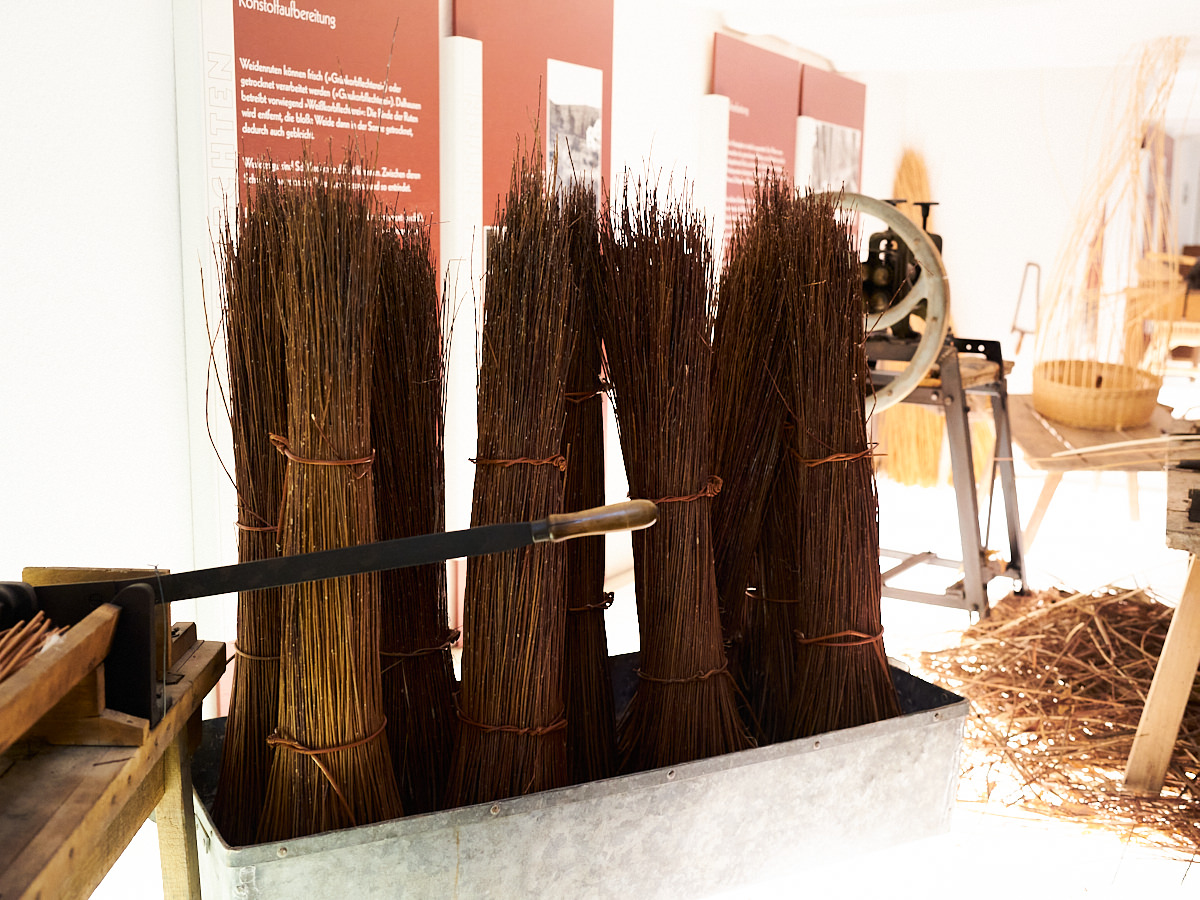
This shows an actual example of willow rods with their bark still attached, immersed in water. 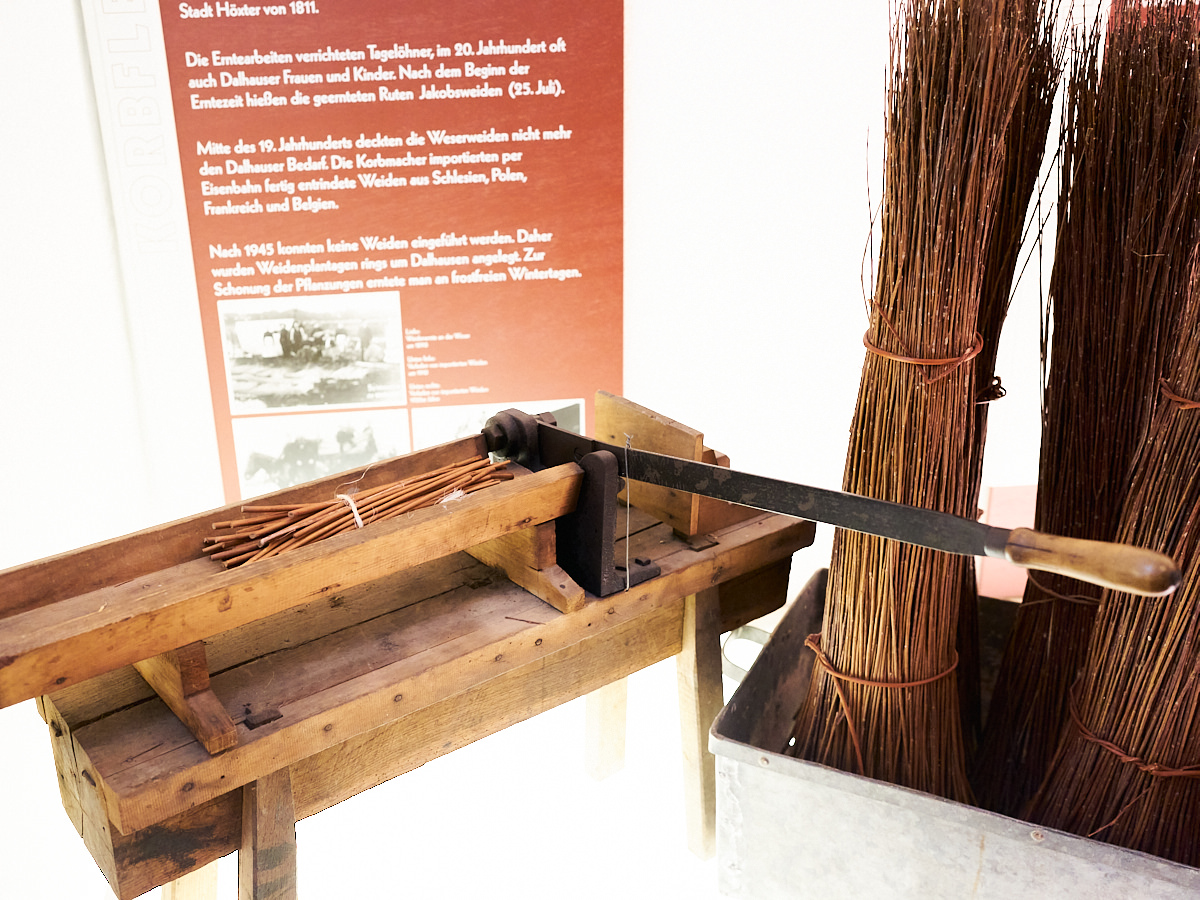
In addition, a cutting bench used for trimming bundles of willow is also on display. 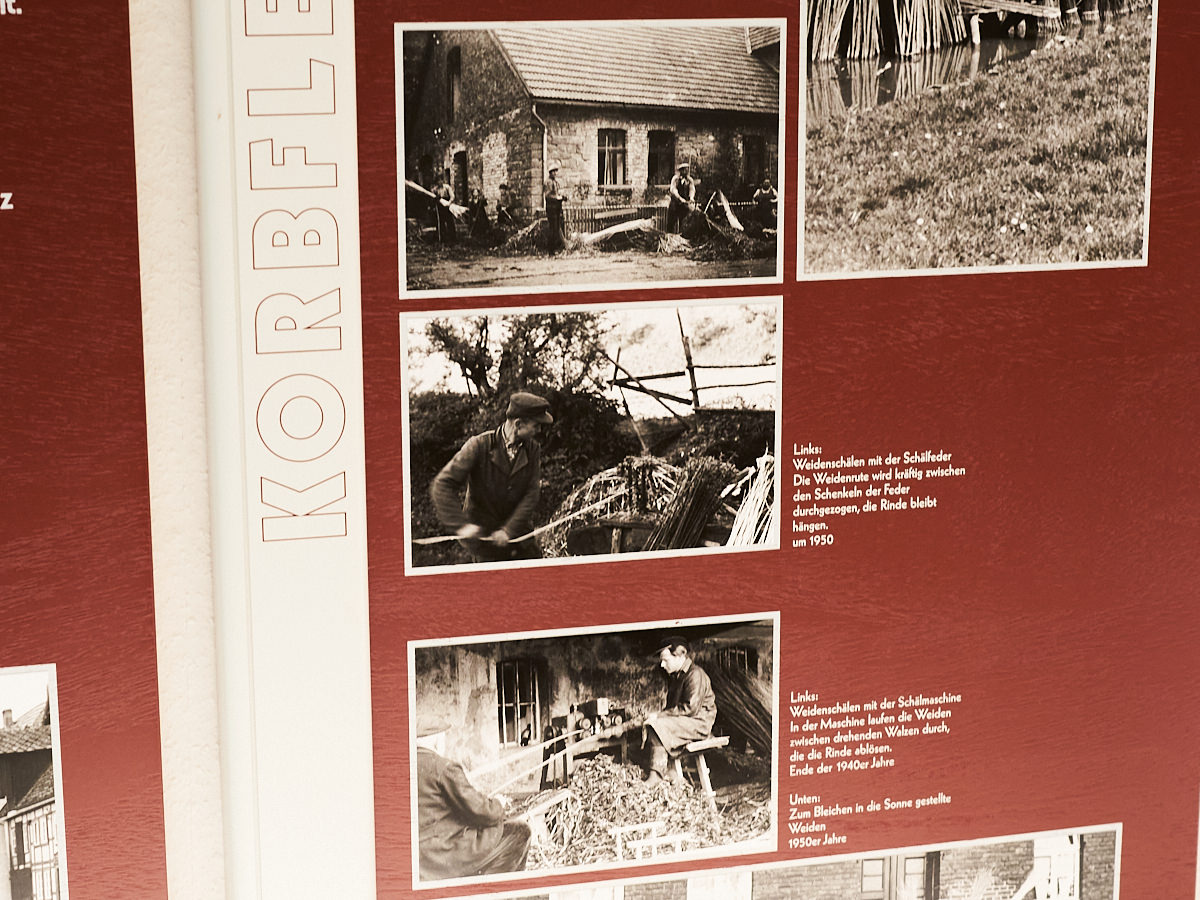
Originally, the bark was peeled by hand, one rod at a time. However, from the 1940s onward, roller-type machines were introduced, making it possible to strip the bark more efficiently and significantly increasing productivity. 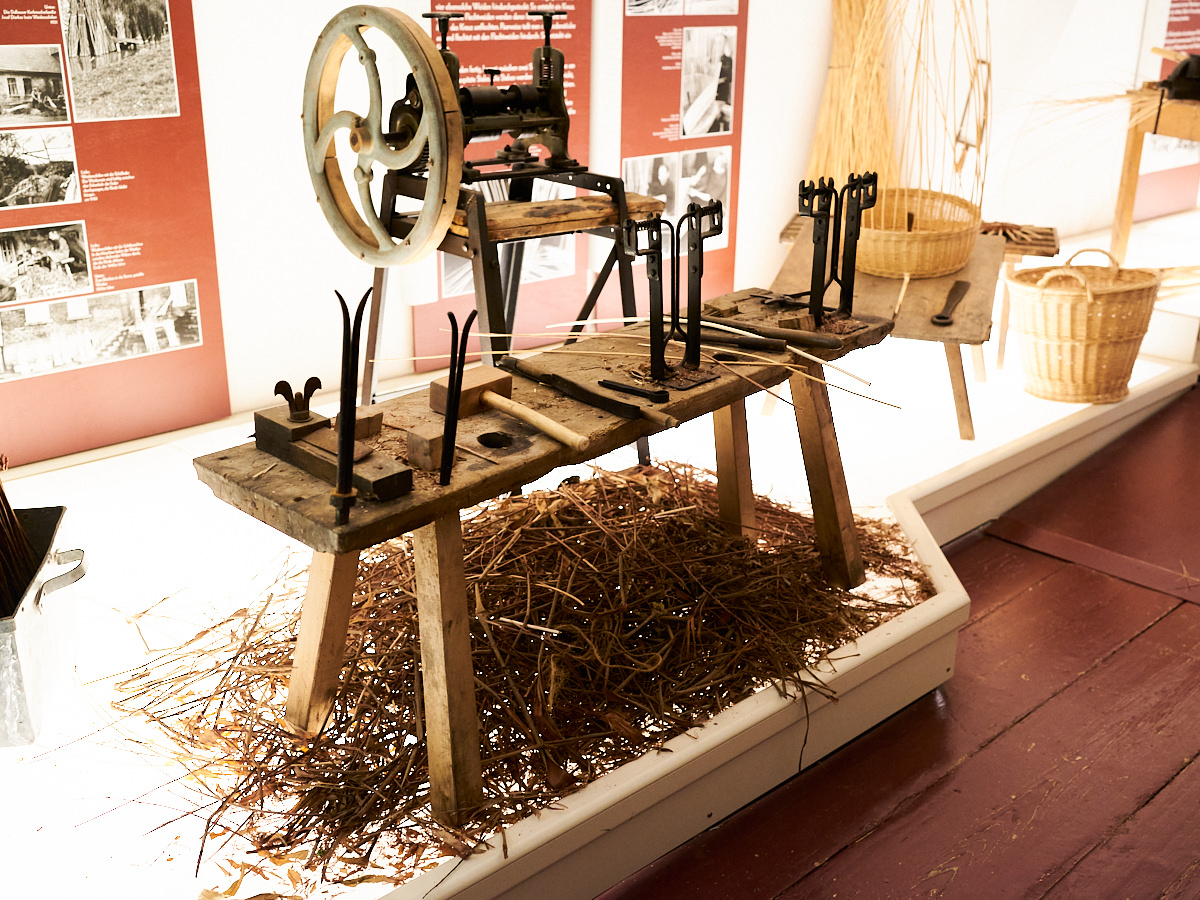
Tools for stripping the bark—both simple hand-operated metal implements and larger mechanical devices—are also on display. 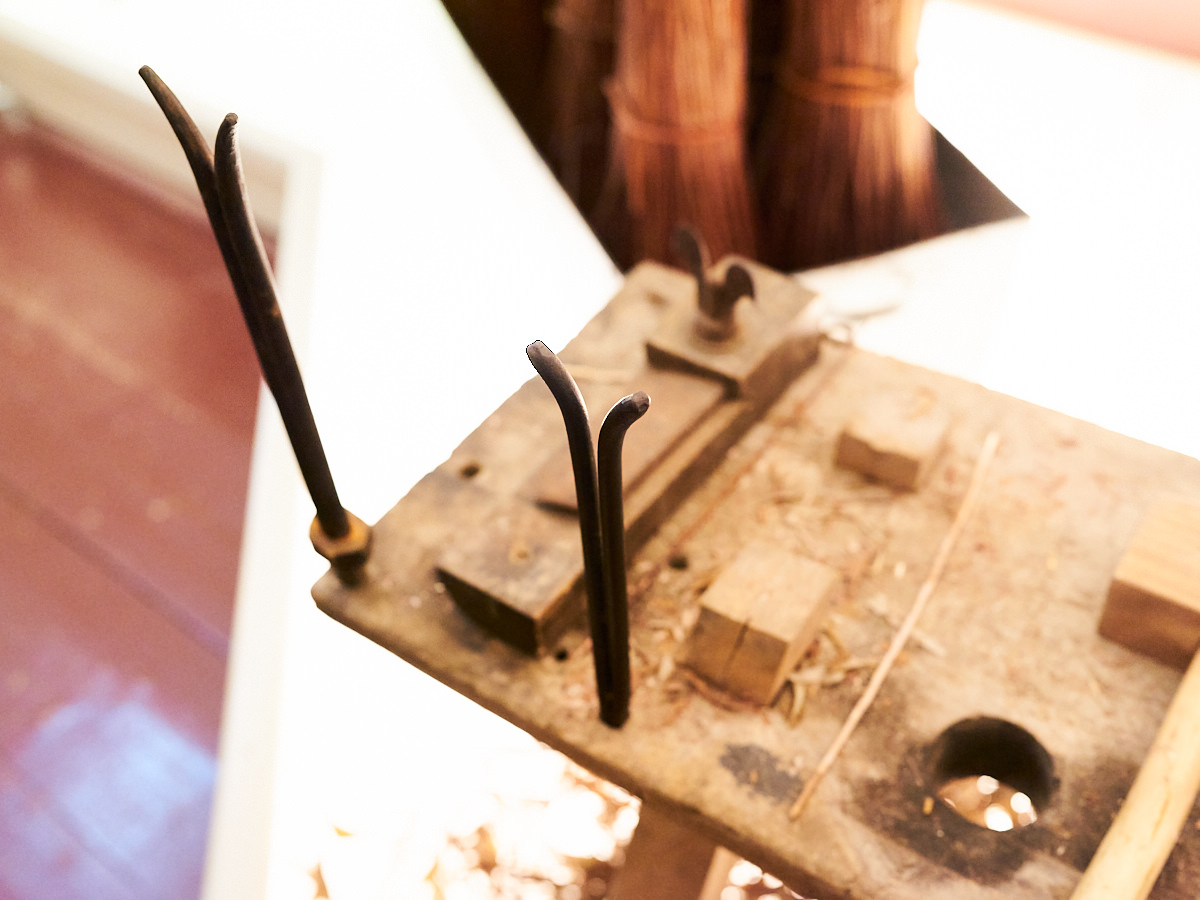
The willow that has been soaked in the river is drawn firmly against this metal tool to strip away the bark. It is a remarkably simple, almost primitive device. Even today, some European basket makers continue to use tools of this kind. 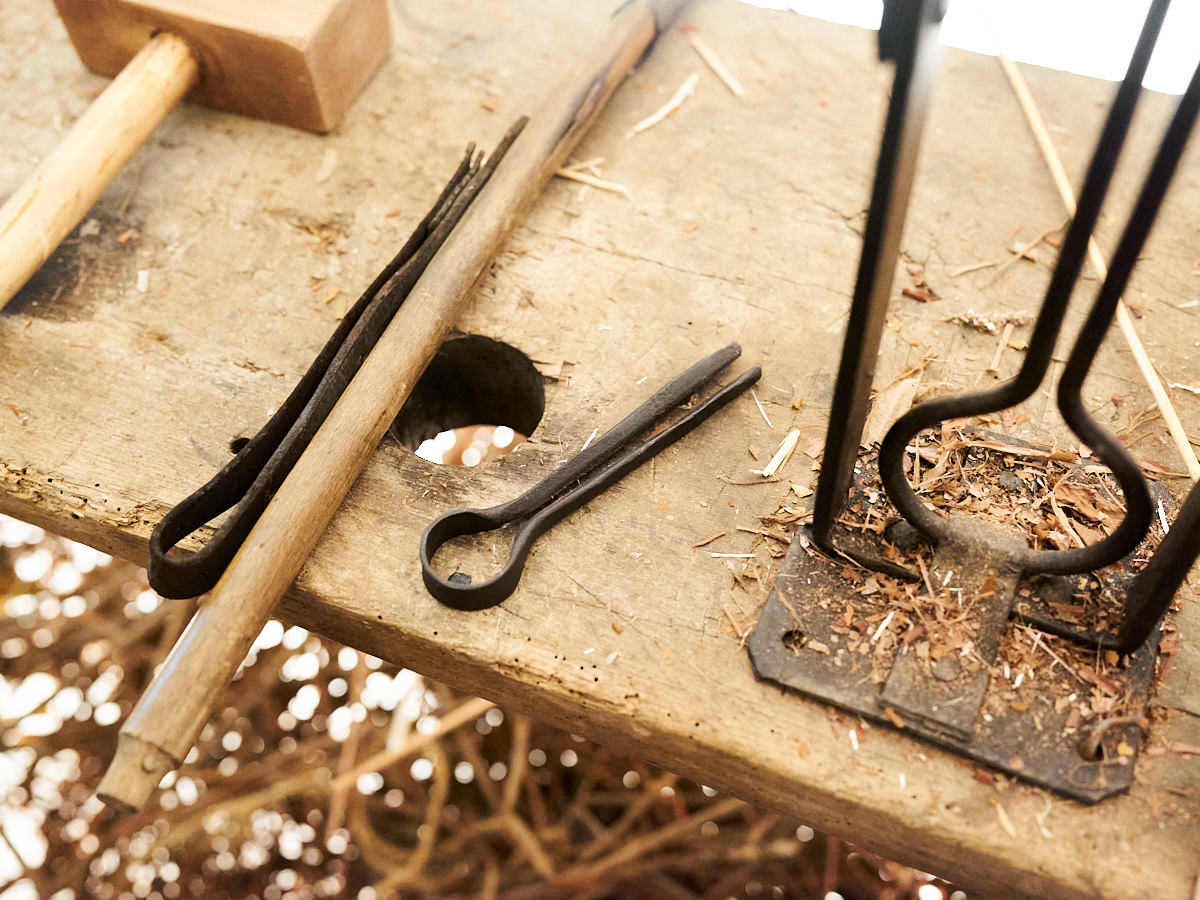
This is another bark-stripping tool, used by pinching the willow between two blades—much like a pair of scissors—and pulling it through by hand. 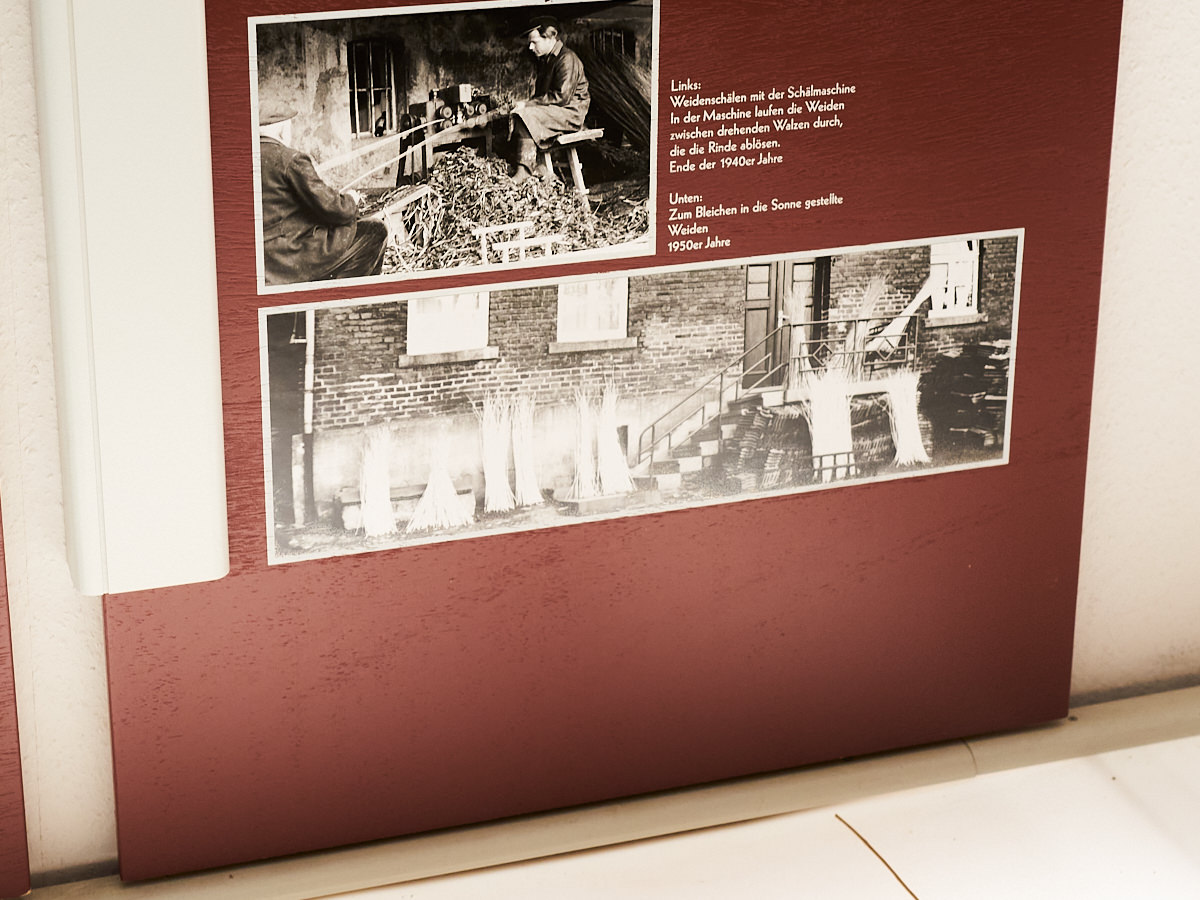
After the bark has been removed, the willow is dried in the sun, which turns it a pale white. This completes the basic preparation of the material in Dalhausen. Before weaving begins, the willow is soaked in water once more to soften it, and only then is the basket-making process started. 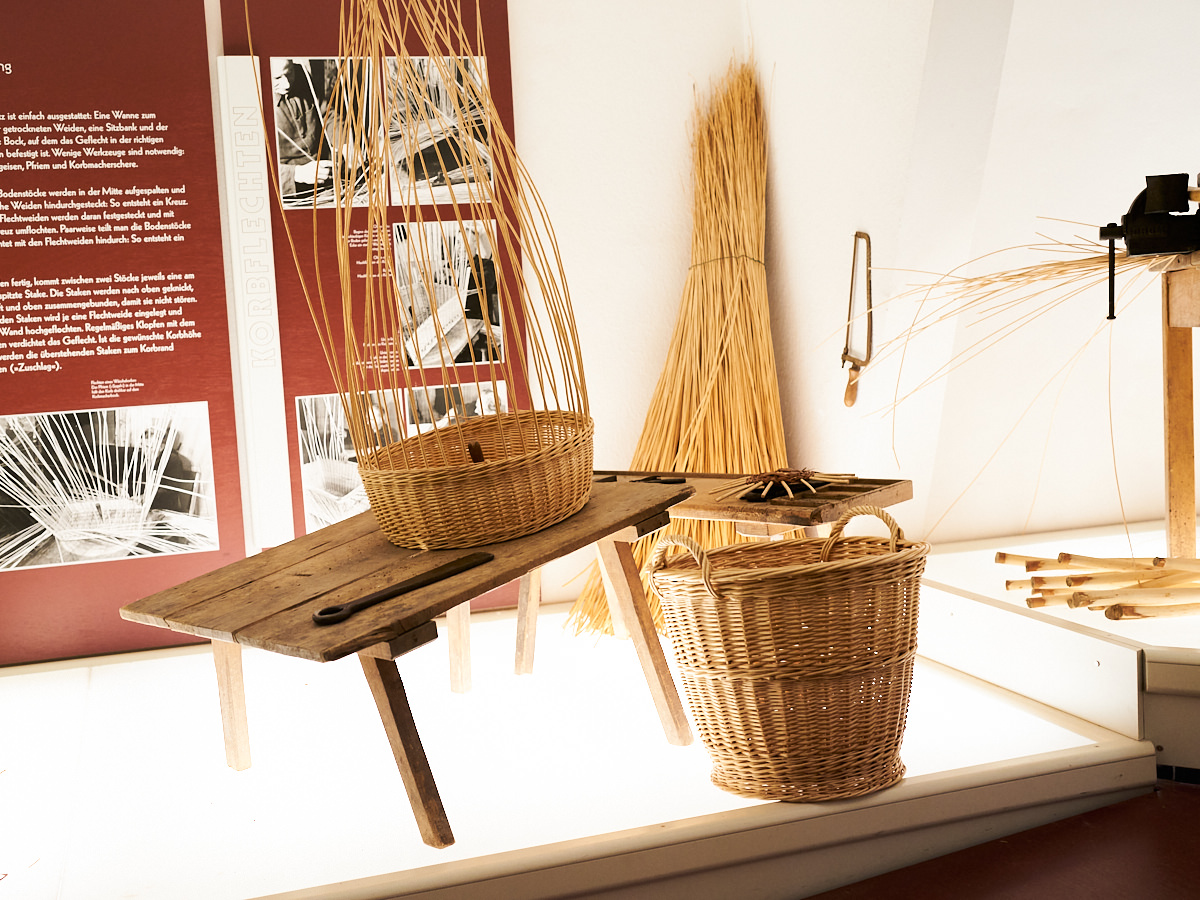
Here we see the craftsmen’s workbench and chair. In the foreground is the workbench, and behind it stands the chair.
The front edge of the table slopes downward—this distinctive inclined design is said to be characteristic of the Dalhausen style.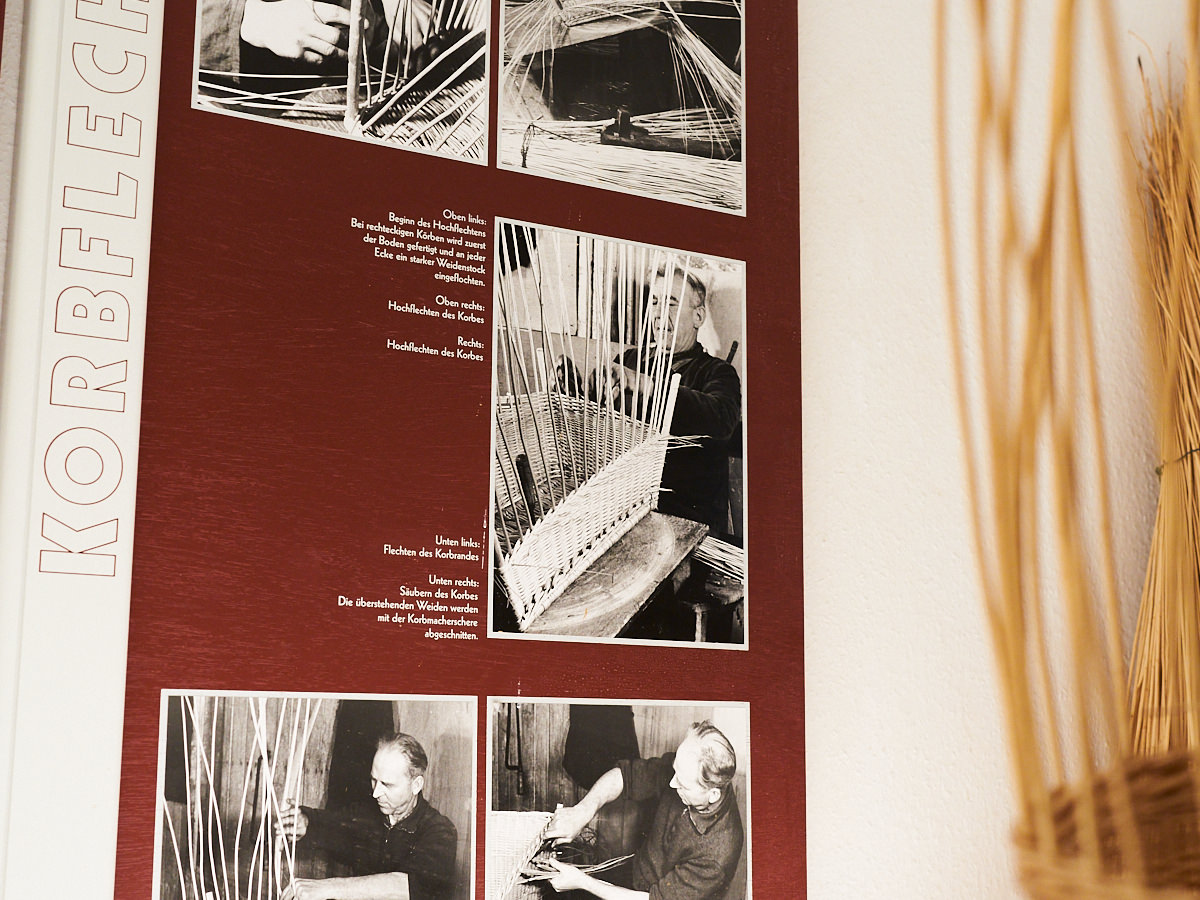
Dalhausen baskets are woven beginning with the base, then the sides are raised, and finally the rim is finished with a wrapped border. 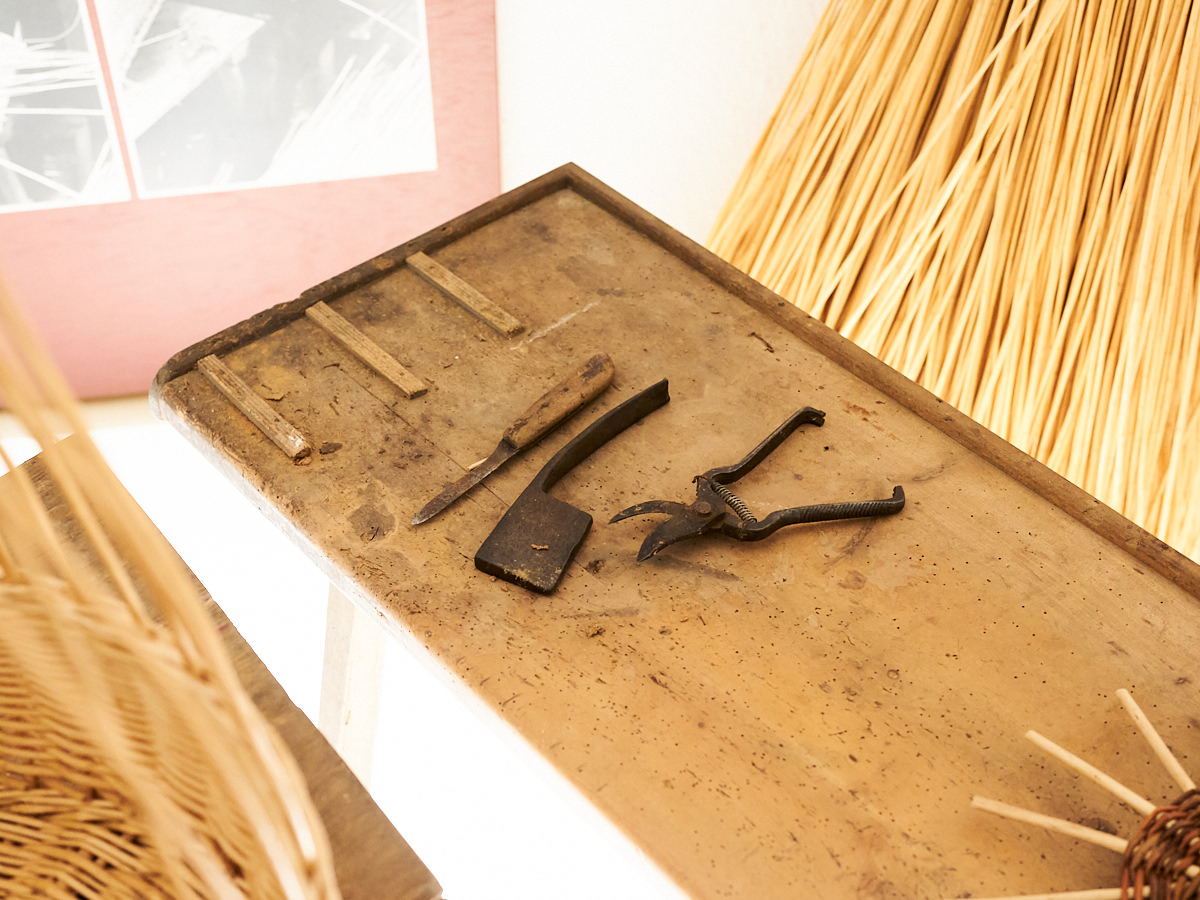
The tools placed on the workbench include an awl-like tool used to insert the rim material into the weave, a hammer-like tool for tightening and compacting the woven structure, and a pair of nippers for cutting the rods. 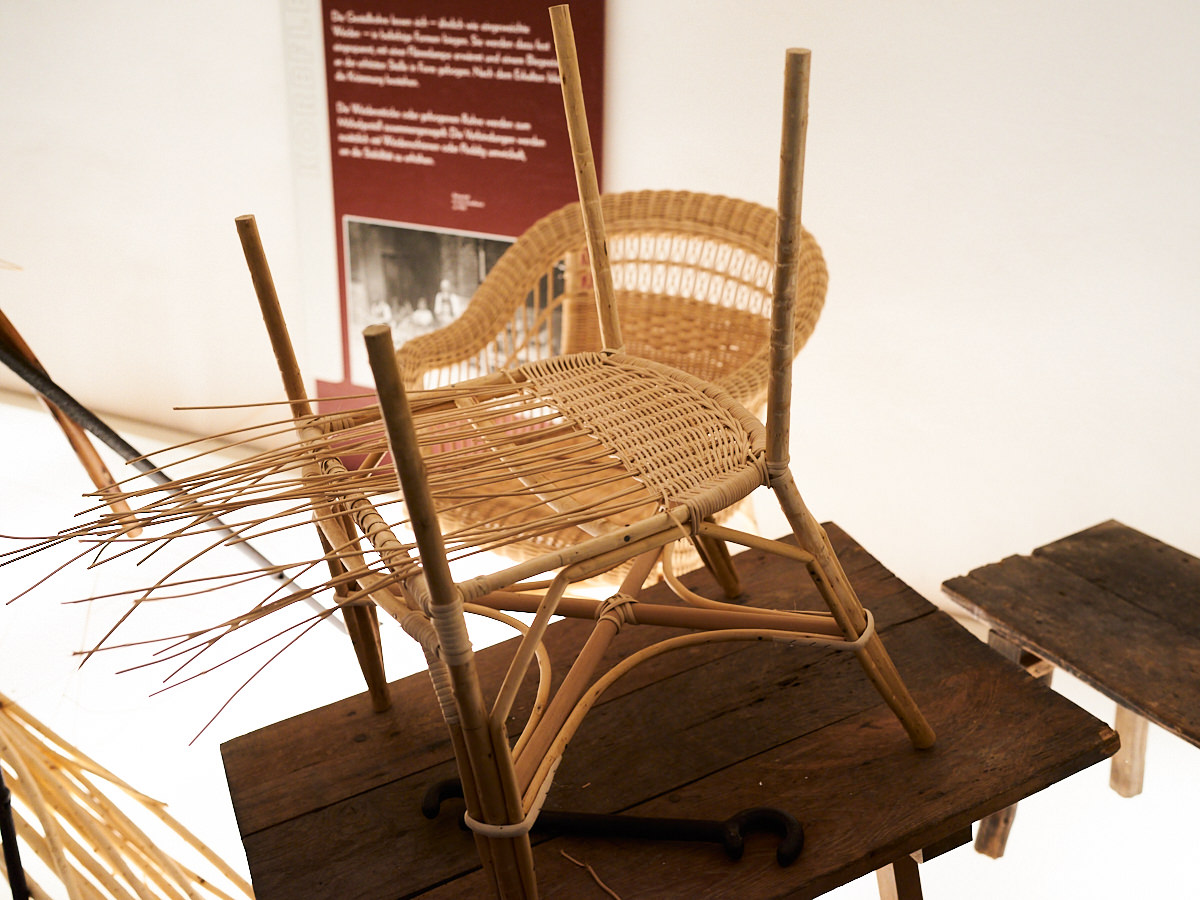
In addition to baskets, there were also pieces of furniture, such as chairs, constructed with thick willow rods used as the structural frame. 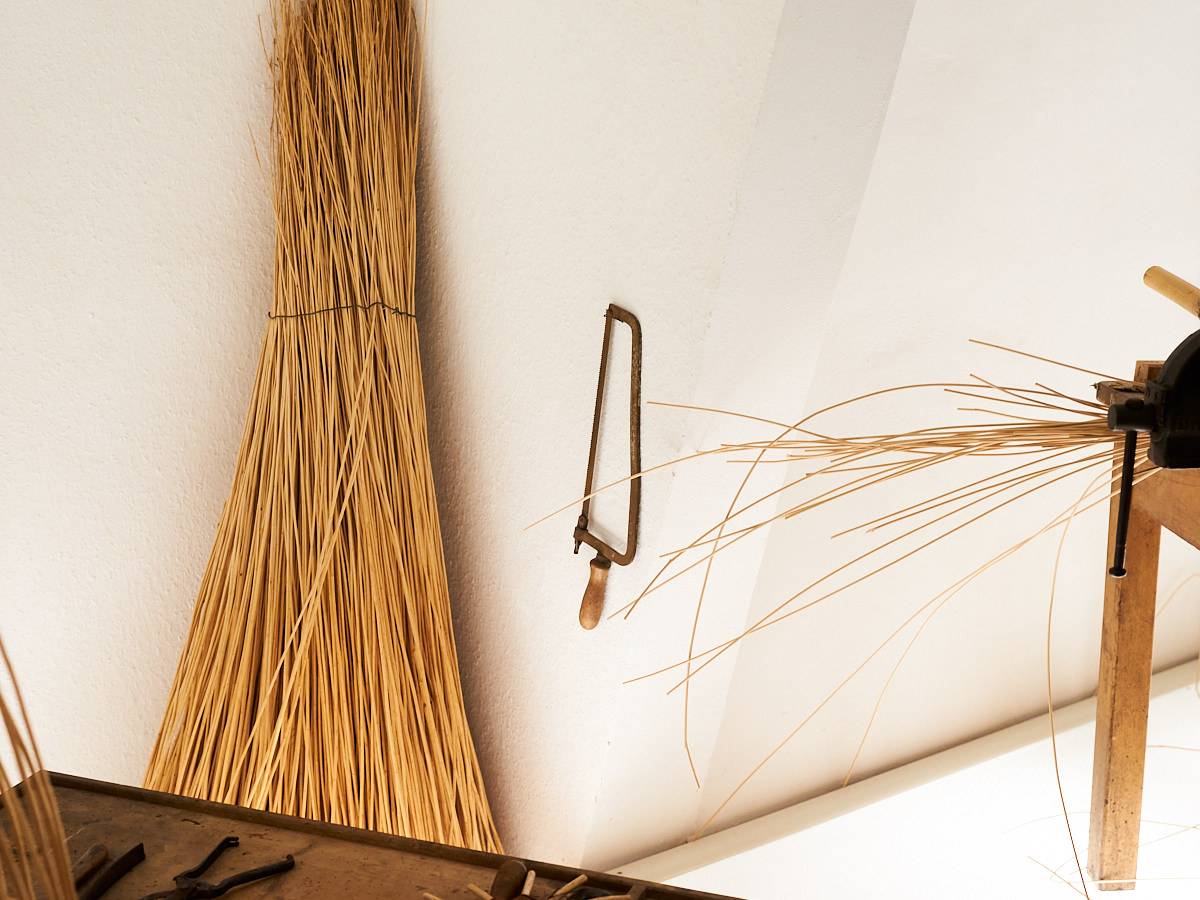
This is a saw. Its shape is very similar to the saws used for cutting bamboo in Japan. It is said that this particular form was used when a clean and precise cross-section was required. 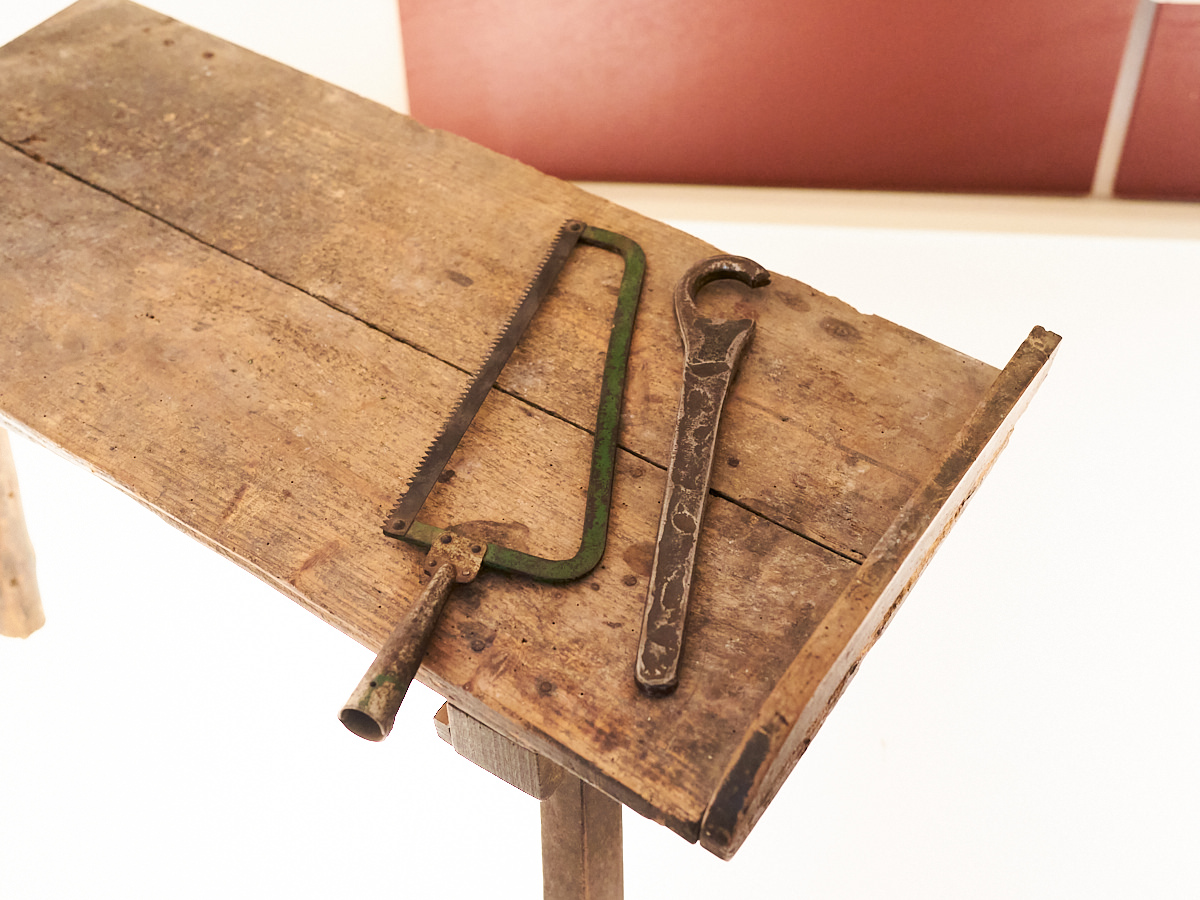
On the left is a saw. On the right is a tool used to straighten thick willow branches. When making furniture, this tool was used to correct the natural curves of the willow and shape it into straight components. 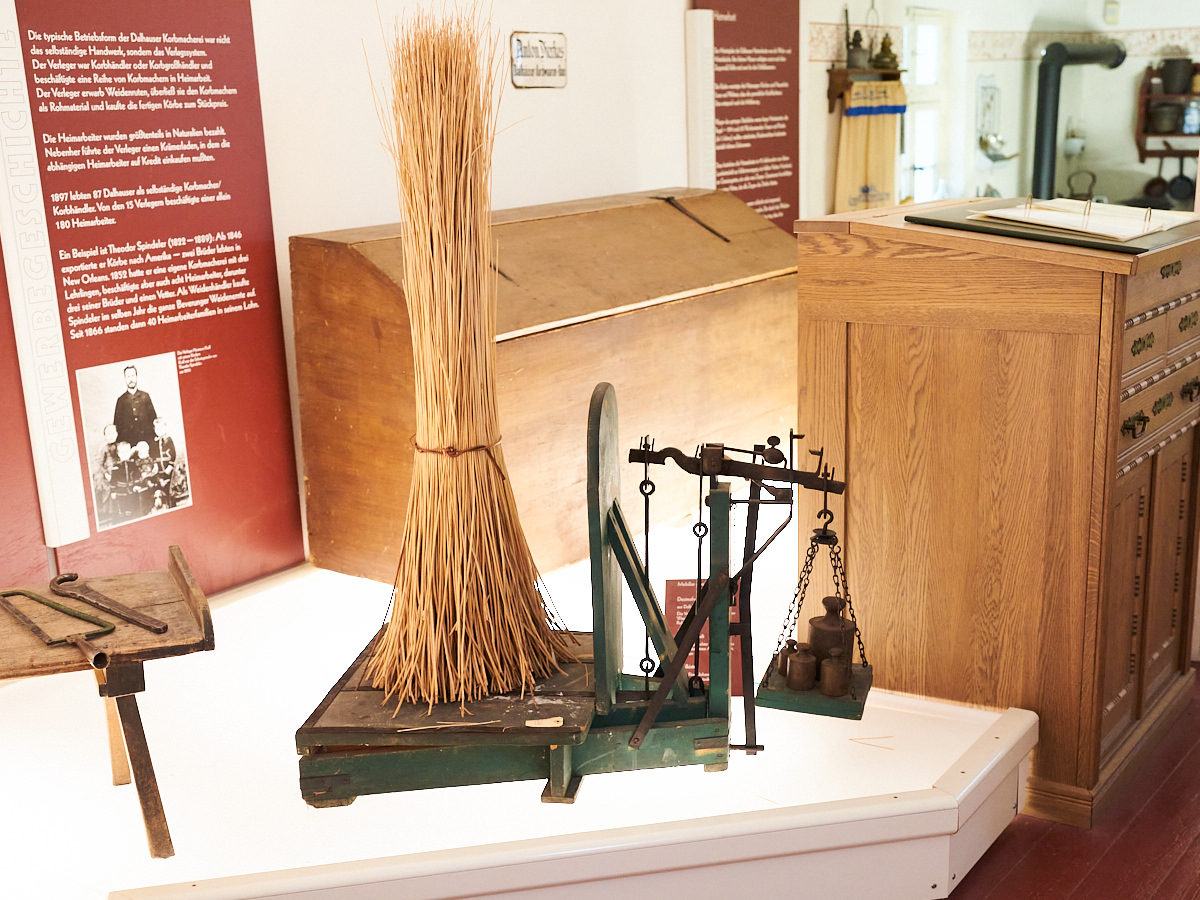
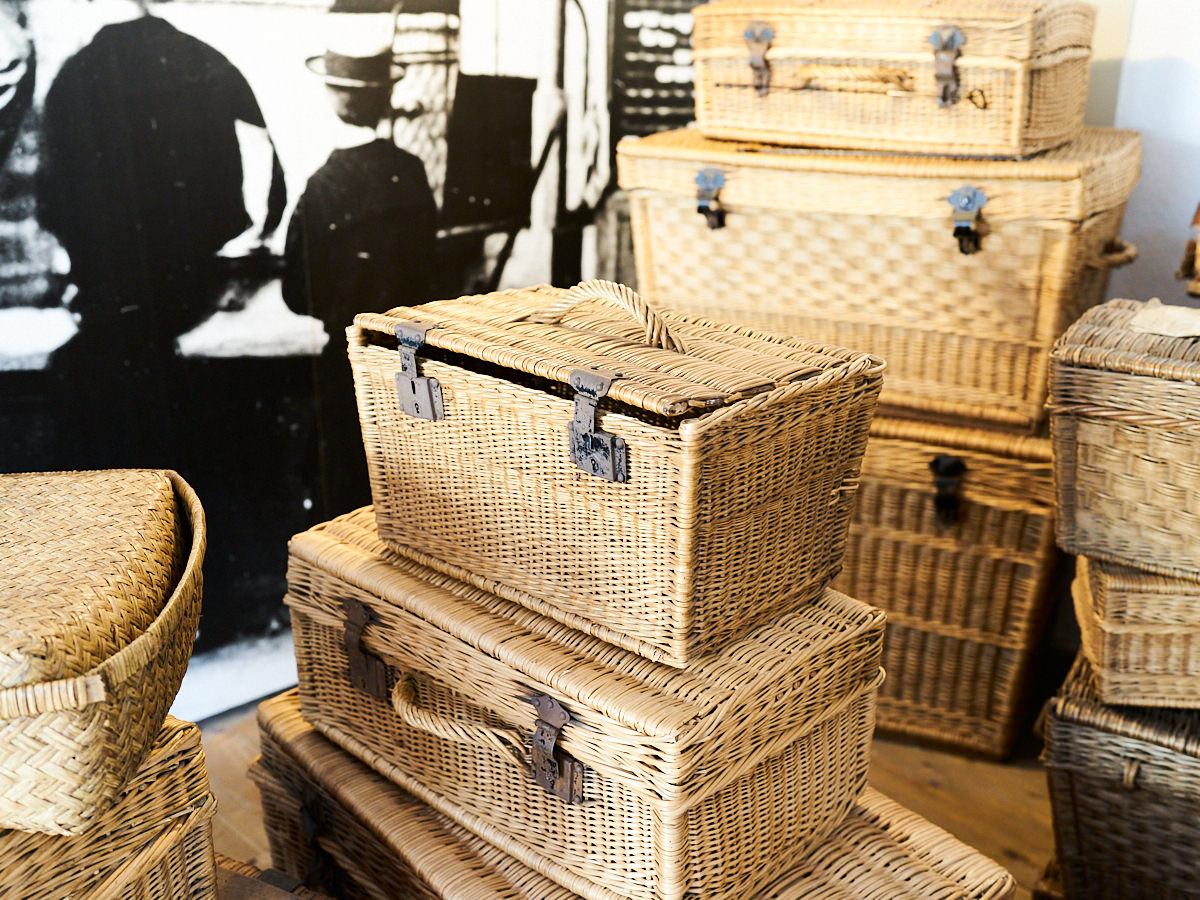
As basket production expanded in Dalhausen, the willow available along the surrounding riverbanks was no longer sufficient to meet demand. By the latter half of the 1800s, peeled willow was being imported from Poland, France, and Belgium. This is a scale used to measure those materials.
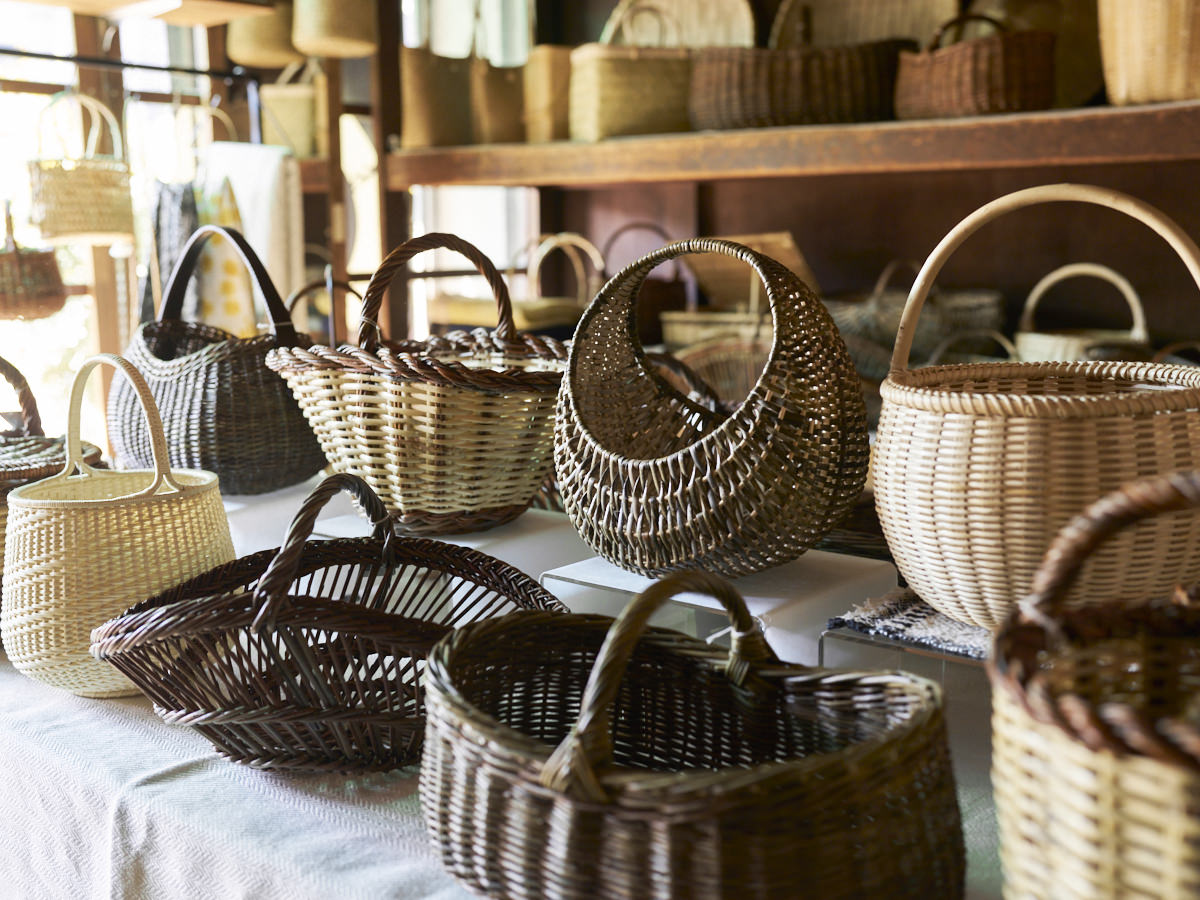
As I continued walking through the museum, looking carefully at the various baskets on display, 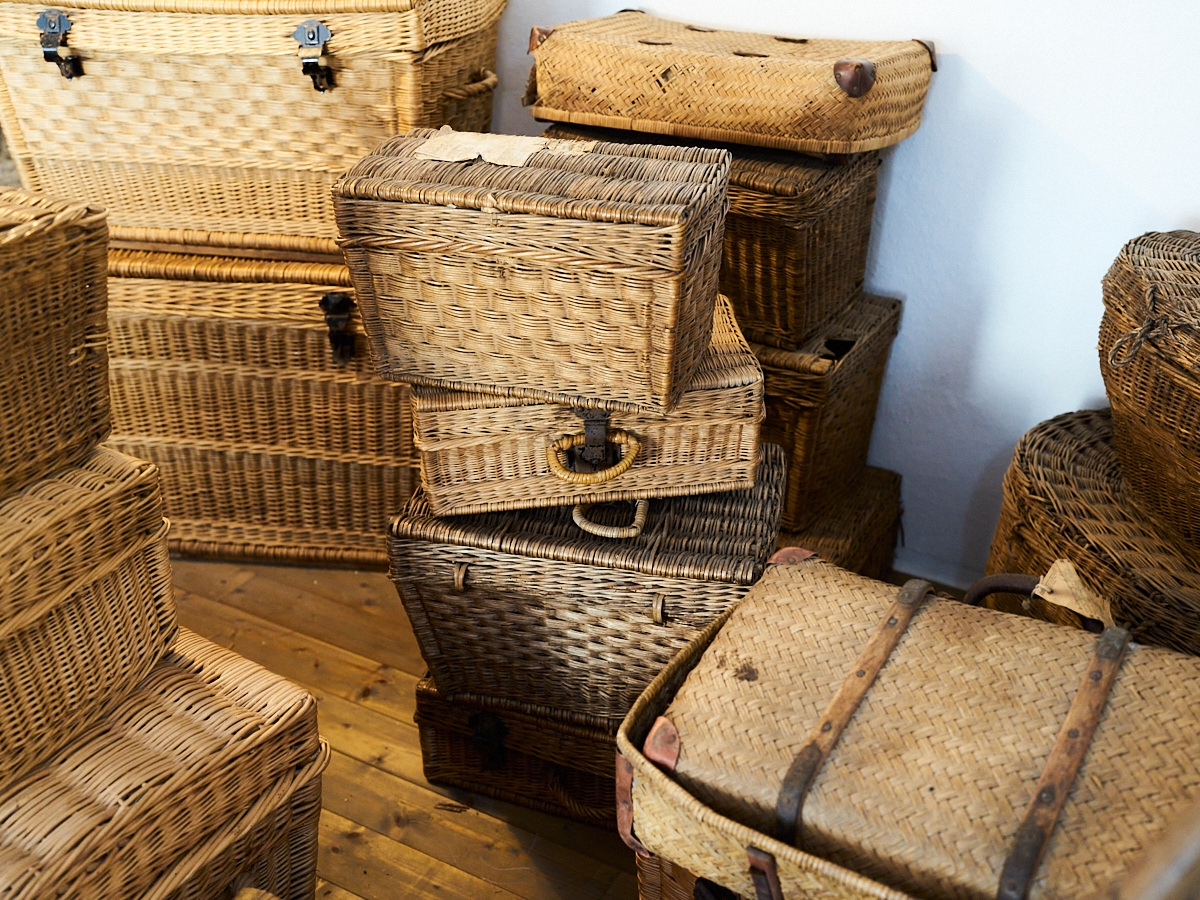
I had the impression that many of the baskets made in Dalhausen were woven from white willow rods, their bark carefully removed. 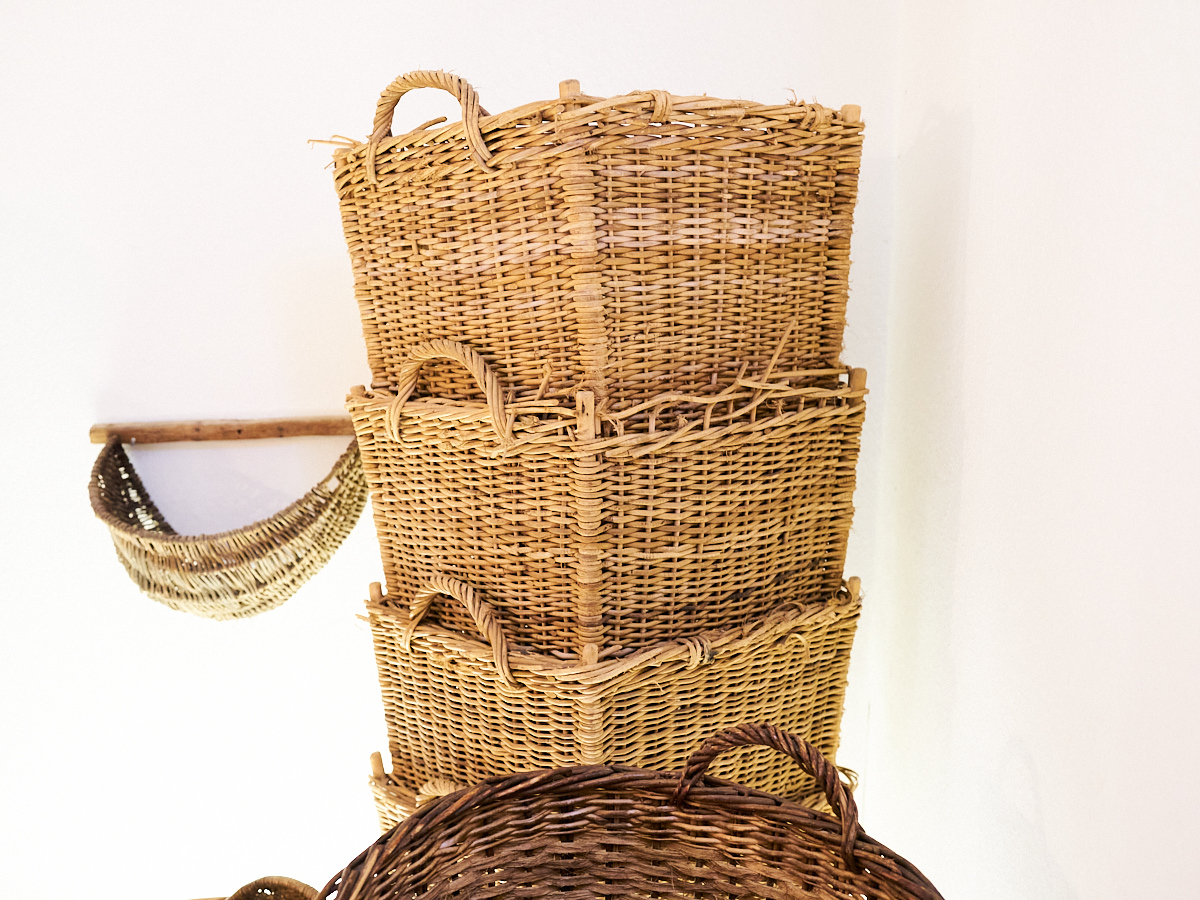
Not only with willow—just as with bamboo in Japan—the outer bark carries the marks of its natural growth: subtle variations in texture, small scars, and stains. Each rod has its own individuality. When these are woven into a basket, gentle gradations of color appear, and differences in surface texture become visible, giving rise to pieces that each possess their own unique character. 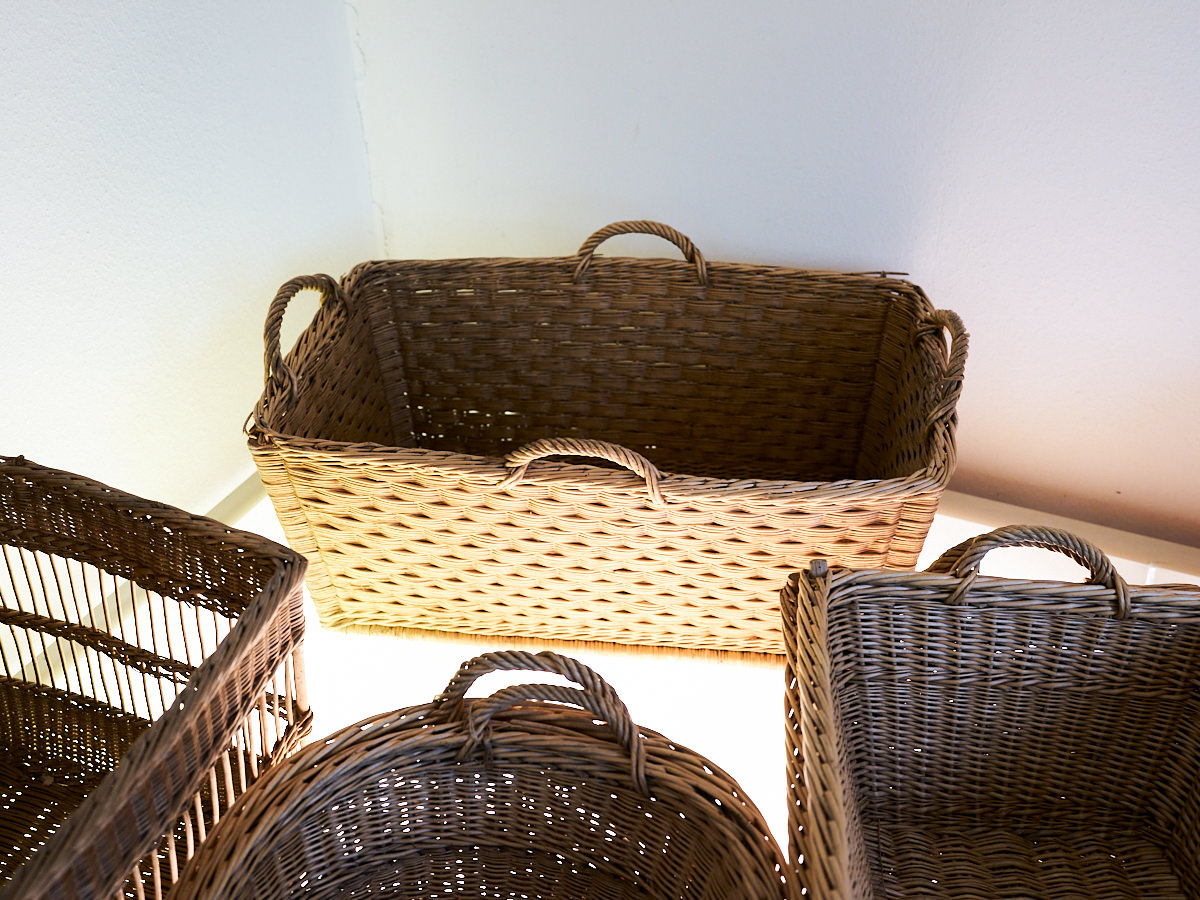
Today, such natural variations might be appreciated as expressions of originality and individuality. However, in those days, when baskets were produced and sold in large quantities, uniformity as a product was likely valued more than individual character. For that reason, peeled willow—allowing for greater consistency in color and quality—was probably used more often, making it possible to produce goods with a stable and reliable standard.
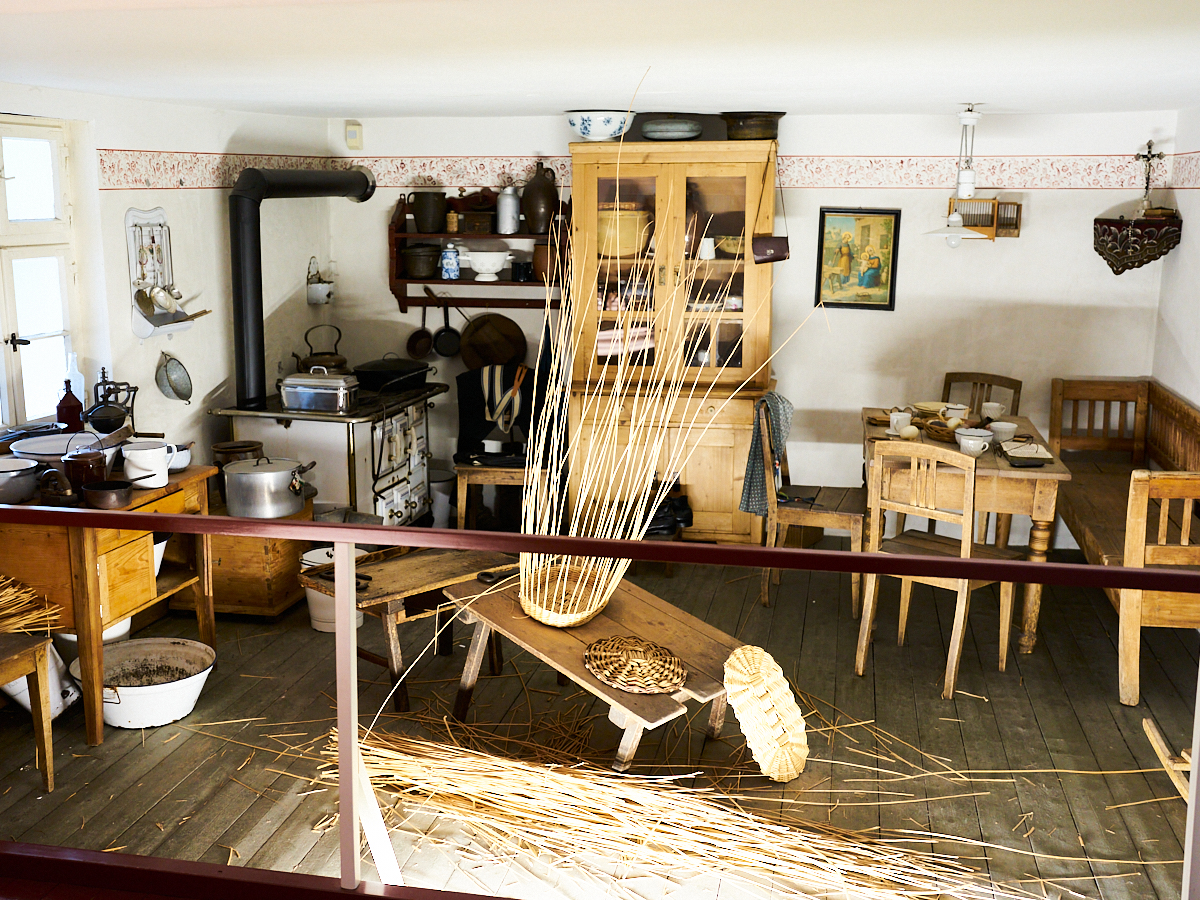
This display recreates the living quarters of basket makers from that time.
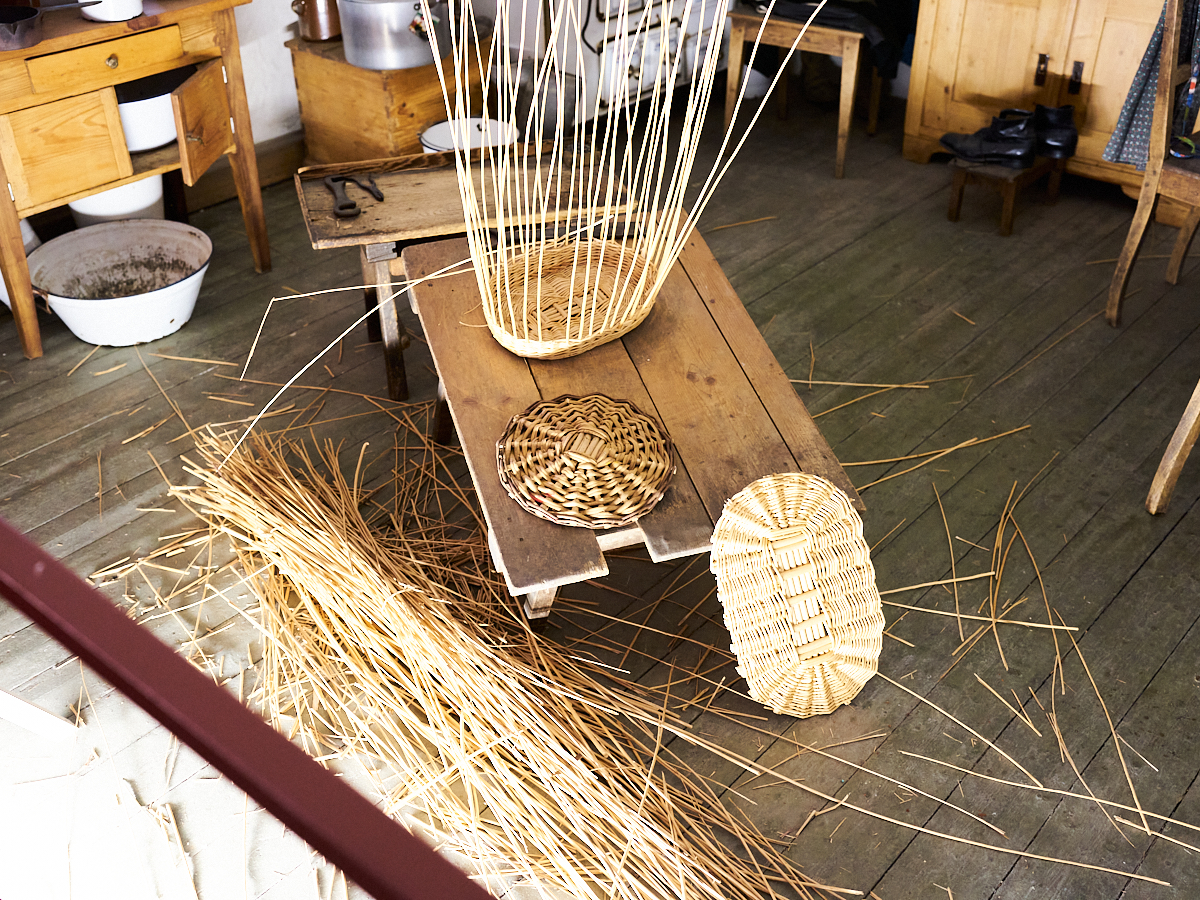
At the center of the room stand a worktable and chair for weaving baskets, along with bundles of willow and a basket still in progress. 
To the left is the kitchen area, 
and a chest holding tableware and cooking utensils. Beside it, bundles of willow lie resting. 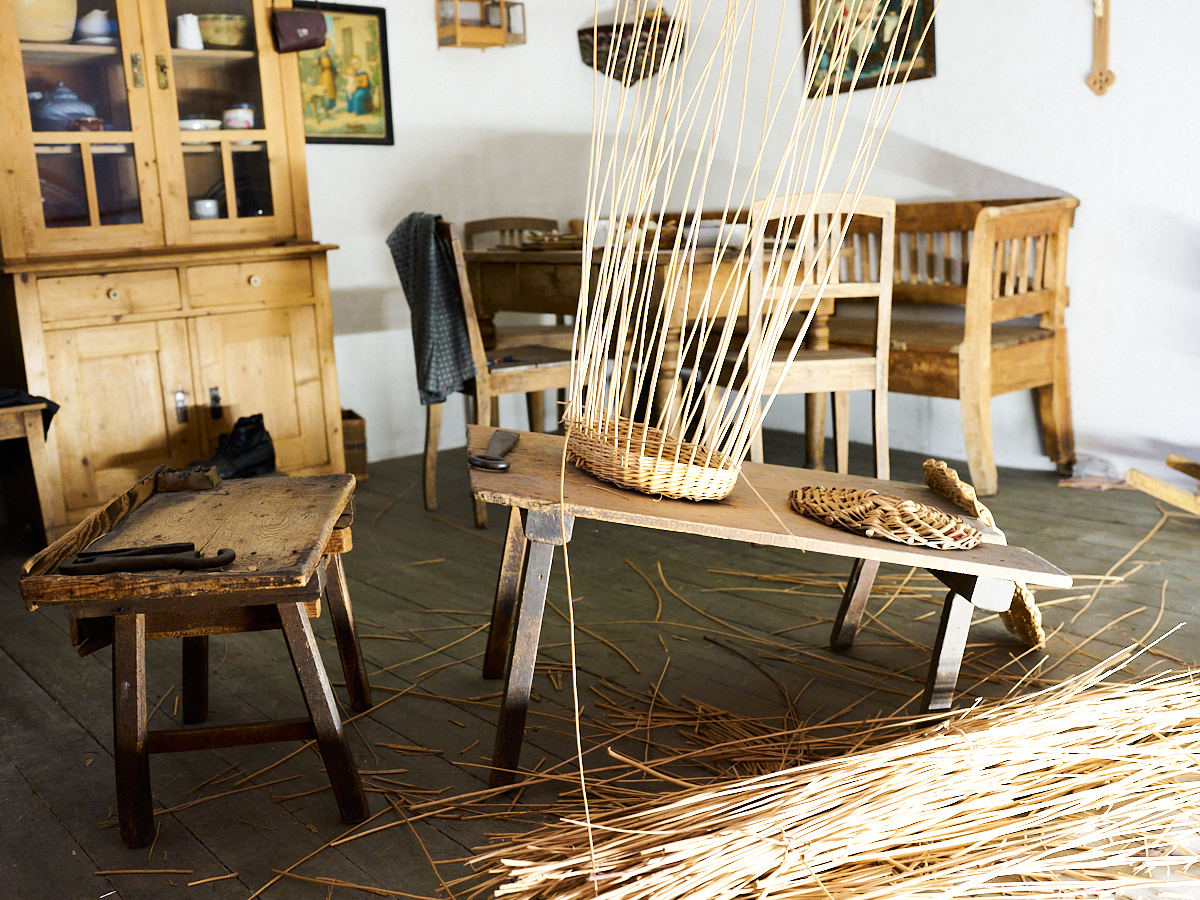
The slanted worktable is characteristic of the Dalhausen style. Behind it stand a dining table and a cupboard, creating a space that vividly conveys the atmosphere of a home-based craft workshop.
Although the scene represents life more than a hundred years ago, it felt almost as if the craftsman had just stepped outside for a short break.
Thus, basket making in Dalhausen, which had developed as a home-based craft industry,
eventually entered what could be called its golden age.
The story continues in the next journal.
___________________________________________
“The One Table” Special Exhibition
European Baskets We Discovered in Germany
2026
February 19 (Thu), 20 (Fri), 21 (Sat), 22 (Sun), 23 (Mon, Holiday)
26 (Thu), 27 (Fri), 28 (Sat)
March 5 (Thu), 6 (Fri), 7 (Sat)
Open | 11:00–16:00
In-store | 1basketry, Minami-Senju, Tokyo