Japan and the Dalhausen Museum (1) — Germany Business Trip Journal 4 日本とつながる、ダルハウゼン博物館 (1) ― ドイツ出張記 4
The morning after our joyful gathering arrived.
After staying in the beautiful guest room at Hansgert’s home,
I slept deeply and woke to a fresh and peaceful morning.
In this journal,
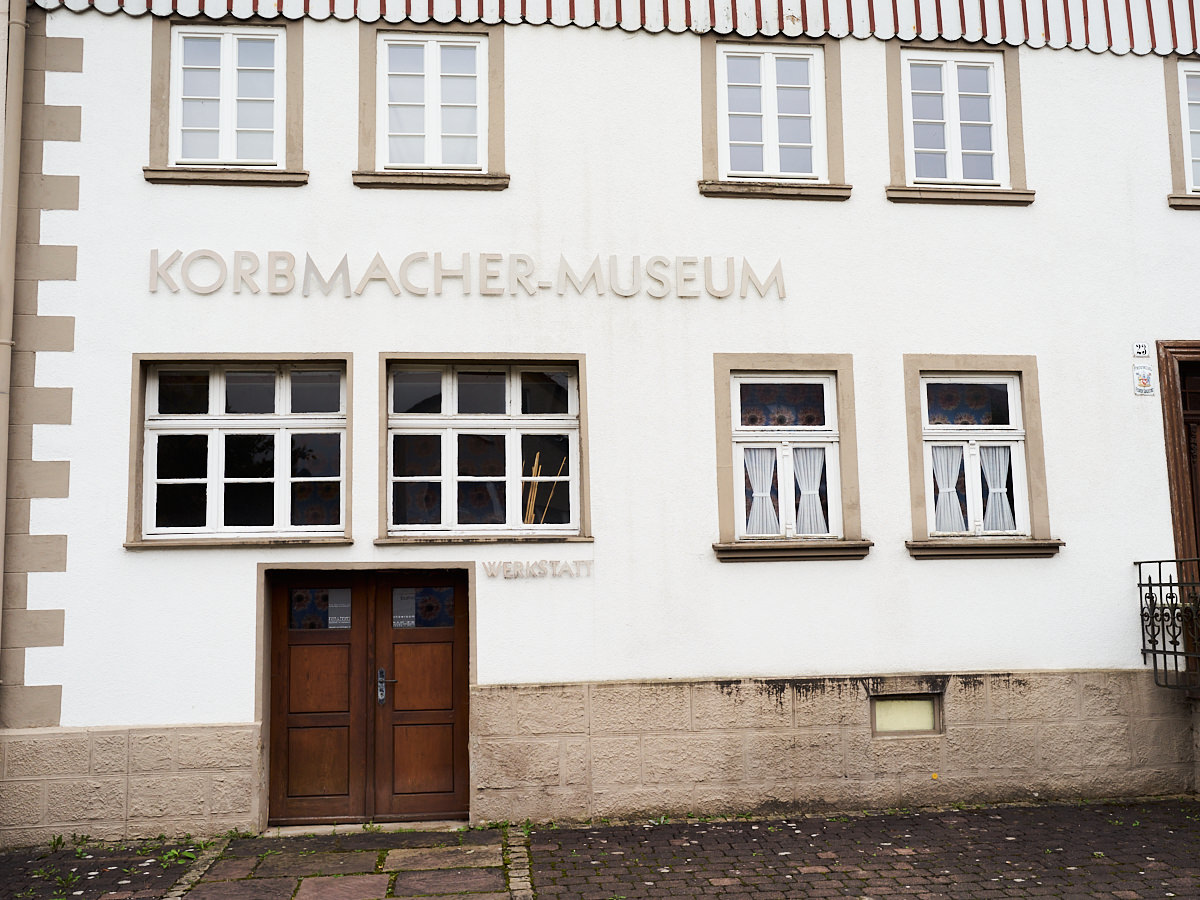
I would like to introduce the Basket Maker Museum of Dalhausen (Korbmacher-Museum Dalhausen),
and share a little about the history of the town itself.
On this day, Hansgert kindly gave me a special tour of the museum,
and I was able to ask him questions about basket-making tools and techniques, making it a truly meaningful and enriching experience.
At present, the museum can only be visited by workshop participants.
(As of 2026, the workshops are currently on hold.)
Now then, let us begin our tour of the Dalhausen Basket Maker Museum.
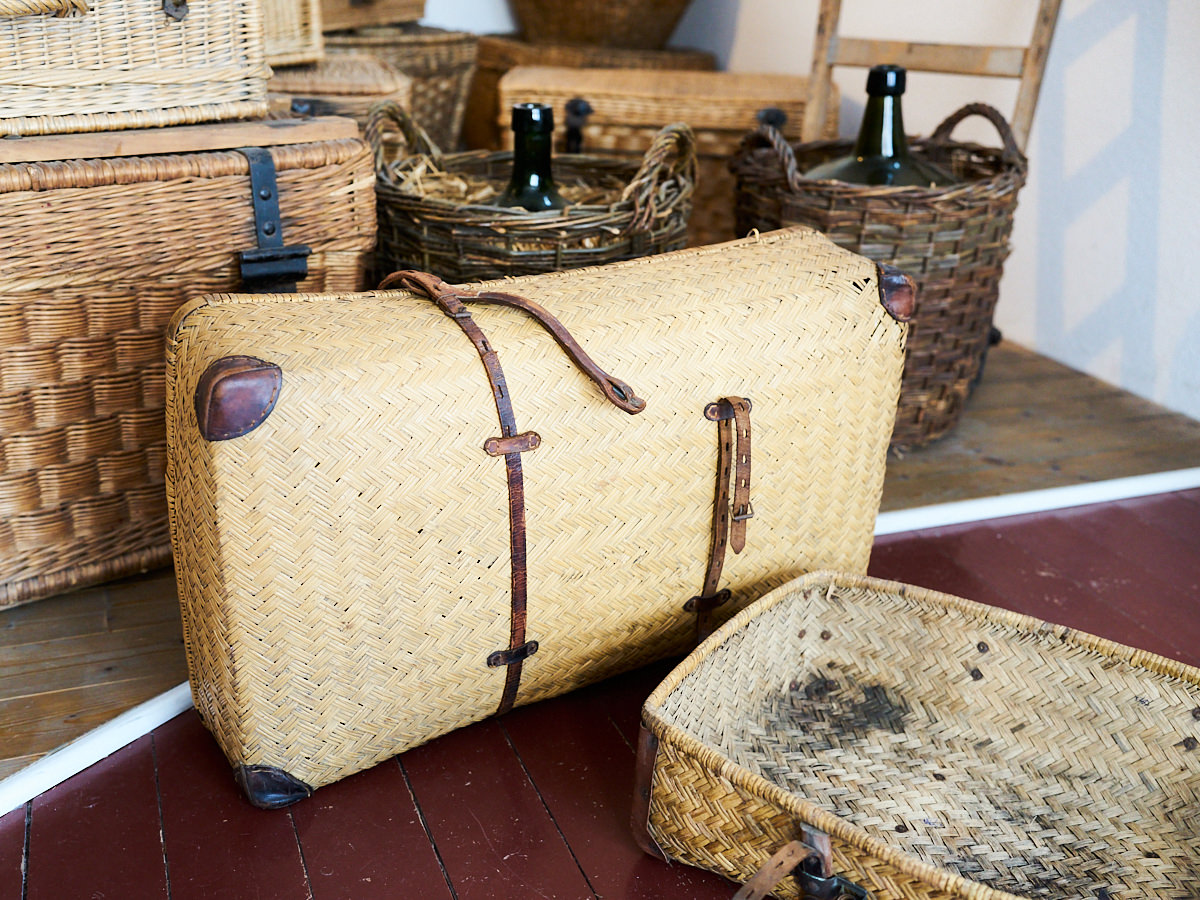
As soon as I stepped into the museum, the first thing that caught my eye was this basket.
This—!
It looked strikingly similar to a basket I knew well.
A large trunk-shaped basket, much like those made from Japanese suzutake bamboo (also known as misuzu-take).
Looking more closely, although this piece was fitted with belts and decorative details,
the texture of the material and the construction of the finer parts were unmistakably reminiscent of the Japanese kōri (traditional bamboo trunk).
I had assumed that the museum would primarily display baskets traditionally made in Dalhausen, Germany.
So to find what appeared to be Japanese suzutake work among them was completely unexpected for me—and a deeply moving discovery.
When I asked Hansgert about it, he told me that he did not know the detailed background, but that it is indeed true that, in the past, baskets were imported from Japan and other countries. 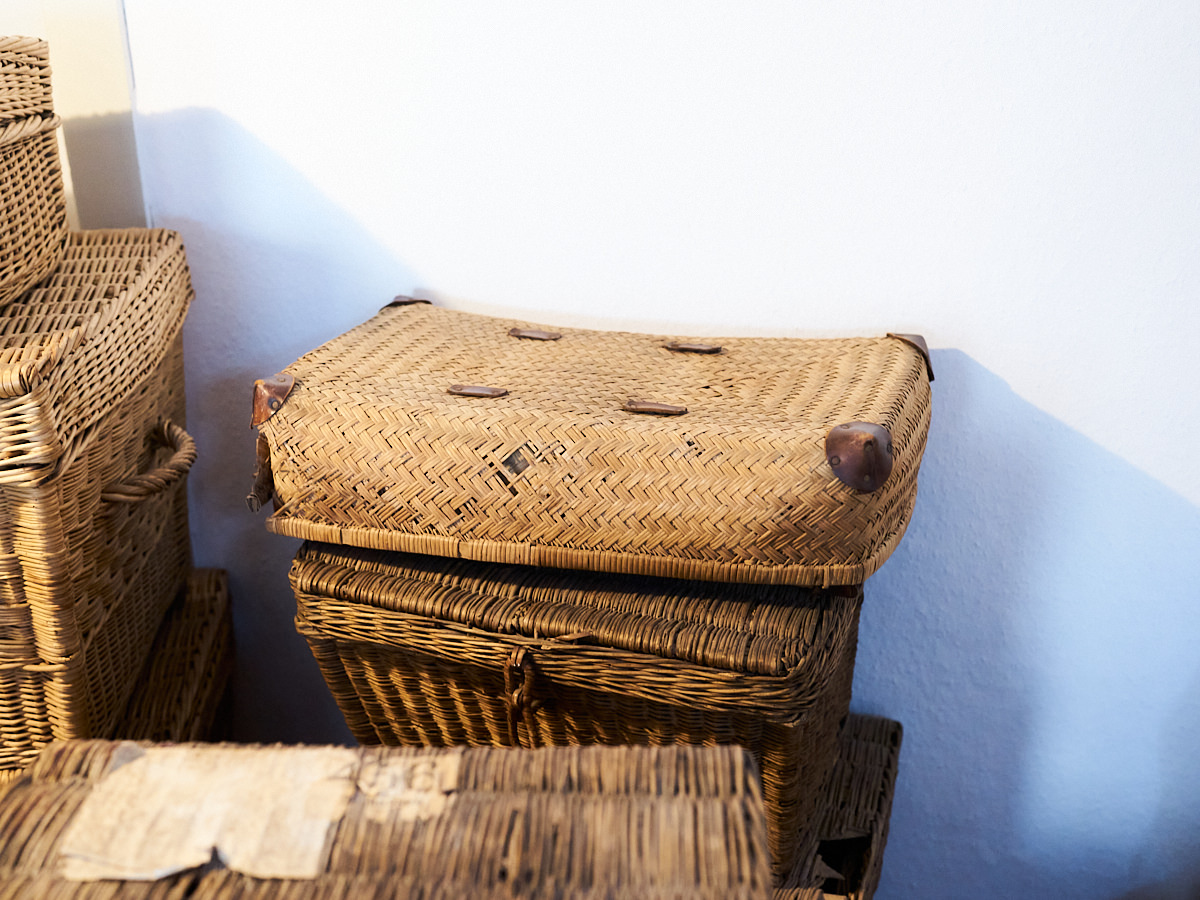
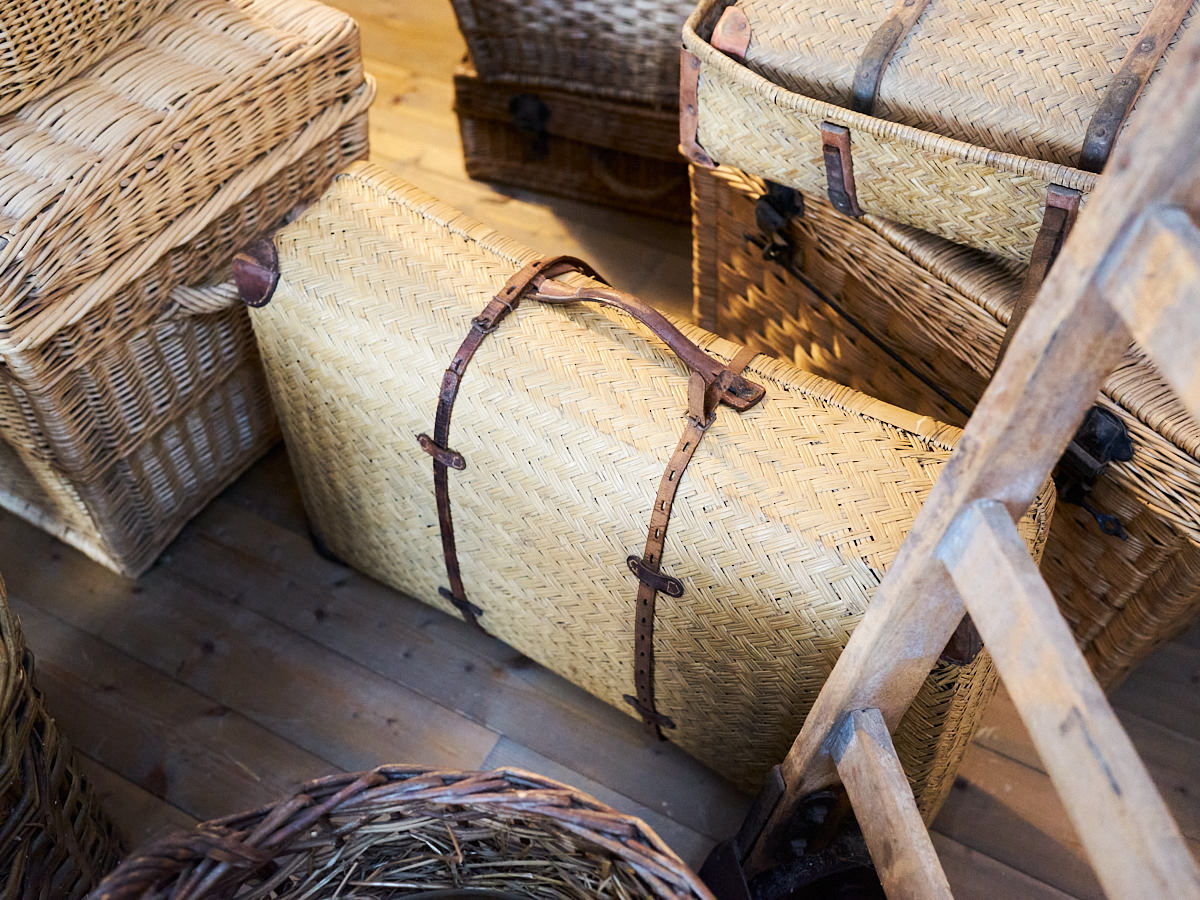
Here was another basket of a similar design, but in a different size. Leather reinforcements were attached to the four corners, and metal fittings for threading belts were also in place. 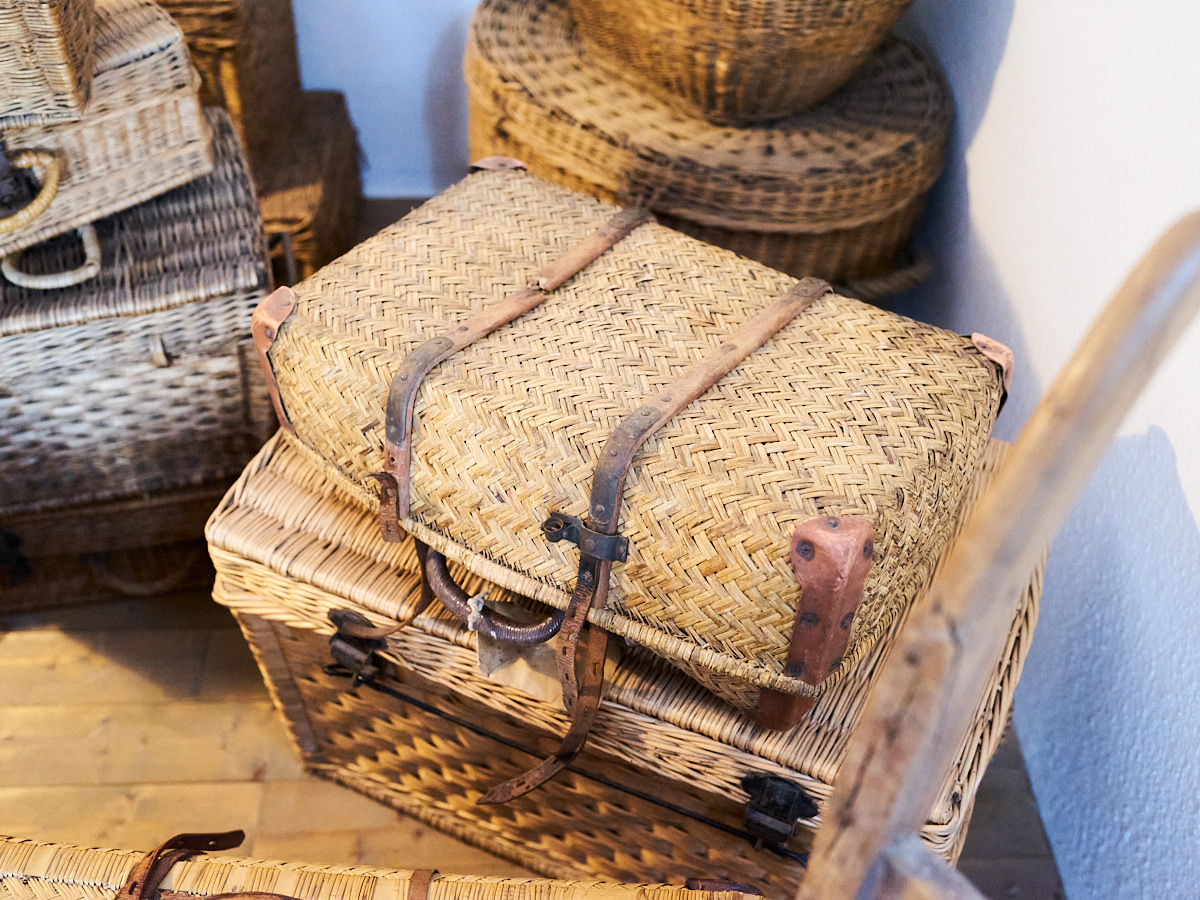
There were several other baskets of a similar kind as well. Although they resembled suzutake bamboo, a closer look revealed that some were made from a different material. According to Hansgert, these were most likely made of rattan. 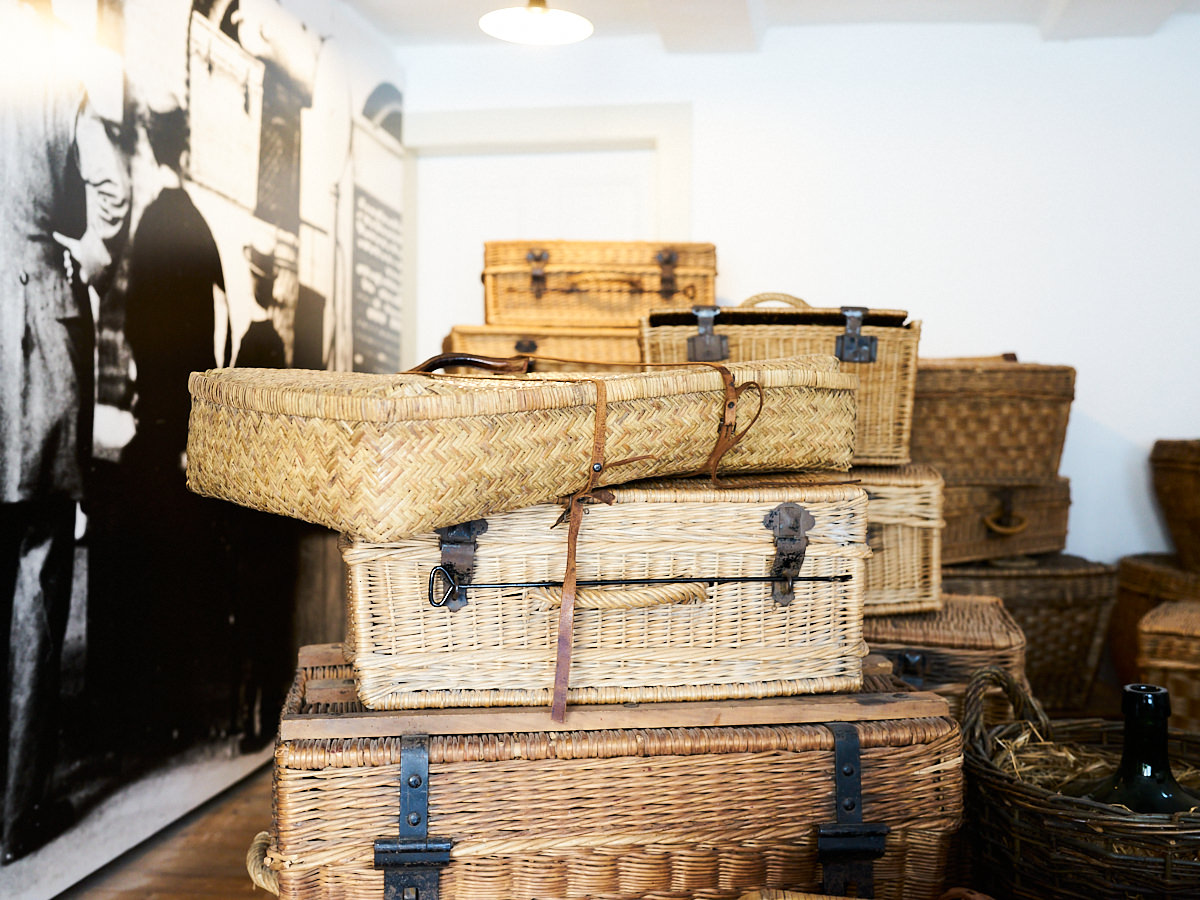
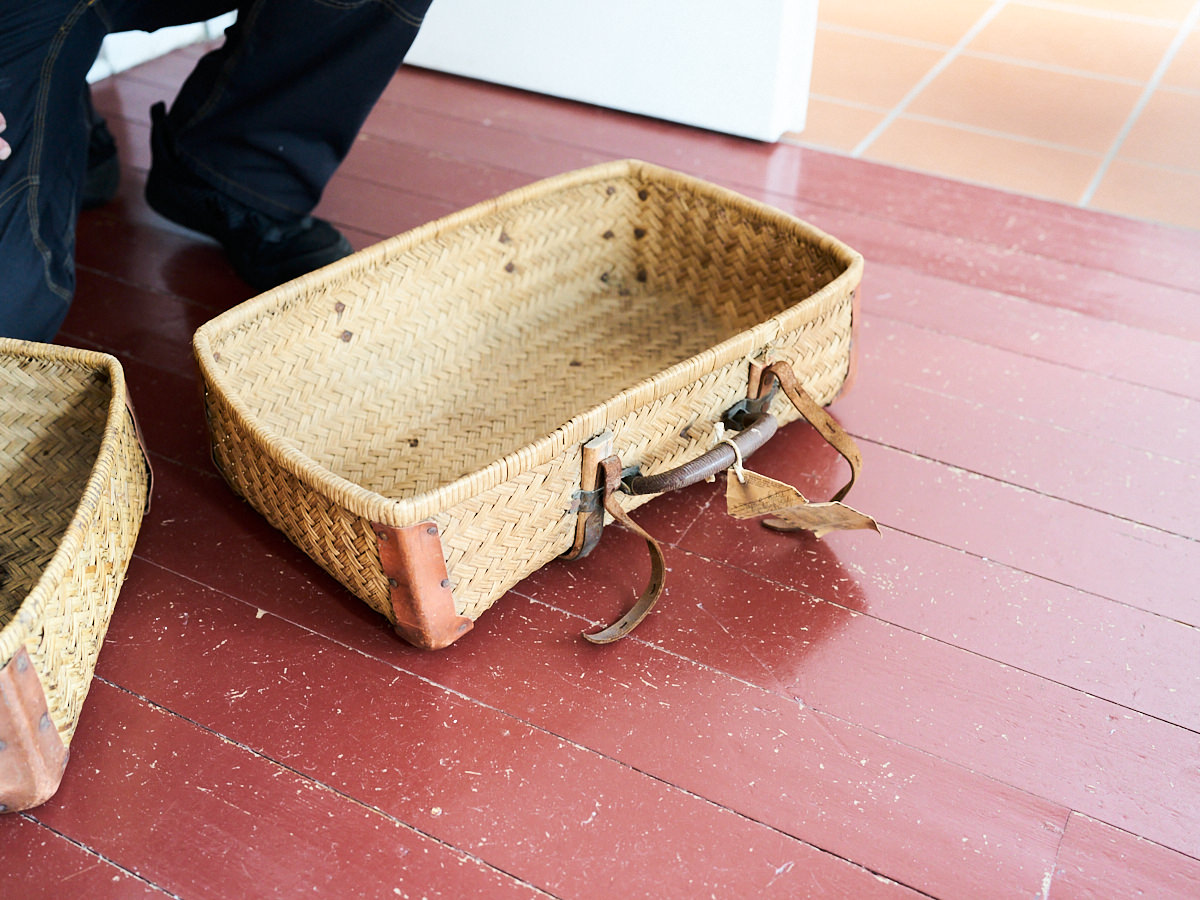
The basket on the very top here is a rather shallow yet large piece—perhaps used as a clothing case. This one, too, appeared to be made of rattan.
At that moment, something came back to me.
It was a document about Japanese basket making that had once been shared with me by an acquaintance.
During the Taishō period (1912–1926),
farmers in the area around Gotemba City in Shizuoka Prefecture are said to have produced large numbers of take kōri (bamboo trunks) as a side occupation.
These were exported not only throughout Japan, but also actively overseas.
Even earlier, artisans who possessed the techniques of “Misuzu-zaiku,” practiced near present-day Matsumoto in Nagano Prefecture, moved to Gotemba.
There, using suzutake bamboo with similar characteristics, they began producing kōri trunks.
This is said to mark the beginning of the industry in that region.
After returning from Germany,
I reread the materials more carefully and found clear records stating that these bamboo trunks had been exported
to the United Kingdom, Australia, the Netherlands—and even to Germany.
“Leather was attached to the four corners,
and bands were added so that the trunks were finished in a suitcase style for export.”
That sentence was written there.
In that unexpected moment, many scattered points suddenly seemed to connect, forming a single thread of history.
*Source: Gotemba City History Compilation Committee (ed.), Gotemba City History, Supplementary Volume 1: Archaeology and Folklore, Gotemba City, 1982.*
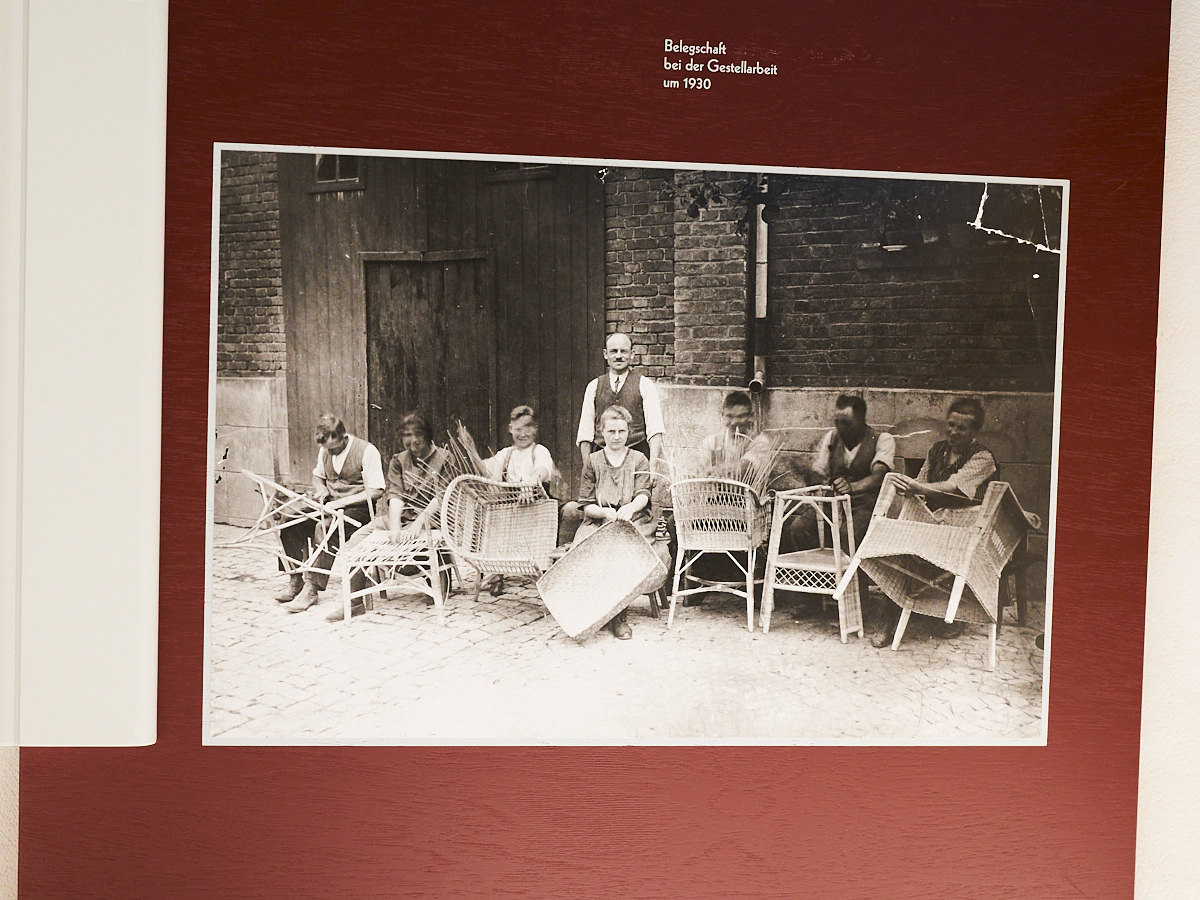
Let us return once more to the exhibition at the Dalhausen Museum.
This photograph shows people in Dalhausen around 1930,
engaged in the production of baskets and furniture.
The woman seated at the center is clearly making a trunk-style basket (kōri).
According to the exhibition, the rattan used for making these trunks was imported from Southeast Asia.
Depending on the place of origin, the rattan was referred to as “Manila” (Philippines) or “Malacca” (Indonesia).
It makes one wonder why they distinguished between them.
This is only speculation, but even though it is the same material—rattan—its strength and texture may have differed depending on the region where it was grown.
Perhaps “Manila” rattan was preferred for basket making, while “Malacca” rattan was more suitable for furniture production.
The photograph above dates from around 1930, which in Japan corresponds to approximately Shōwa 5.
Since the export of take kōri from Gotemba flourished during the Taishō period (1912–1926),
it is possible that by this time Japanese-made trunks had already reached Dalhausen.
It may be that rattan was imported from Southeast Asia and used to recreate forms similar to Japanese trunks,
which were then produced locally in Dalhausen.
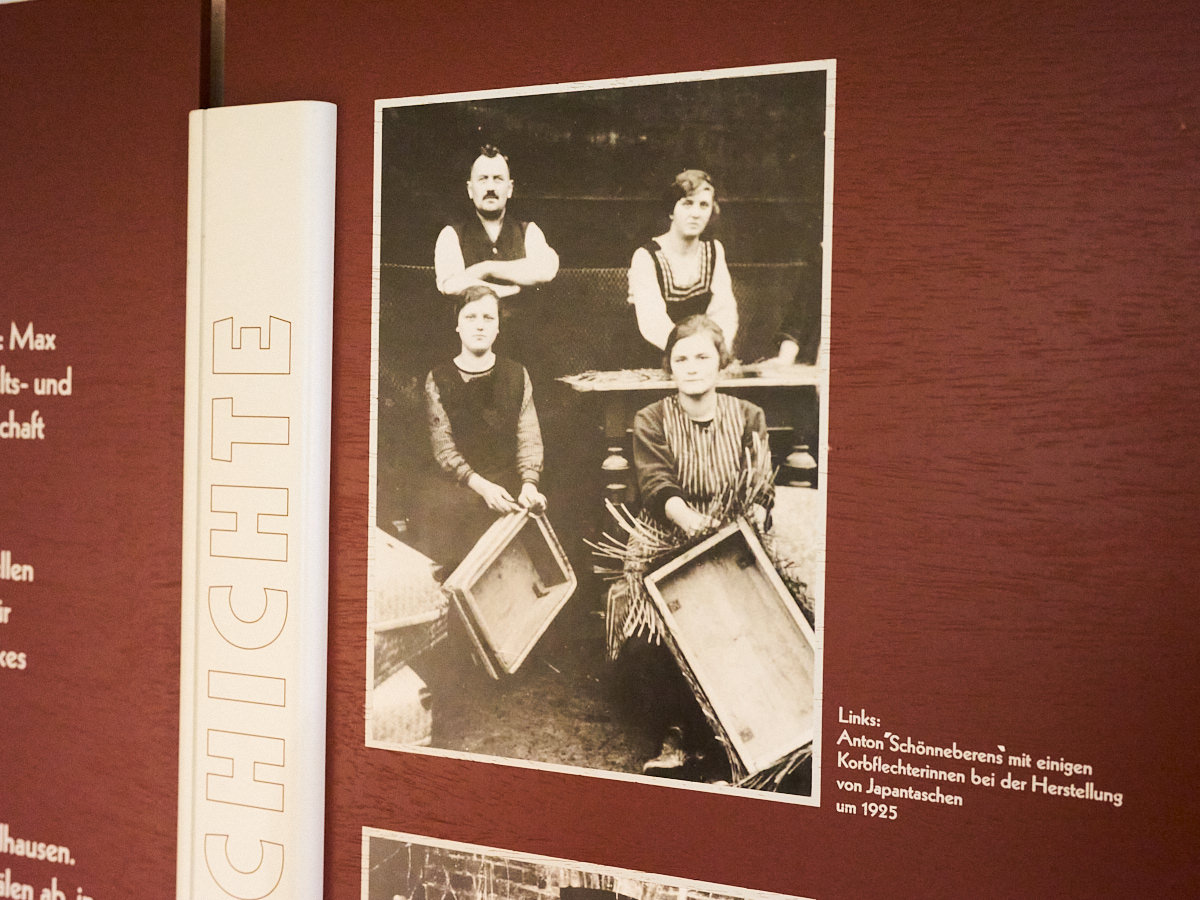
This photograph shows several female basket makers around 1925,
engaged in producing what were called “Japanese bags.”
The fine, delicate weave seen in take kōri (bamboo trunks) in Japan is often associated with women’s handwork.
Perhaps in Germany as well, a similar division of roles existed.
The German term Japantaschen literally translates as “Japanese bags.”
It seems that at the time, the trunk form had become established enough to be referred to by this specific name.
I never imagined that, in a basket museum in a small German town I was visiting for the first time,
I would encounter Japanese bamboo trunks—and baskets produced locally in rattan based on that very form.
It was a truly astonishing discovery.
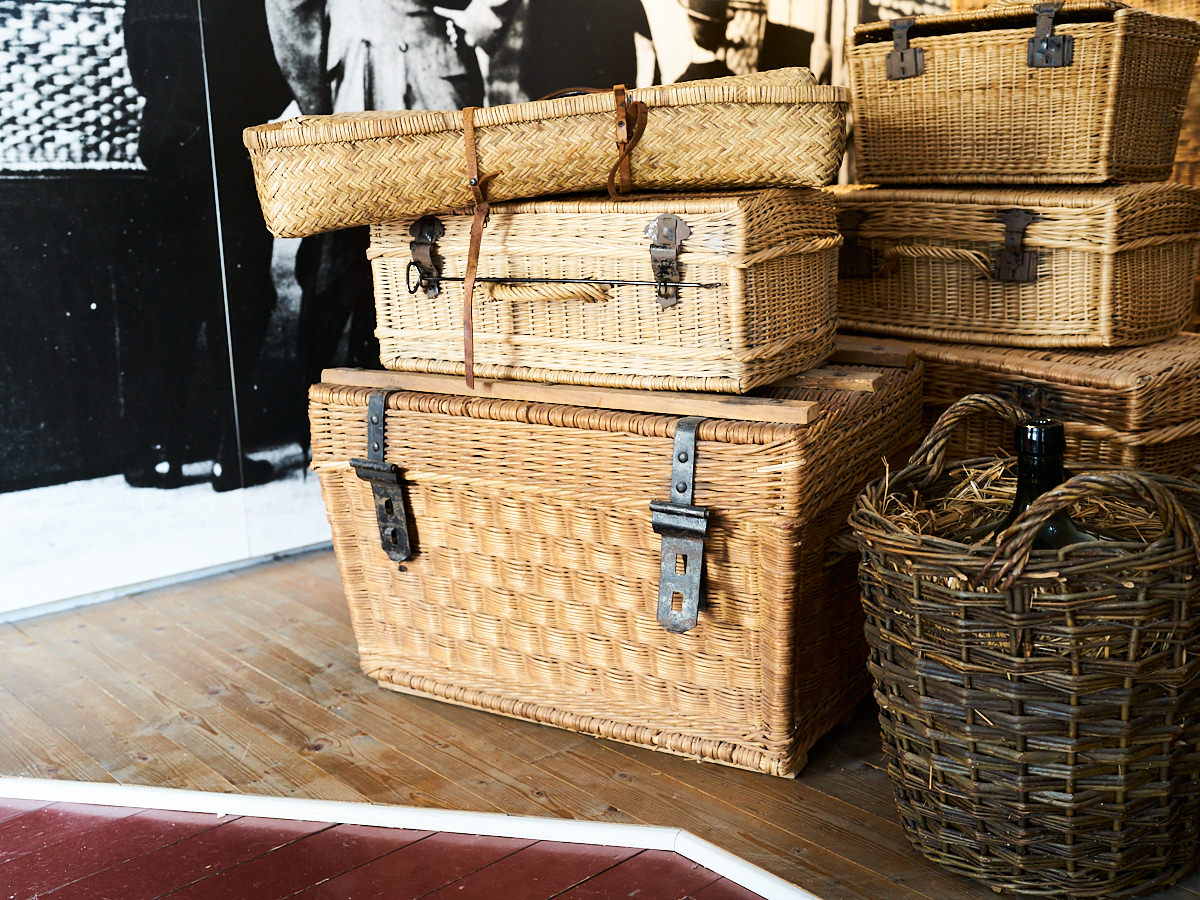
And I felt a quiet sense of pride seeing them displayed in what could be called the main space of the museum,
placed side by side with Dalhausen’s traditional willow baskets.
In the very first room of the museum, I discovered a connection to my own country and stood before the actual pieces,
allowing my thoughts to wander to the basket makers and merchants of the past.
It felt as though I had touched one thread of a larger story linking German and Japanese basketry.
As I lingered in that overlapping history,
I found myself increasingly drawn to the town of Dalhausen and to its journey as a true “village of baskets.”
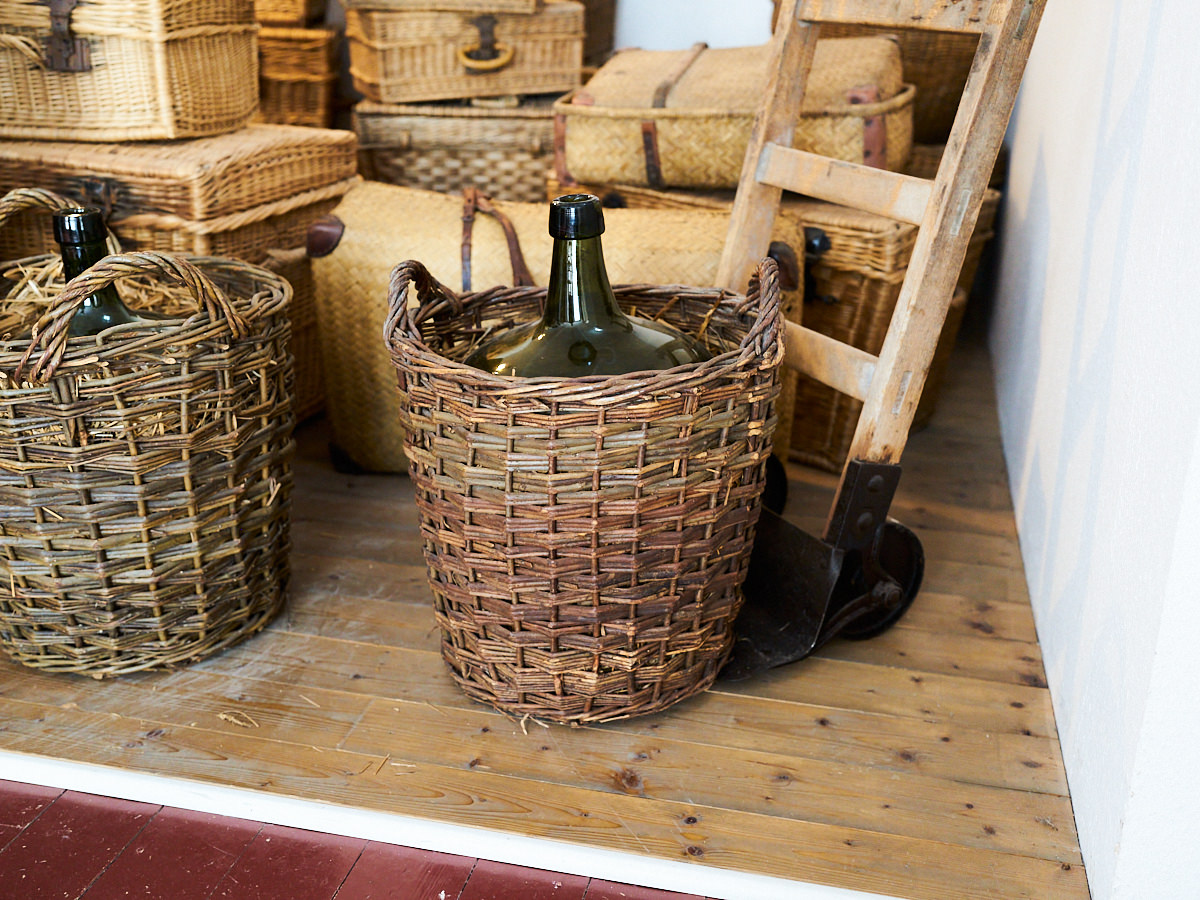
And as I looked at the Dalhausen baskets displayed here—robust in appearance,
surely once the tools of hardworking hands—I found myself wanting to learn more deeply
about the path this village has taken.
Although my stay in Dalhausen lasted little more than a day and a half,
I was kindly granted special permission to return to the museum several times,
taking my time to observe everything carefully and reflect upon what I saw.
The story continues in the next journal.
Tomotake Ichikawa
___________________________________________
“The One Table” Special Exhibition
European Baskets We Discovered in Germany
2026
February 19 (Thu), 20 (Fri), 21 (Sat), 22 (Sun), 23 (Mon, Holiday)
26 (Thu), 27 (Fri), 28 (Sat)
March 5 (Thu), 6 (Fri), 7 (Sat)
Open | 11:00–16:00
In-store | 1basketry, Minami-Senju, Tokyo