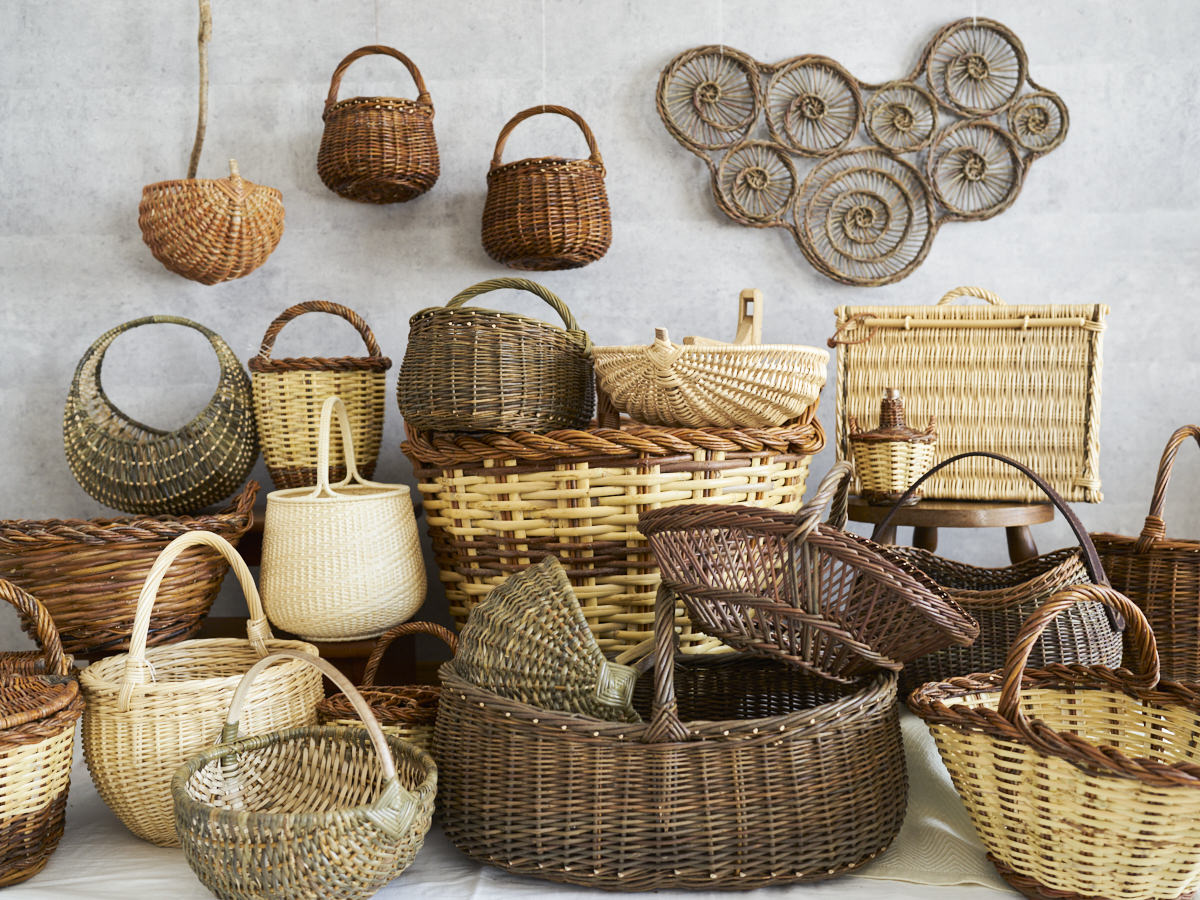
To Visit Hansgert — Germany Business Trip Journal 3 ハンスゲルトさんのもとへ ― ドイツ出張記 3
Hello. I am Tomotake Ichikawa of 1basketry.
Continuing from the previous entry, I would like to share “Germany Business Trip Journal Part 3.”
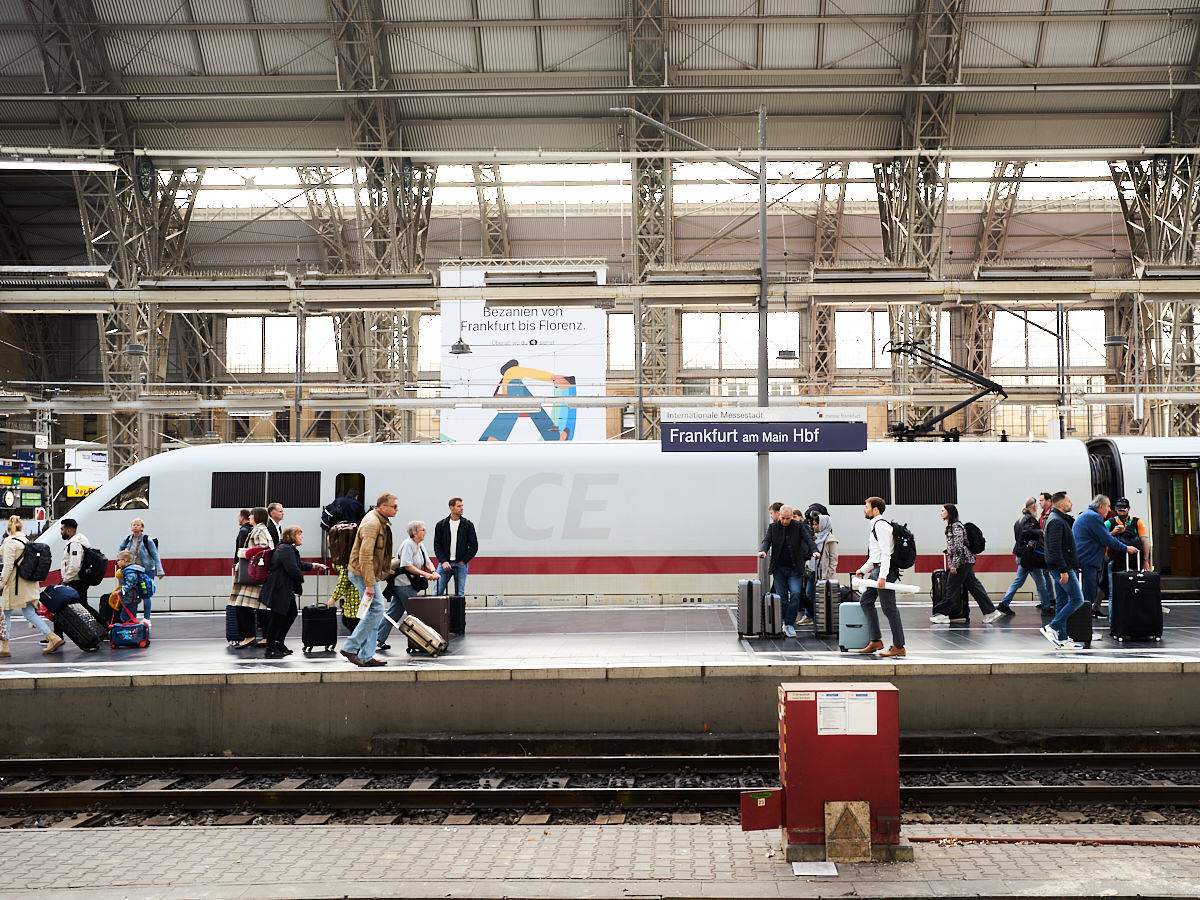
Today, I will depart from Frankfurt, one of Germany’s major cities,
and travel north by high-speed ICE train and local rail connections,
heading toward a station called Warburg, about three hours away.
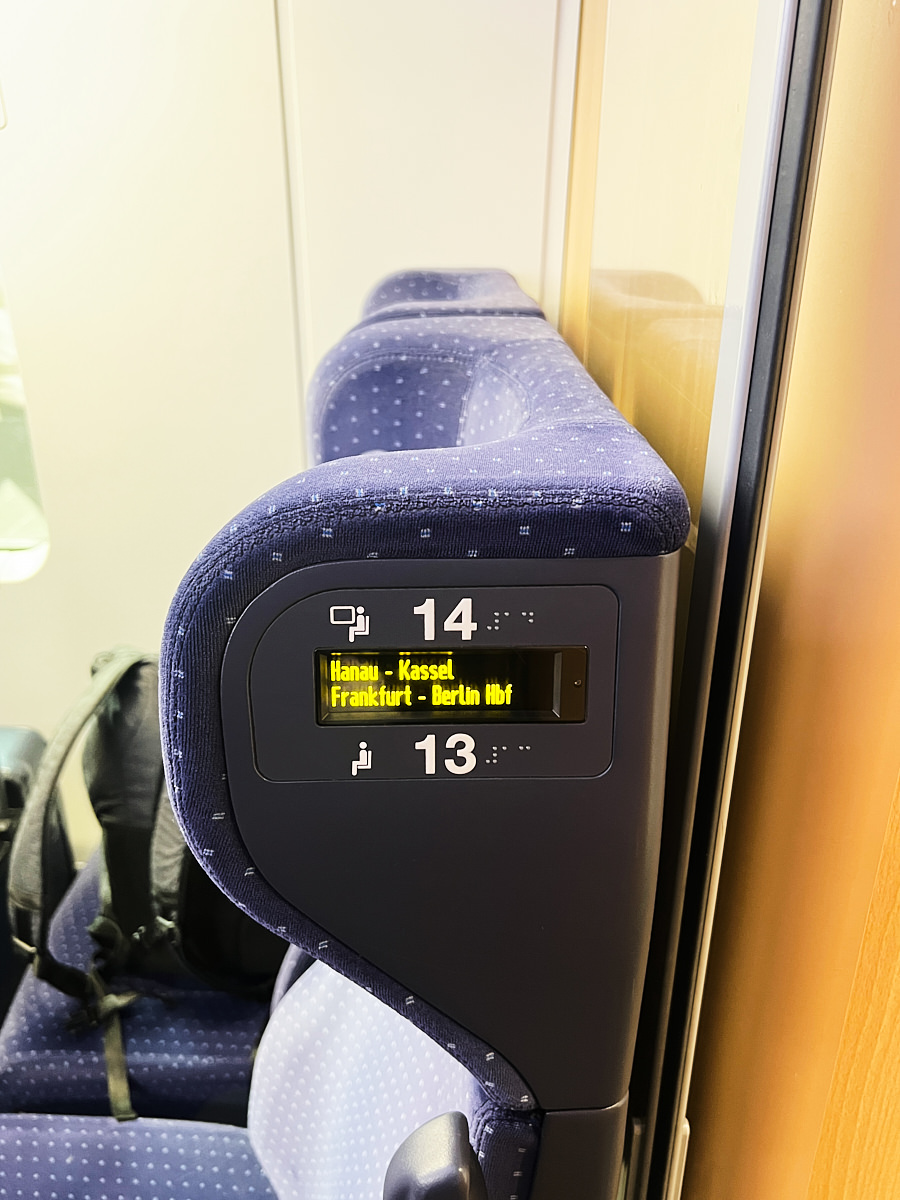
I boarded an ICE train for the first time.
Once seated in my reserved seat, I opened the ticket app I had purchased in advance on my smartphone,
scanned the QR code at the seat, and “activated” it.
Then, as you can see in the photo, my destination appeared on the small electronic display above the seat.
Das ist ja toll! (That’s amazing!)
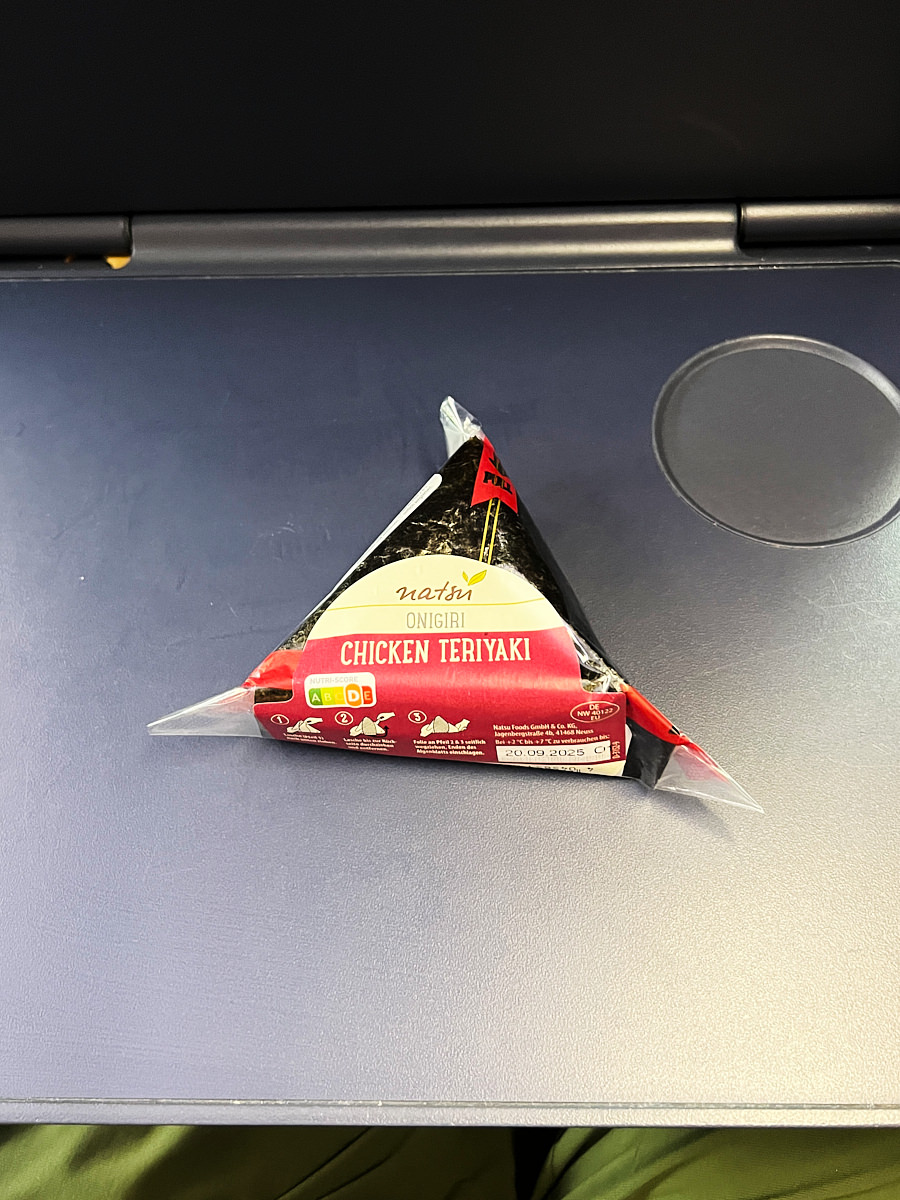
To begin with, my companion for the journey was the onigiri I had found at a supermarket called REWE in Frankfurt, which I mentioned in the previous journal. Among the various fillings—some of them quite unexpected from a Japanese perspective—I chose “teriyaki chicken,” a flavor I felt I could more or less imagine. 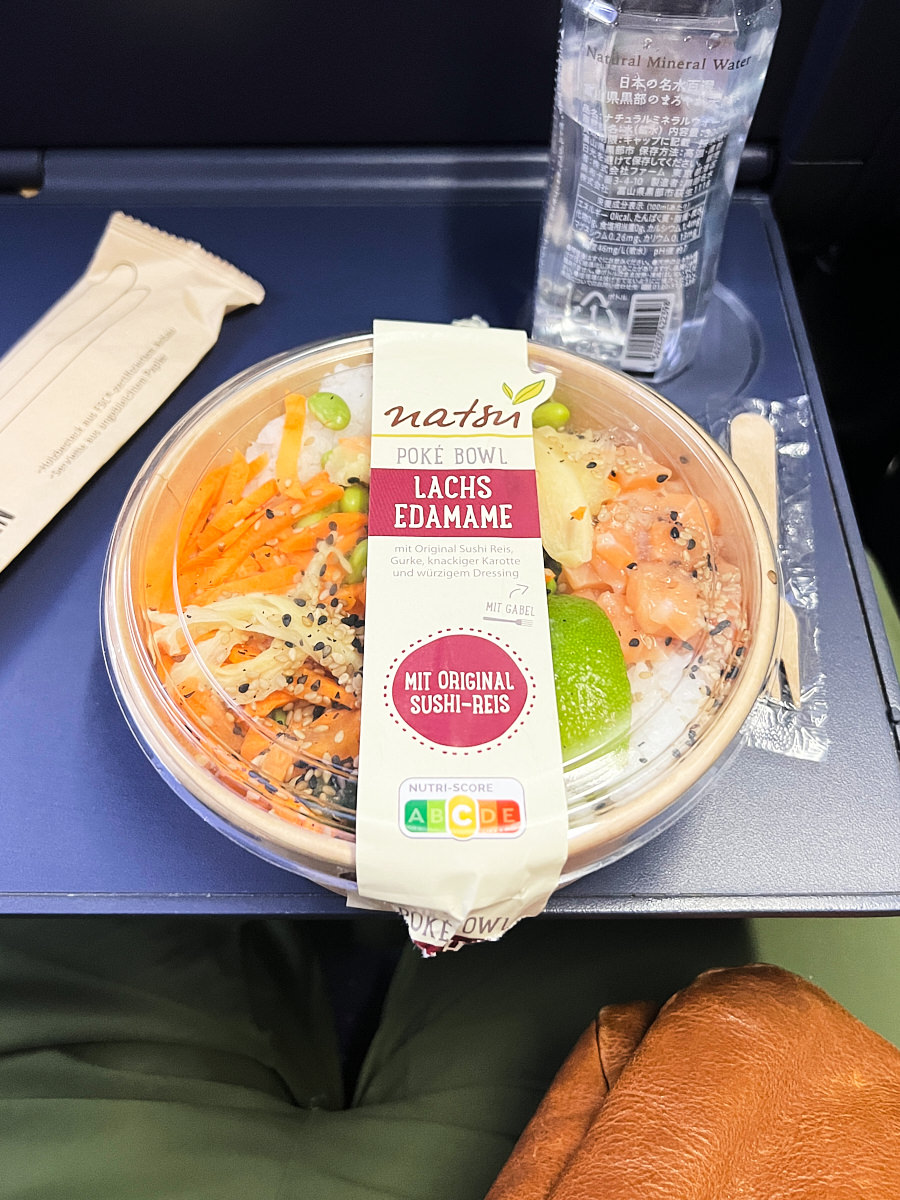
Of course, one onigiri was not quite enough, so I had another.
This one caught my eye because of the word “EDAMAME.” It was topped with edamame, carrot, salmon, pickled ginger, and even a slice of lime, all arranged over vinegared rice. The ICE journey was very comfortable as I watched the German landscape pass by the window. Even my first transfer—something I had quietly been nervous about—went smoothly, and before long, I was approaching Warburg Station.
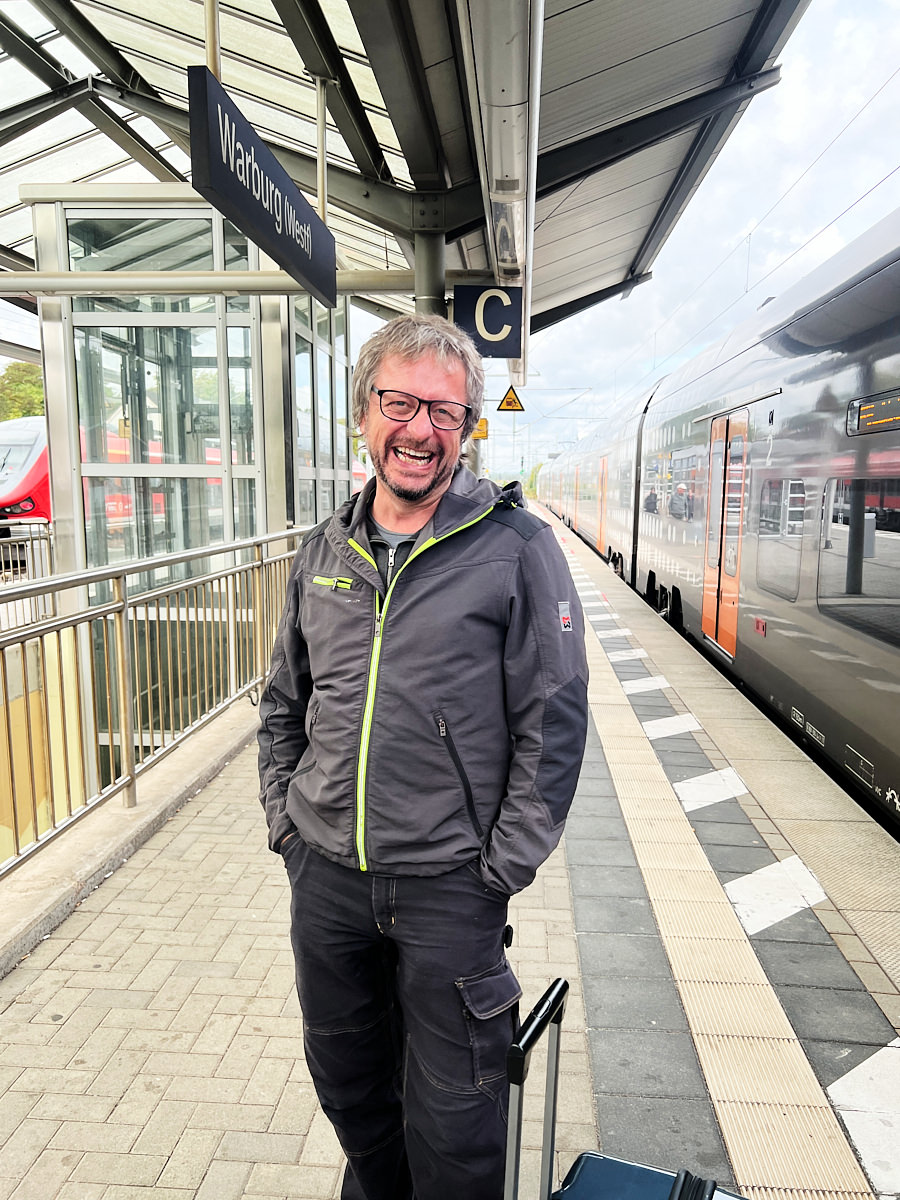
At last, I arrived at my destination—Warburg Station.
Waiting for me at the station was this person!
Hansgert, a basket maker from Germany.
I first met Hansgert about ten years ago.
It goes back to the World Wicker and Weaving Festival held in Poland in August 2015.
To share how we first met, let me take you back in time to 2015 for a moment.
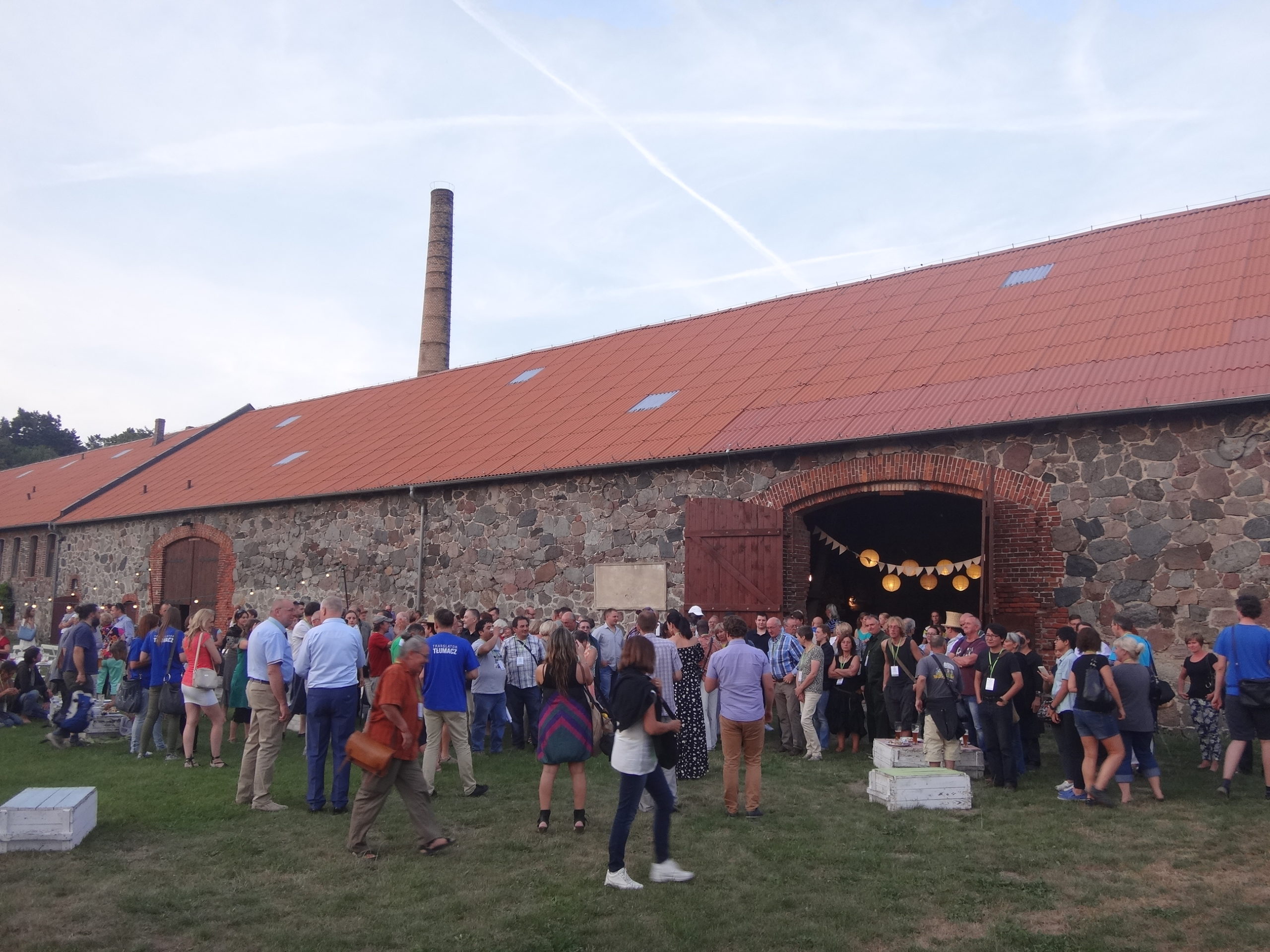
The evening before the 2015 festival in Poland, there was a welcome gathering. All the participants assembled in what had once been a large warehouse, sharing dinner together and deepening friendships. I still remember how delicious the Polish beer served that night was! 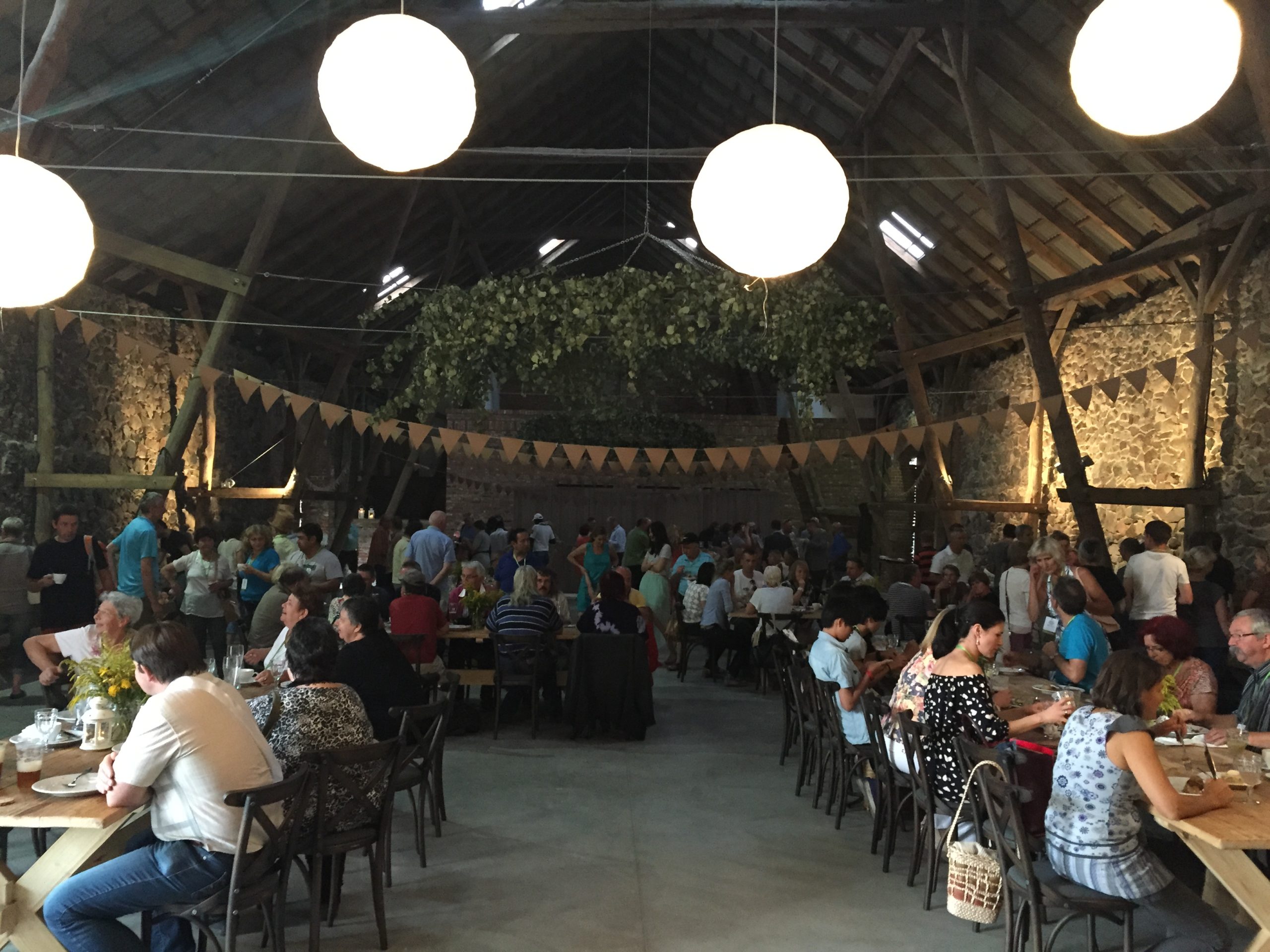
When I lined up to get another glass of that beer, the person who happened to join the line at the very same moment was Hansgert.
With a gentle expression and warm manners, he said, “Please, go ahead,” and kindly let me take my turn first. I still remember clearly how positive that first impression was.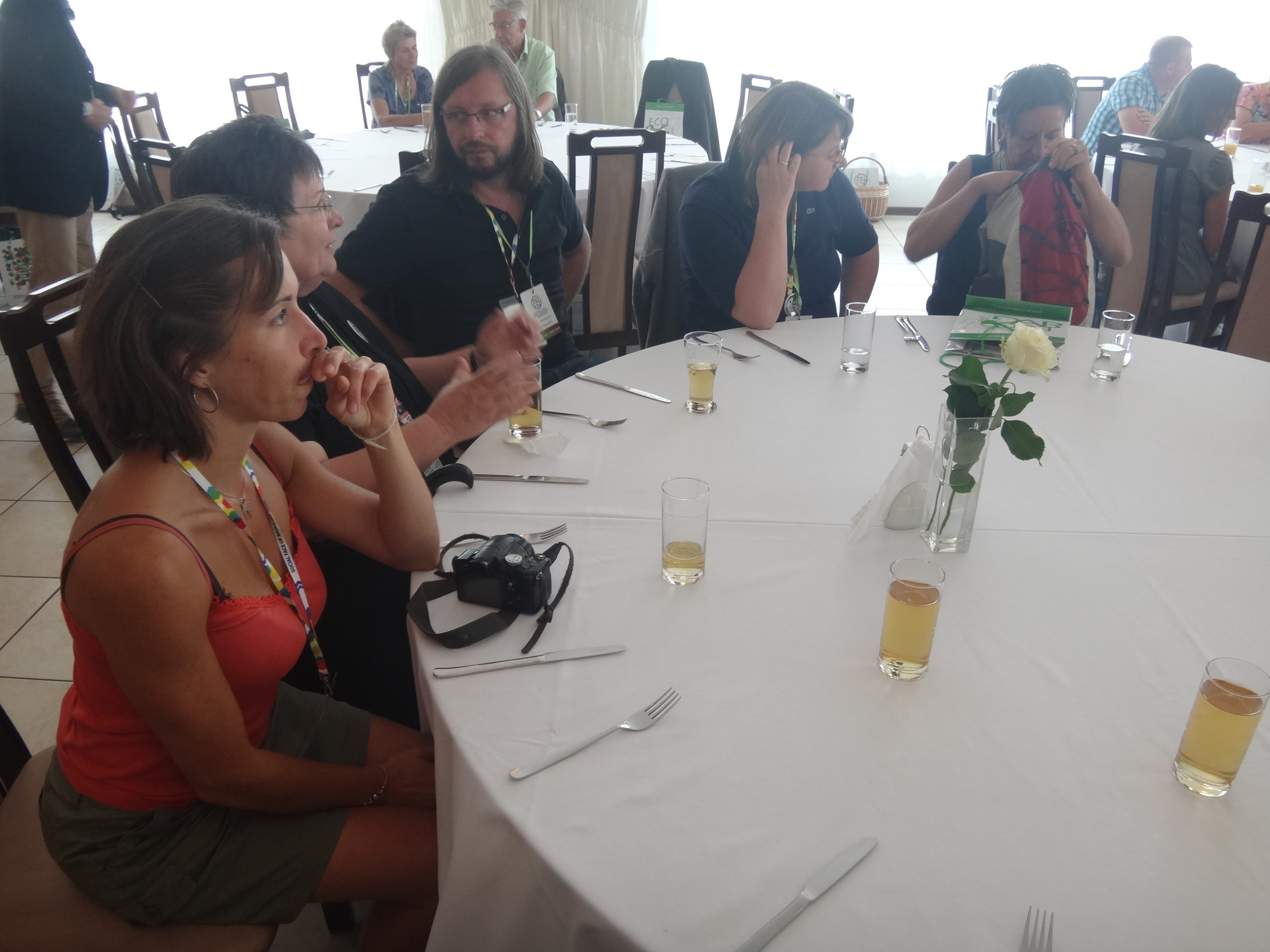
During the symposium held as part of the festival, we happened to sit at the same table as well, and over the course of those few days, our paths crossed several times. However, it was my first time attending the festival, and I was spending much of my time at our own sales booth. As a result, I did not have many opportunities to speak in depth with each of the makers. 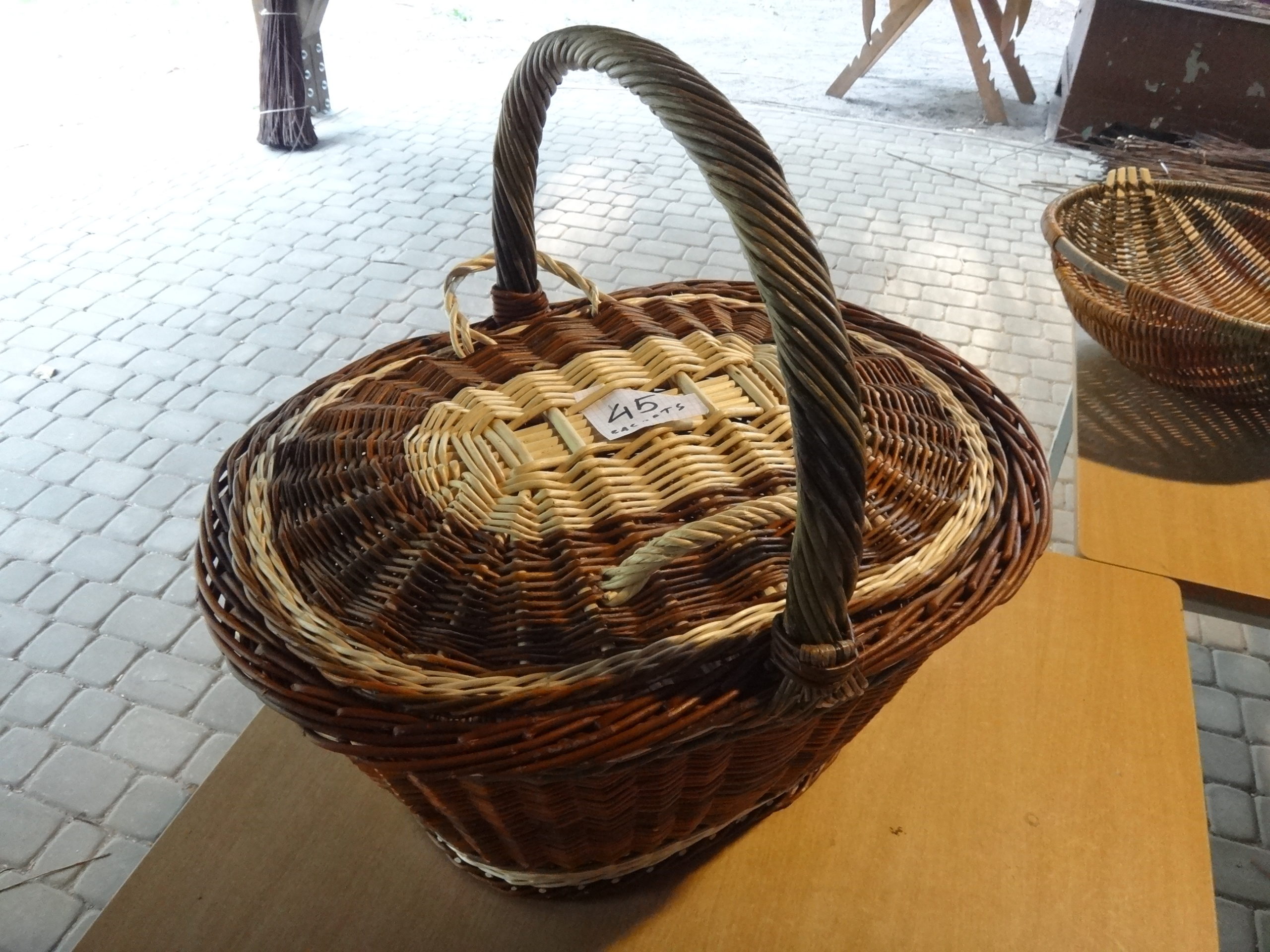
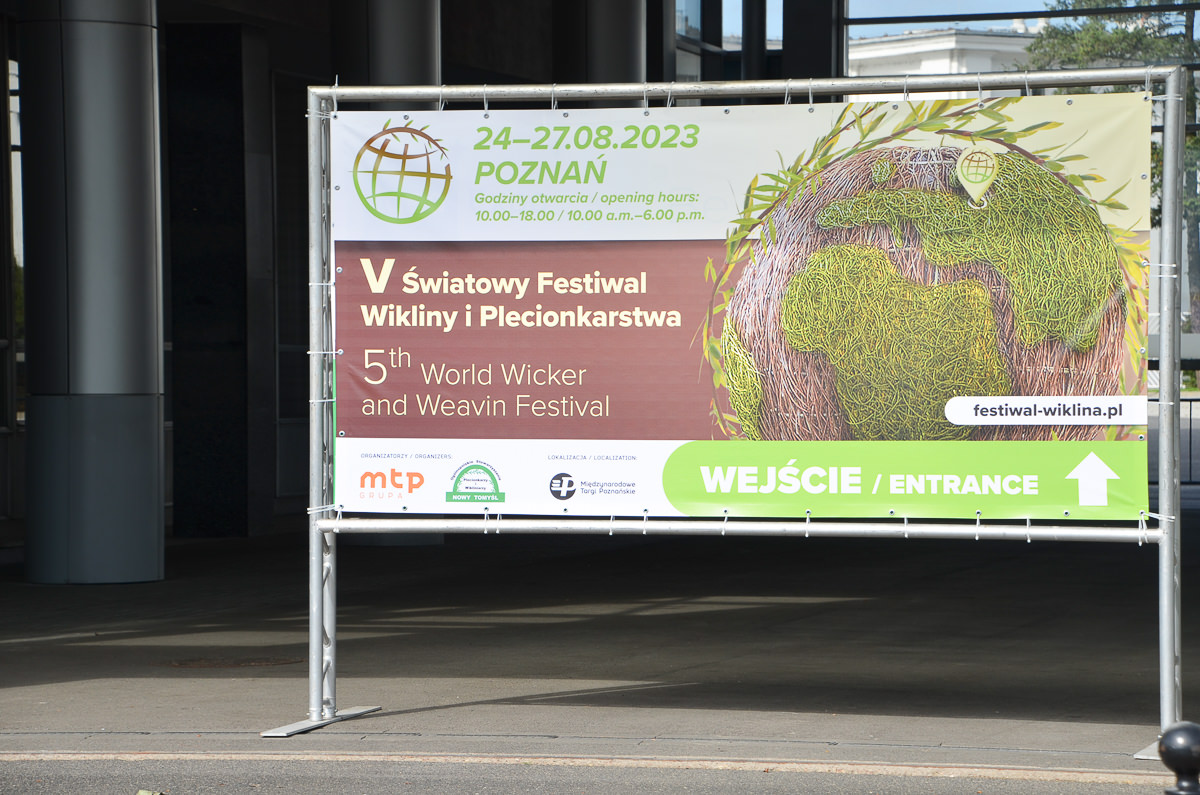
Only after the festival had ended did I learn that he, too, was a maker—and that he was from Germany. At the 2015 competition, he had created a traditional German bread basket (pictured) and received an award for it. When I first saw that bread basket up close, I did not know who had made it. I only knew that I was deeply drawn to it, and so I took a photograph. Later, when I looked back at that photo and realized it had been his work, I could not help thinking, “I wish I had spoken with him then.”
That feeling stayed with me for a long time.
Eight years passed from that moment.
After the 2019 competition,
the World Wicker and Weaving Festival was once again held in Poland in 2023.
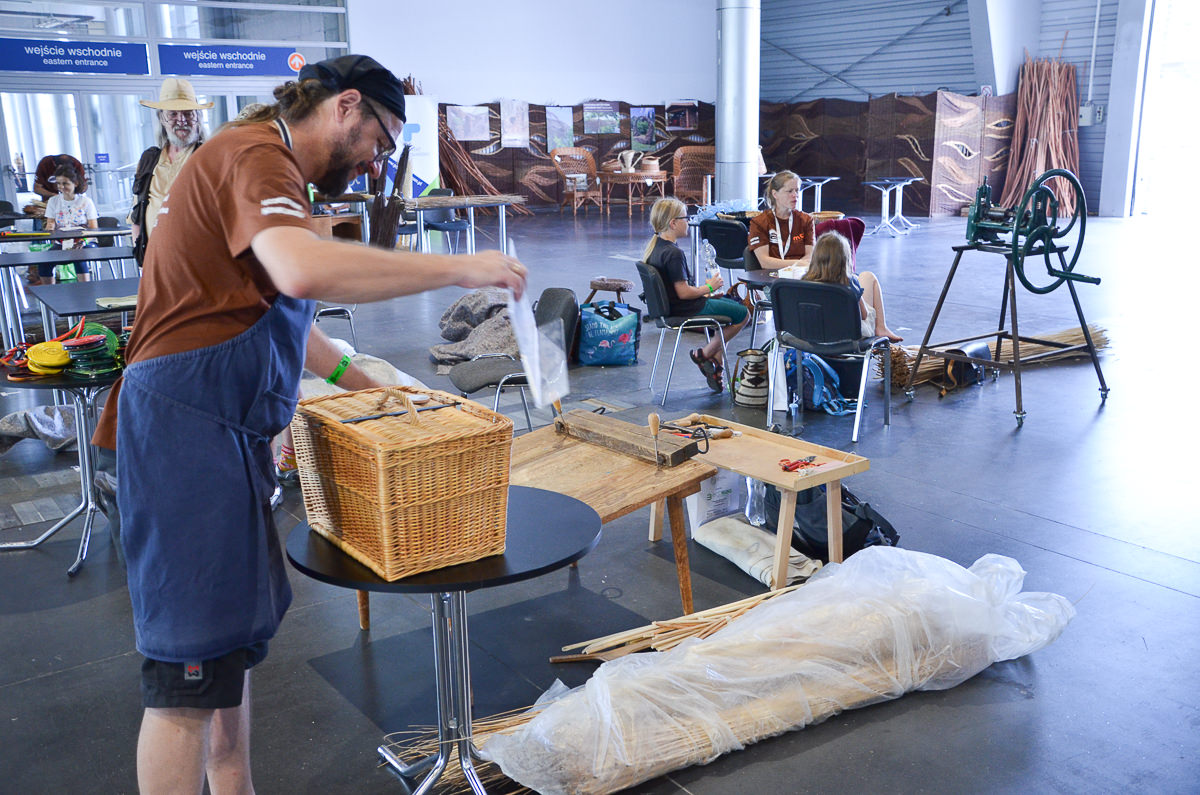
And to my great surprise—we met again! Hansgert was also participating in the festival. 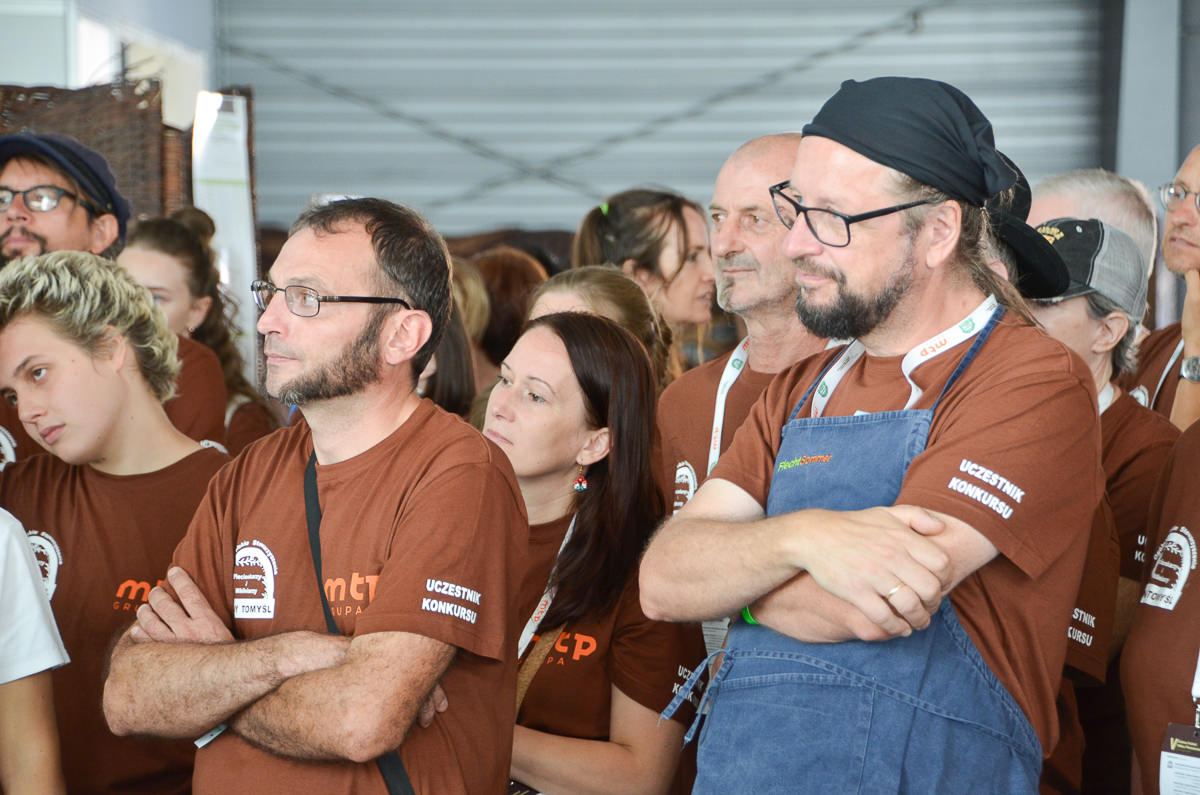
When I spotted him, I felt an immediate surge of happiness. The memory of the brief greeting we had exchanged at the 2015 welcome gathering came rushing back to me. 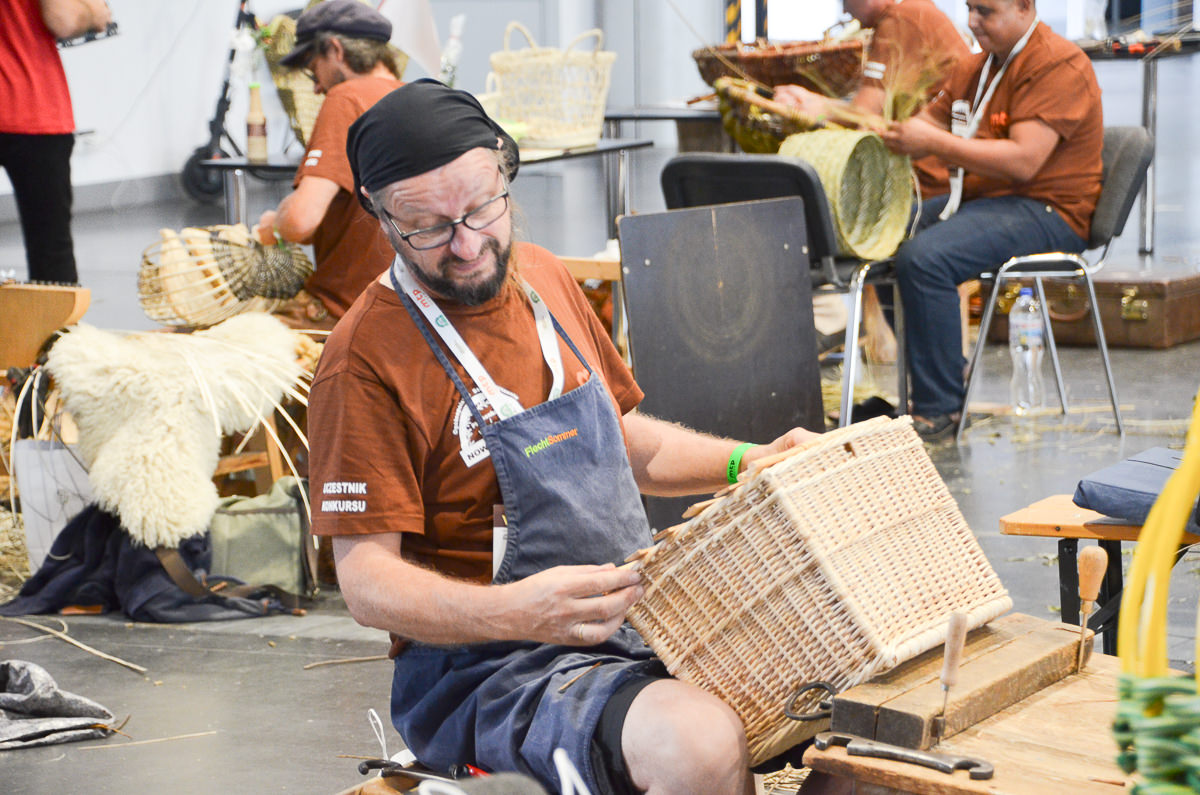
At the 2023 festival, he once again participated as a German basket maker, and this time he created a traditional “postal basket” that had historically been made and used in Germany. 
It was our first reunion in eight years. This time, we were finally able to talk at length and deepen our friendship. He warmly invited me to visit him in Germany, and we promised that the next time we met would be on German soil.
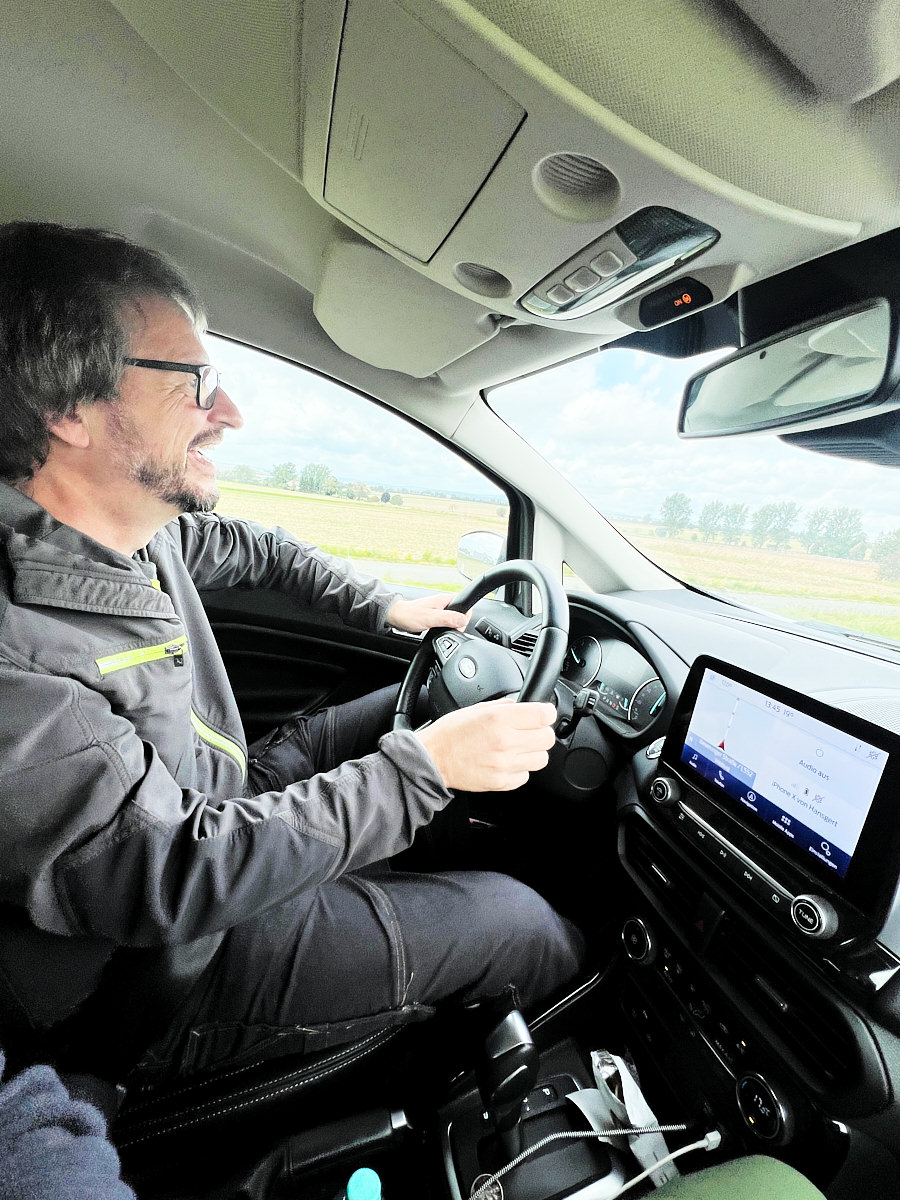
And then, in September 2025, the long-awaited moment finally arrived.
After our reunion at Warburg Station, Hansgert kindly invited me into his car,
and together we set off toward the town of Dalhausen, where he lives and has his workshop.
“This area has many fields,” he told me,
“but as we get closer to my town, you’ll start to see more hills and forests. The landscape changes quite a bit.”
According to him, the name “Dalhausen” means “a settlement in a valley.”
Please watch this short video capturing our conversation in the car,
and the changing scenery as we drove from wide open fields into the hilly town of Dalhausen.
(Music begins to play.)
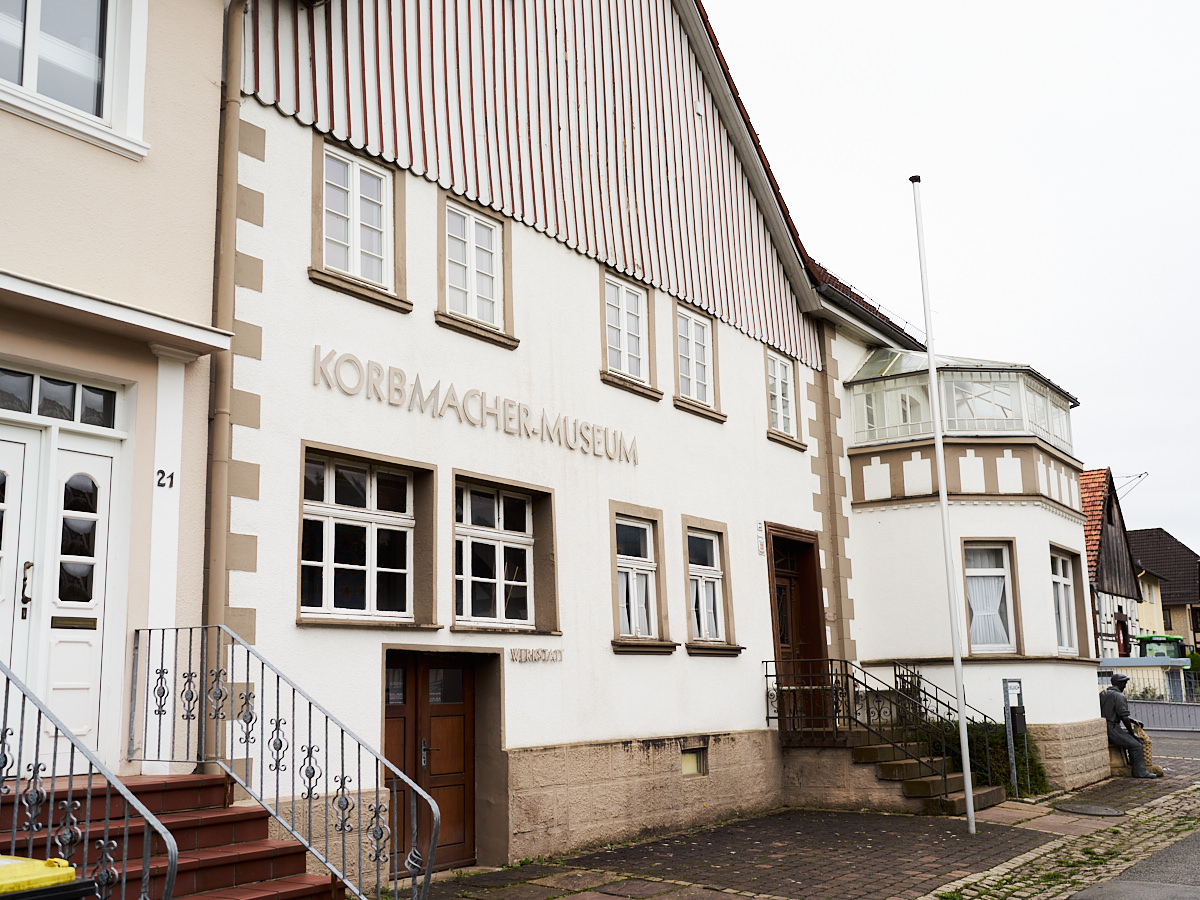
At last, we arrived in Dalhausen.
The first place Hansgert took me was the Korbmacher-Museum Dalhausen—
the Basket Maker Museum of Dalhausen.
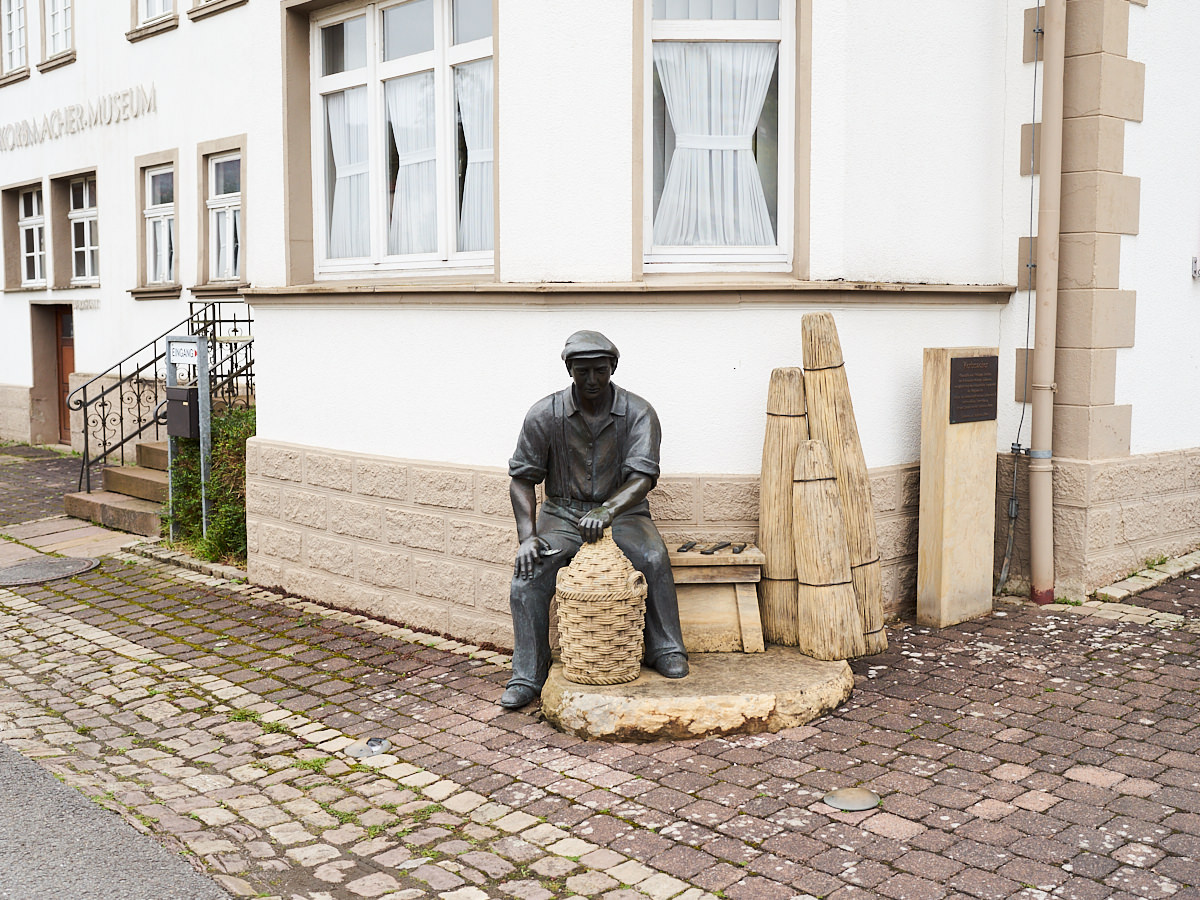
When one speaks of the Dalhausen Museum, this statue of a basket maker immediately comes to mind. It has long been a place I have dreamed of visiting. 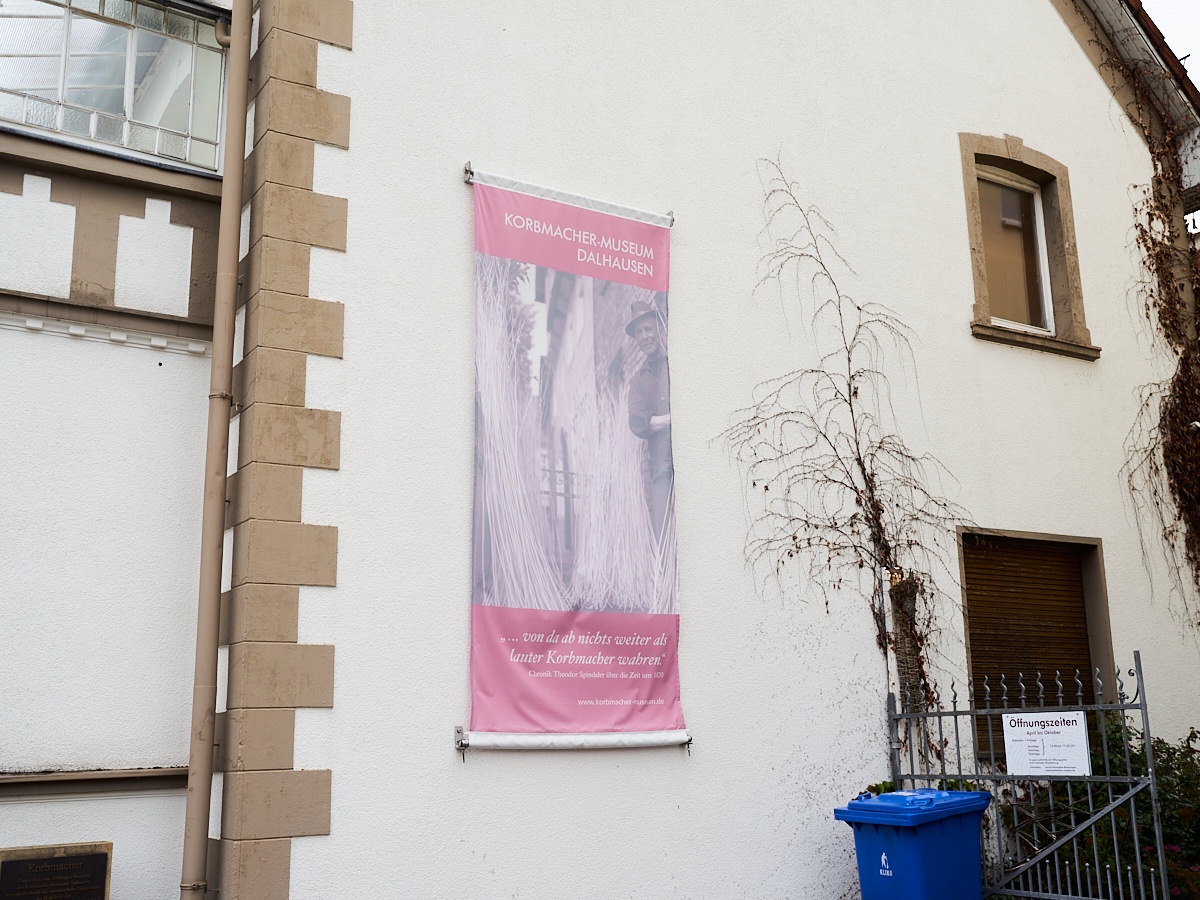
On a banner displayed on the wall were the words: “At that time, everyone in this village was a basket maker.” 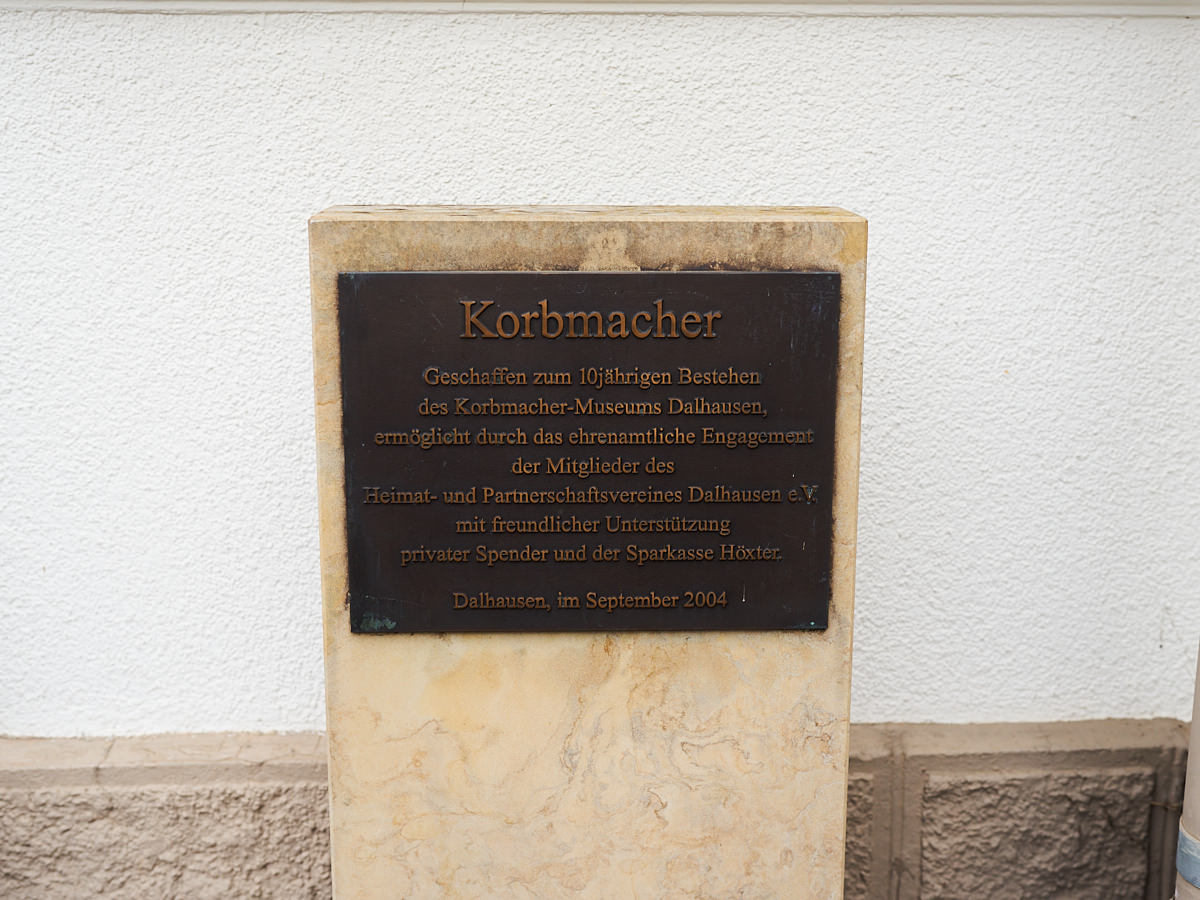
Near the entrance of the museum stood a commemorative monument, created in 2004 to mark the tenth anniversary of its opening. 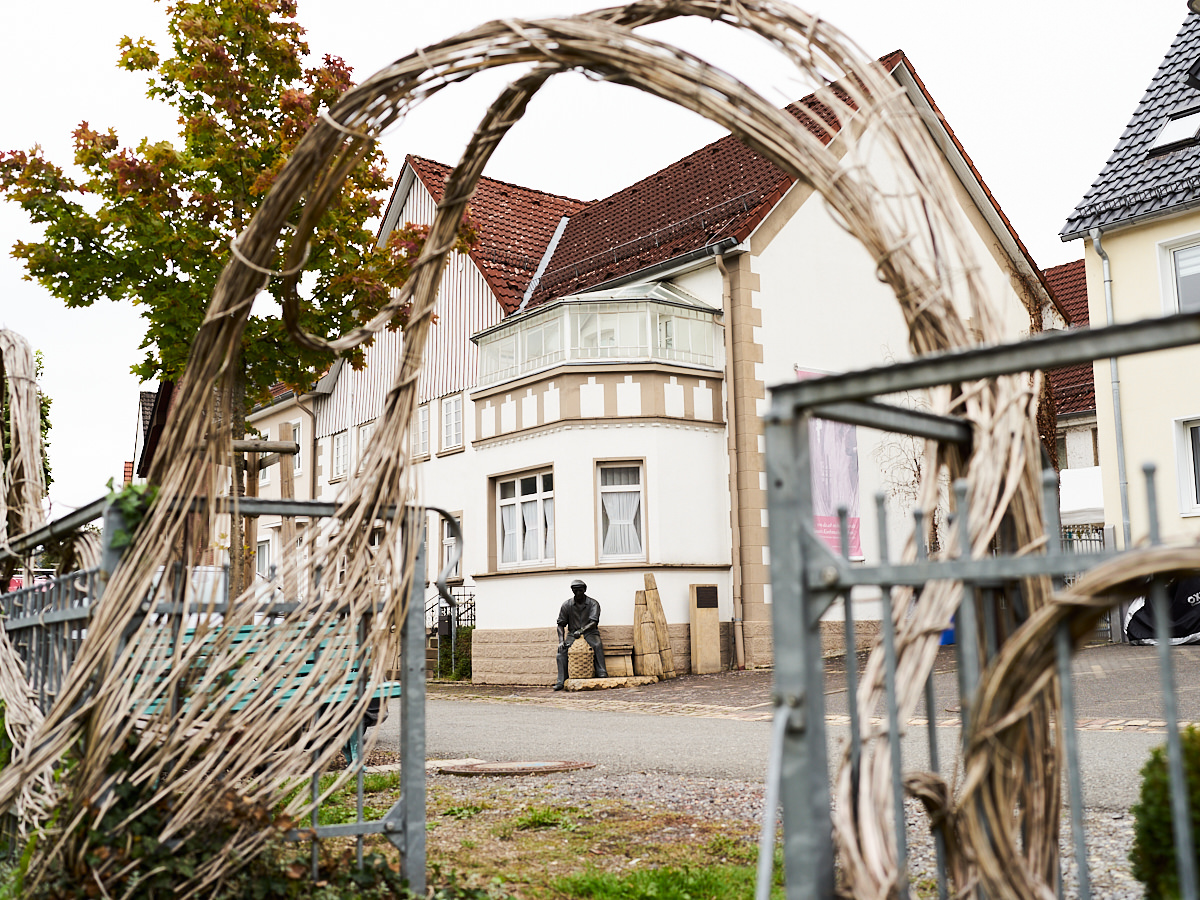
A small stream flowed nearby, and along the fence stood an arched structure woven from willow.
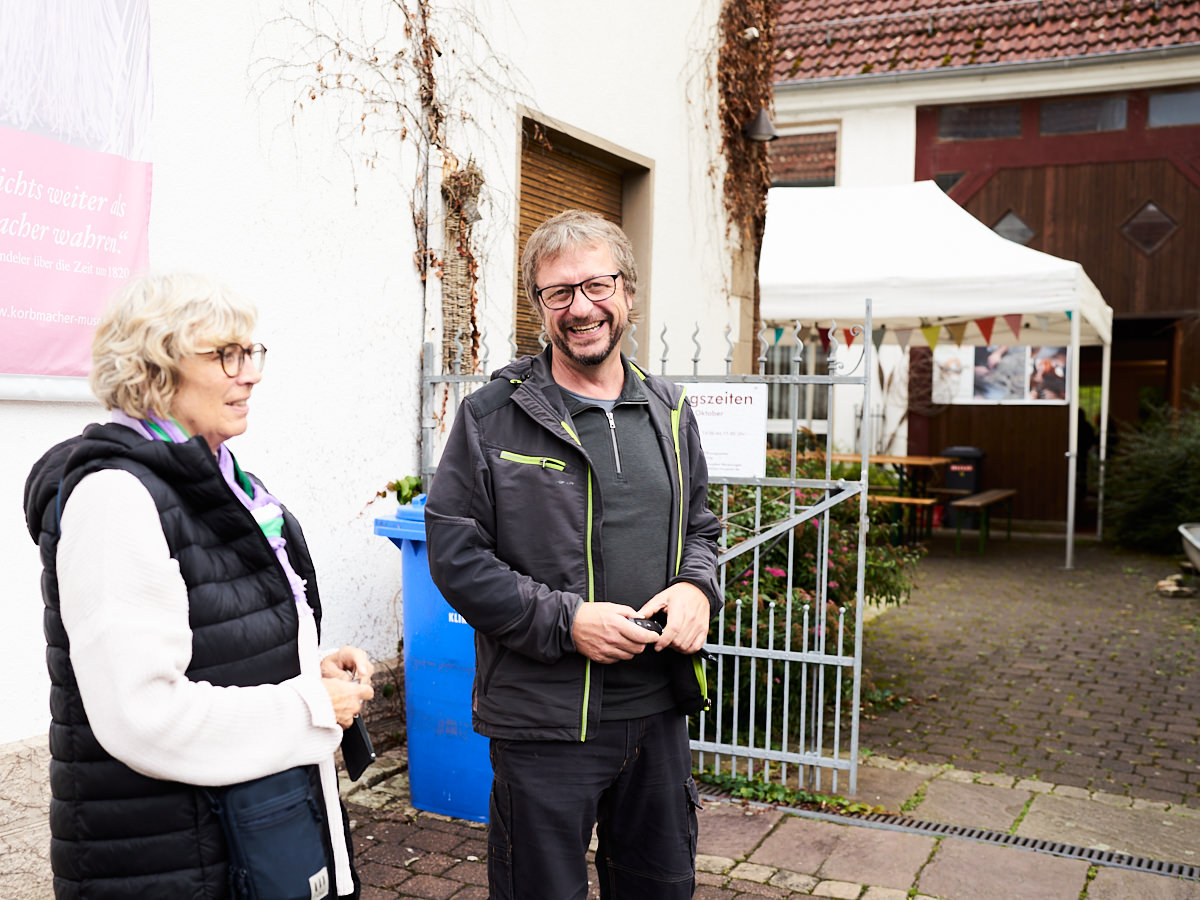
With permission from the staff, I was able to photograph the inside of the museum as well.
I hope to share those scenes in more detail in the next journal, “Germany Business Trip 4.”
Just then, I was told that a basket-making workshop was taking place in one corner of the museum.
“Would you like to take a look?” they asked—and of course, I gladly accepted the invitation.
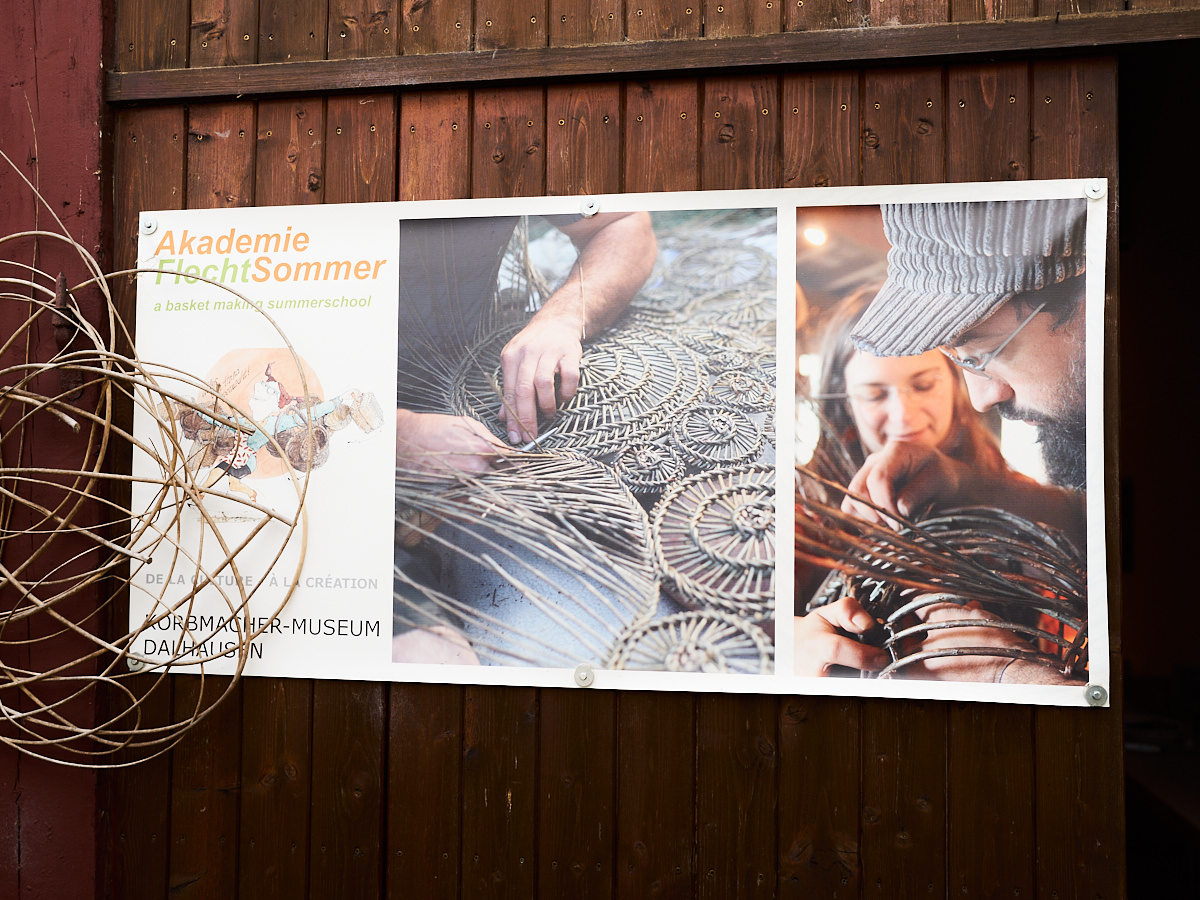
When I arrived, the workshop taking place was being led by a couple from France—Karen and Corentin.
Fortunately, I had met both of them before,
and by sheer coincidence, it turned into a very joyful reunion.
My first encounter with Karen and Corentin also dates back to the 2015 World Wicker and Weaving Festival in Poland.
I will write more about them in detail in a future journal.
*As of 2026, these workshops are currently on hold, and there is no confirmed date for their return.
We kindly ask that you refrain from contacting the museum regarding this matter.*

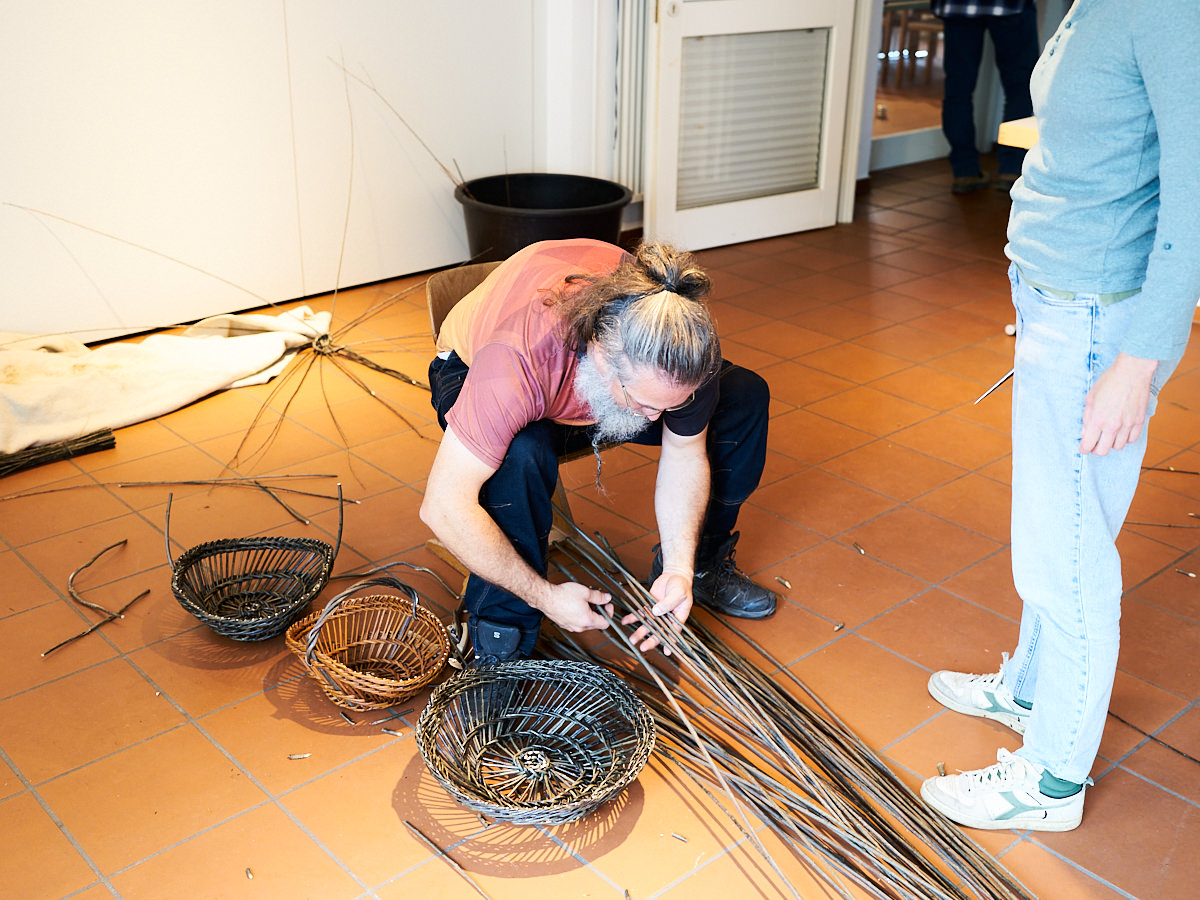
Since I was there, I gladly took the opportunity to observe the workshop. This first class was led by Karen, the wife. 
They were weaving the base of a basket using willow. 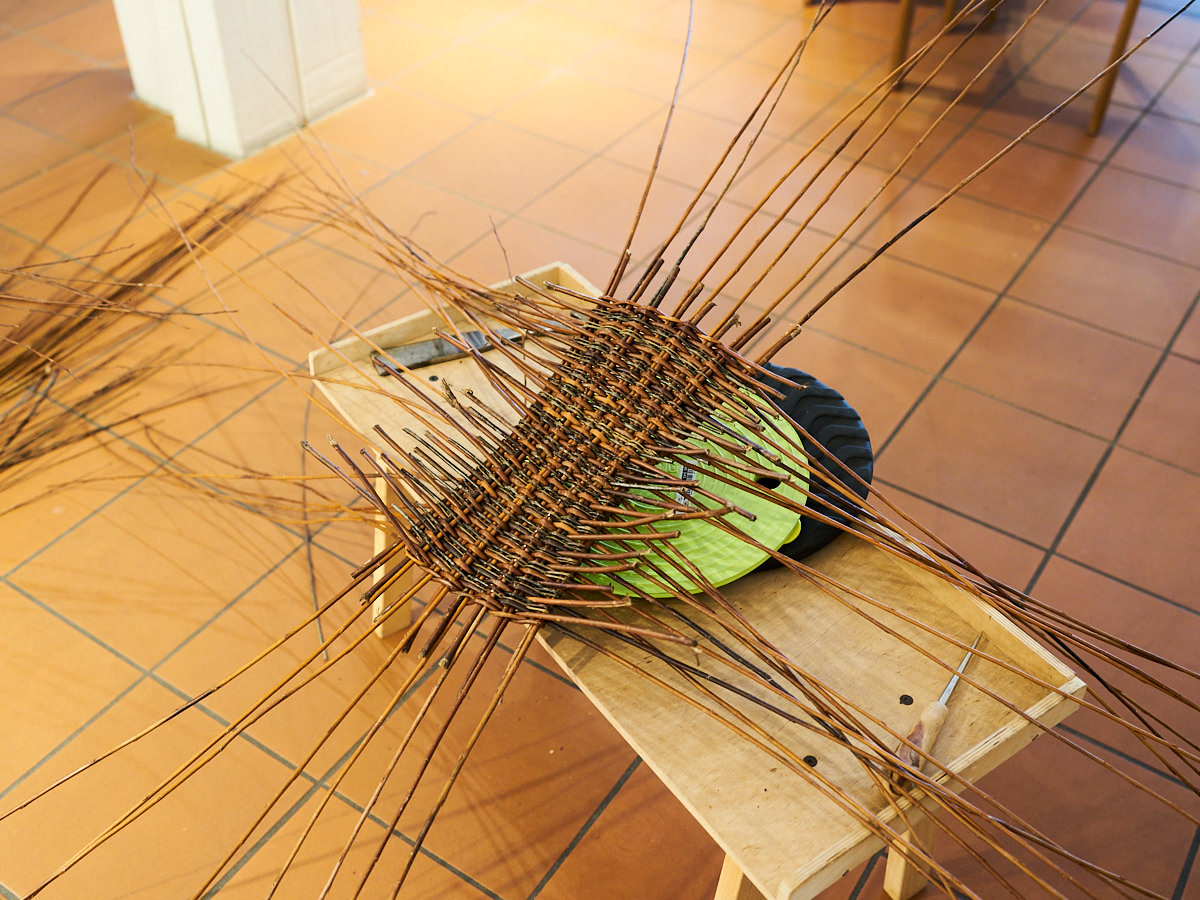
They were weaving the base of a basket using willow. 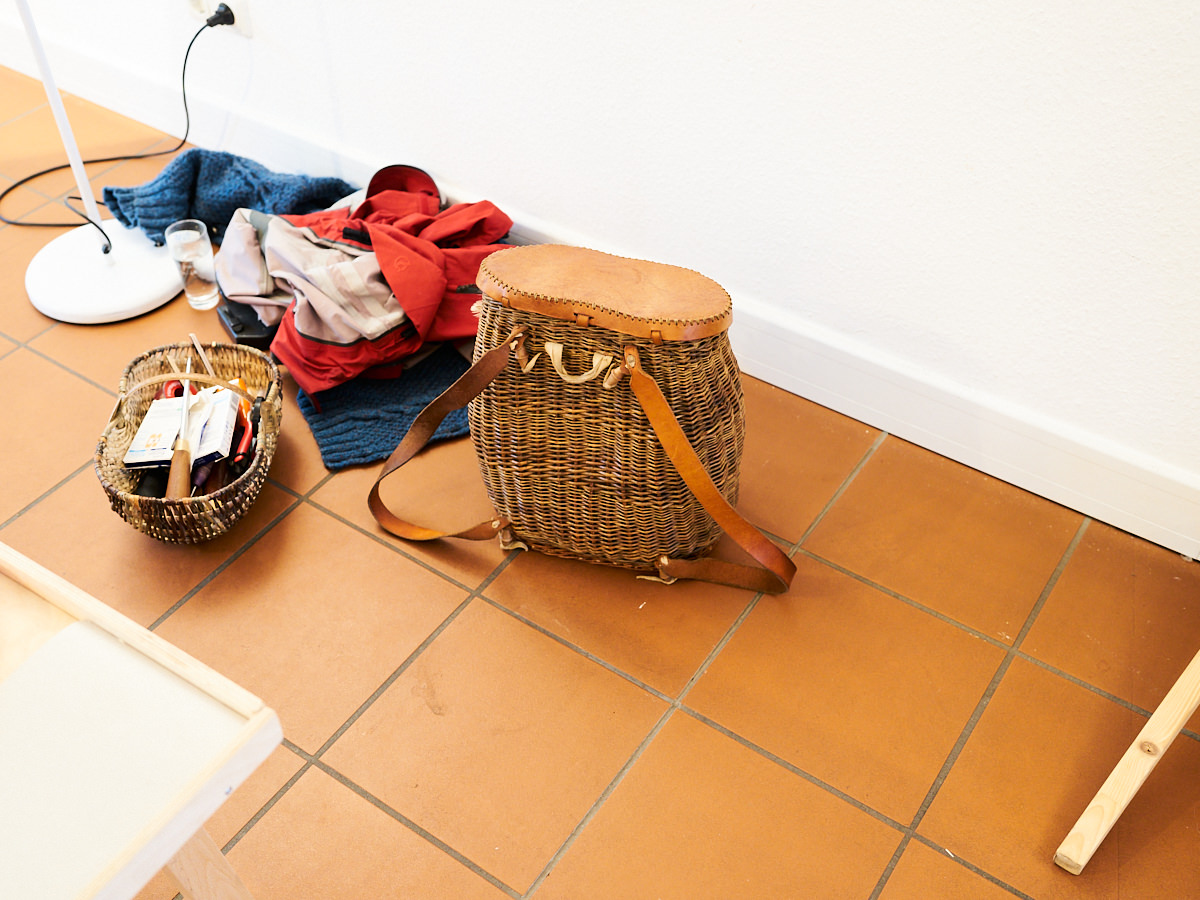
Several participants were even carrying backpacks and other items they had (most likely) made themselves from willow.
It gave me the impression that many of them were already quite familiar with willow basketry.
In another room, a class led by her husband, Corentin, had also just begun. 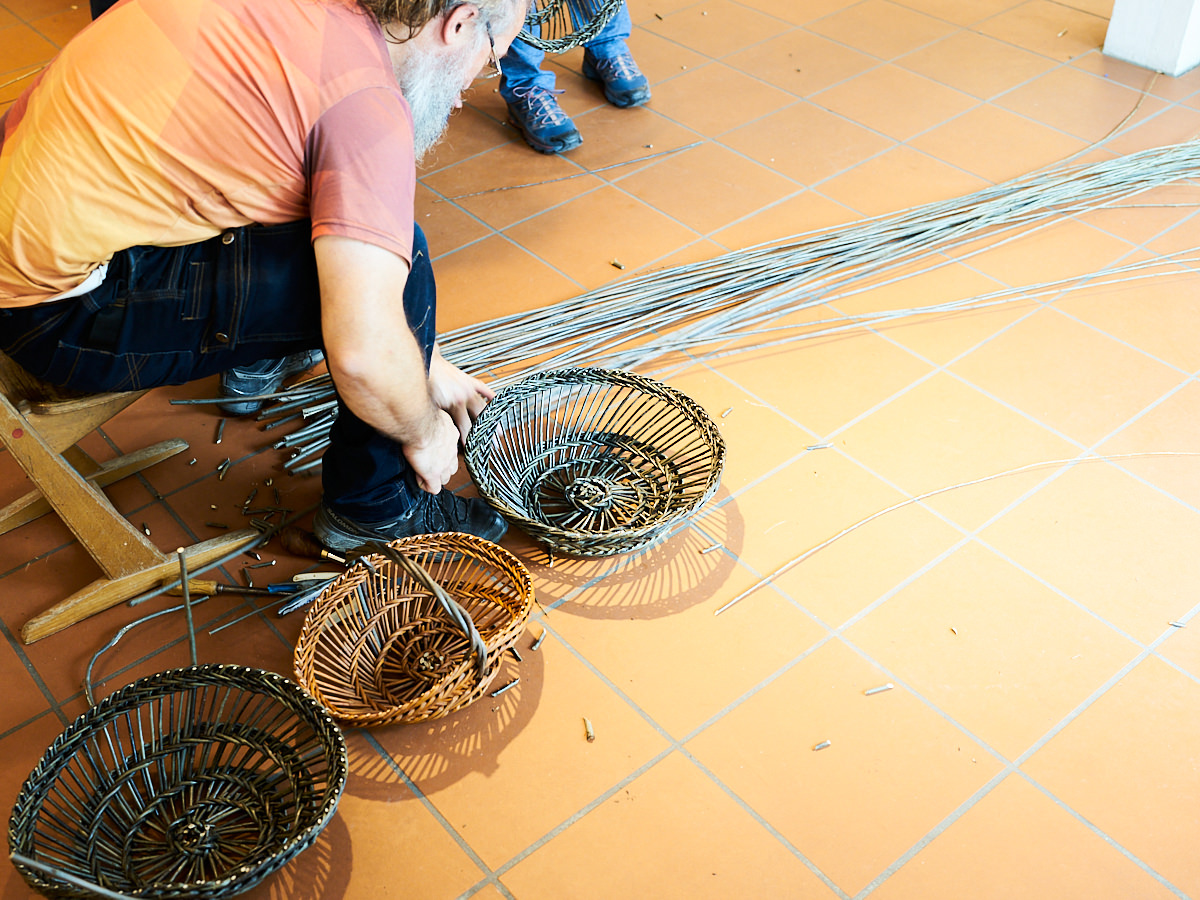
This is a traditional French basket known as “Bouyricou,” characterized by its striking spiral pattern and openwork weaving. 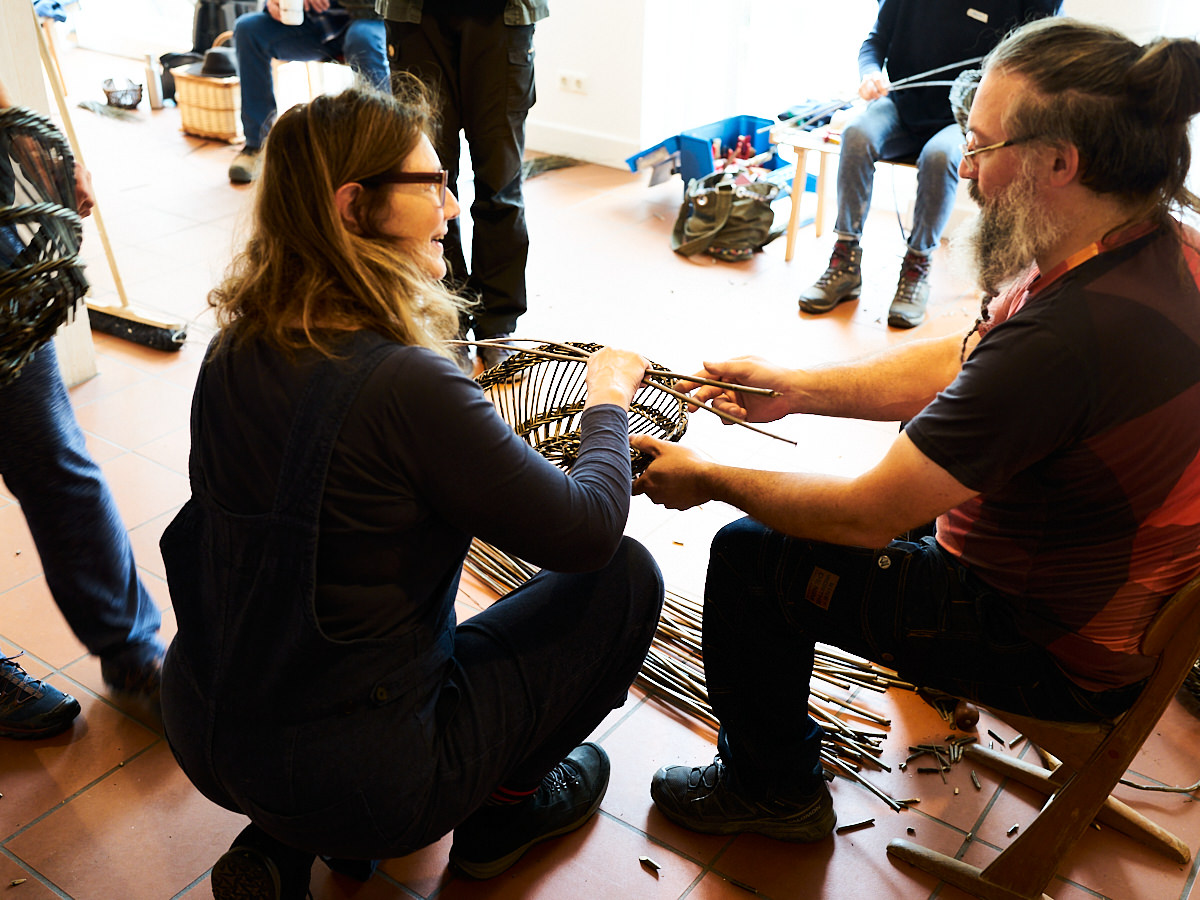
It seemed that some participants had taken advantage of the summer holidays to attend the workshop, coming not only from Germany but from other countries as well. 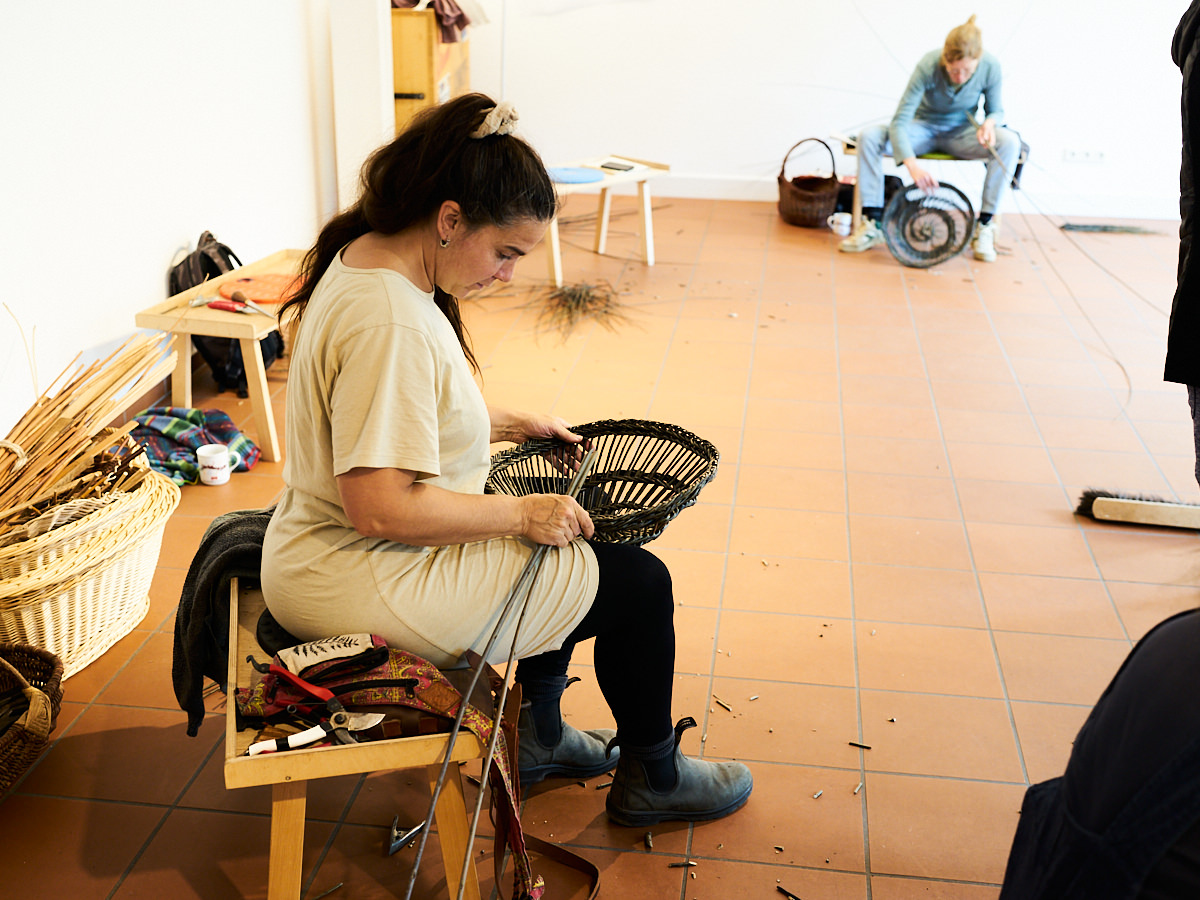
This is Florence, who came all the way from Quebec, Canada.
A mother of three, she weaves baskets herself and also runs her own shop—an energetic and inspiring woman.
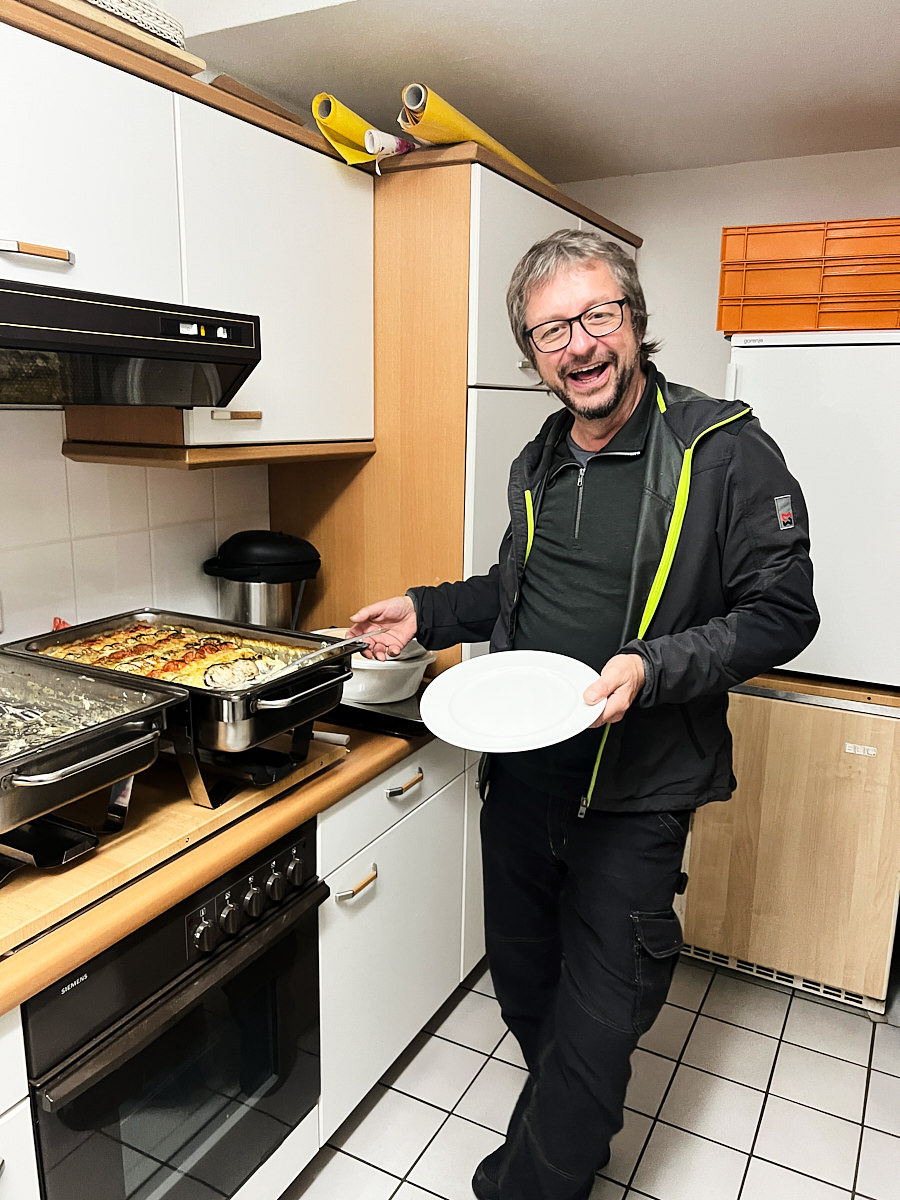
As I listened to the participants’ stories and enjoyed catching up with Karen and Corentin, I found myself happily occupied. Just then, Hansgert turned to me and said, “Tomotake, would you like to have lunch together?” It was a welcome and generous invitation. 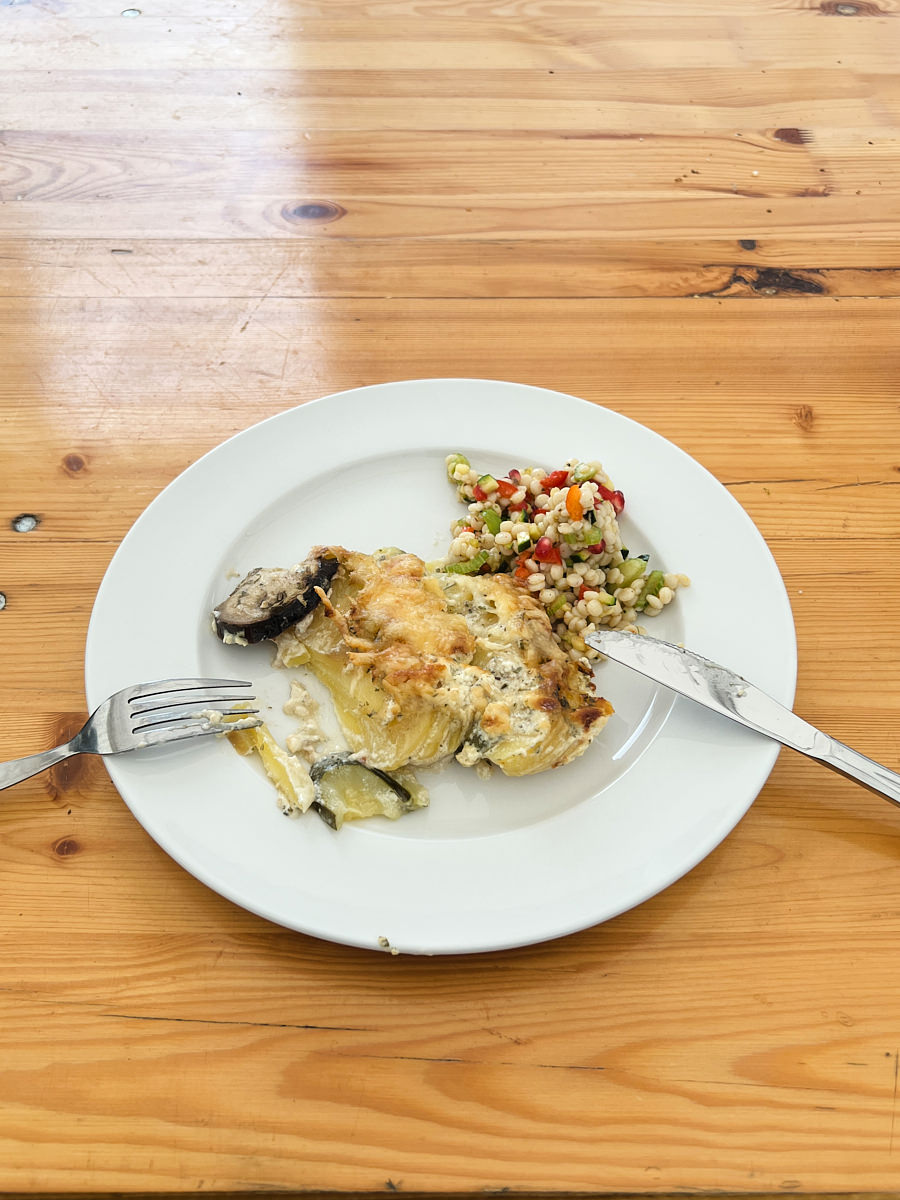
Since it seemed to be a meal prepared for the workshop participants, I initially declined as politely as I could. But Hansgert said kindly, “Tomotake, you are my special guest today. Please, I would be happy if you joined us.” (Hansgert was the host of the workshop that day.) Grateful for his generosity, I accepted and was served a portion. The combination of eggplant, potatoes, and cheese was wonderfully comforting, and the side dish was light and refreshing. I finished it in no time. Lecker! (Delicious!)
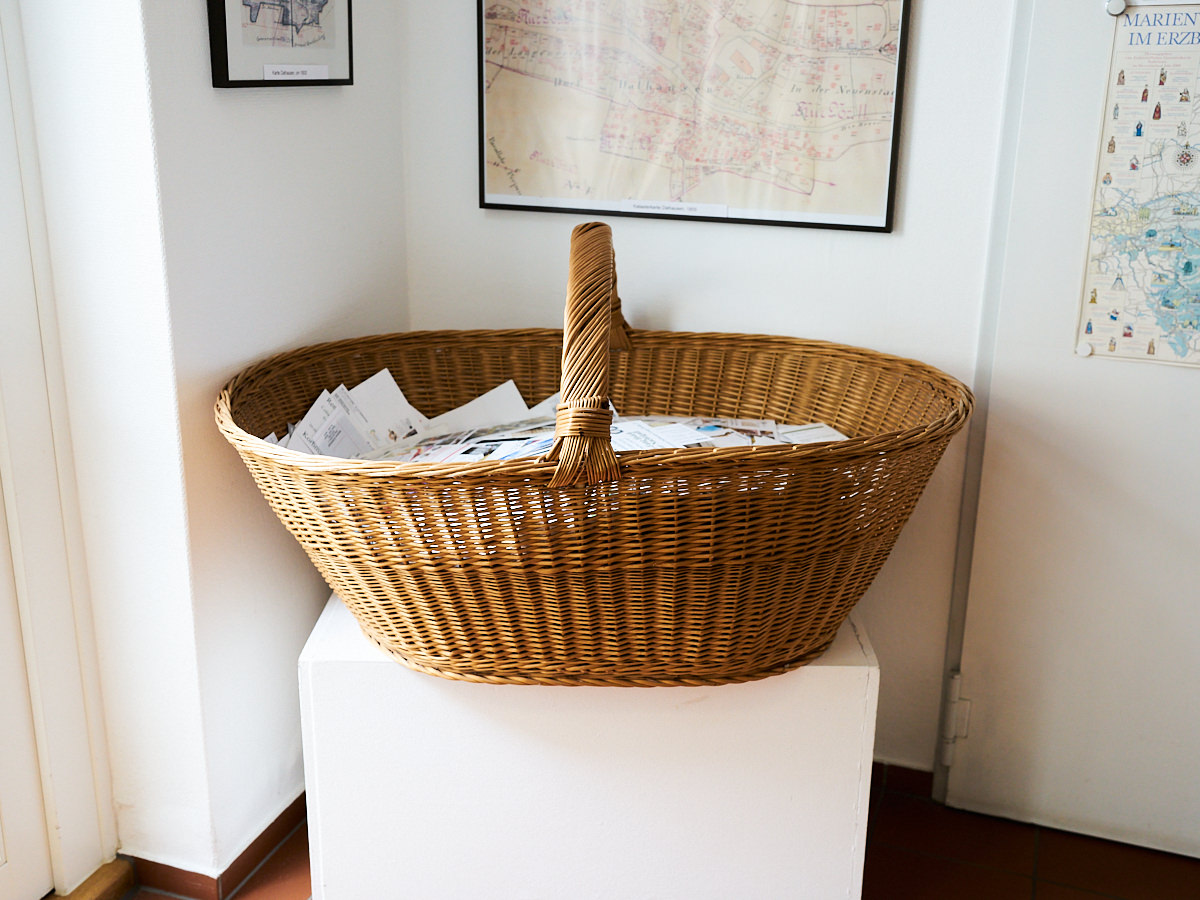
After enjoying the delicious meal, I took some time to explore the basket museum on my own, moving slowly and taking everything in.
I will share more about what I discovered there in the next journal, “Germany Business Trip 4.”
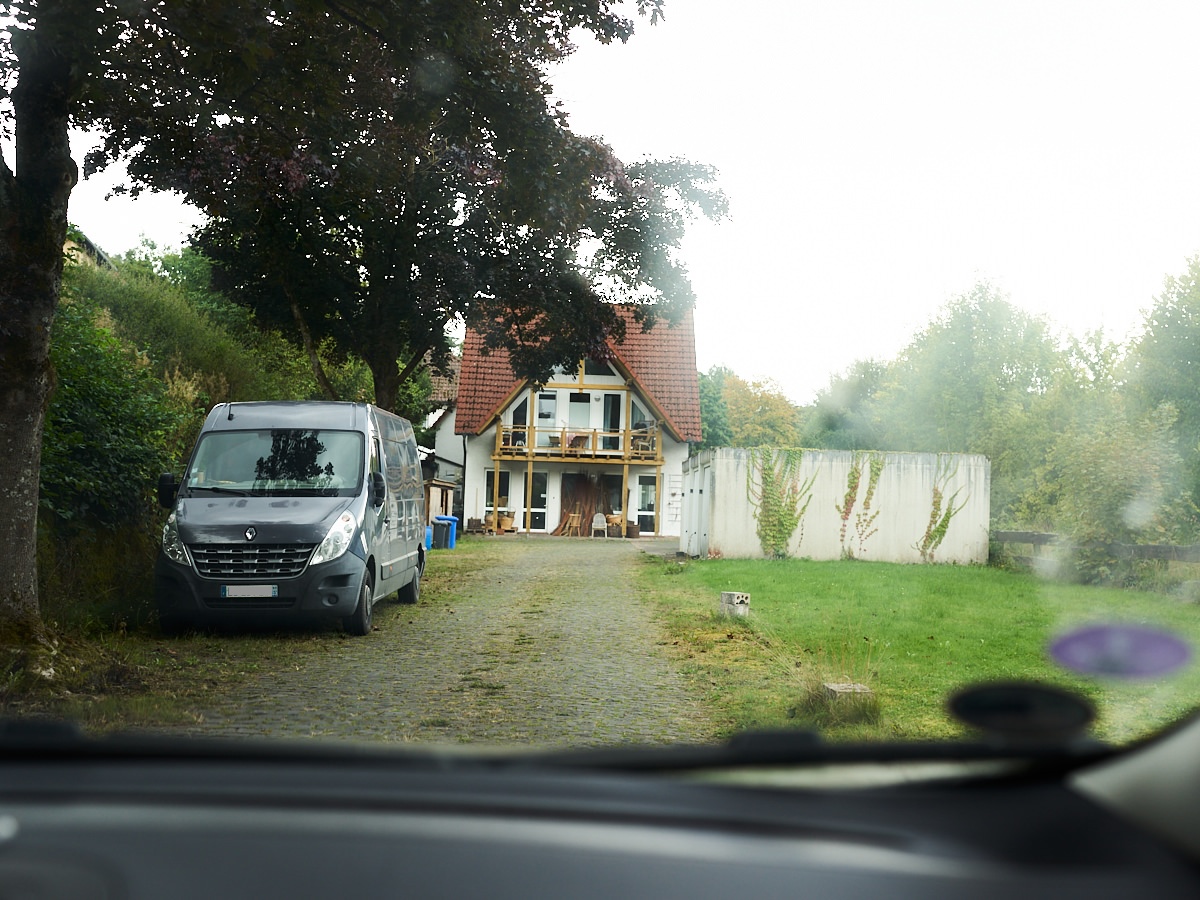
And on that day, I was grateful to be welcomed to stay at Hansgert’s home.
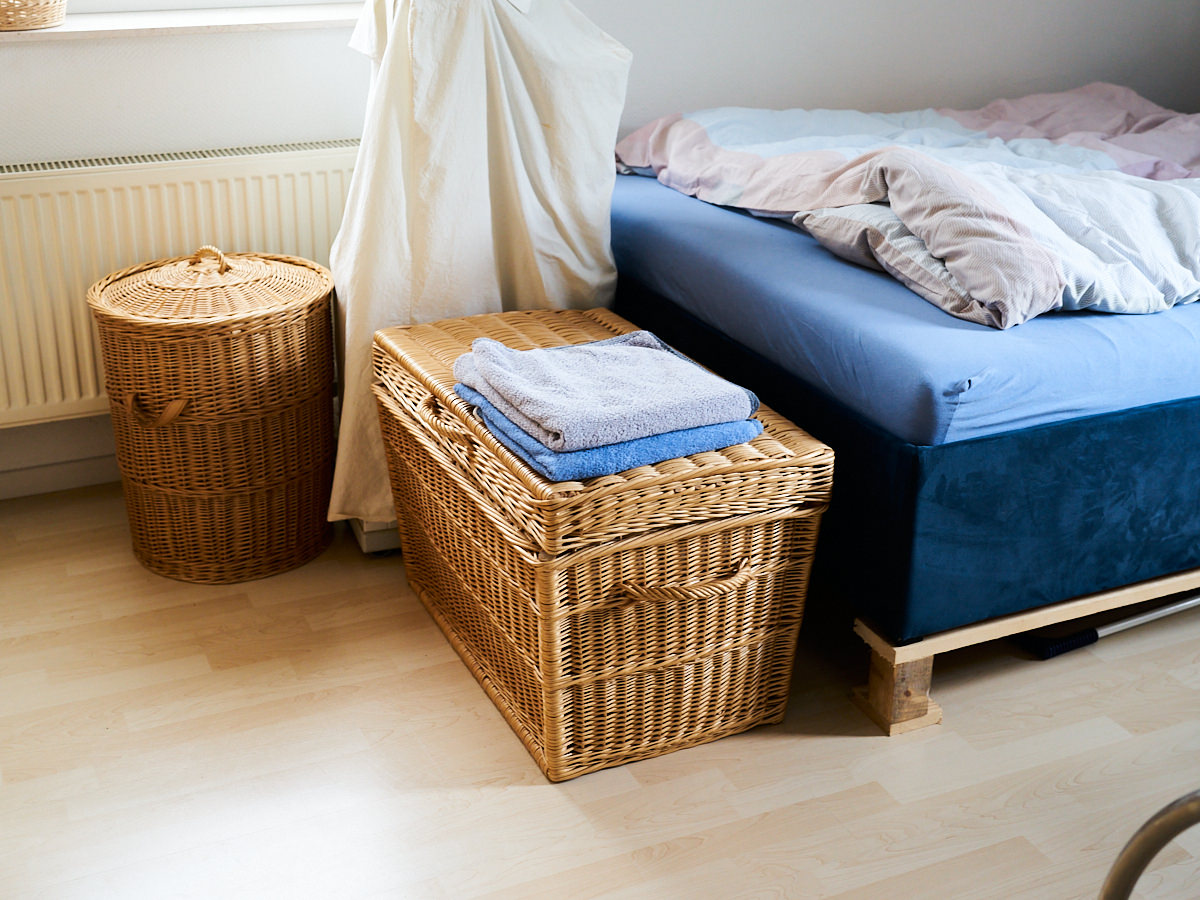
What a beautiful guest room he had prepared for me—it felt almost like a dream. Thinking back over the ten years since 2015, I was deeply moved. “Please use it as if it were your own home,” he said—words so kind that they nearly brought me to tears. 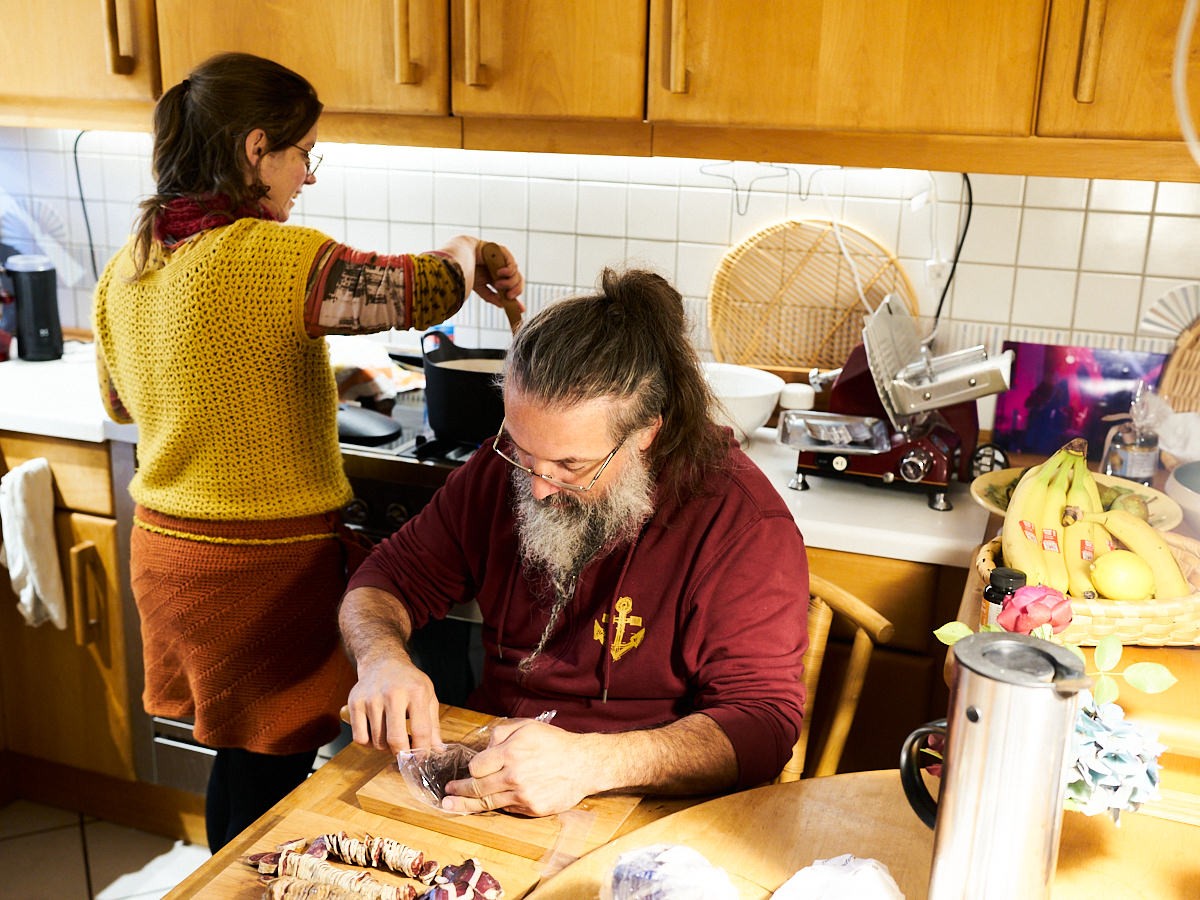
A little later, when I went into the kitchen, I found Karen and Corentin already beginning to prepare dinner for everyone that evening. After a full day of teaching the workshop, they must surely have been tired, and yet their movements were calm and practiced, as if they were completely at home in the kitchen. 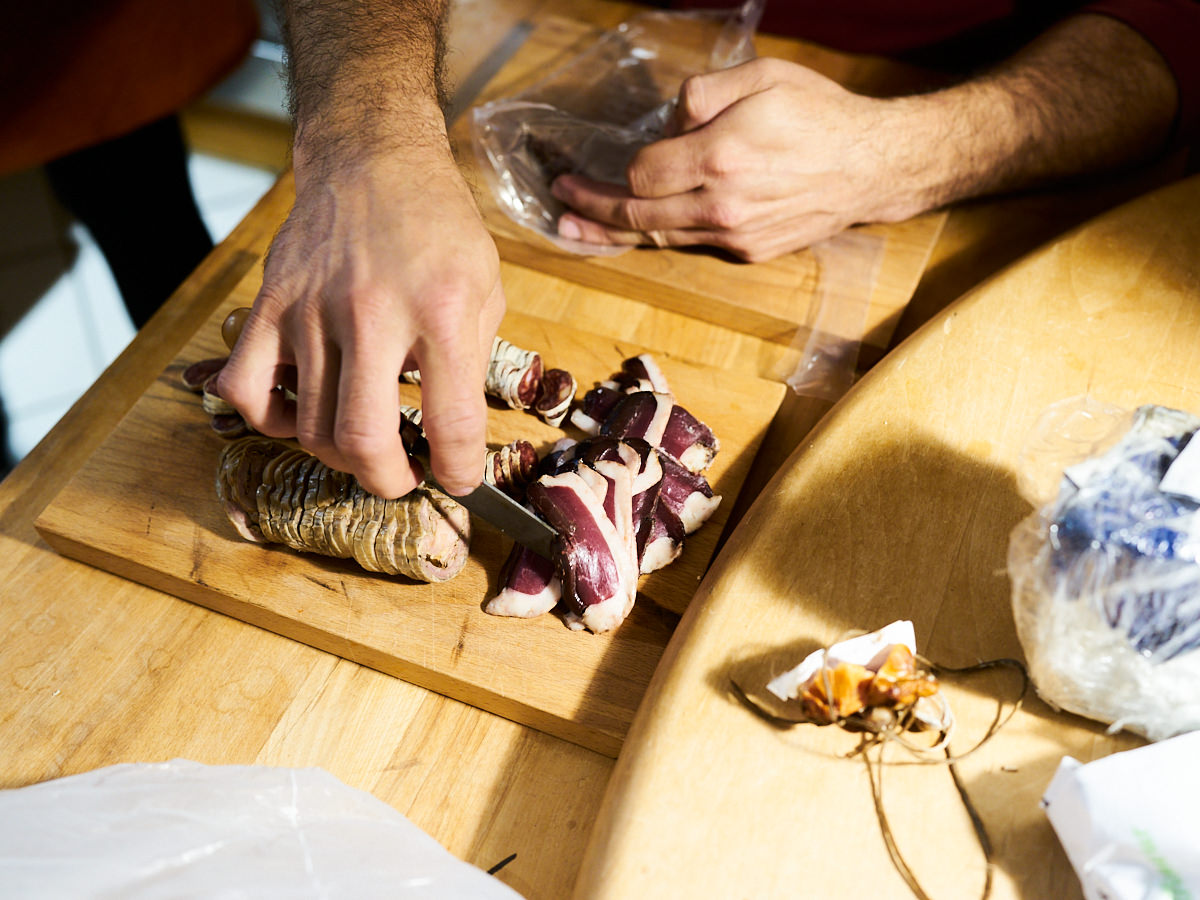
Having driven overland from France to Dalhausen, they had brought along a generous supply of ingredients that would keep well during the journey. There was plenty of duck prosciutto and salami to accompany the wine—everything looked absolutely delicious. With practiced hands, Corentin began slicing the meat with ease. 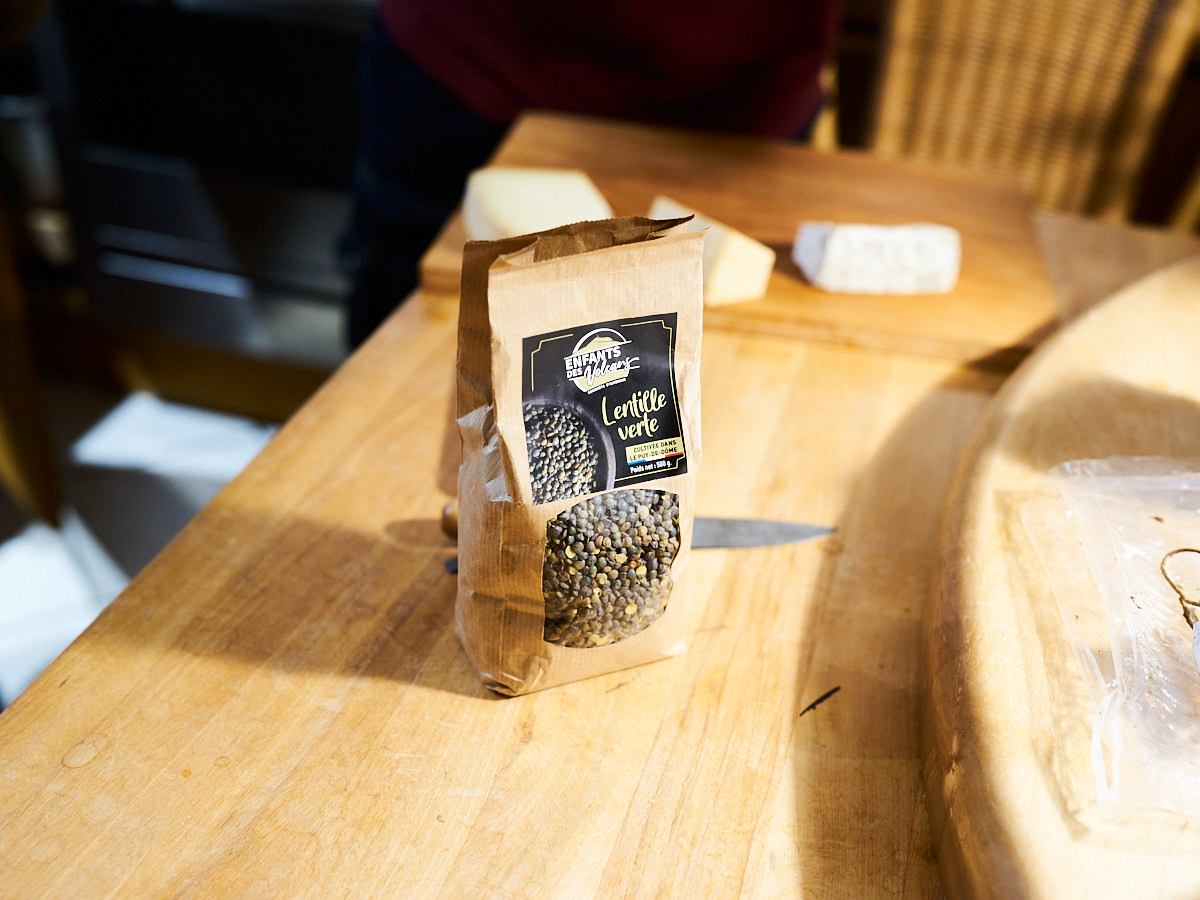
What Karen had brought with her was this—dried lentils. 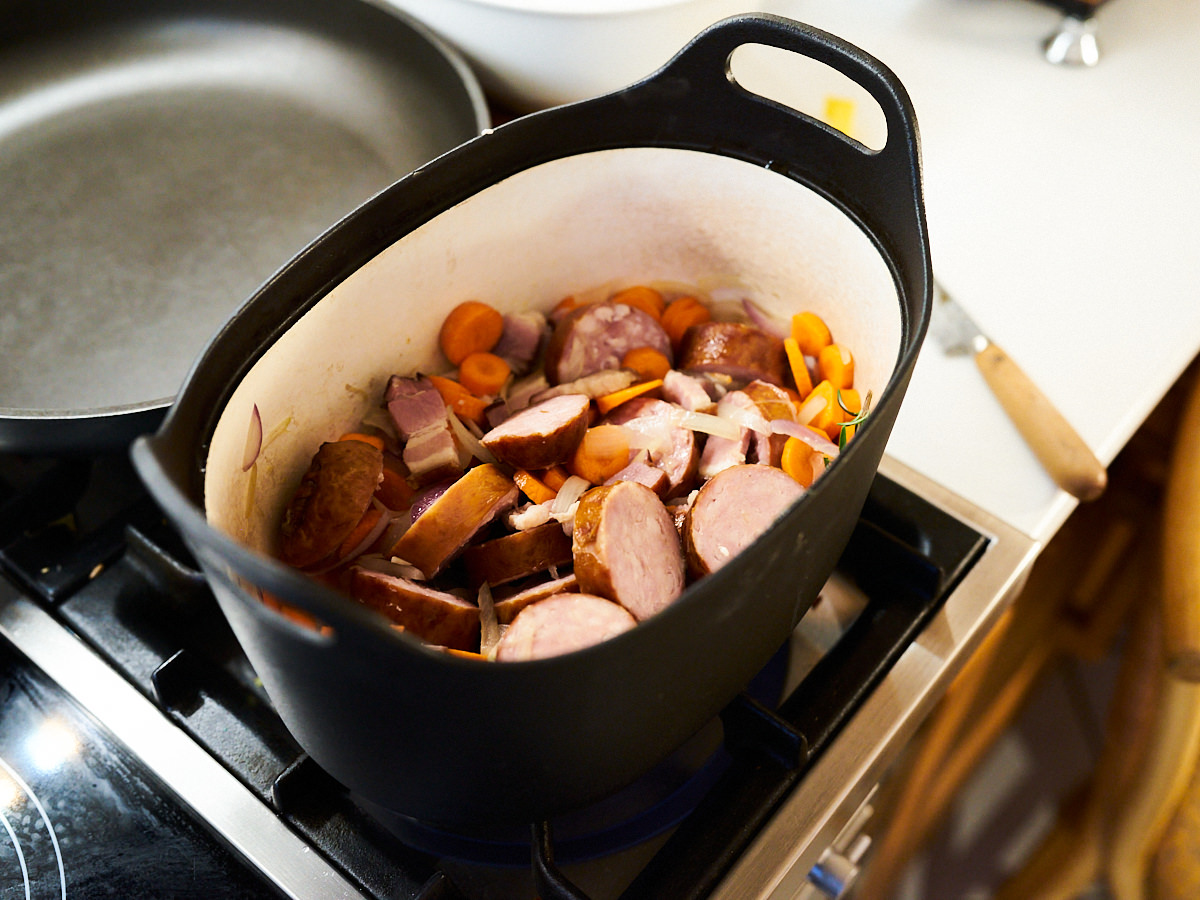
They sautéed carrots, onions, and sausage, then added the lentils, water, and a touch of orange peel, and let everything simmer gently. 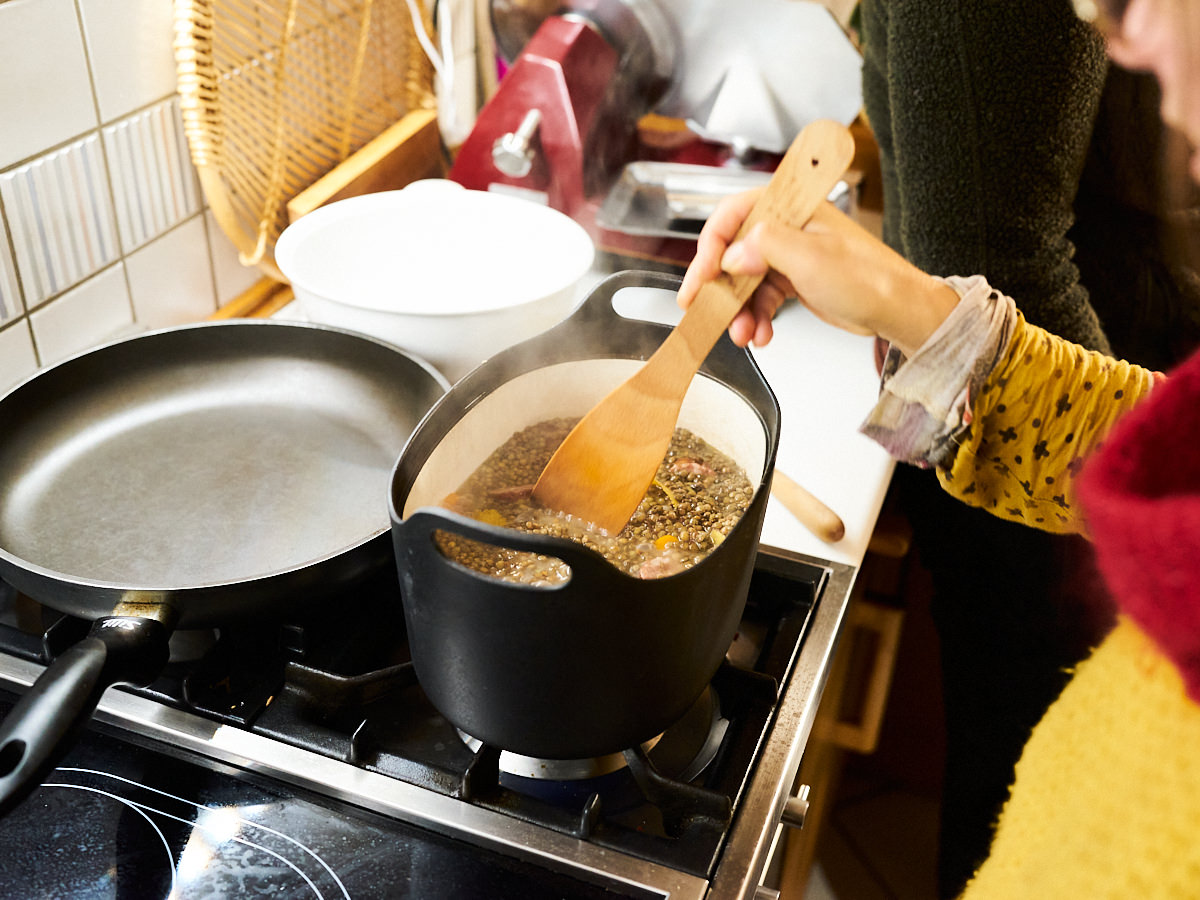
It was rich and full of flavor—absolutely delicious. As he watched the preparations for dinner, Hansgert—the host of the house and a proud German—remarked with a bright smile, “We’re lucky tonight. Our chefs are French. If a German were cooking, it wouldn’t turn out like this!”
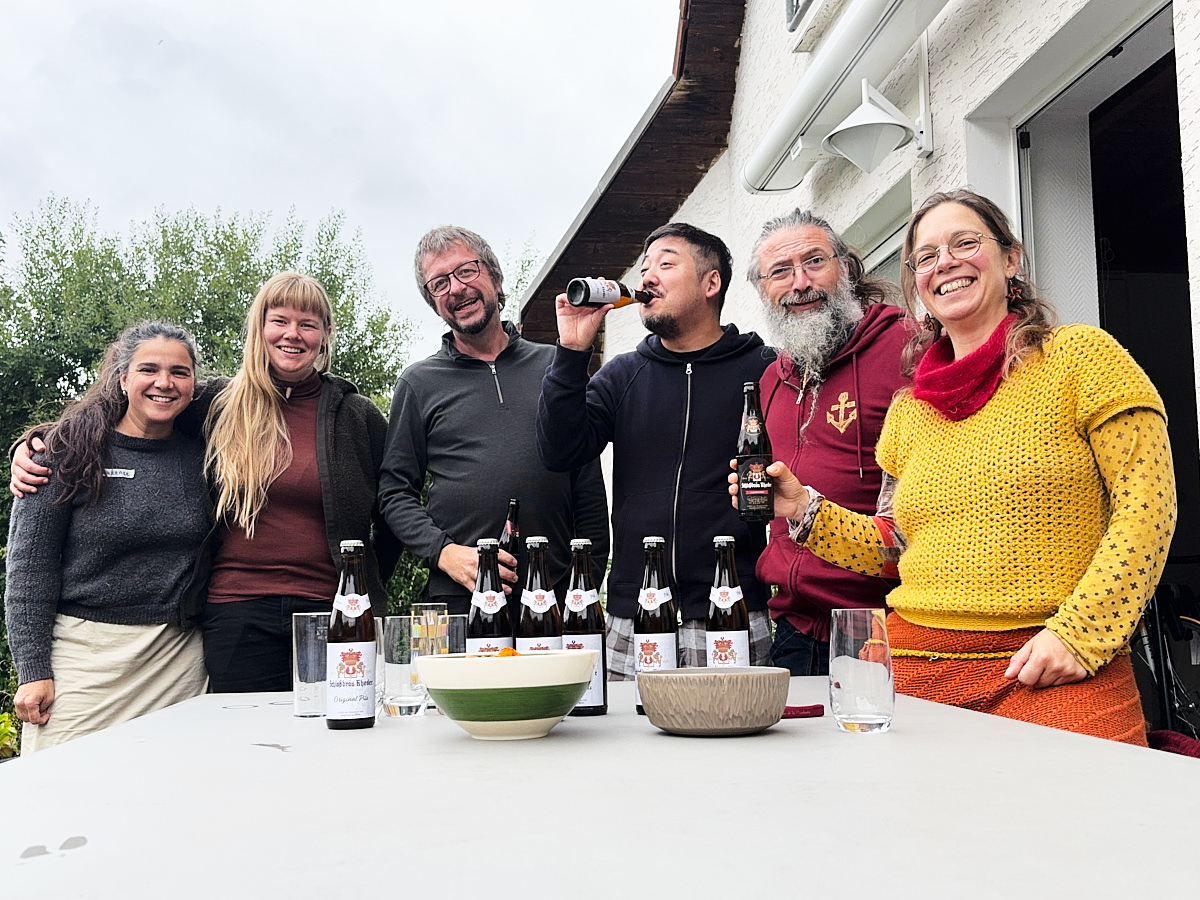
Once everything was ready, we began the evening on the terrace with bottles of German beer in hand.
And so started a joyful, multinational gathering—Germany, France, Canada, and Japan all around the same table.
Prost! (Cheers!)
To be continued.
Tomotake Ichikawa
___________________________________________
“The One Table” Special Exhibition
European Baskets We Discovered in Germany
2026
February 19 (Thu), 20 (Fri), 21 (Sat), 22 (Sun), 23 (Mon, Holiday)
26 (Thu), 27 (Fri), 28 (Sat)
March 5 (Thu), 6 (Fri), 7 (Sat)
Open | 11:00–16:00
In-store | 1basketry, Minami-Senju, Tokyo