Gathering Materials — Sawagurumi Bark from Iwate, Part 2 –材料採取– 岩手県のさわぐるみ樹皮 2
Joining a sawagurumi bark harvest for the first time and hearing that we had reached the day’s target,
I felt a moment of relief.
But once the short break was over, the next task began right away.
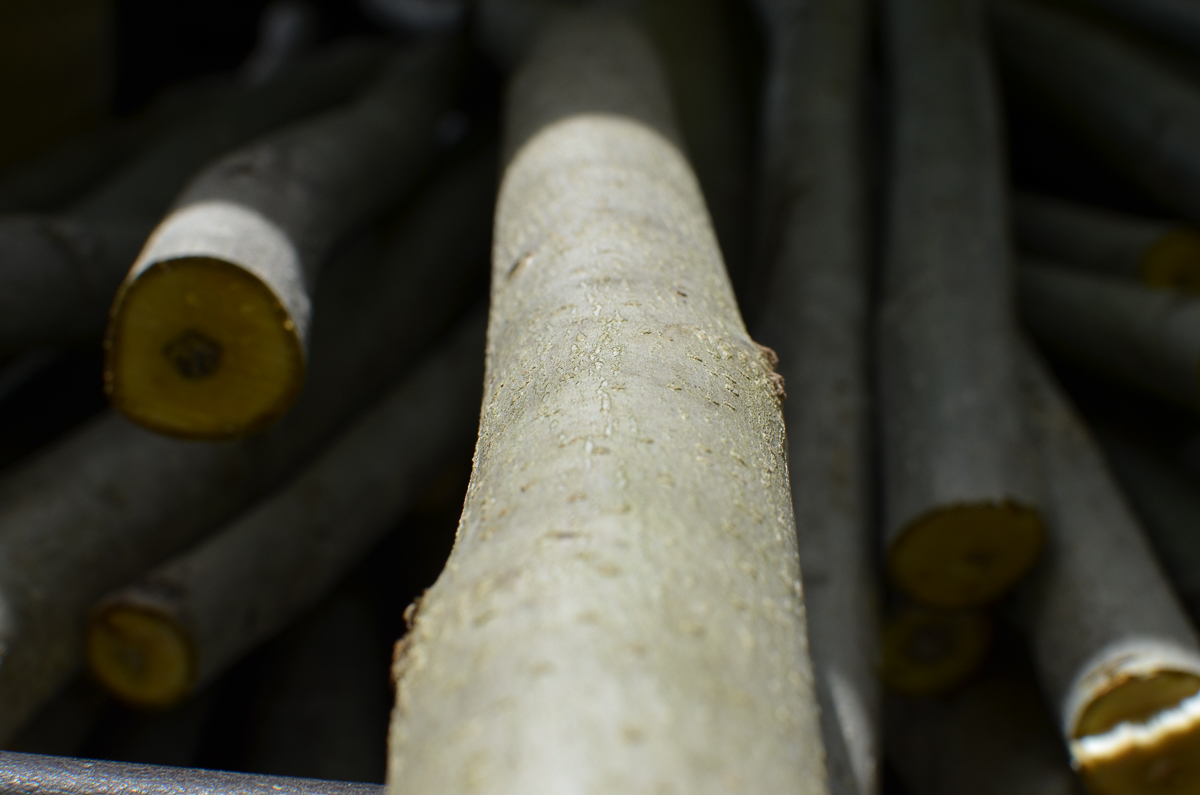
Before the freshly cut sawagurumi branches have a chance to dry,
the bark is peeled right there.
Once the wood dries and tightens,
removing the bark requires a great deal of effort.
For this reason, it becomes a race against time.
The bark is peeled as quickly as possible.
The method for peeling sawagurumi bark is quite simple.
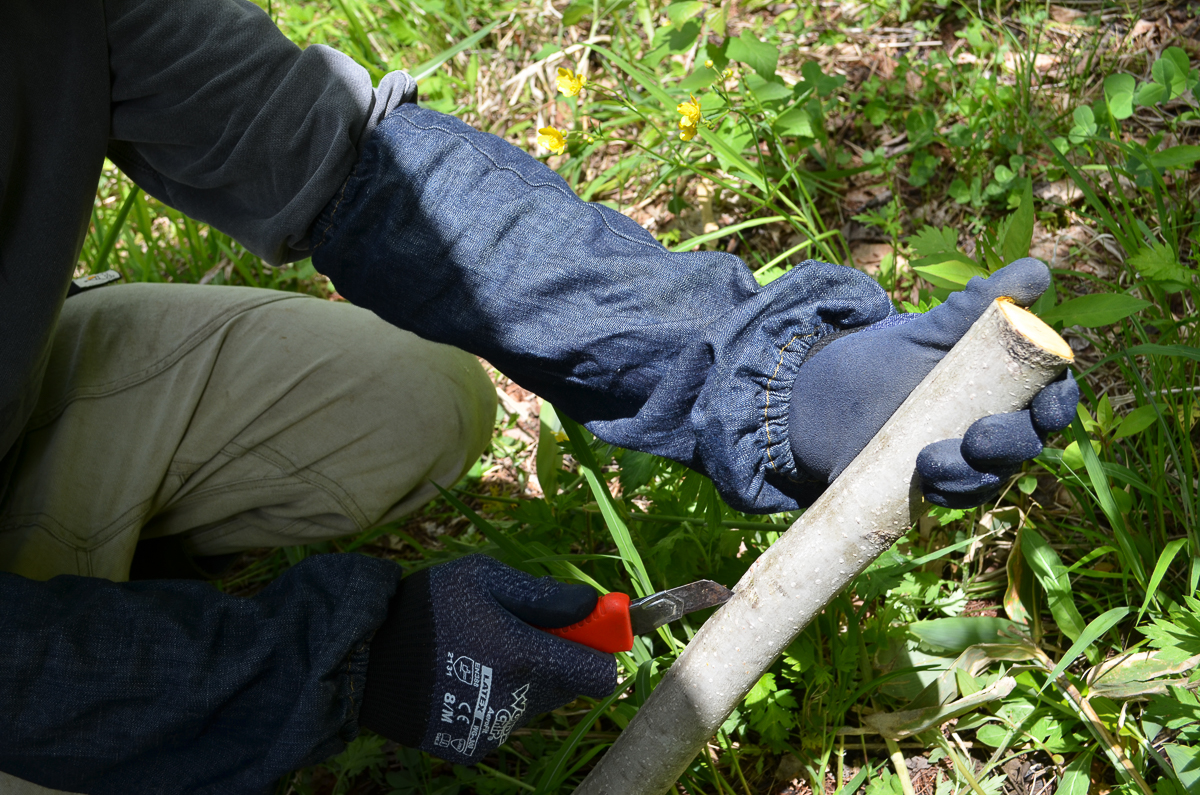
Using a sturdy utility knife, a cut is made from the top. 
The cut is drawn smoothly all the way down to the base. 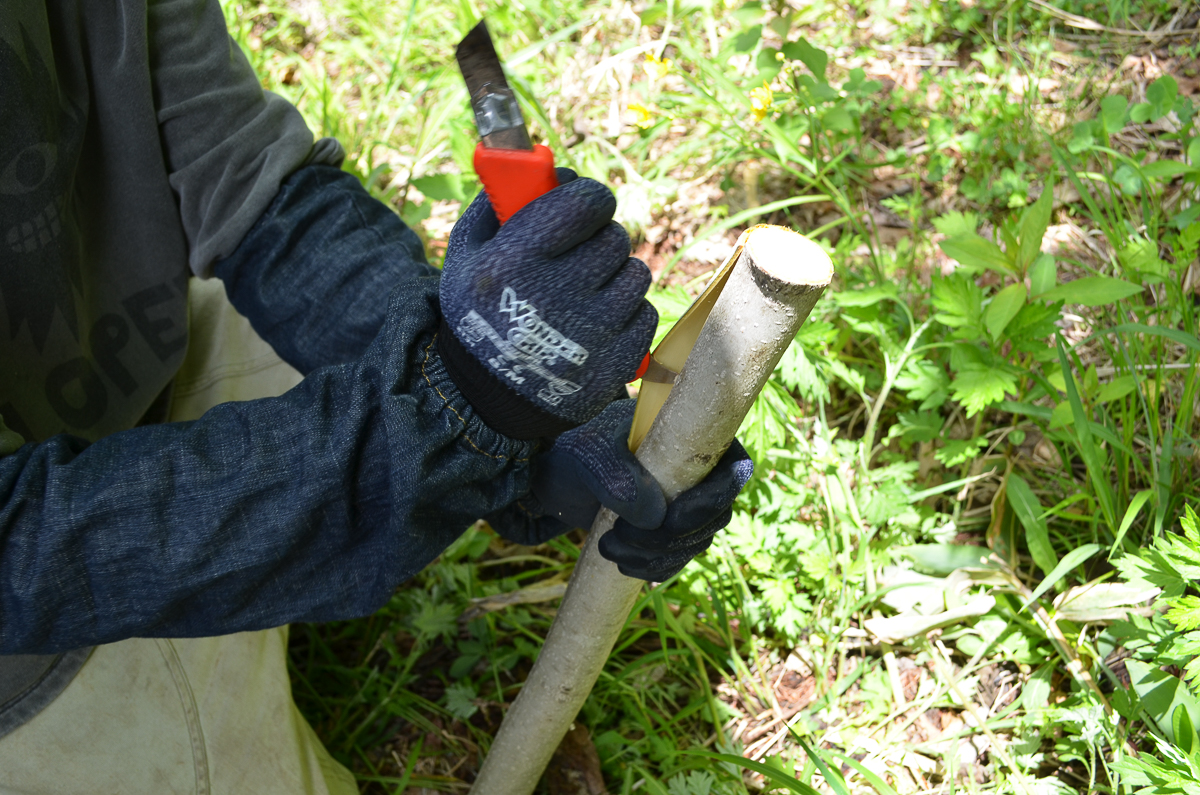
Then, the spatula-like part attached to the back of the knife
is inserted into the cut that was just made.
Using leverage, the bark is firmly pried away from the wood. 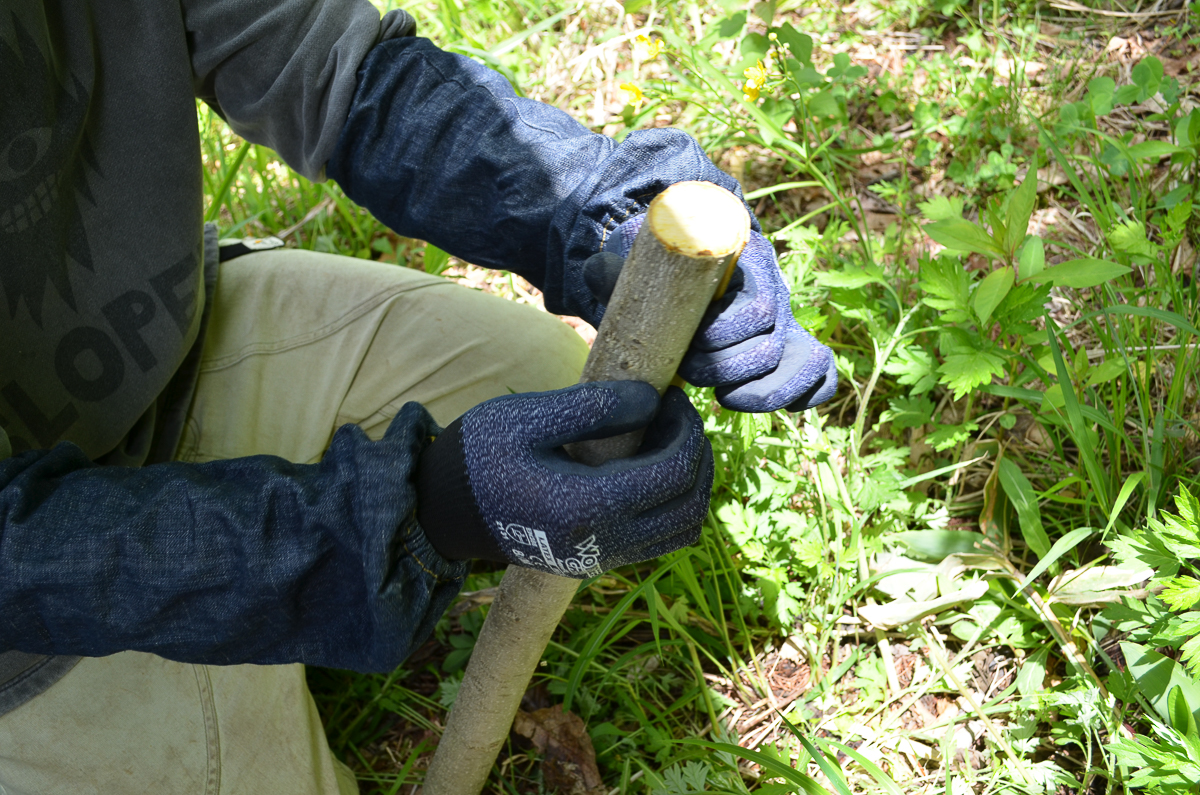
The side with the cut is turned away from the body. 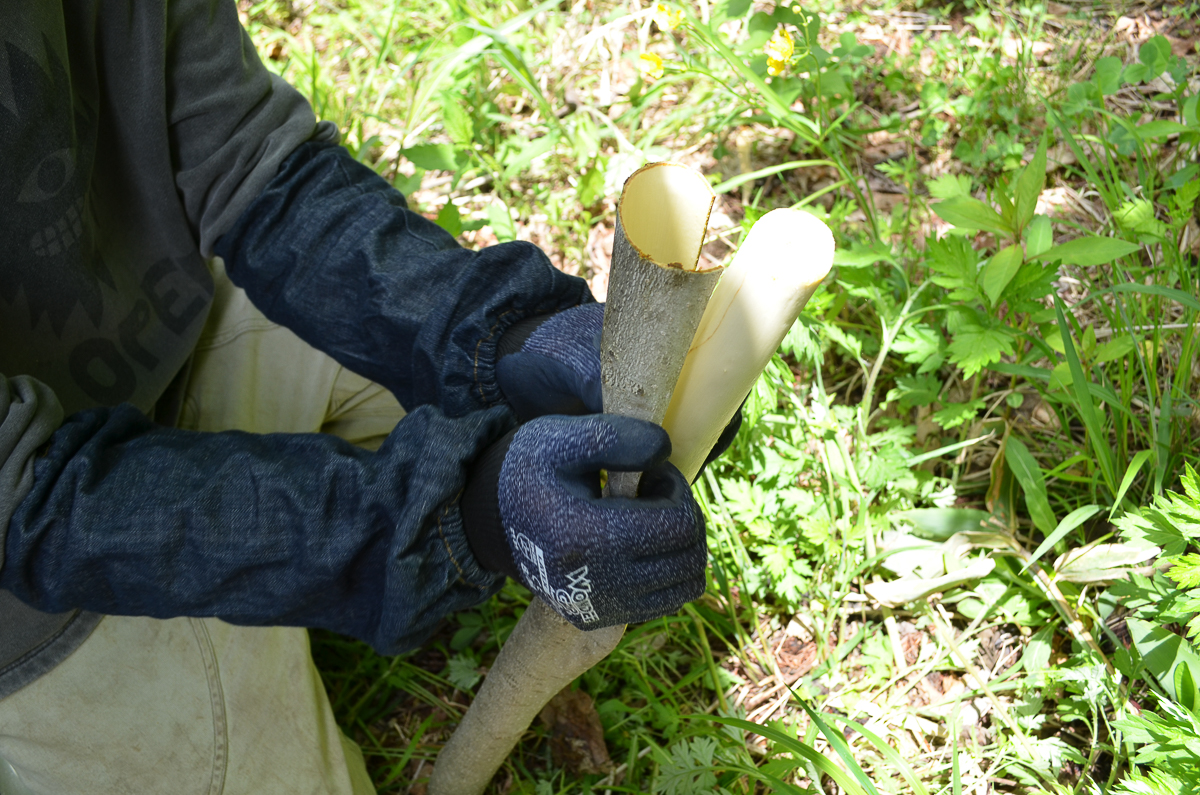
From there, both hands are inserted deeply into the opening, and the bark is peeled away by spreading it open. 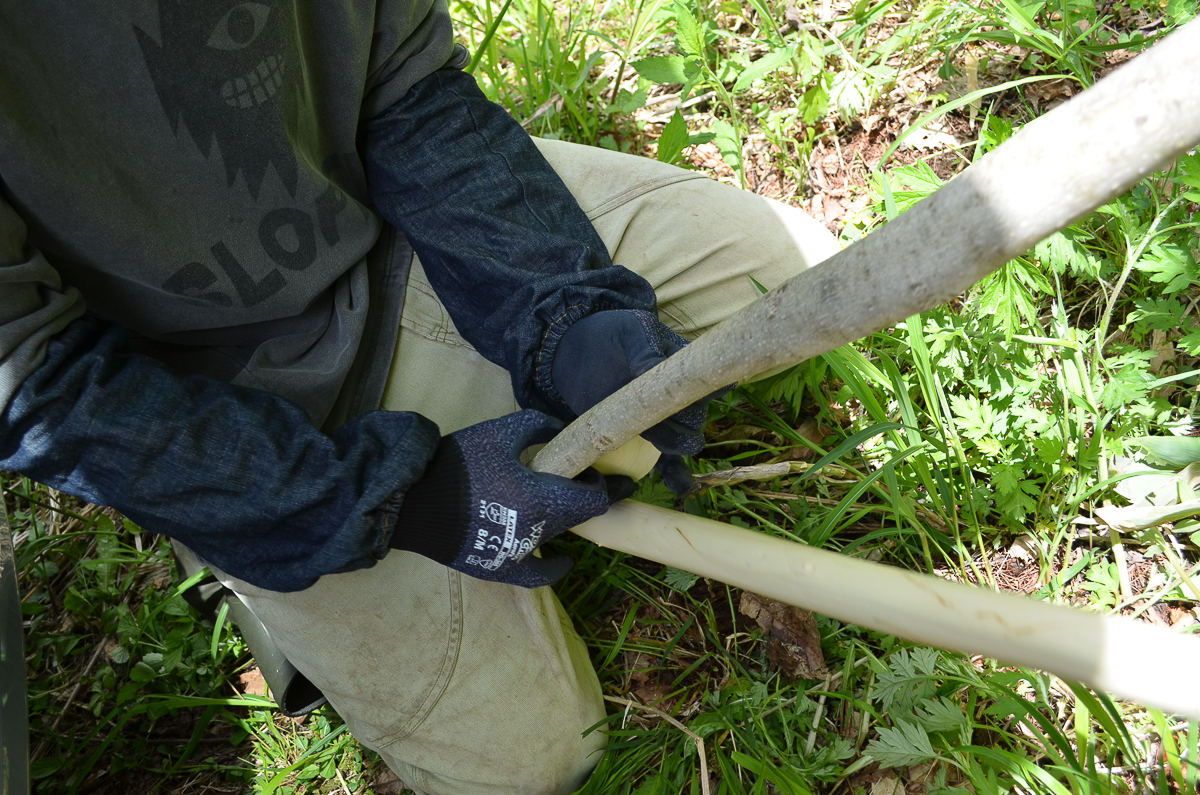
Keeping the fingers inserted, they are guided downward as they are,
and as you can see, the bark peels away cleanly.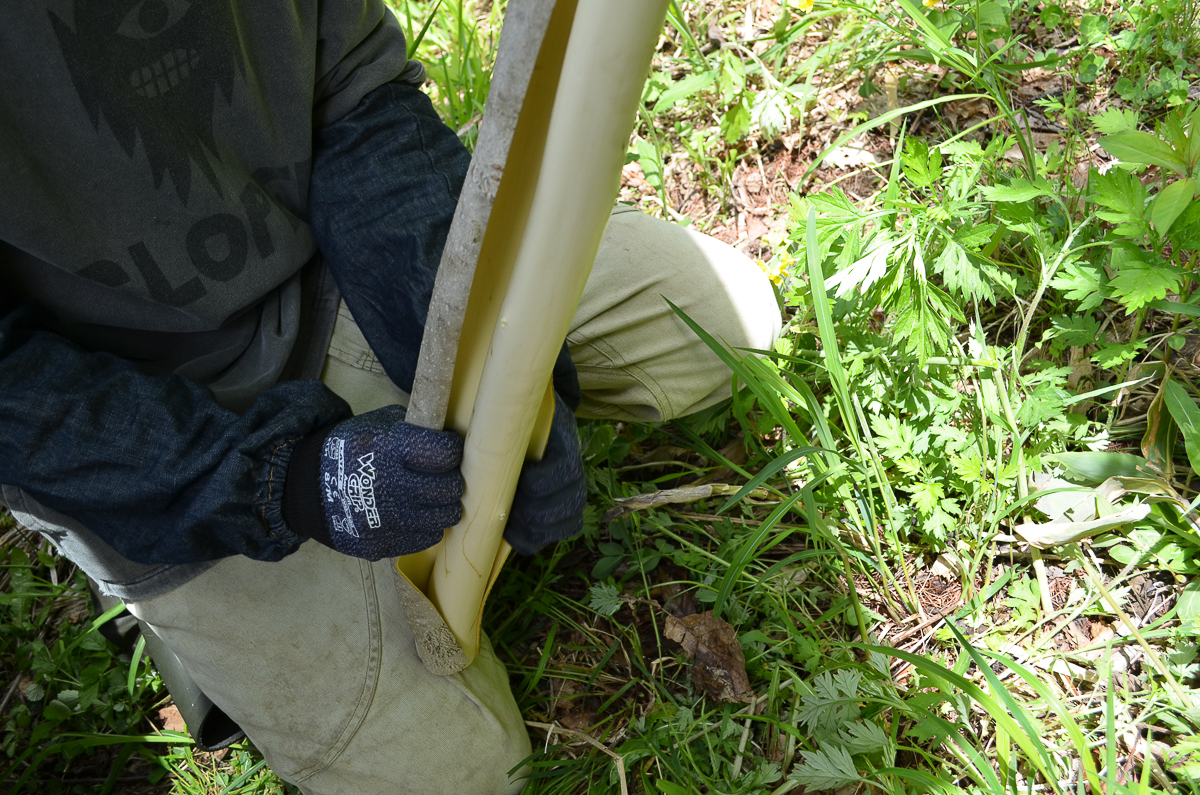
Once it reaches this point, the bark peels away smoothly, almost with pleasure.
We recorded the process of peeling sawagurumi bark, which you can see here.
He mentioned that this part of the process might be his favorite
among all the steps involved in making a basket.
I tried it myself as well, and it truly felt wonderful.
More than anything, the scent of freshly peeled sawagurumi bark left a lasting impression.
When we usually notice the scent of finished sawagurumi baskets, it is rich and mellow,
almost like something gently aged over time.
But the fragrance at this freshly peeled stage was entirely different.
If I had to describe it,
it was refreshing—like melon or cucumber—
with a green freshness and a hint of subtle sweetness.
For someone like me, who usually only knows the scent of the finished pieces,
it felt like encountering a completely different material.
This fragrance seems to exist only in that brief moment,
and I realized I had been allowed to witness
something truly rare and luxurious.
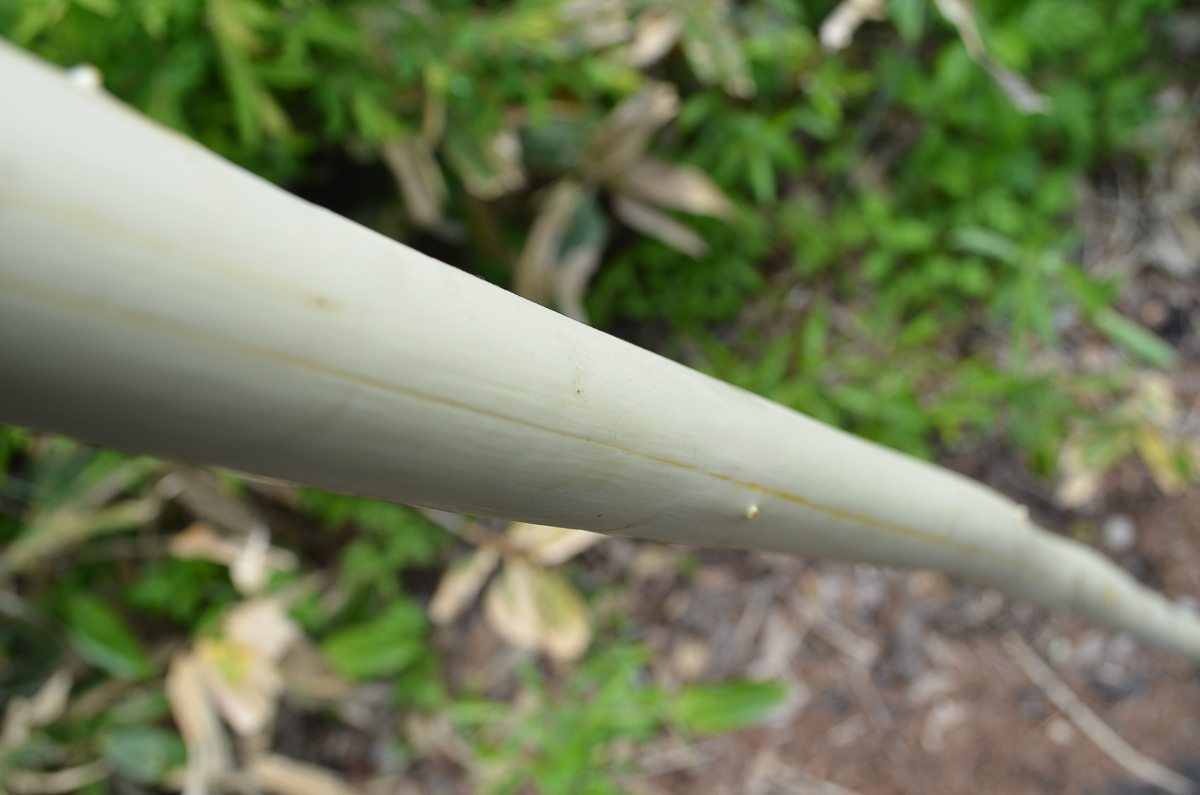
The cores left after the bark has been peeled are returned to the mountain.
Within a year, they gradually break down, becoming soft and beginning their return to the soil.
“I make a point of checking the places where I returned the cores the following year.
It’s something I want to see through properly,” he said.
In those words, I felt a deep respect for the materials taken from the mountain.
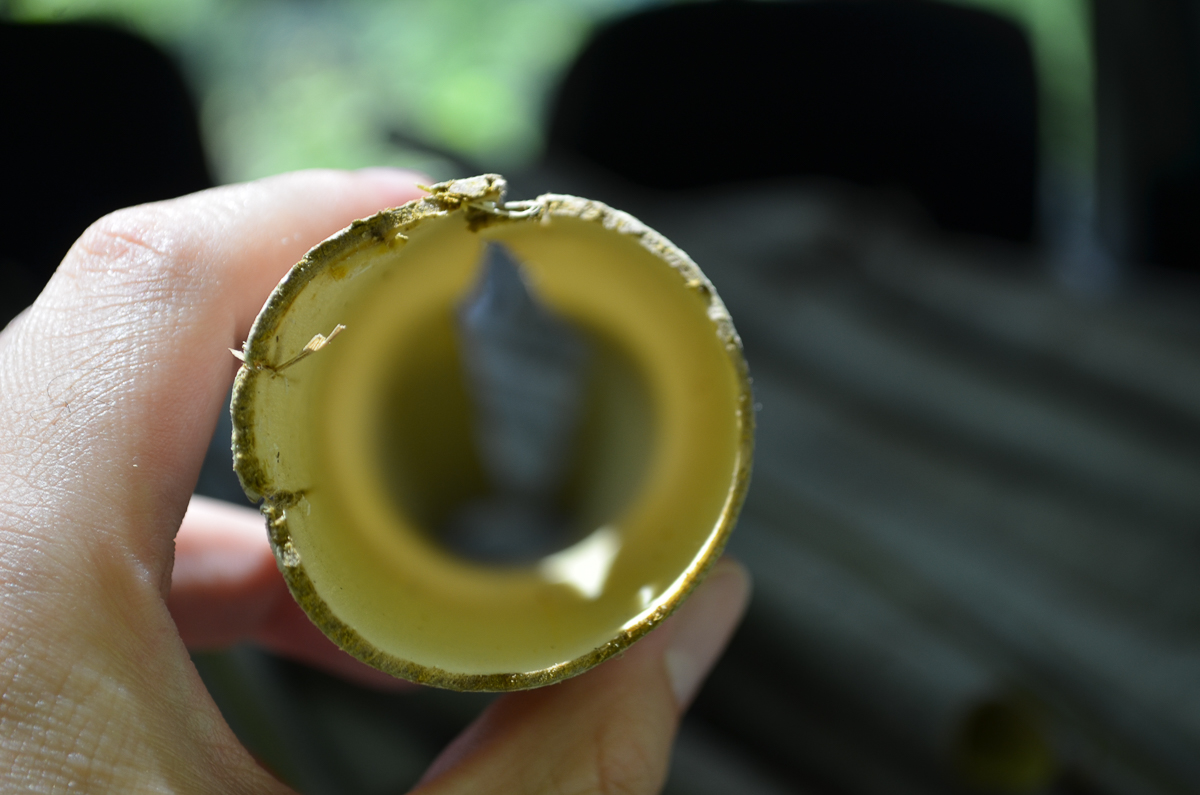
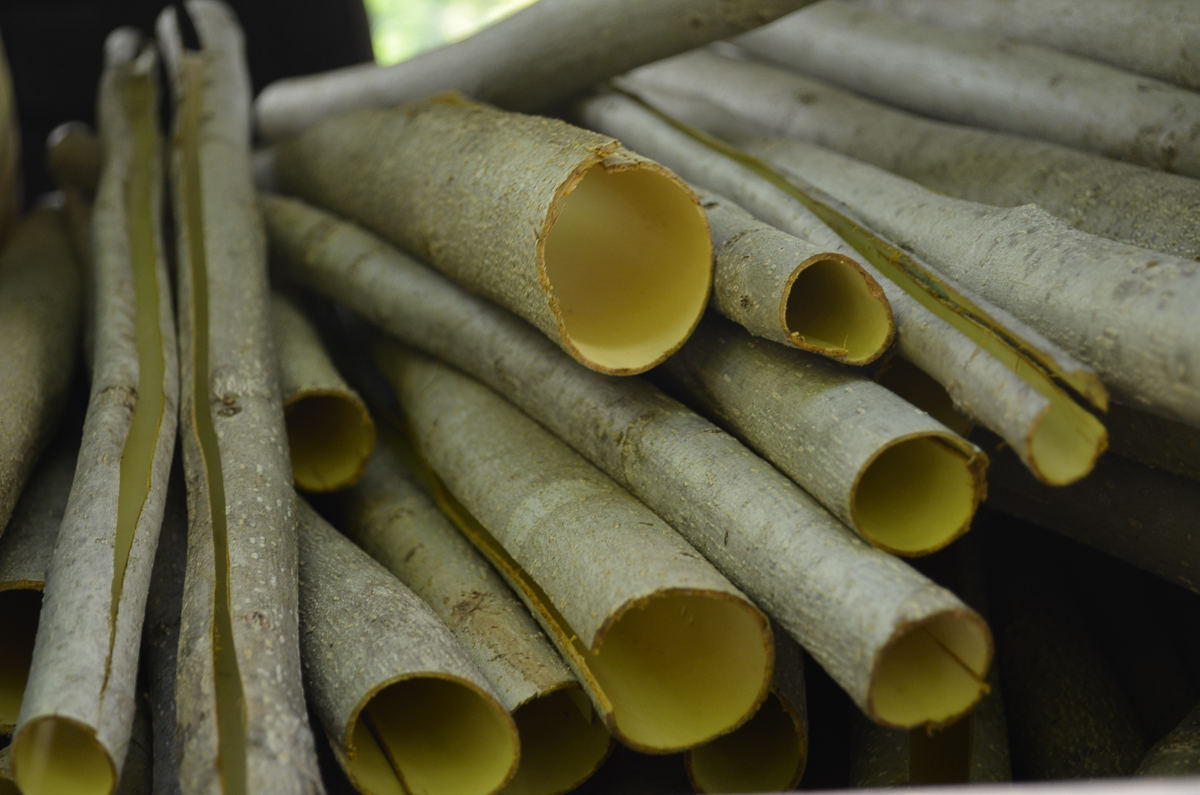
The cores and bark are peeled one after another, then separated and sorted. 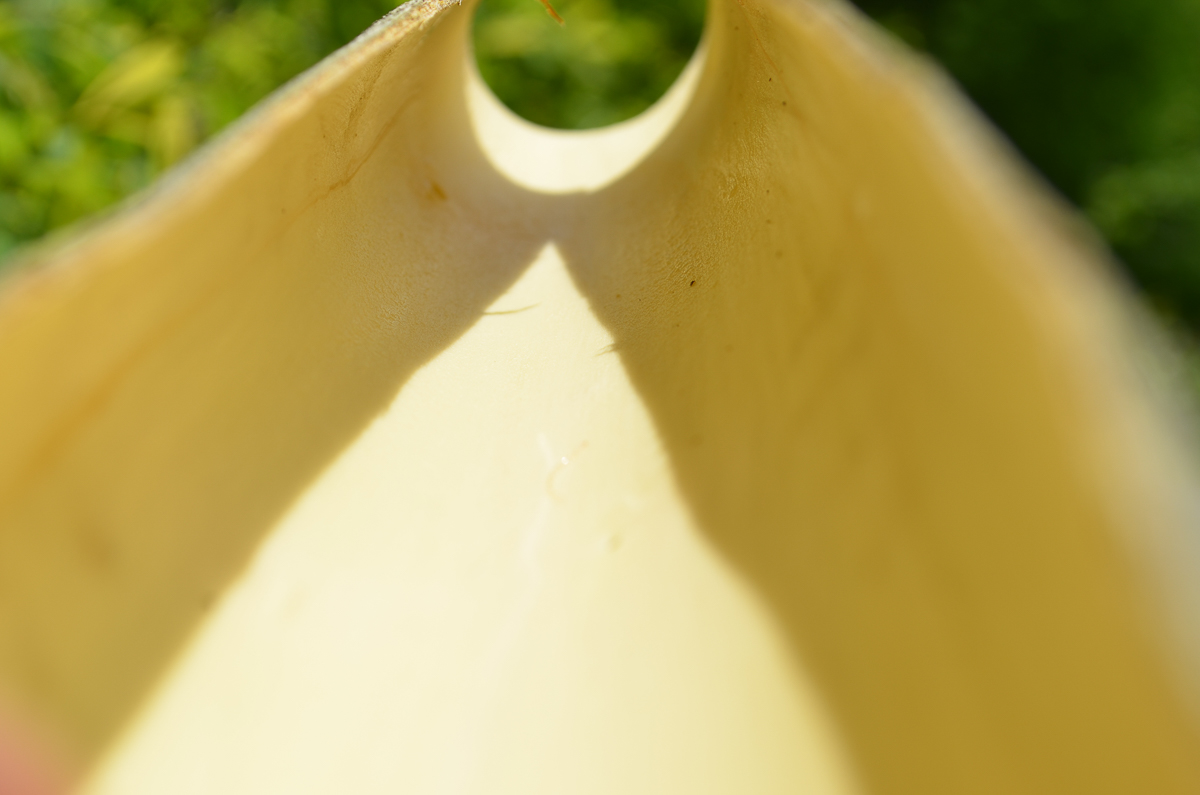
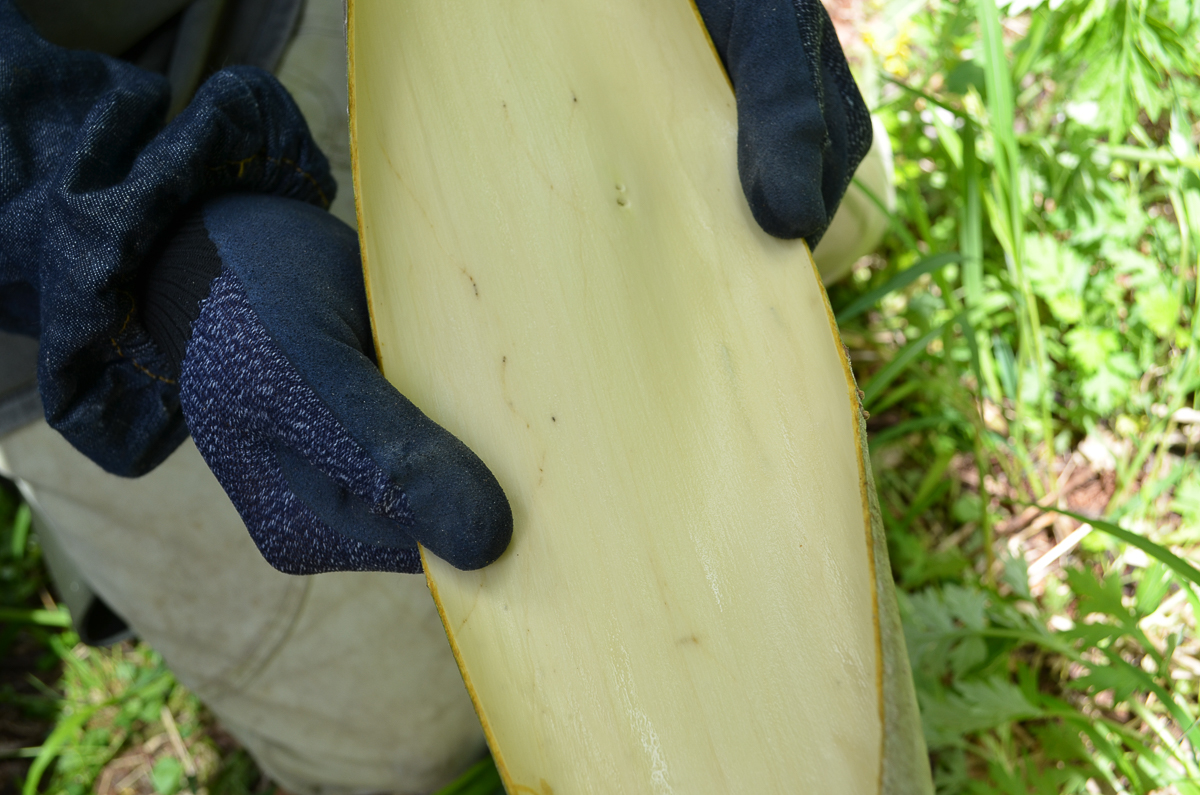
The inner surface is smooth and beautifully translucent. 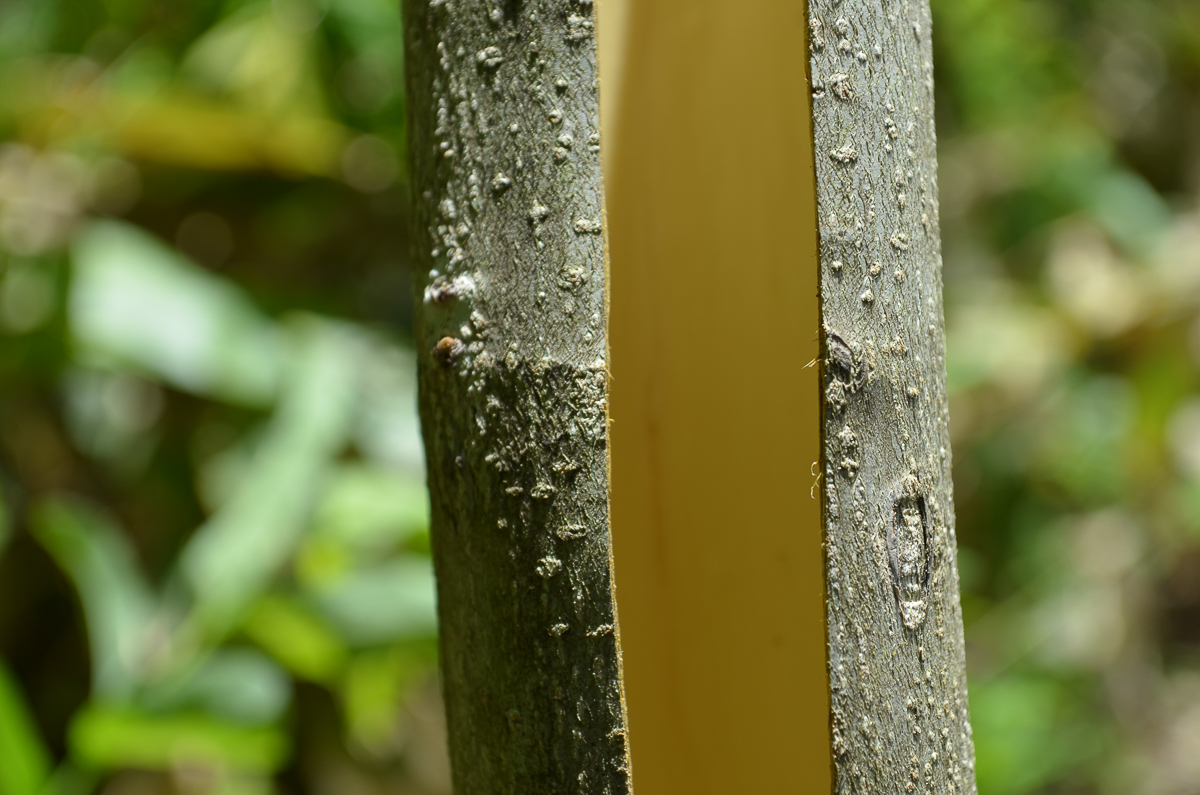
The inner bark of the baskets we deliver to you is dark in color,
but when freshly peeled, it shows this kind of natural color combination.
Once the bark has been fully peeled, a glass bottle is used to roll it in the opposite direction, curling the white inner side inward. 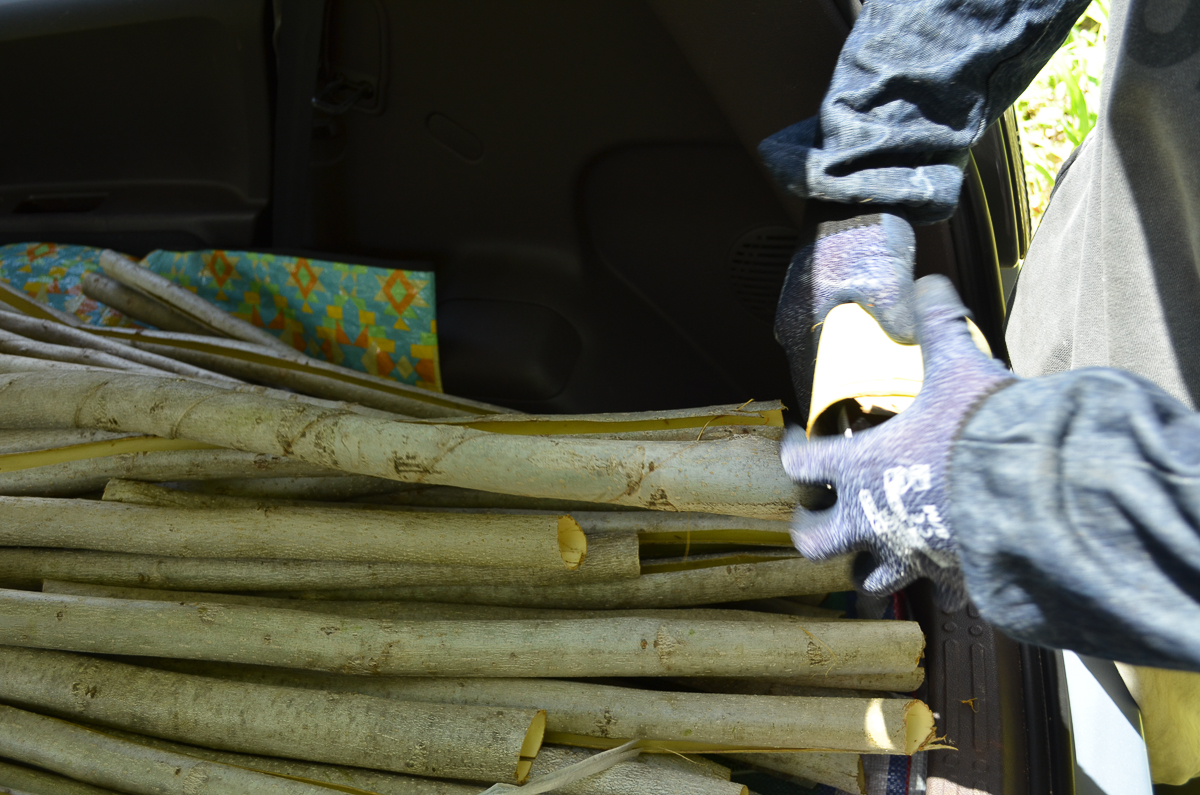
Because the bark naturally tries to return to its original curl,
it is rolled while being pressed firmly against the bottle.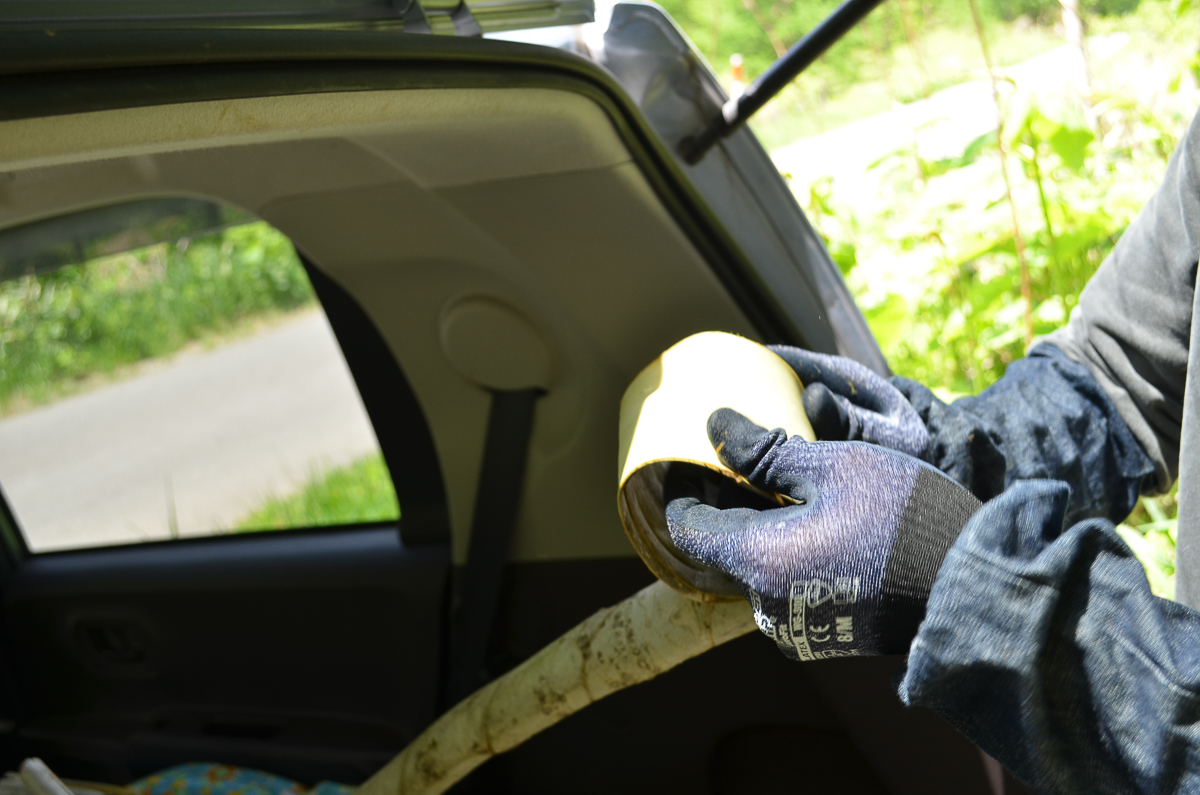
Once a smooth curl has been formed, the bottle is removed, and the bark is gathered together. 
In no time at all, it curls up smoothly into a tight roll. 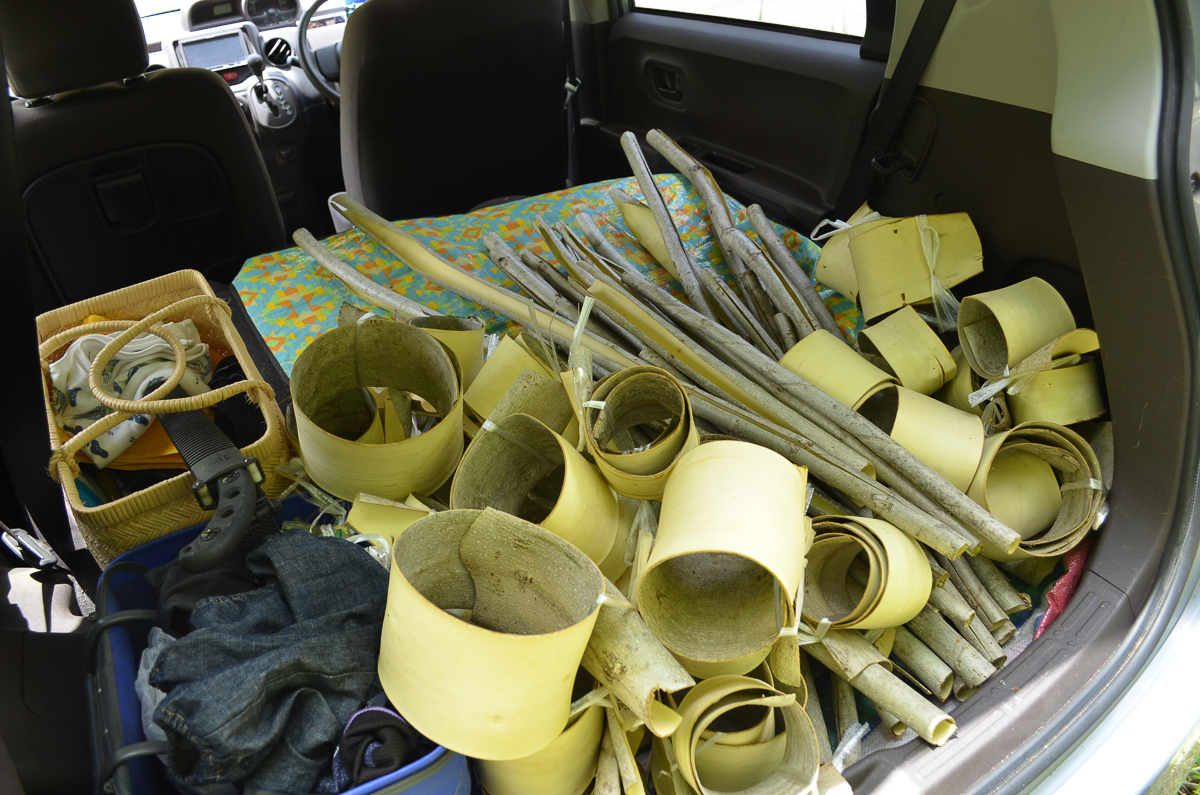
It is then tied with a string prepared in advance, and the process is complete. This is repeated over and over again.
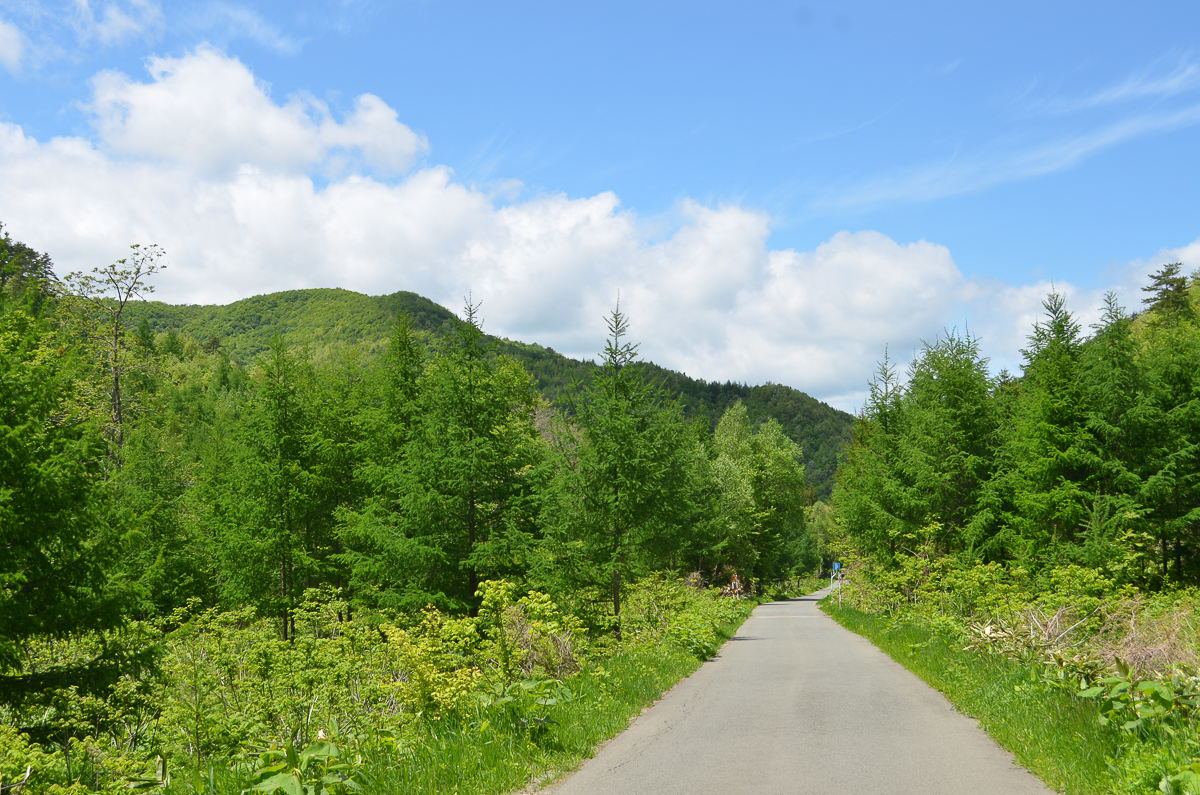
On the way back, he offered to show us the materials he had already gathered earlier this year,
so I gladly went along.
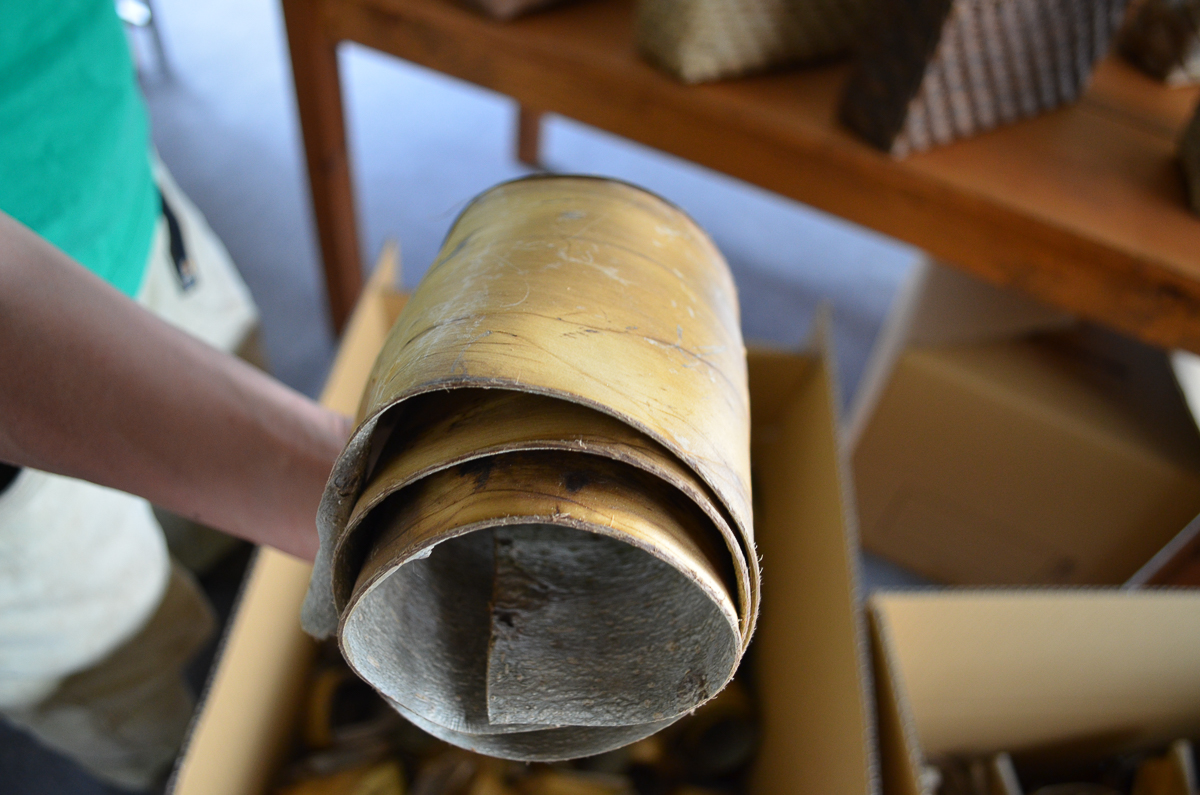
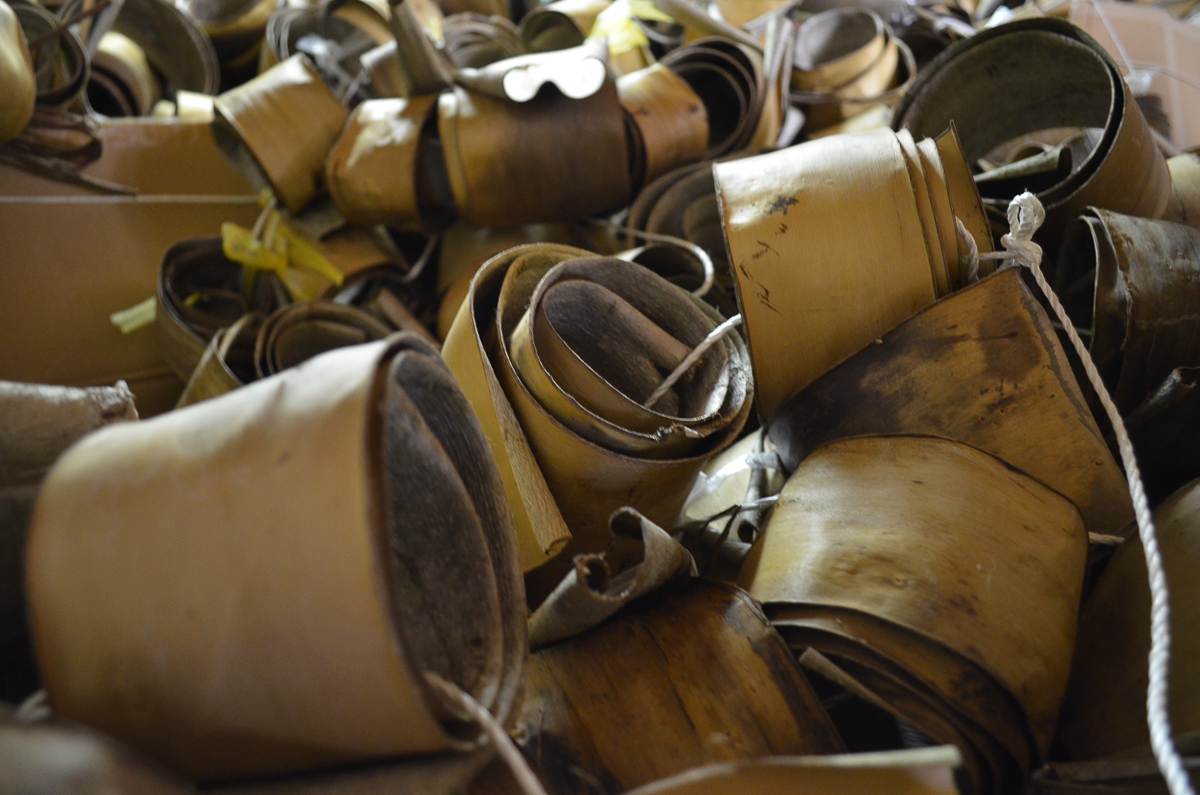
As you can see, over time the color begins to deepen like this. 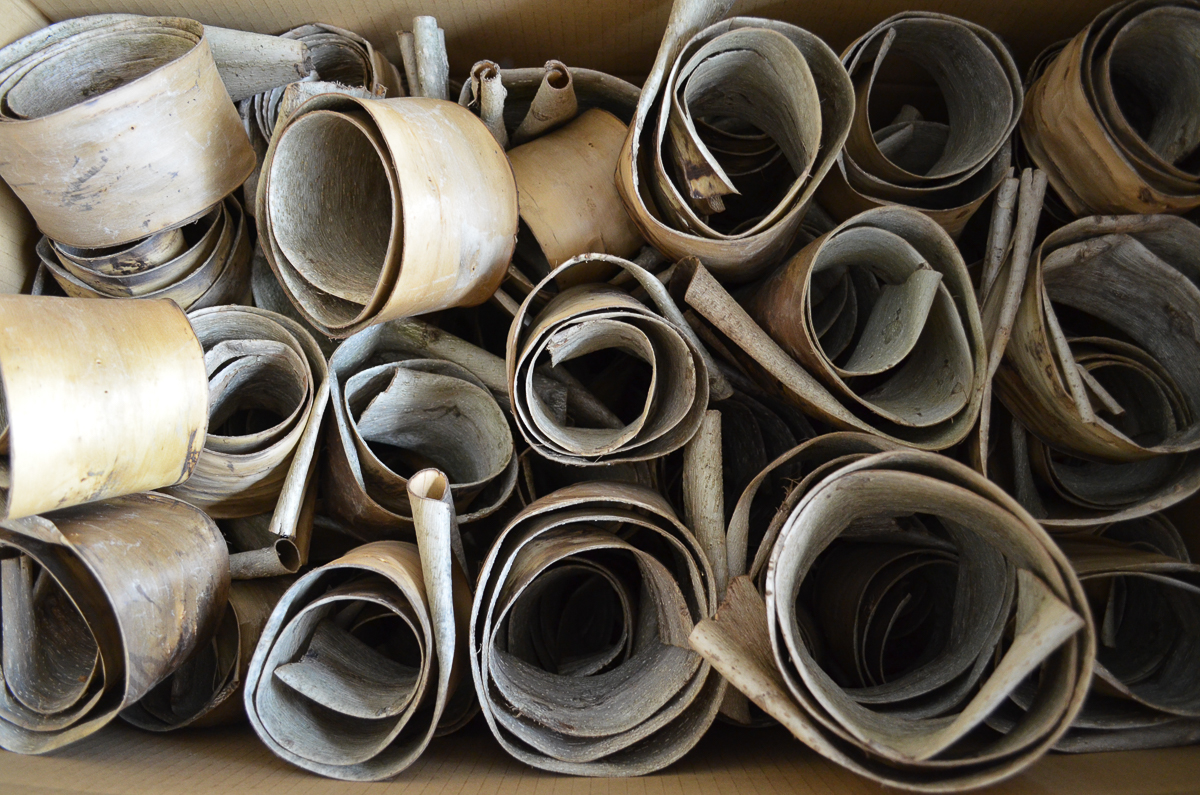
Freshly harvested, moisture-rich bark is dried outdoors, laid out in the breeze while keeping an eye on the weather. 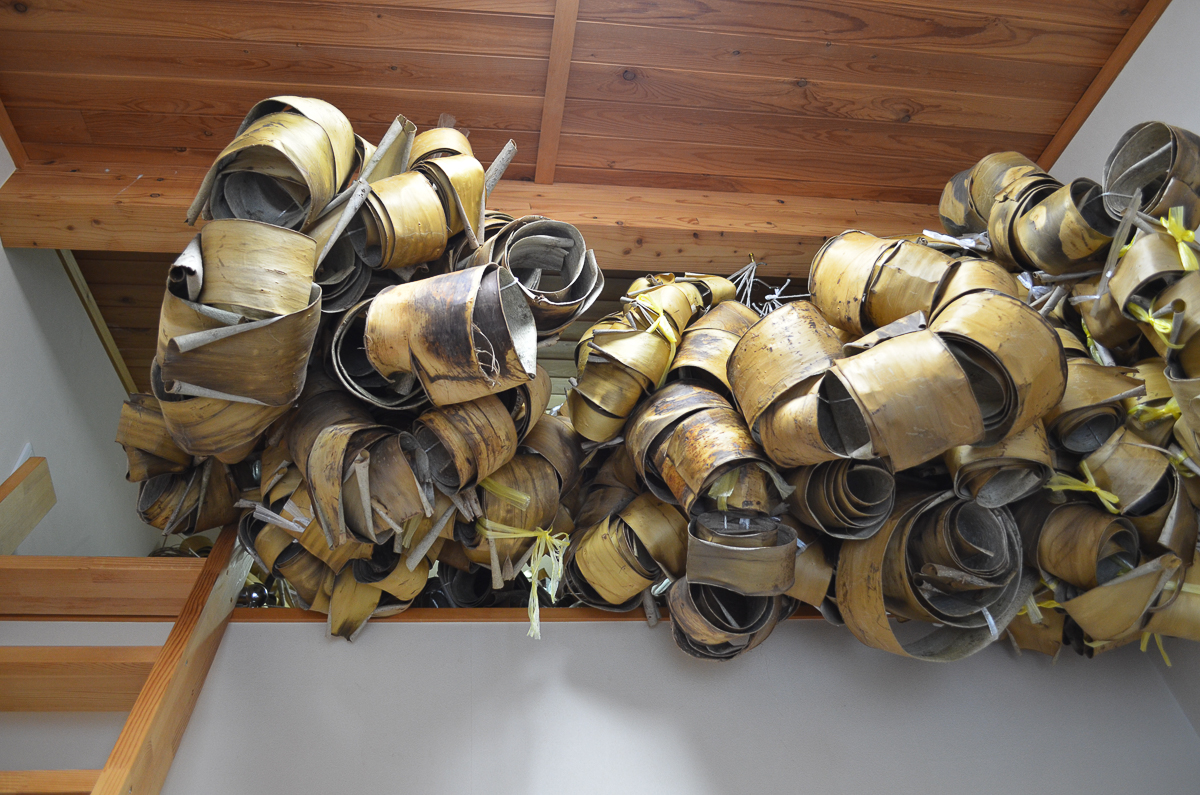
Near the ceiling of the workshop, many pieces of bark gathered earlier this year were already fully dried, lined up as they waited for their turn to be used. 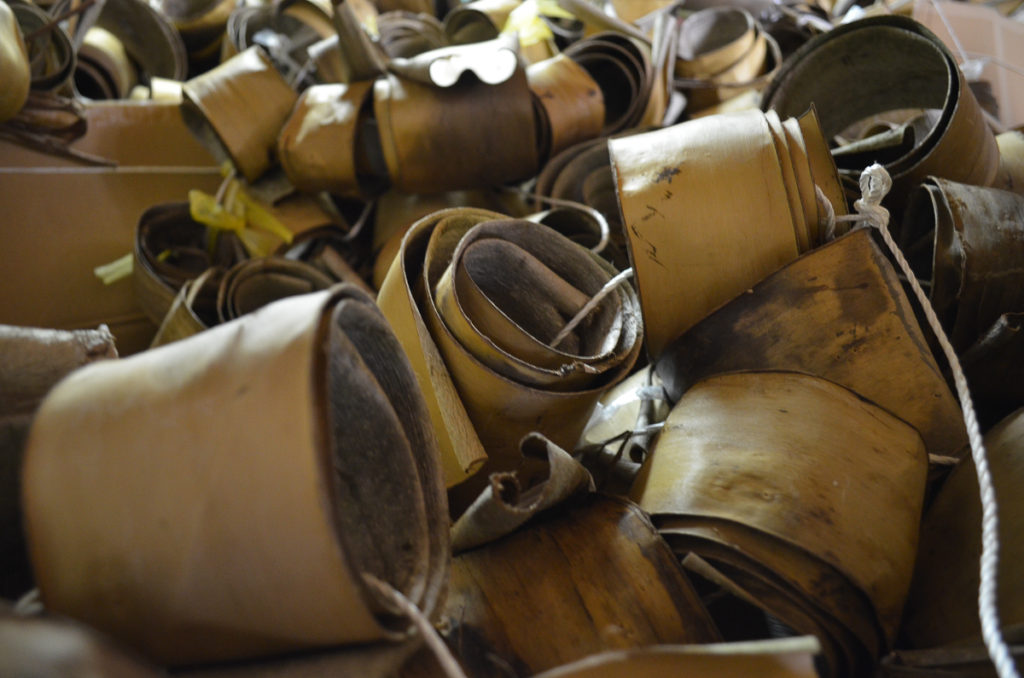
After passing through these essential first steps, the process finally moves on to basket making.
Thank you very much for reading this two-part journal on gathering sawagurumi bark in Iwate.
I would also like to express my sincere gratitude to Mr. Toshio Sasaki,
who generously welcomed us into his workshop for this visit.
Using the sawagurumi materials gathered in this way, a wide range of forms is created,
each shaped with careful attention to original design and scale.
Please take a look at the finished pieces on our shop pages as well.
Tomotake Ichikawa
++++++++++++++++++++++++++
The works made using sawagurumi introduced in this journal
are available in our online shop.
You can view them here.
Gathering Materials — Iwate Sawagurumi Edition: Complete
Read
“Gathering Materials — Sawagurumi Bark from Iwate, Part 1”