The German Exhibition: World Wicker and Weaving Festival 2023 in Poland – Part 5 世界かご編み大会2023 in ポーランド 5 -ドイツの展示-
Following the Swedish exhibition introduced in the previous entry,
we now turn to the display presented by the German team.
In fact, Germany has institutions for studying basketry,
much like those found in Japan.
The Bamboo Craft Training Center in Beppu City, Oita Prefecture,
for example, currently operates as a two-year program,
with twelve students enrolled in each year as of 2023.
In Germany, the system is a three-year program,
with ten students studying in each cohort.
Most German basketry is made using willow as the primary material.
Compared to Japanese bamboo craft,
German basketry often has a stronger artistic character,
with many works taking on sculptural, object-like forms.
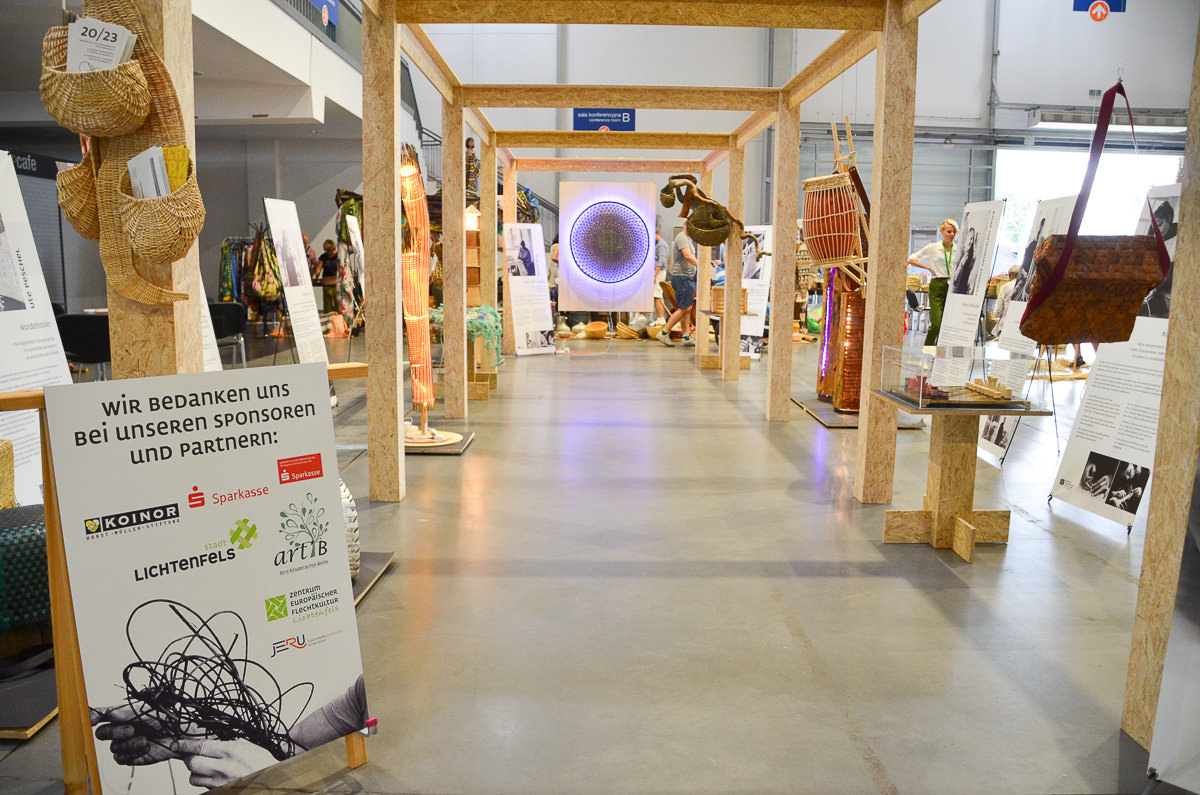
The exhibition made elegant use of a large space,
and this time focused mainly on works created by graduates of the program.
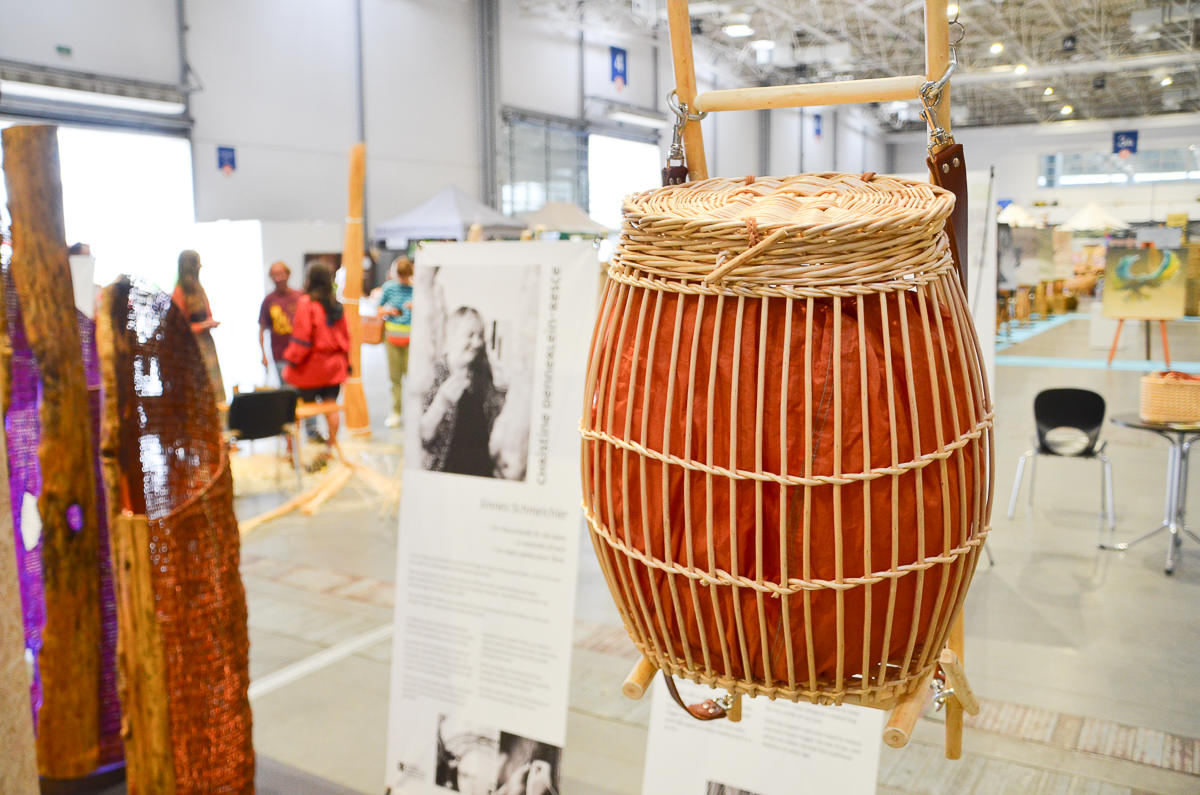
A backpack woven in willow. 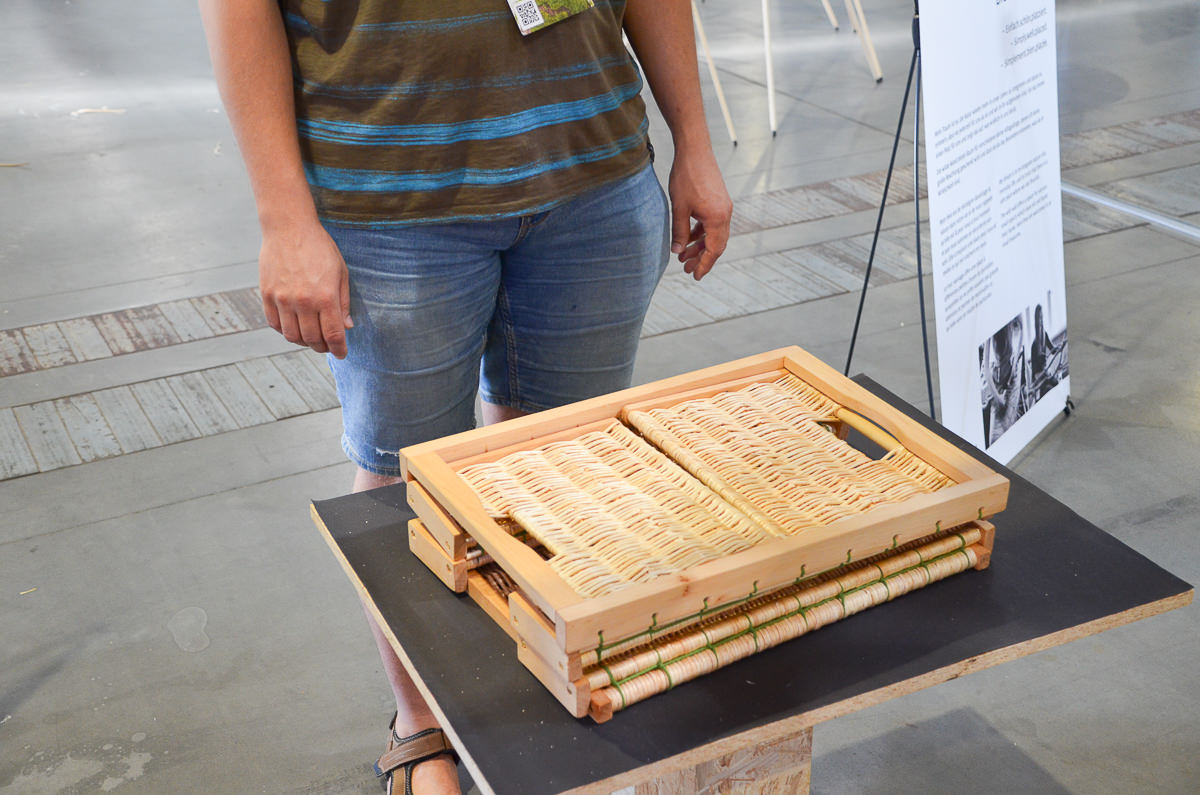
A foldable crate reimagined in willow and wood. 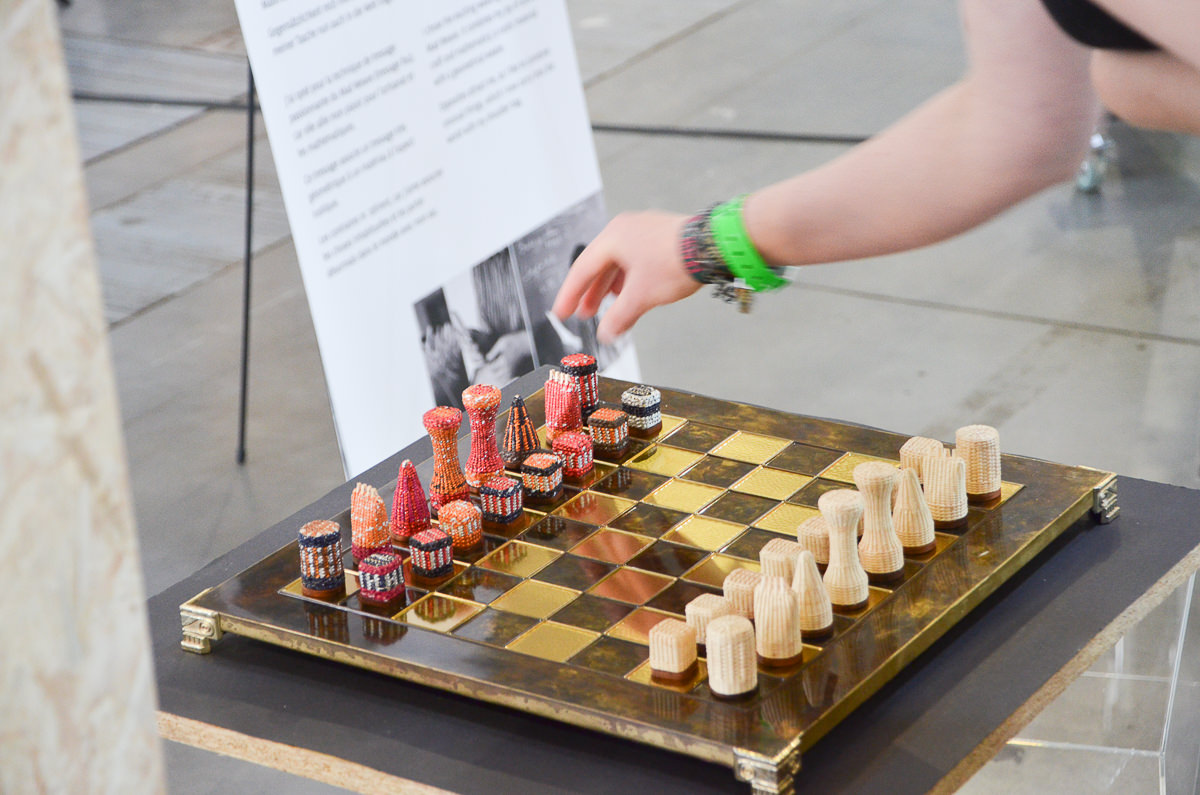
Even a chess set, woven by hand. 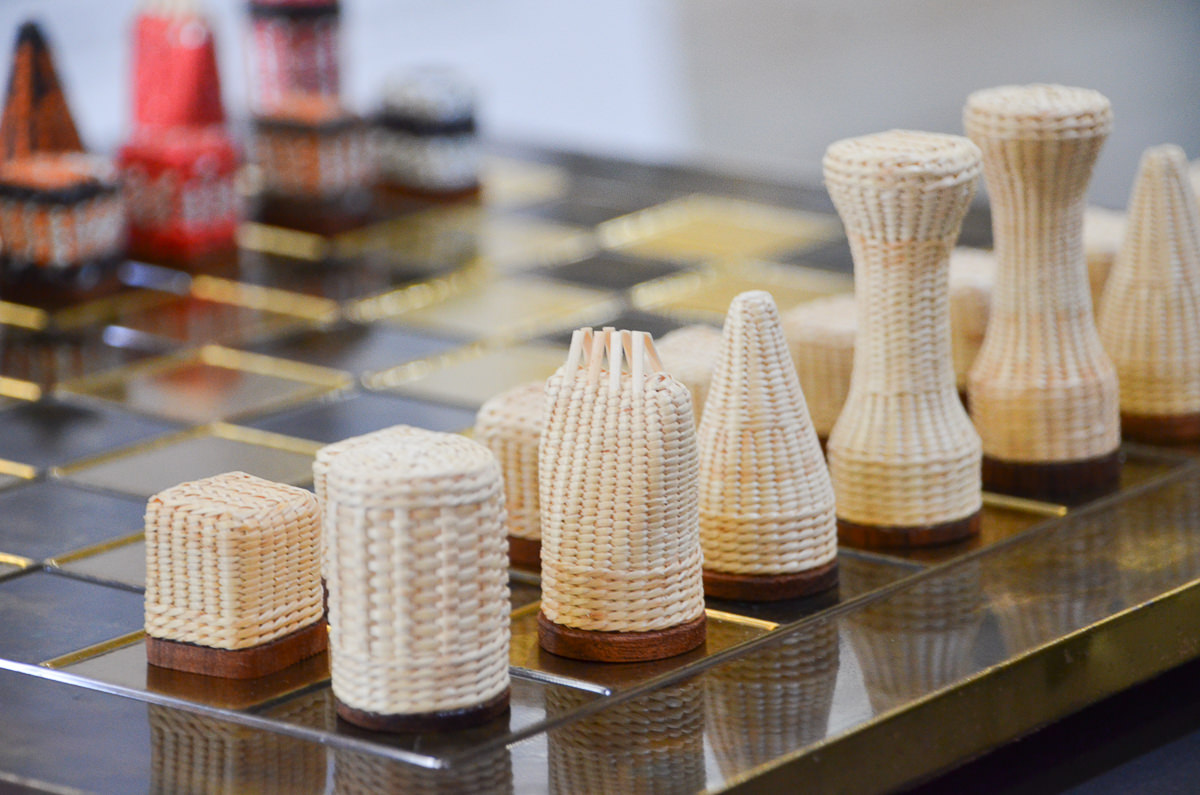
Finely woven with remarkable precision. 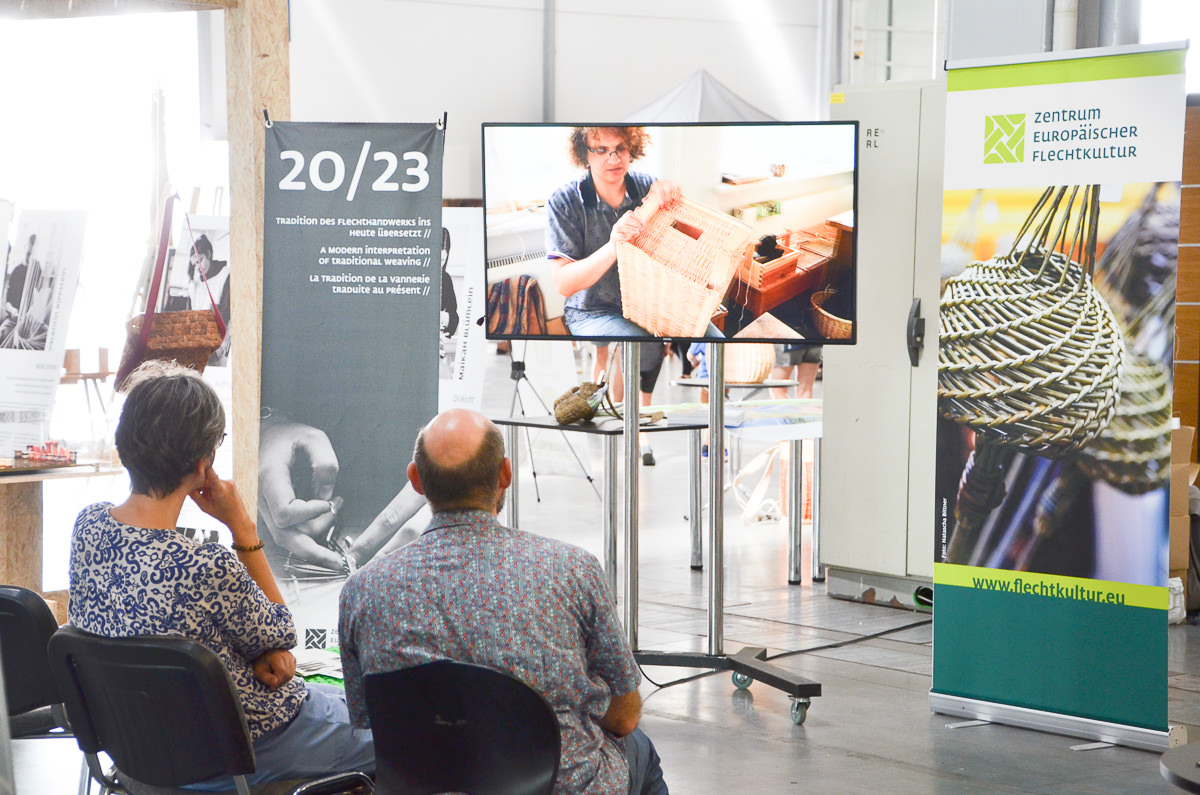
The exhibition was richly composed, featuring video footage of the training facility, 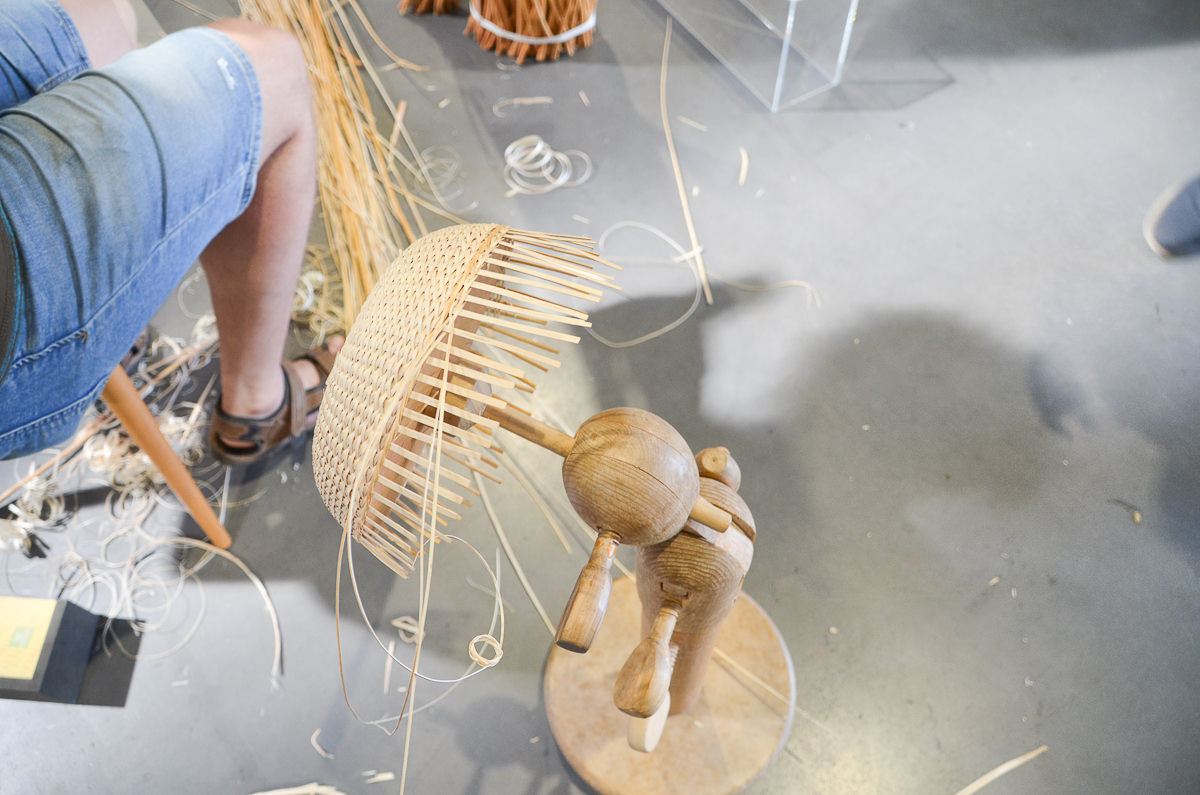
live demonstrations by graduates, and displays of the tools used in basket making. 
The tools used to weave baskets like these are also carefully and solidly made—perhaps something that can be described as distinctly German. 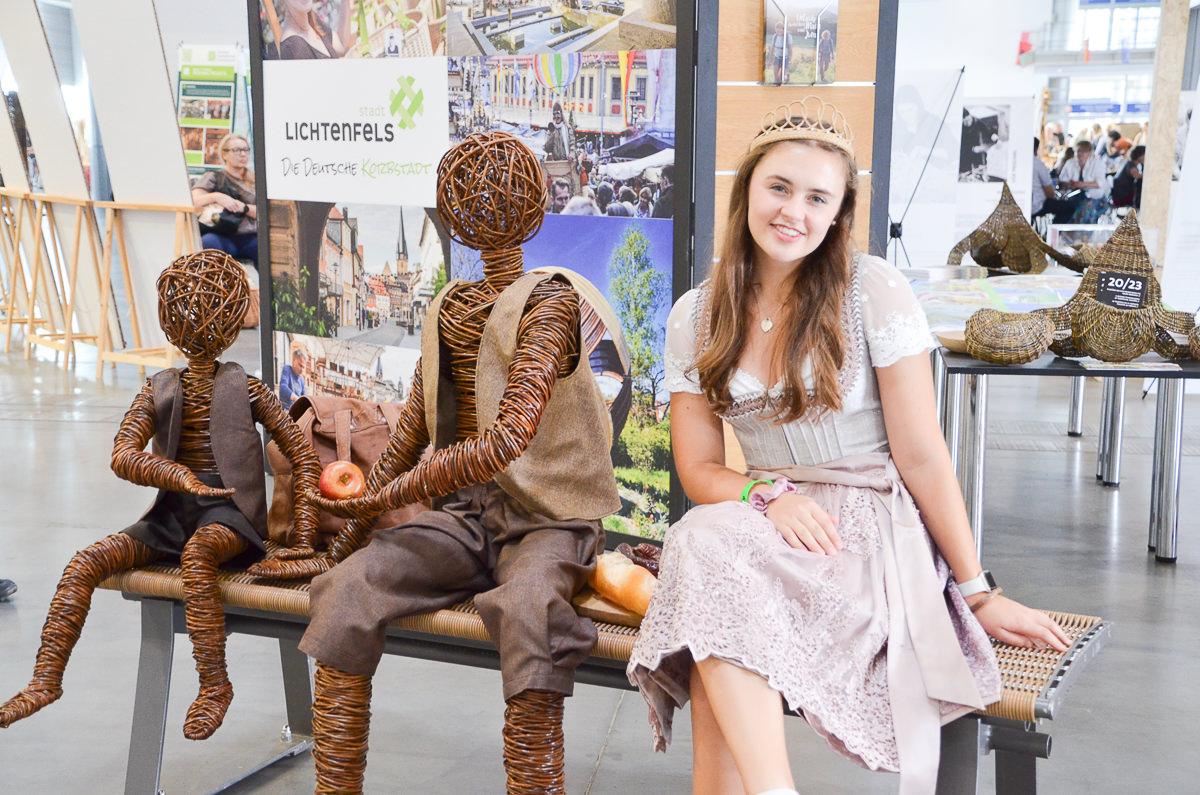
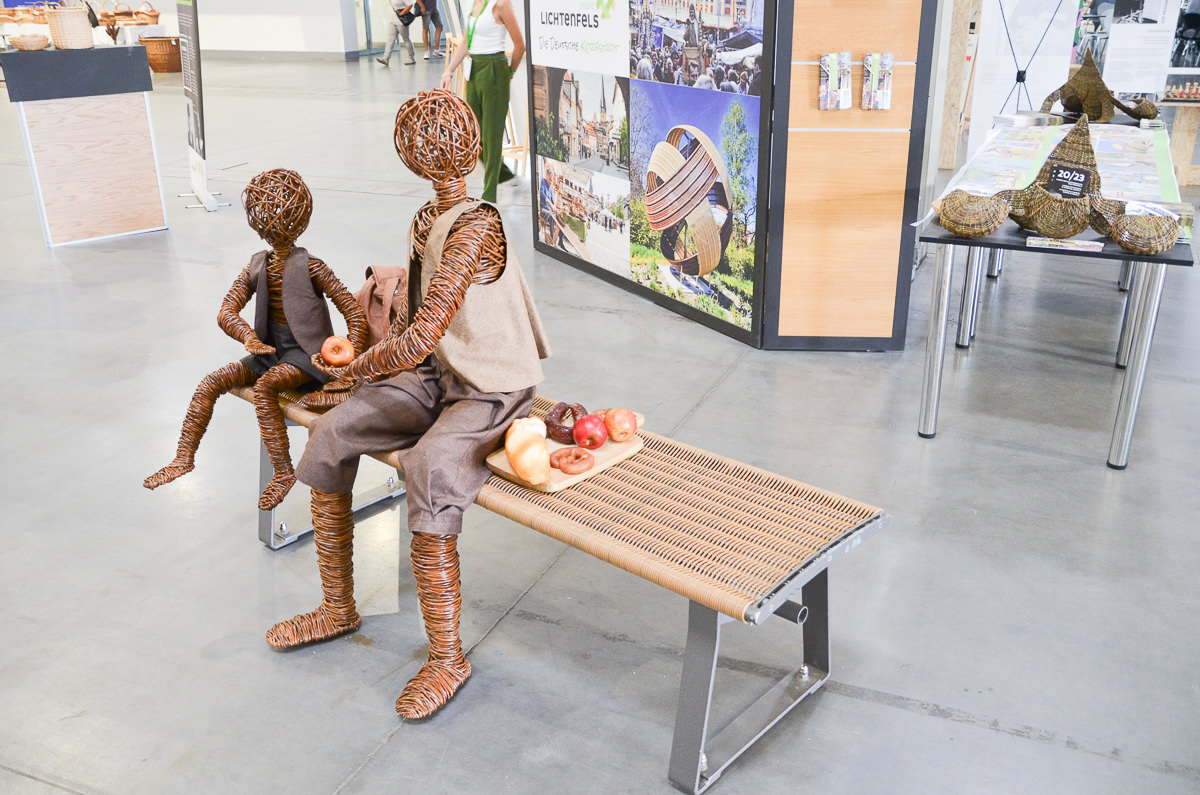
The “Basket Queen” was also present at the venue as part of the promotion. The figure beside her is another basketry work, woven entirely from willow.
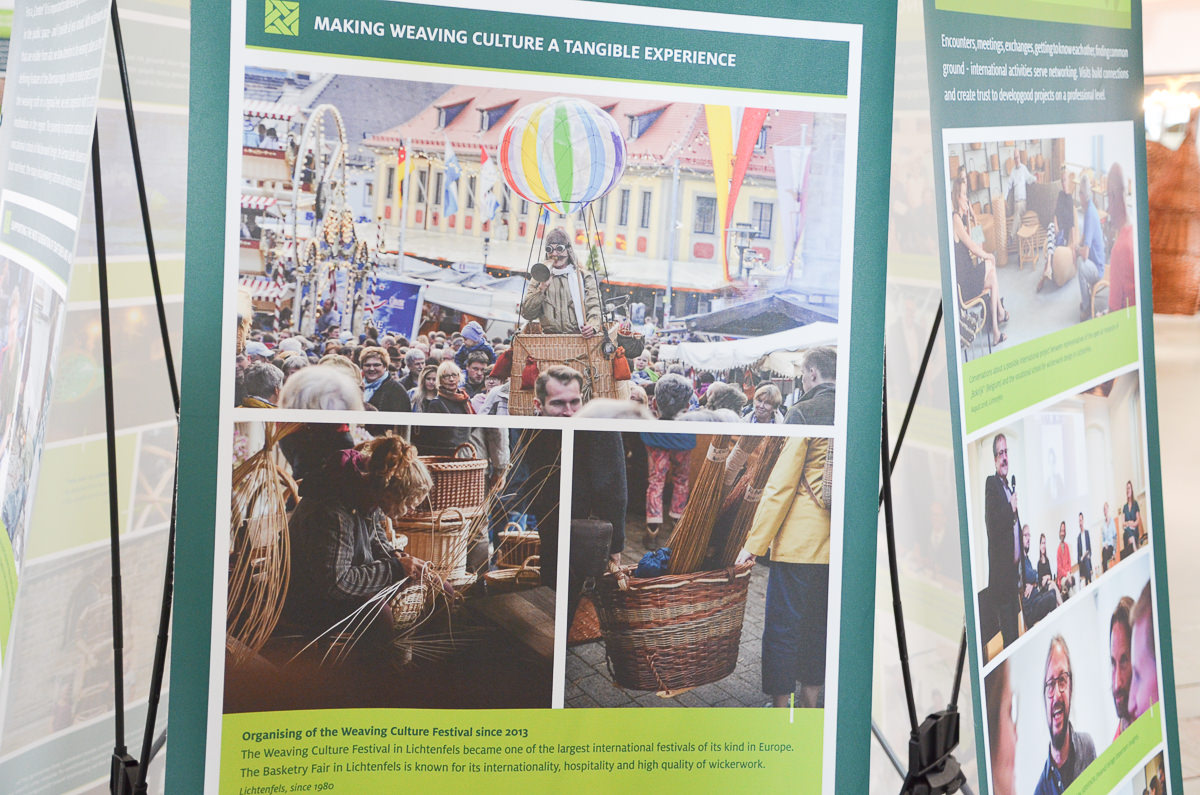
In Germany, there is a town called Lichtenfels, often referred to as a “town of basketry.”
A basketry festival is held there every autumn, and the basketry training school is also located in this town.
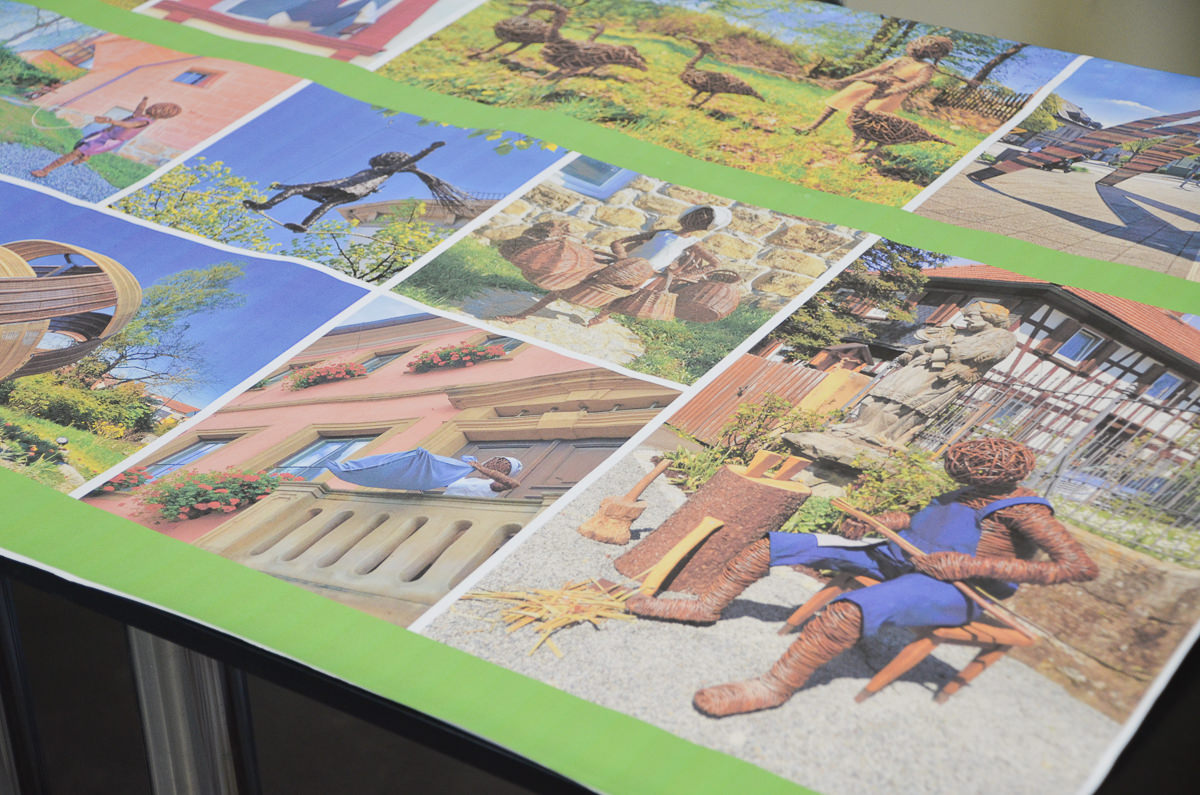
Because it is originally a town known for basketry, the entire town becomes even more immersed in basket crafts during the festival season. 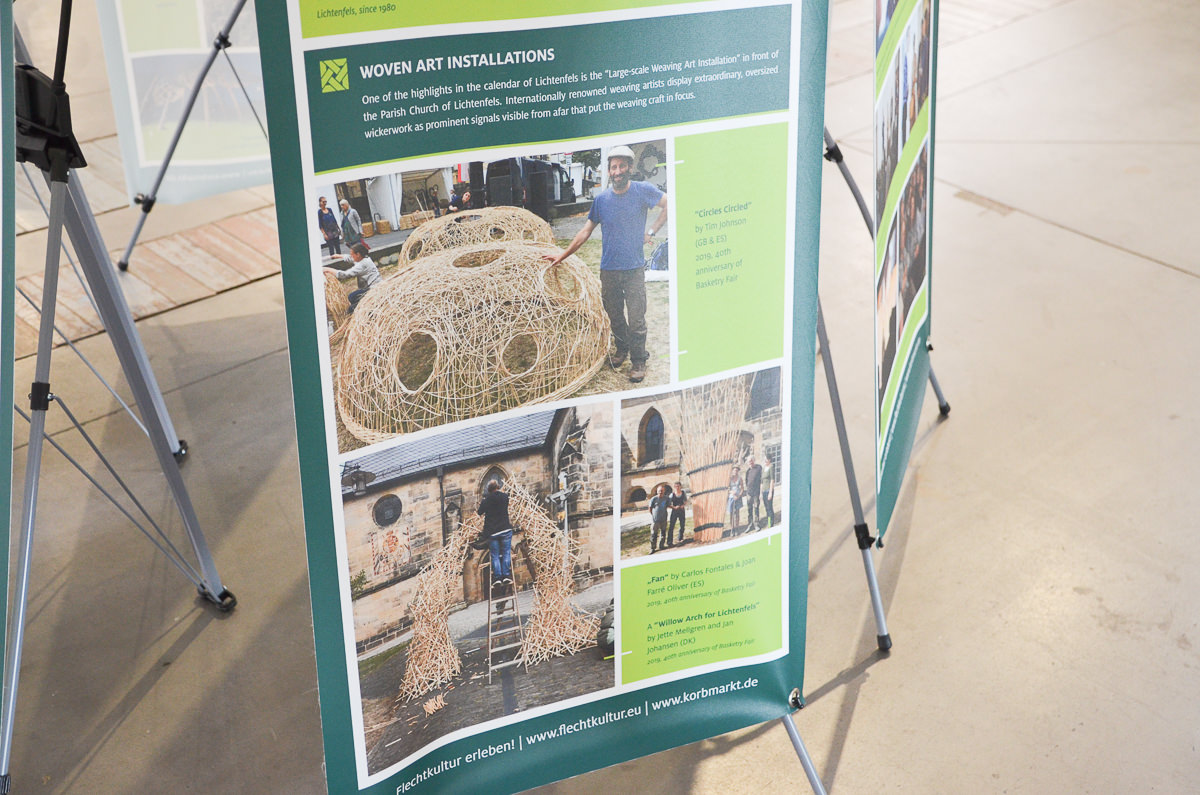
During the festival, woven installations appear throughout the town, and makers give live demonstrations, creating several joyful days—we would very much like to visit someday.
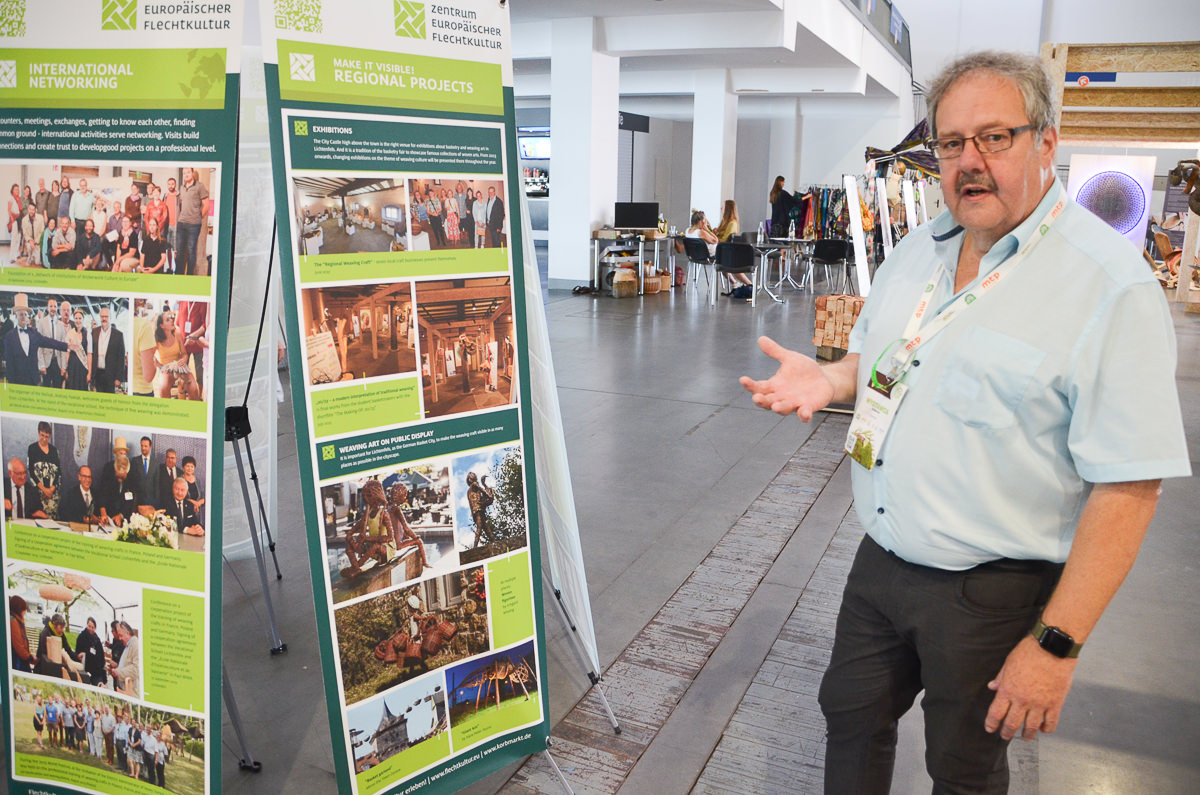
This is Manfred, one of the central figures behind the Lichtenfels basket festival, who kindly took the time to explain everything to me during this visit.
We were able to spend a long time talking together, as he spoke with great passion about basketry.
He shared many things with me, including:
– That the history of the Lichtenfels festival is very long, said to date back 400 or even 500 years.
– That in Germany, it is possible to study willow basket making at a training facility for three years, but very few graduates are actually able to make a living from it.
– That these facilities do not include business or management-related education needed after graduation.
– That because the three-year program is funded by public taxes, he feels it is deeply regrettable that skills so carefully learned cannot be sustained as a profession.
– That unfortunately, in present-day Germany, shops that purchase and sell handmade baskets have largely disappeared.
– That most graduates now rely on craft markets held in various places, as well as sales through social media and personal websites, as their primary sales channels.
Hearing this left me with very mixed feelings.
In terms of sales and livelihood, the situation felt similar to that in Japan—or perhaps even more severe.
No matter how skilled a maker may be, and no matter how well a basket is made,
the reality is that there may be no stable place to sell it.
Situations like the COVID pandemic, where craft markets were unable to take place for several years, can and do happen.
In our time, makers can, on one hand, sell independently using social media and their own websites.
At the same time, we believe it is also reasonable—and important—for makers and sellers to work together
to bring these works to customers.
In Germany, however, it seems that the people who take on the role of “seller” have largely disappeared.
This is not something distant from us.
Our own shop was originally meant to close with the previous generation,
and it is possible that we might have found ourselves in a similar situation.
Manfred and others feel a strong sense of urgency about this reality,
and he told us that they are now planning to open a shop where such basketry can once again be sold.
At the same time, he said that shops like ours—specialized in basketry,
building relationships with makers both in Japan and abroad,
and introducing their work to customers—are something truly valuable.
We ourselves are usually too busy, working day by day without much time to reflect.
But hearing this perspective from someone in Germany allowed us to see our own position more clearly,
and to recognize it anew.
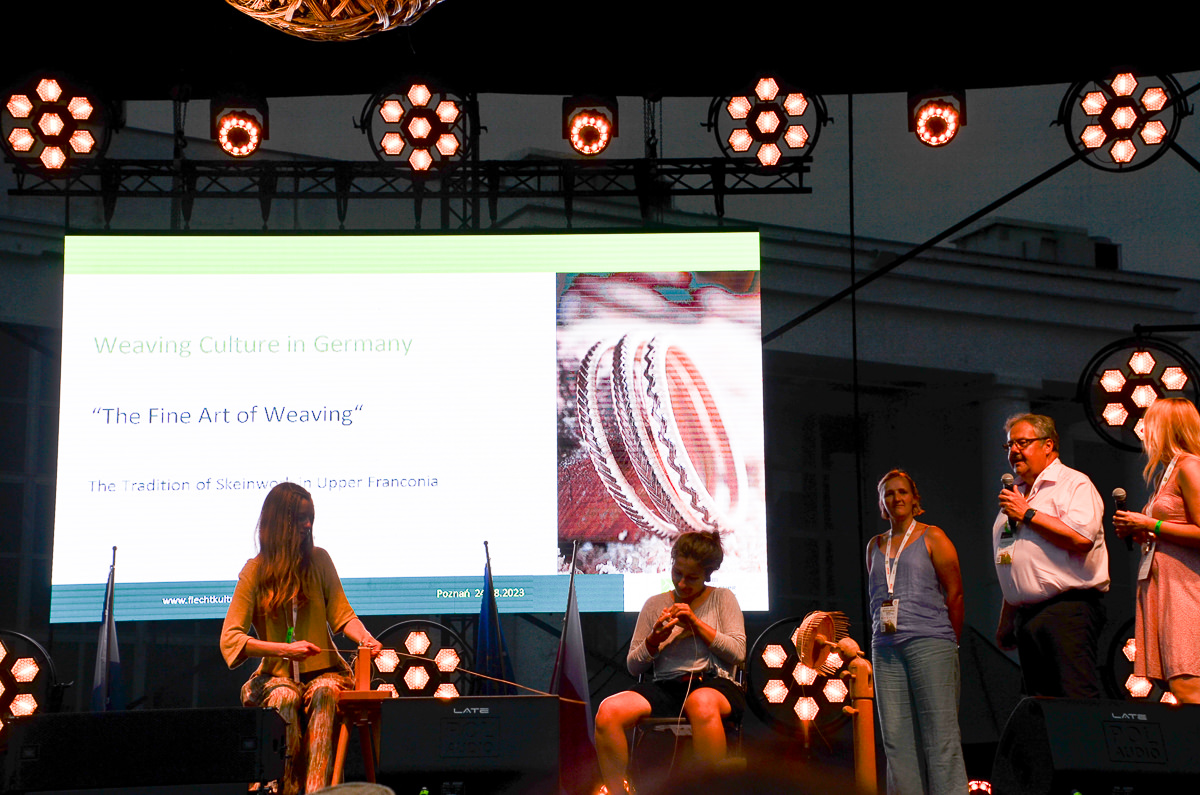
This time, we were truly grateful for the opportunity to exchange views and share the current situation with Manfred,
the makers who participated in the festival, and graduates of the training facility,
as well as many other members of the German basketry community.
In Germany, as in Japan, there are many people who aspire to basket making.
Yet the question of whether it is possible to make basketry a livelihood remains a very difficult one.
This is a challenge we share across borders.
What we can do, however, is quite simple.
Regardless of national boundaries, we look with our own eyes, touch and examine the work ourselves,
and when we find baskets that truly resonate with us,
we continue to introduce them to our customers.
Little by little, we hope to be able to share the baskets made by German makers with you as well.
Tomotake Ichikawa
+++++++++++++++++++
To be continued