Catalan Basketry Traditions — Pau’s Craft — Germany Business Trip Journal 11 カタルーニャに受け継がれるかご作り パウさんの仕事 ―ドイツ出張記 11

Hello. This is Tomotake Ichikawa.
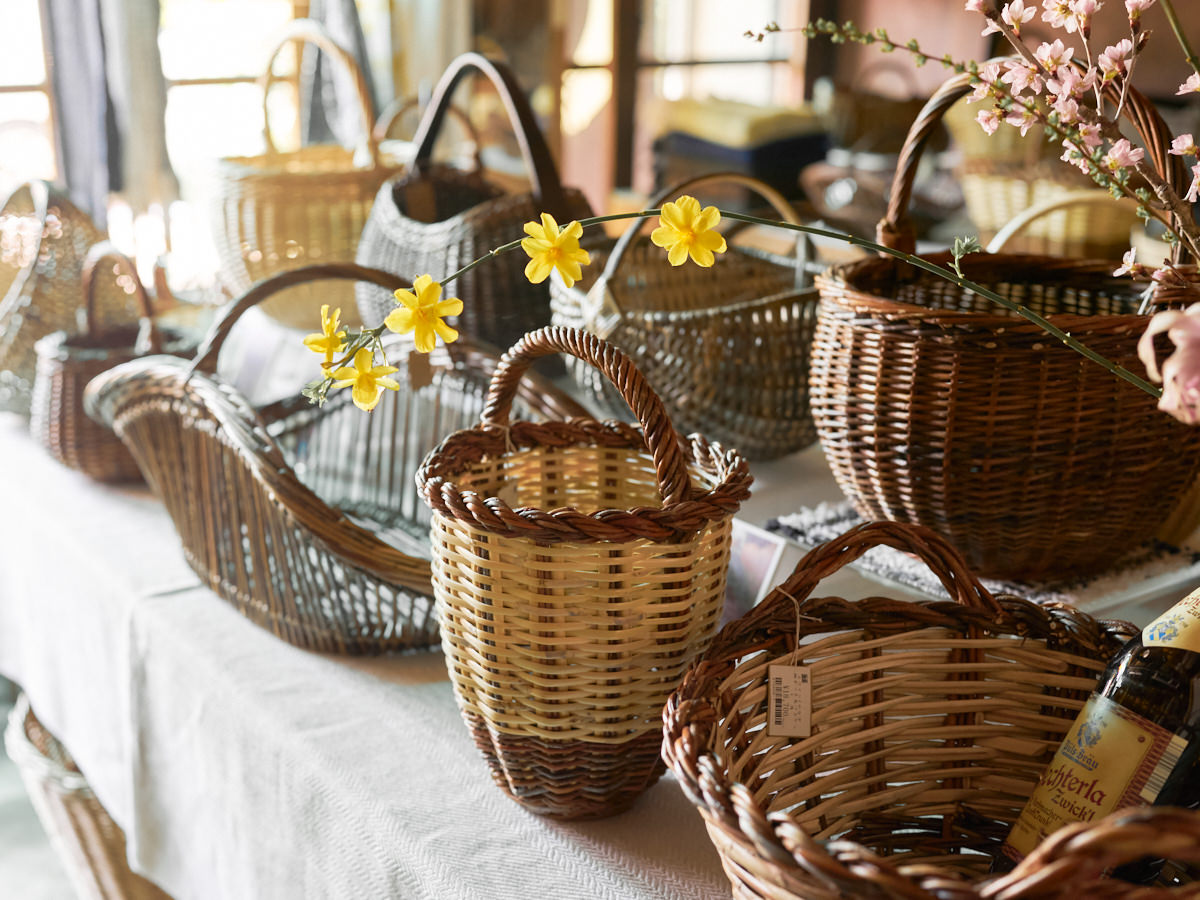
Until March 7, we were holding a special exhibition at our shop.
“The One Table” Special Exhibition
European Baskets We Discovered in Germany
In this exhibition, we introduced the works of makers who had taken part in the basket market at the basketry festival held in September 2025 in the town of Lichtenfels, Germany.
Together with the works of Karen and Corentin from France—presented in Japan for the first time—
there was another maker whose baskets were being shown and sold in Japan for the first time at this exhibition.
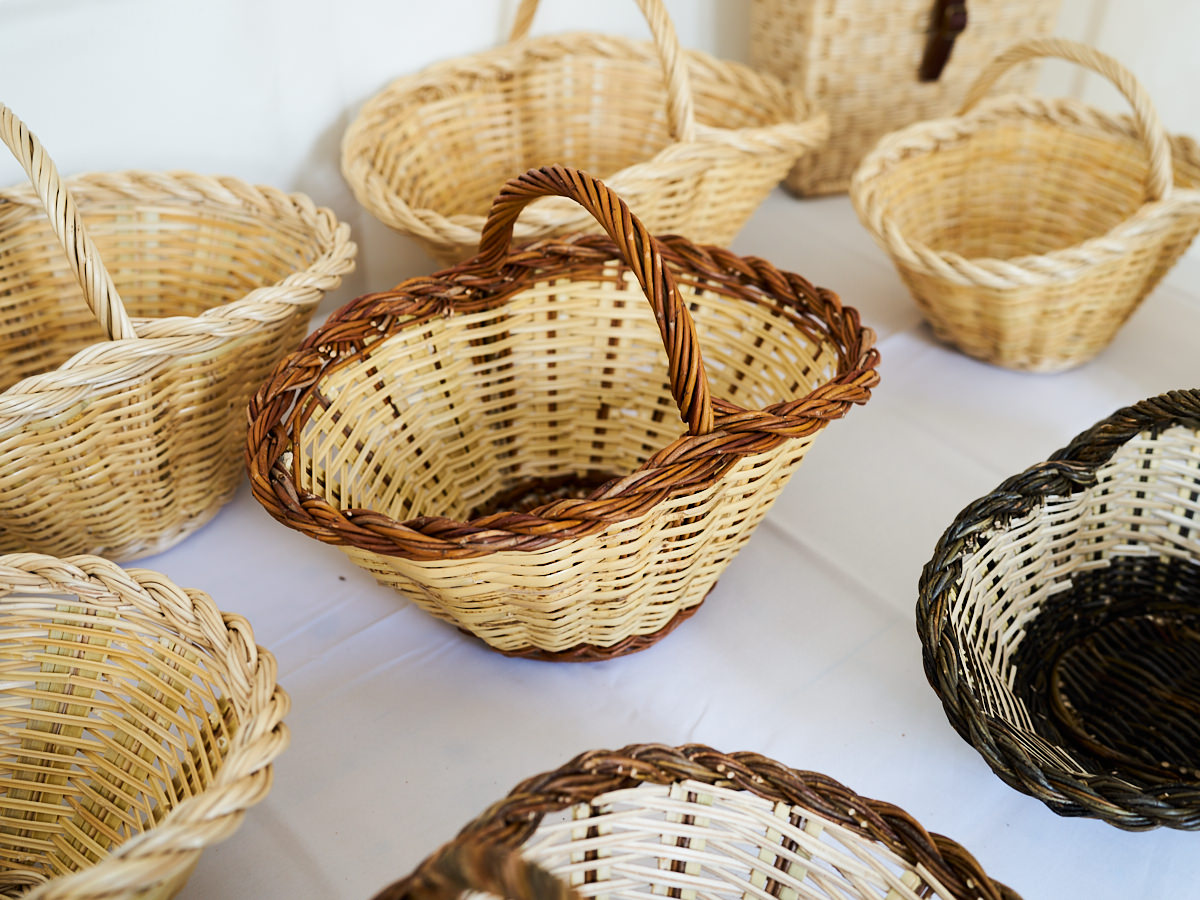
They were made by Pau, a basket maker from the Catalonia region in northeastern Spain,
along the Mediterranean coast.
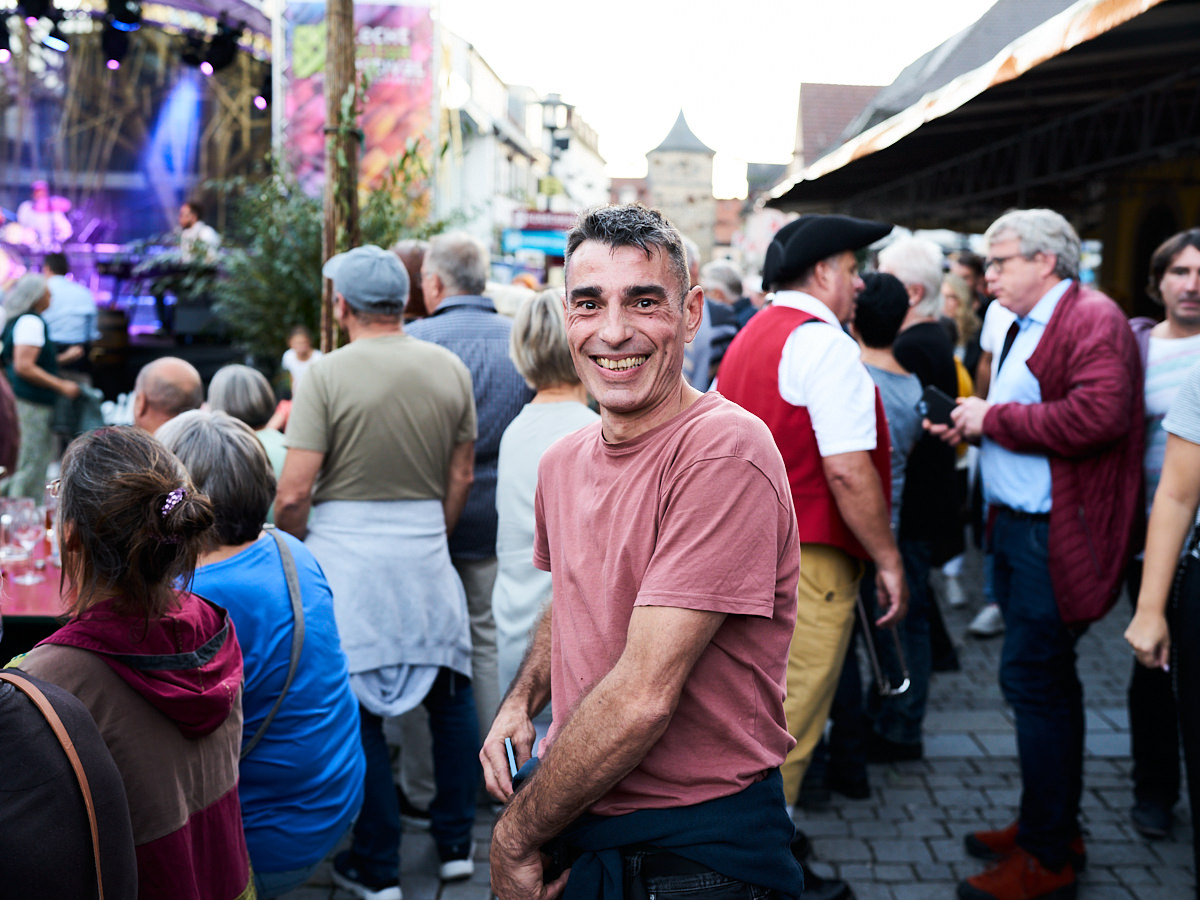
I met Pau for the first time at the basket weaving festival in Lichtenfels.
Since I had once lived in Paraguay in South America for about two years,
I tried speaking to him in my very limited Spanish.
He seemed delighted, and from there our conversation quickly began to grow.
At the festival, I hardly saw anyone speaking Spanish, even among the participants.
So Pau may have been quite surprised when I—an Asian visitor he had just met—suddenly spoke to him in Spanish.
For me as well, it was a joy to exchange words in Spanish again after such a long time.
This was my first time meeting Pau in person,
but I had seen the traditional basket weaving of the Catalonia region long before that.
Many years ago, I once came across an illustration depicting traditional baskets from Catalonia.
A wide variety of basket shapes were drawn there.
From the atmosphere of the illustration, they seemed to belong to a distant past—
as if they were things that might no longer be made today.

Baskets from Catalonia are woven using willow together with a hard reed-like plant called “canya” (Spanish: caña),
which resembles bamboo.
The contrast in color created by these two materials is striking and leaves a strong impression at first glance.
The image of those baskets stayed with me,
remaining quietly in the corner of my mind for many years.
Then one day, in a photograph posted by a basket maker in Europe,
I noticed something that looked like a Catalonian basket.
“Could this be one of those Catalonian baskets I once saw in that illustration?”
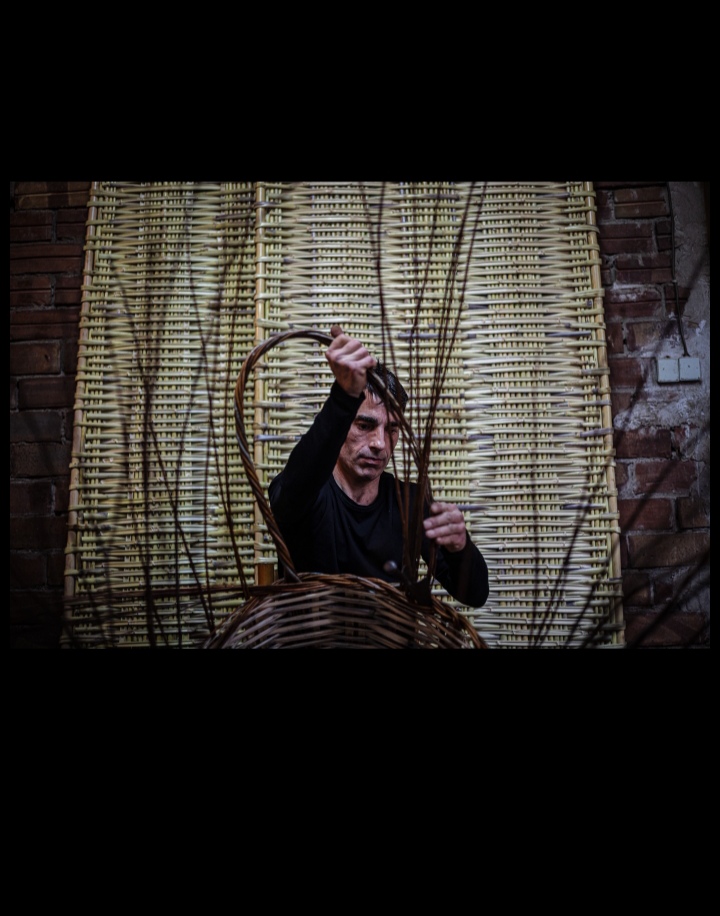
When I asked the maker about it,
I was told that the basket had been made by Pau, a basket maker working in Spain.
Hearing this, I immediately felt that I would very much like to meet him.
I felt a strong urge to travel to Spain right away,
but at that time I had already decided to attend the basket weaving festival in Germany.
So I thought there might be a chance and asked Pau about it.
To my delight, he told me that he would also be participating in the festival.
When I heard that, I was overjoyed, and we promised each other, “Let’s meet there.”
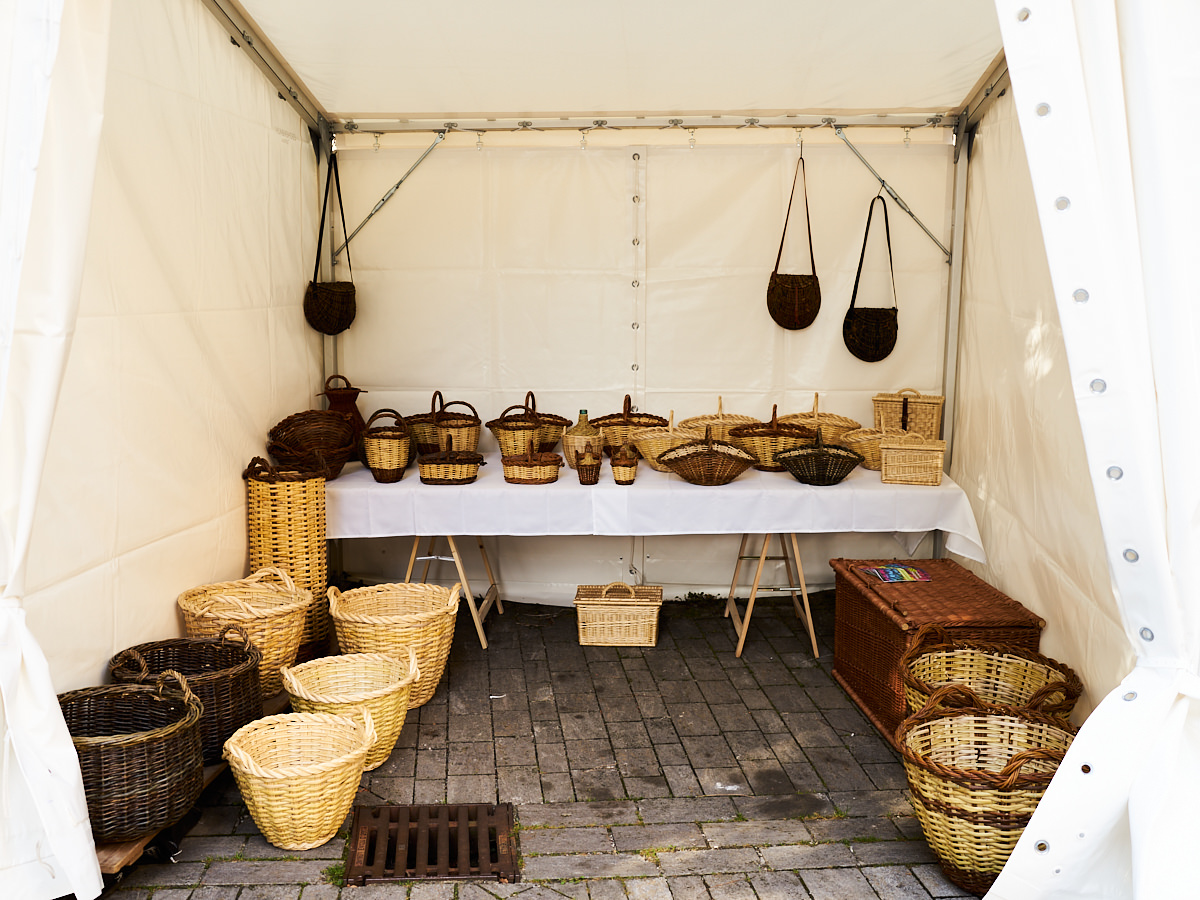
And then came the first day of the basket weaving festival in Lichtenfels, Germany.
The first booth I visited was Pau’s.
And there, lined up before me, were the very Catalonian baskets
that I had once seen in that illustration long ago.
I could not help but feel deeply moved.
To meet a craftsperson who continues to make these traditional Catalonian baskets
in the present day—and in such number—felt almost like a dream.
Every basket was beautifully finished and truly striking.
The sight of them arranged across the booth was something I could have looked at forever.
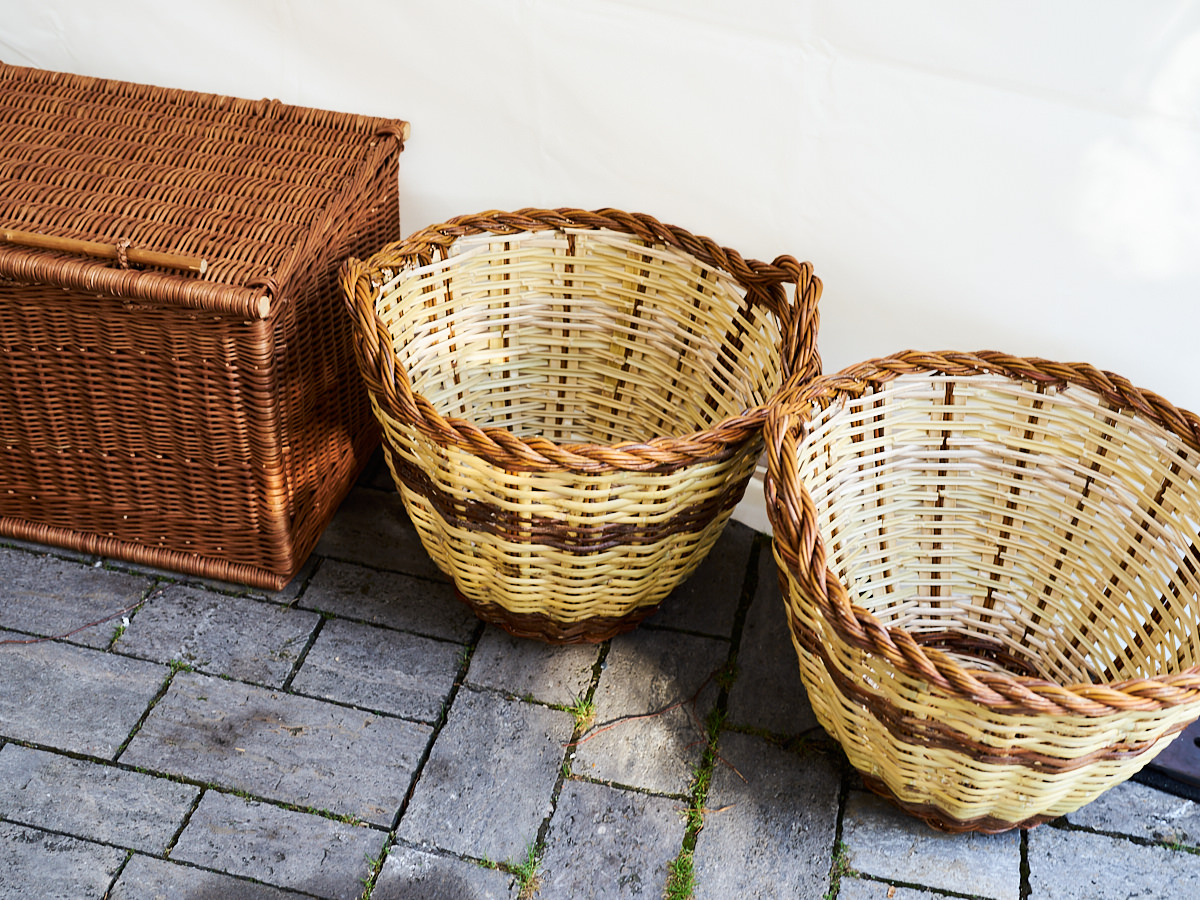
As it happened, there was still a little time before the market opened on that first morning.
While the square was still quiet, we were able to sit down with coffee
and talk together at a relaxed pace.
As I listened to his story, I learned that his family has run a basket-making workshop
in the Catalonia region for generations,
and that Pau himself represents the fourth generation.

Our own shop is now in its fifth generation as well,
so hearing this story came as a surprise to me.
Even though we are in different places,
there was something familiar and comforting in knowing that we both continue
to make a living through baskets
and have carried on our shops for many years.
Once the market began, I stepped away from his booth for a while.
But as I walked around the venue, I stopped by from time to time,
and we exchanged a few words whenever we could.
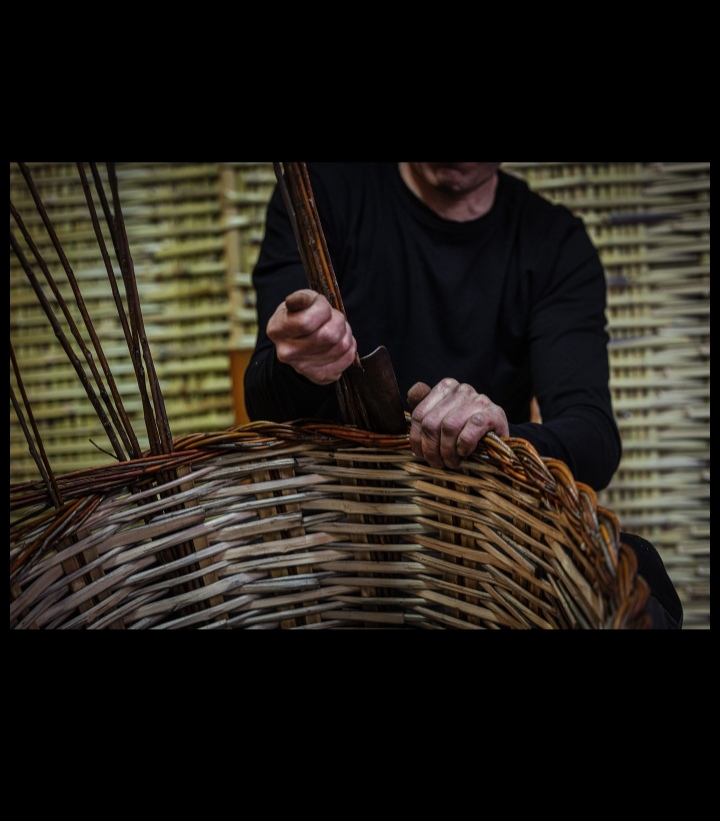
Later, after I returned to Japan, I exchanged several emails with Pau,
and he kindly shared more about his approach to basket making.
As the fourth generation in his family to continue the tradition of basket making in Catalonia,
he told me that this heritage has had a profound influence on his work—both in what he learns
and in the baskets he creates each day.
“Whether it is the materials used for baskets, or the effort to recreate traditional forms,
I want to preserve the purity of this craft as much as possible.”
When Pau speaks of the “purity of the craft,”
I believe he is referring to working with materials from the land itself,
and weaving baskets while respecting the traditional forms and techniques that have been passed down over time.

“It is through traditional basket making that knowledge and skills are truly learned.
And because of that foundation, I believe it becomes possible to create innovations and more contemporary baskets.”
Pau says that it is precisely by learning tradition that one can create something new.
However, he told me that he did not originally intend to inherit the family craft.
“It was not a path I chose myself.
I was not very good at studying, and when I was eighteen,
my father told me to learn the craft in the workshop.”
“But as time passed, I gradually came to love this work,
and now it has become an essential and meaningful part of my life.”
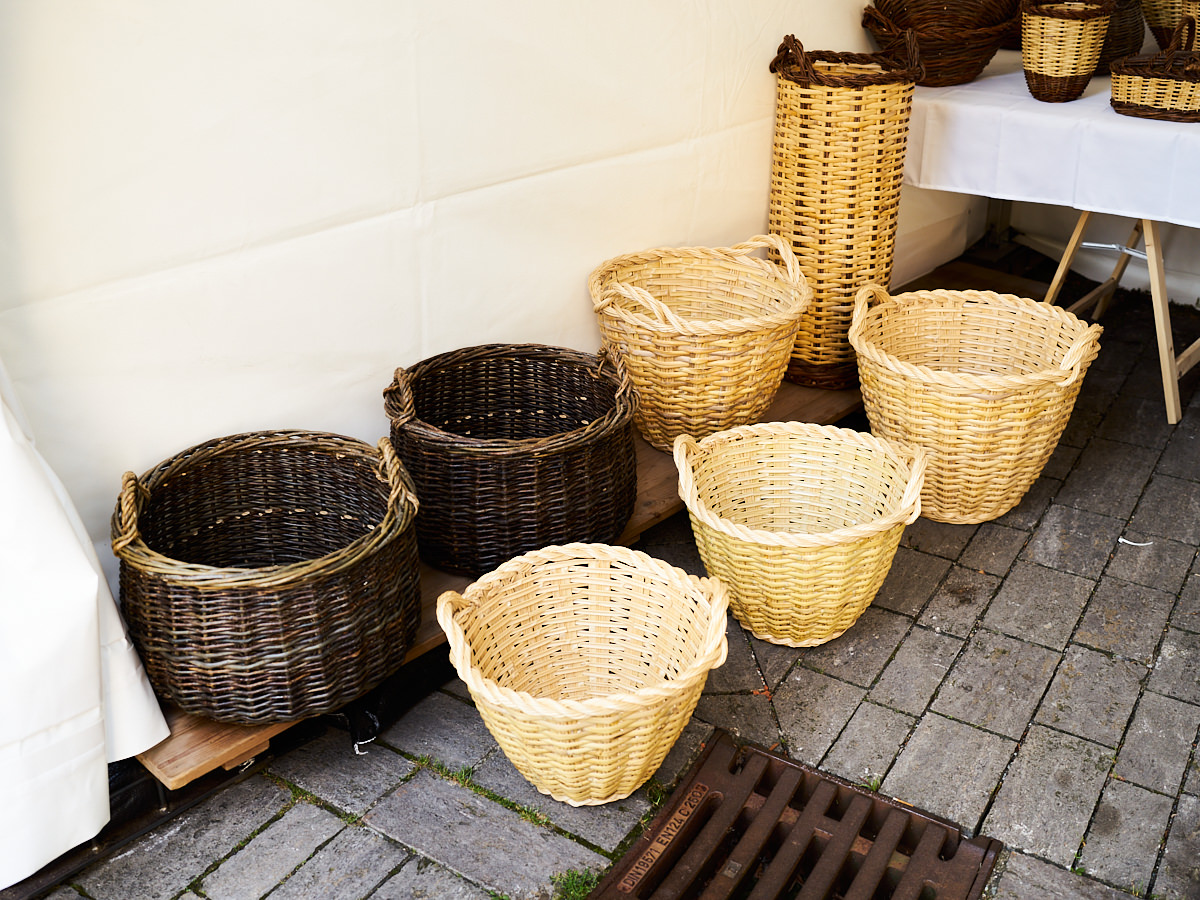
This is another story Pau shared with me when we were talking at his booth during the basket festival.
“My father also makes baskets.
But he says that using a wooden mold and weaving around it is cheating.
Because if you do that, anyone can make a perfectly shaped basket.”
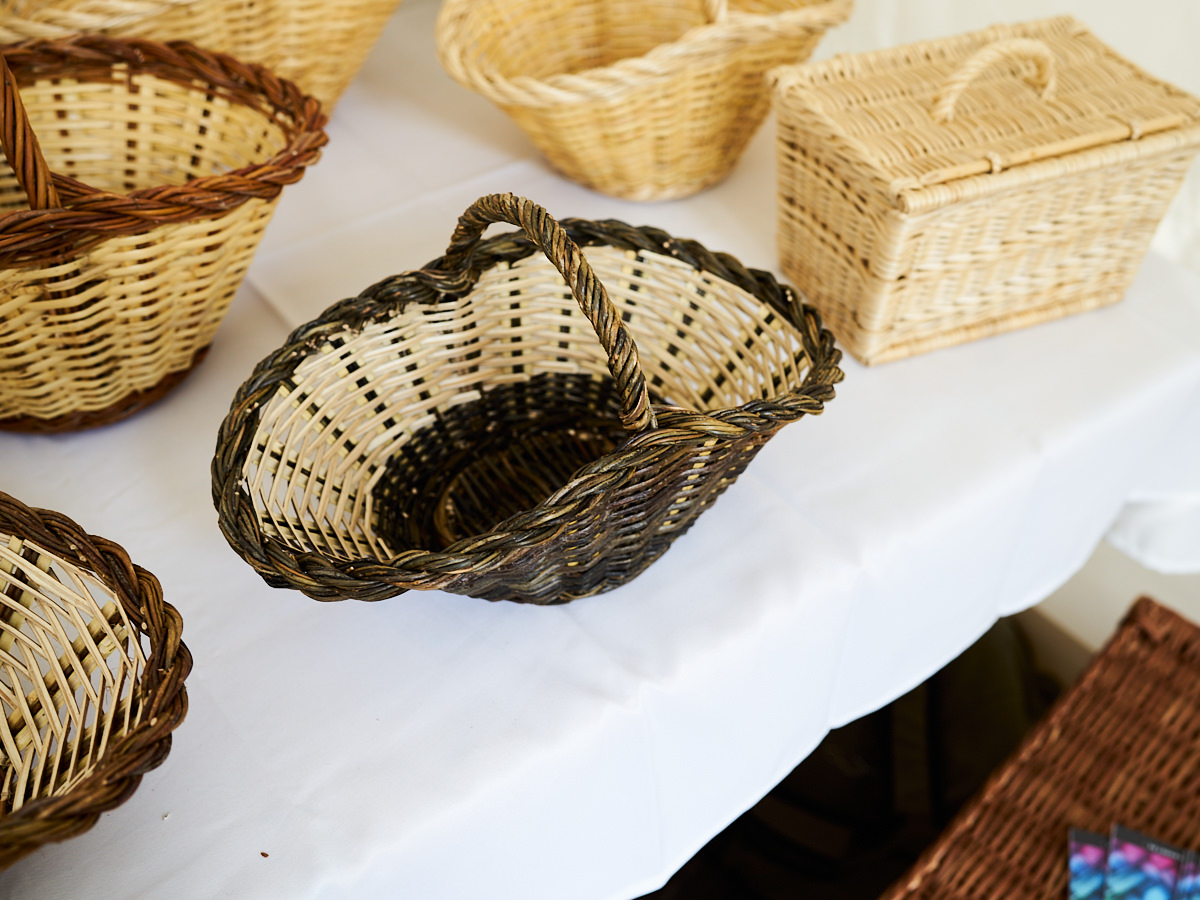
Pau’s baskets are remarkably refined and dignified, yet also strong and powerful in appearance.
To create such baskets without using molds—and to continue making many of them in the same form—cannot be an easy task.
When I asked Pau about this, he answered like this.
“There isn’t any special secret.
What matters is simply doing the work again and again—understanding the material,
and learning how to shape it into the form you imagine.
You make something, and you make mistakes.
That is the greatest way to learn.
And the next time you make it, you begin to understand what needs to be corrected.”
In an email we exchanged after I returned to Japan,
Pau also shared a few more thoughts about basket making.
“Every step in the process is important,
but it begins with selecting the right material for each piece.
And the next important thing is the overall proportion of the basket.”
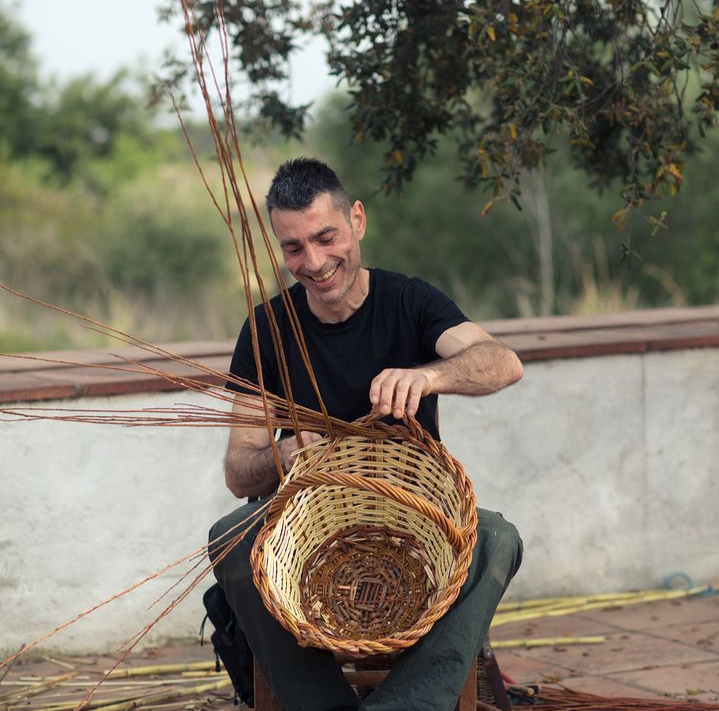
“Once the weaving begins, I try to maintain firm tension,
working carefully so that the basket grows toward the dimensions I have in mind.
And finally, I check the finishing touches with care.”
He also spoke about his own work in these words.
“Continuing this work as the fourth generation is a great source of pride for me,
and it encourages me to carry on my family’s tradition.”
“The fact that I can devote myself to this craft is itself a joy.
For me, it is almost like a kind of medicine.
And the freedom that this work gives me
is also something very important in my life.”
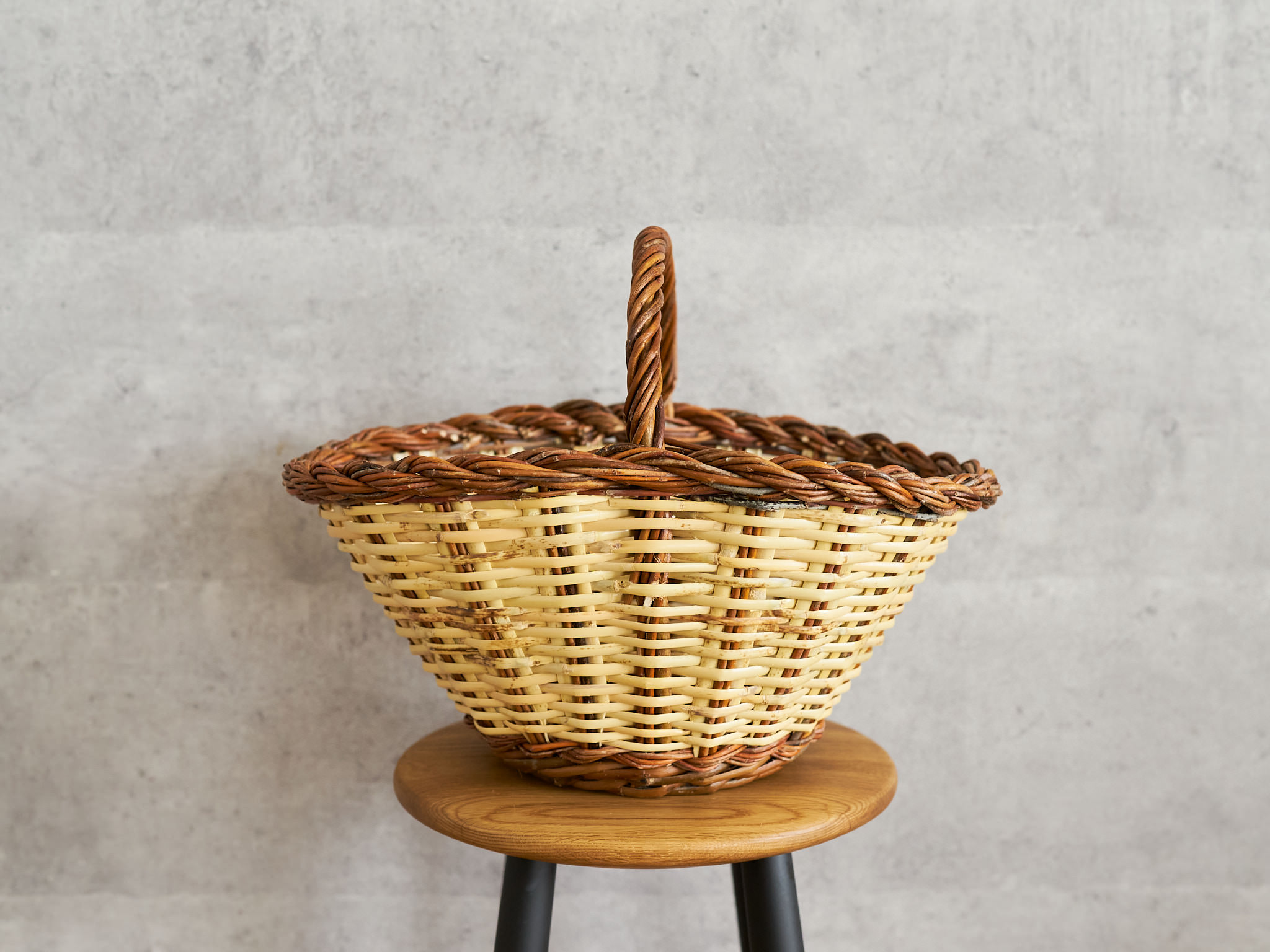
Here I would like to introduce the works by Pau that we are currently exhibiting and offering at our shop. This is one of the most representative forms among traditional baskets from Catalonia. It was traditionally used to carry produce harvested from vineyards and vegetable fields, and was also used as a basket for everyday shopping. 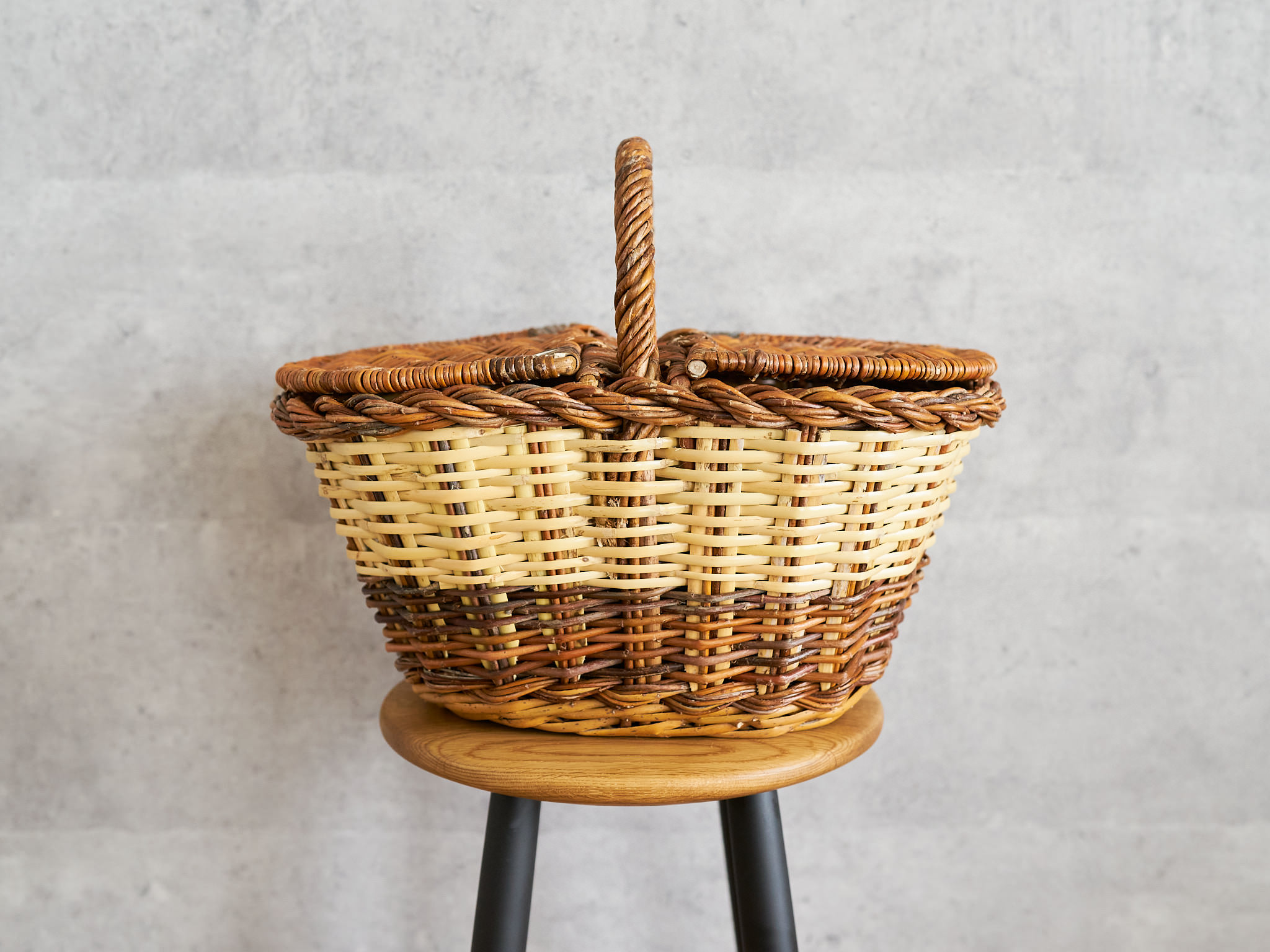
This is a version with a lid. In a region where people have long enjoyed going out to the mountains and the sea for leisure, this form developed as a traditional picnic basket. 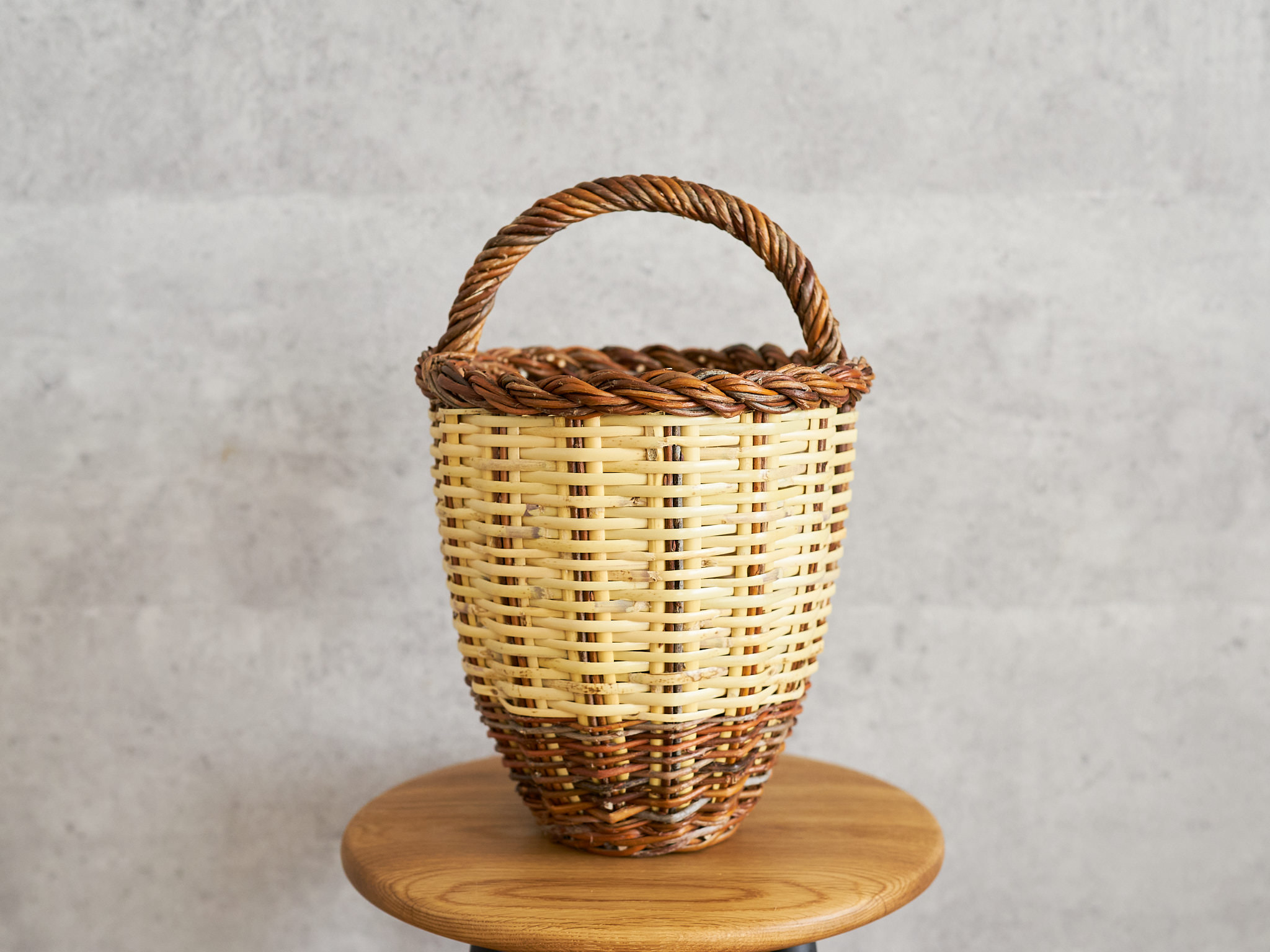
This is the tall type. With its slender and charming form, it is just the right size for carrying a wine bottle. 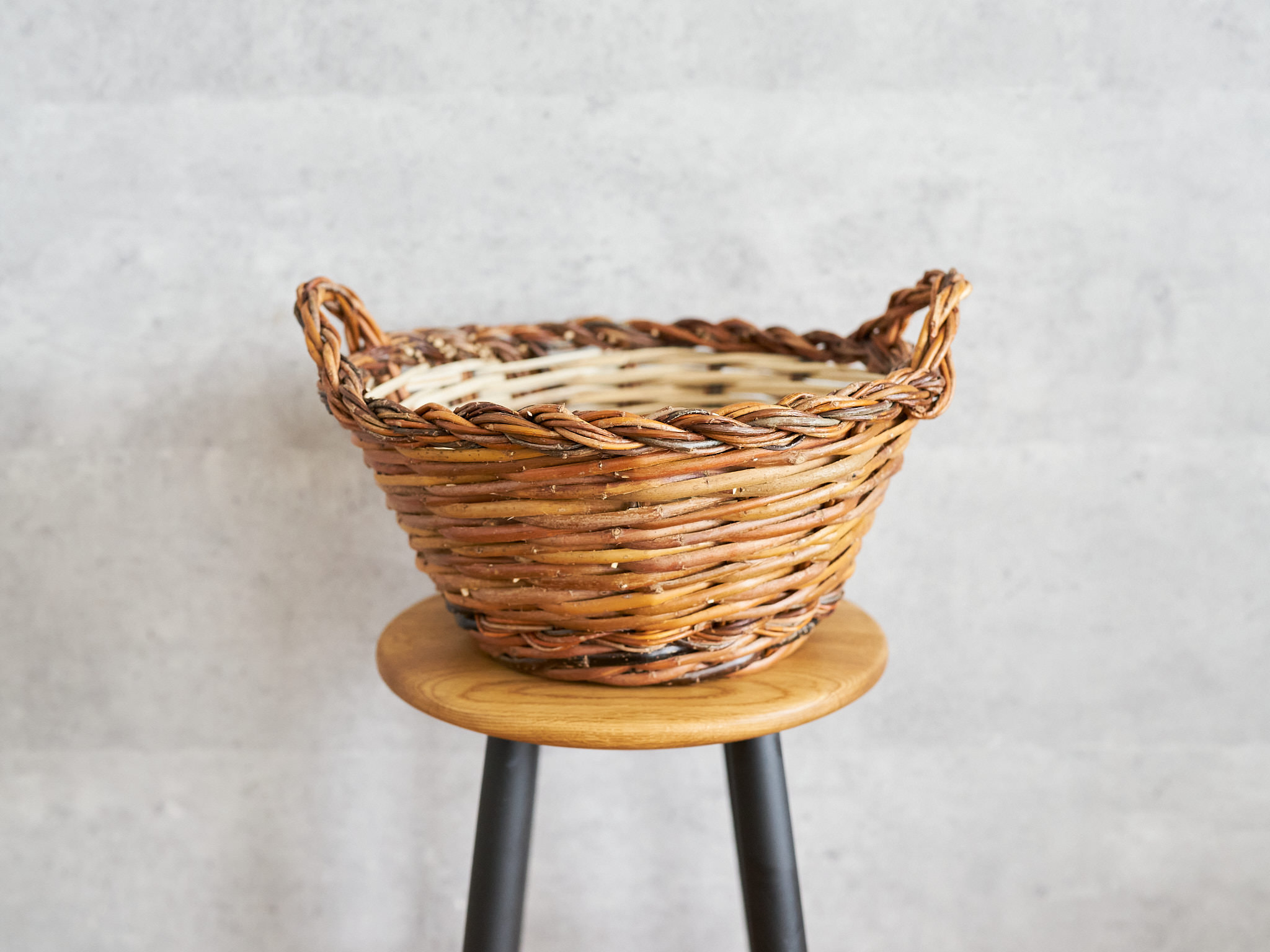
There are also baskets woven entirely from willow. The twisted finish along the rim is slightly different from that of the other baskets. The shallow, wide-mouthed type has traditionally been used as a harvesting basket in the fields. 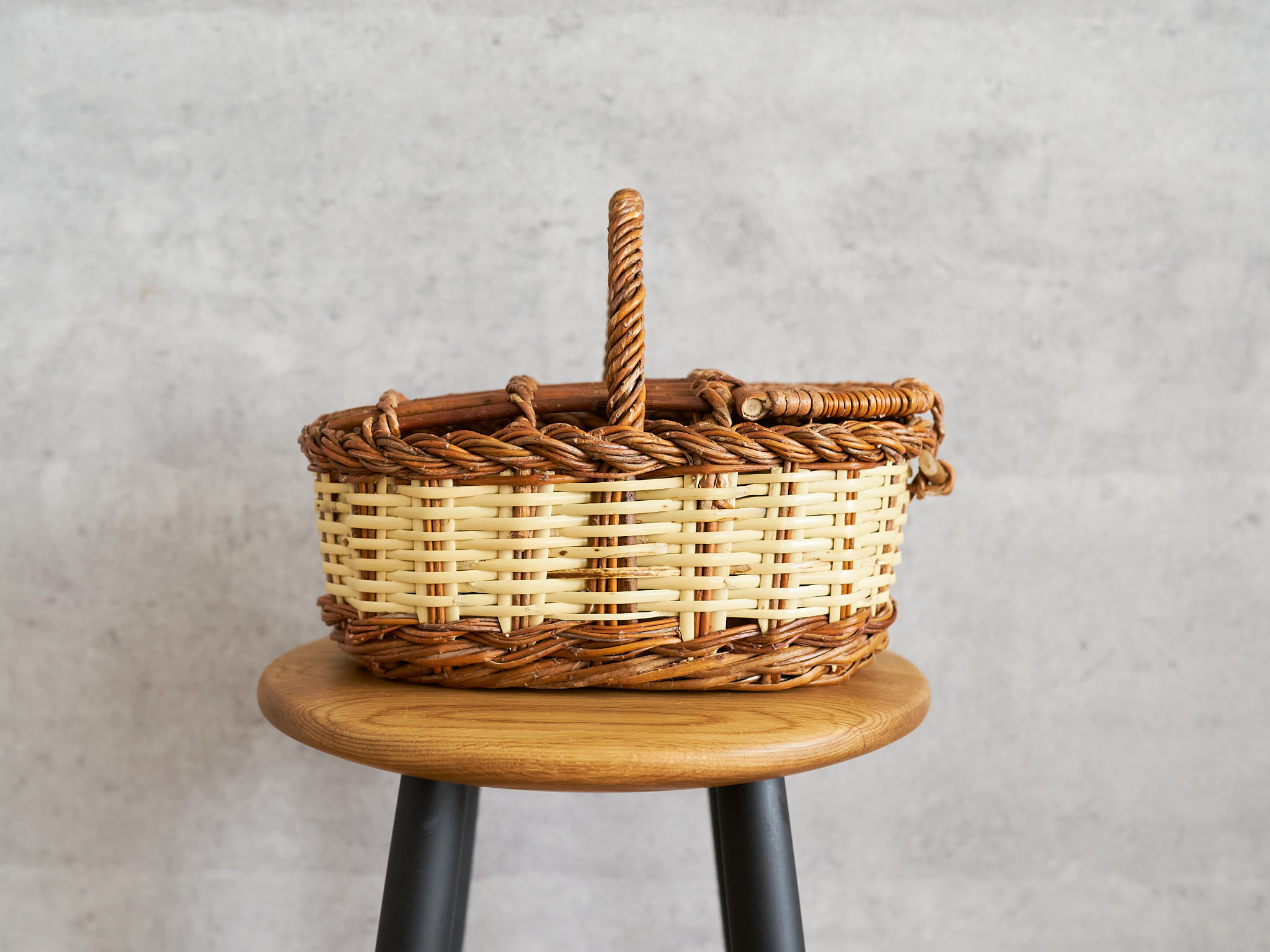
This is also a small basket with a lid. A slightly larger version was once known as a “rabbit basket,” and was used to carry rabbits. 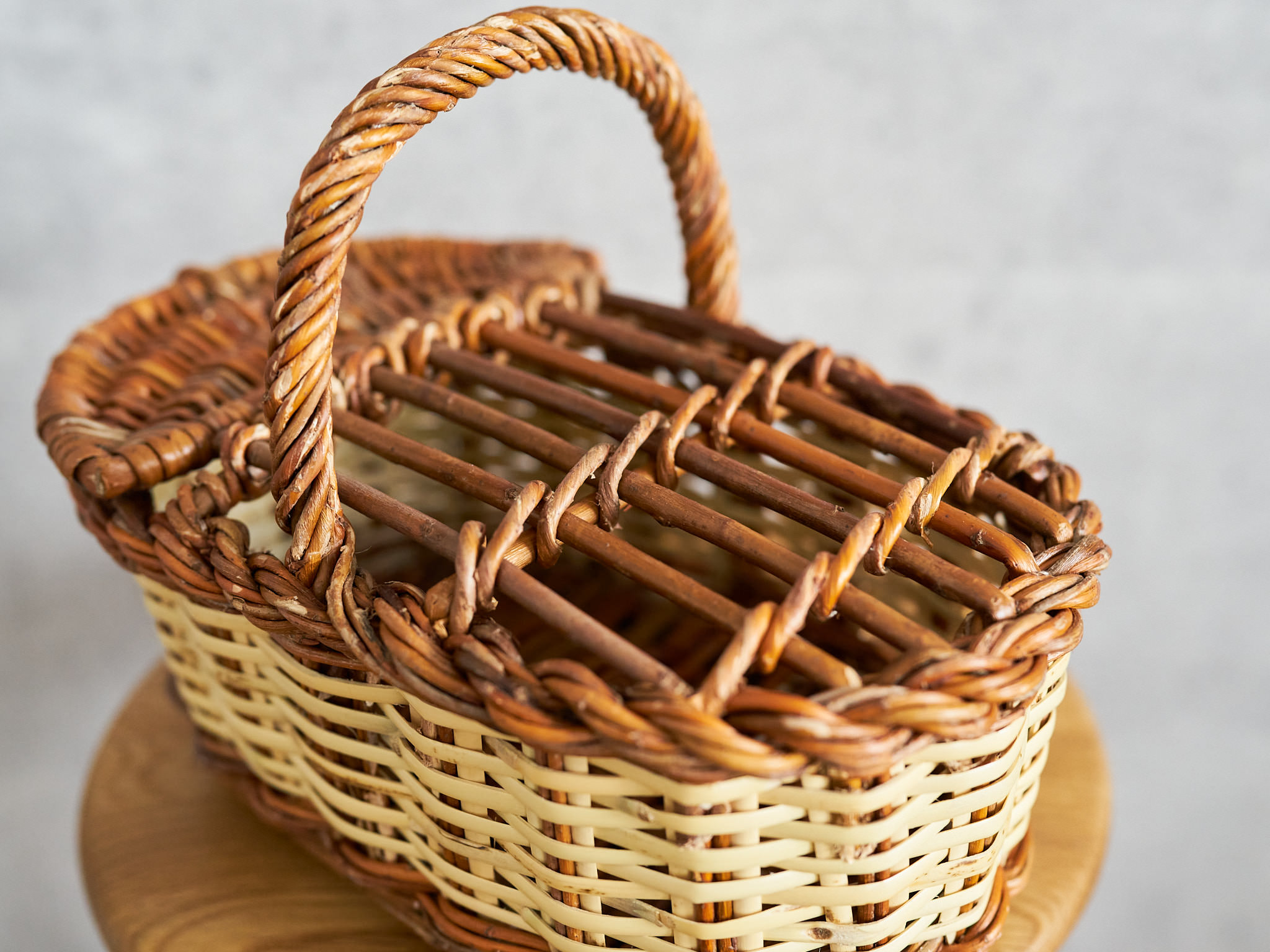
Part of the lid is made in an open, fence-like structure, allowing a glimpse of what is inside the basket. 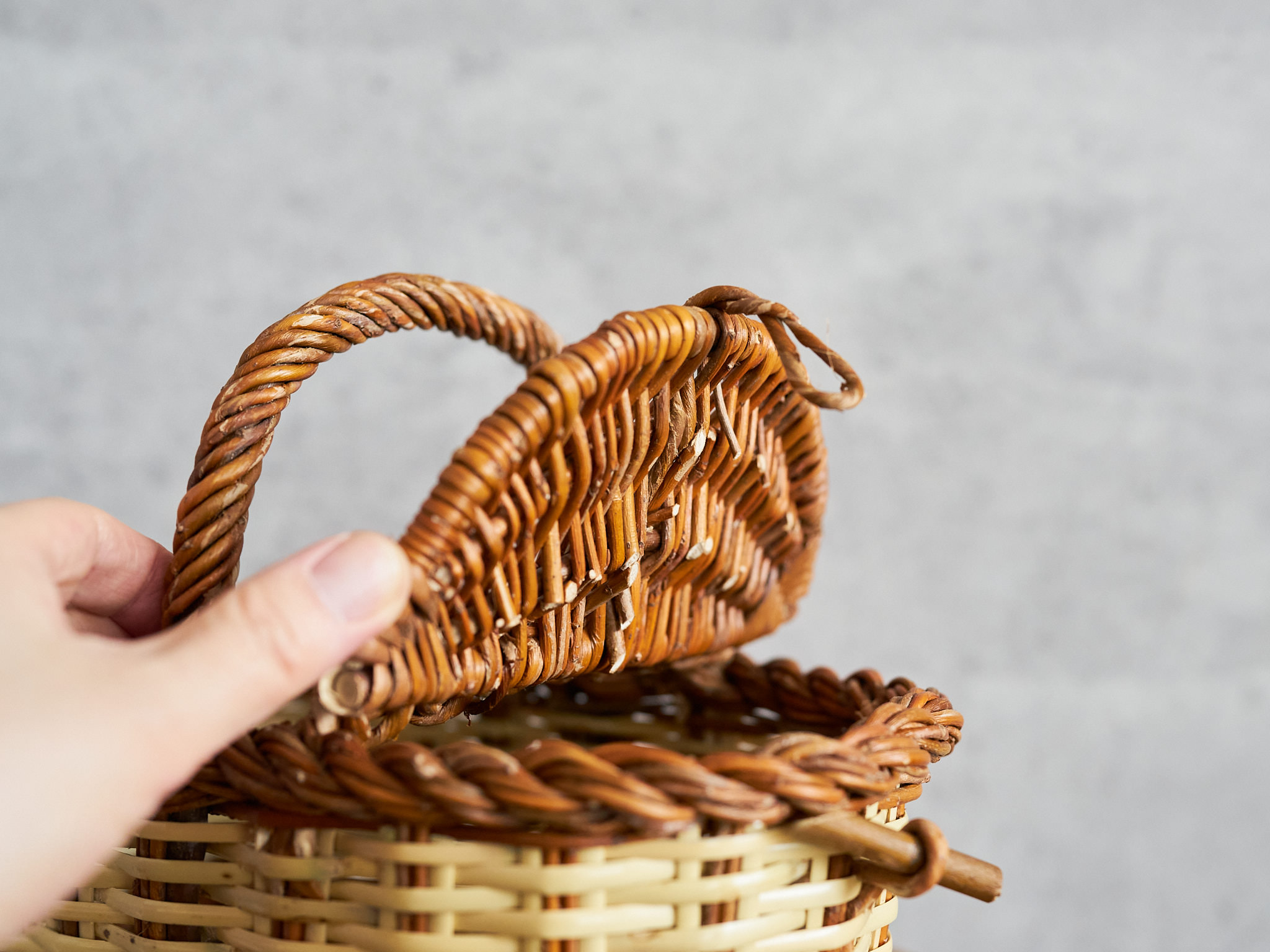
The tightly woven section opens like this. 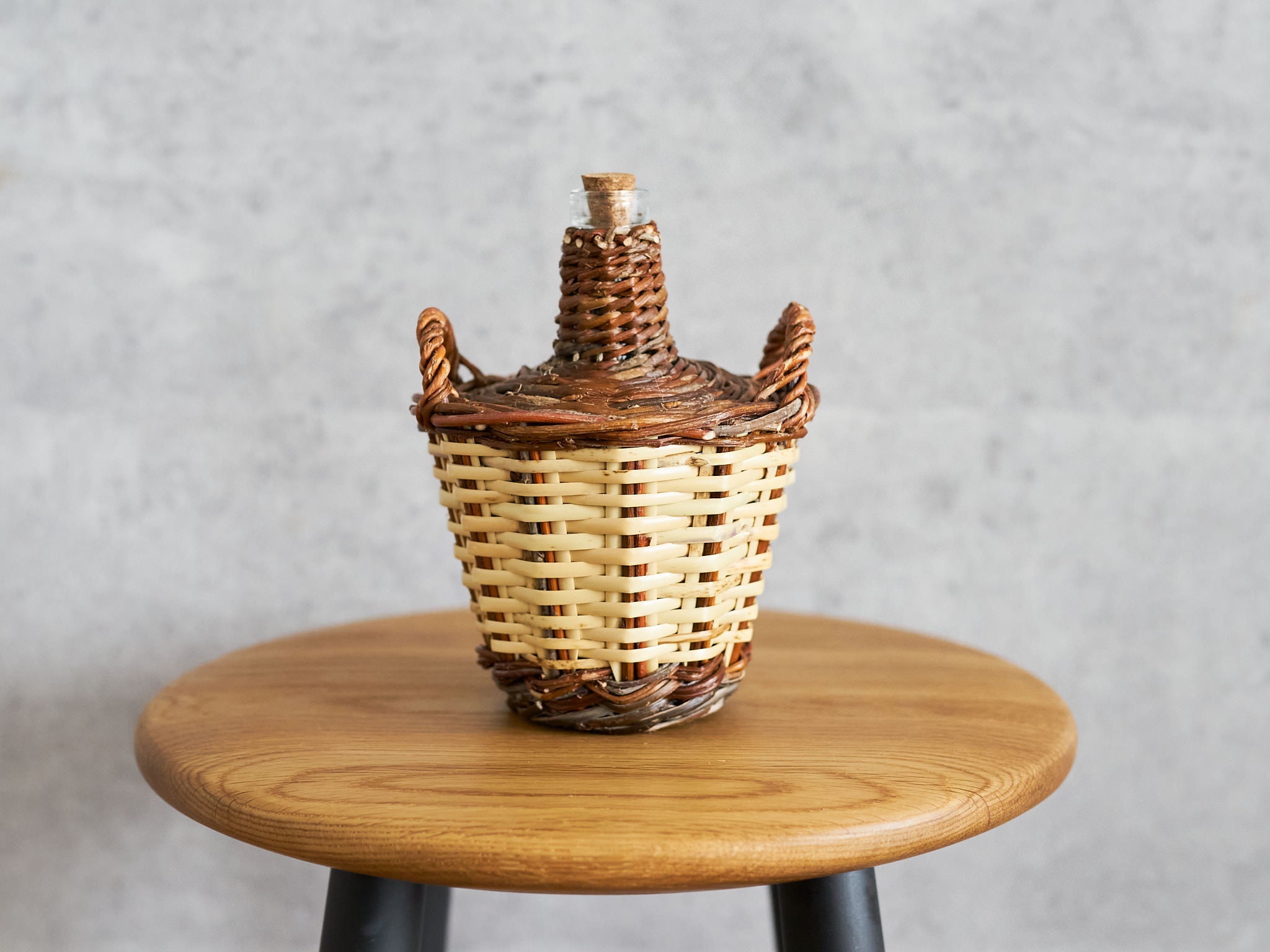
This is a very small basket woven directly onto a glass bottle. Larger versions were traditionally used to carry and store wine, olive oil, or vinegar. 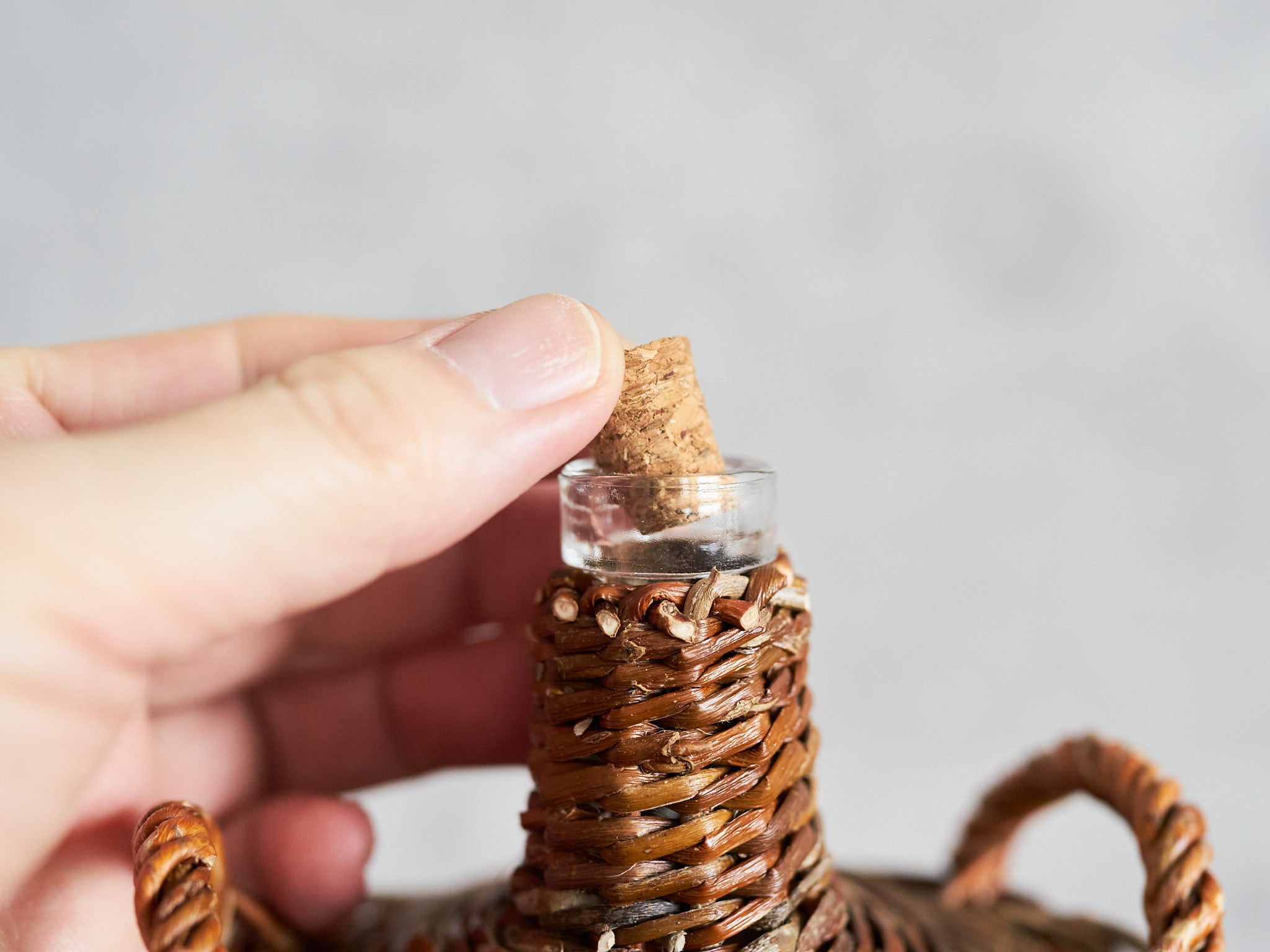
It comes with a small cork stopper. 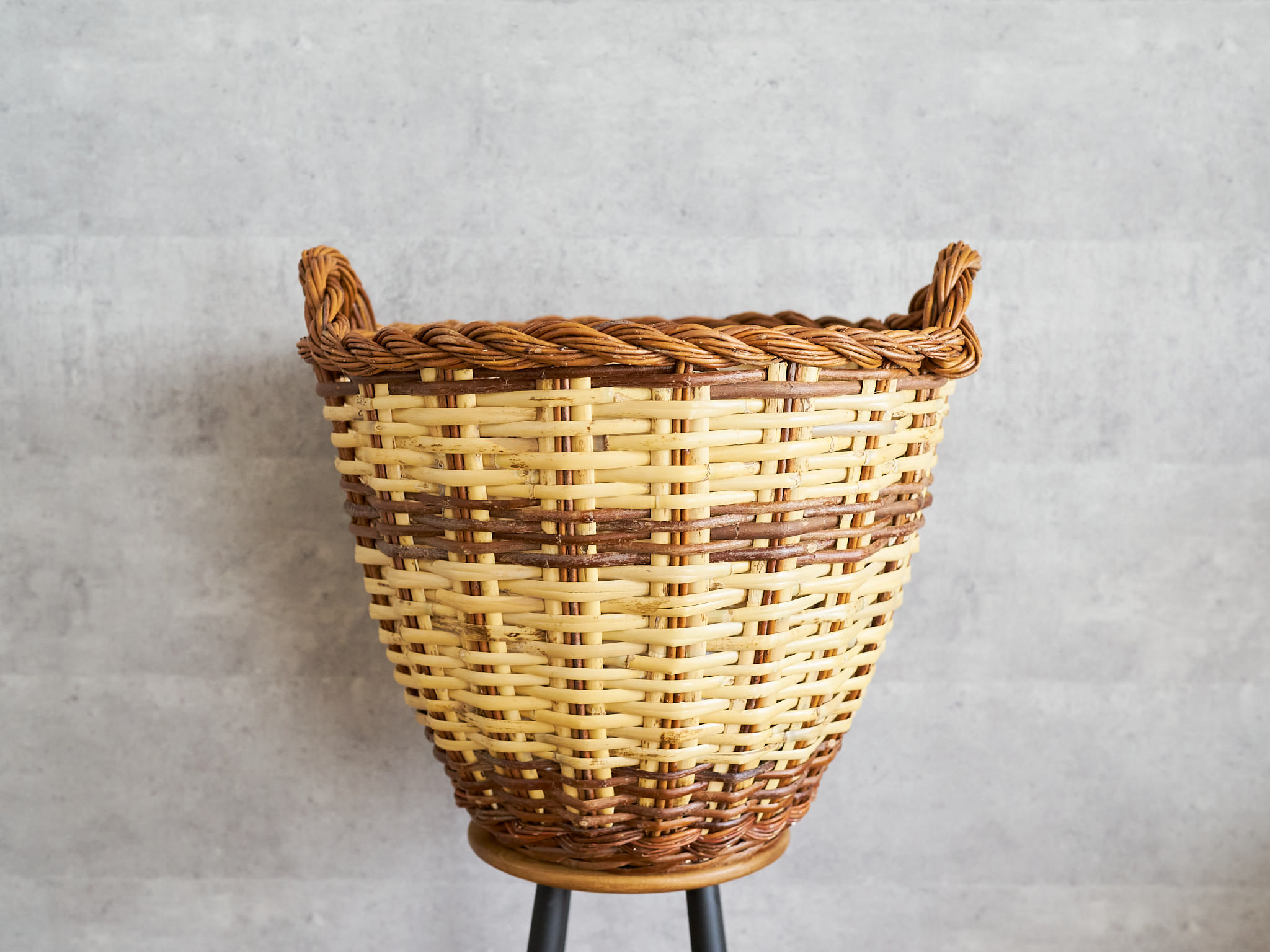
In contrast, this is a very large, oversized basket. It was traditionally used for harvesting and carrying grapes. [SOLD OUT]
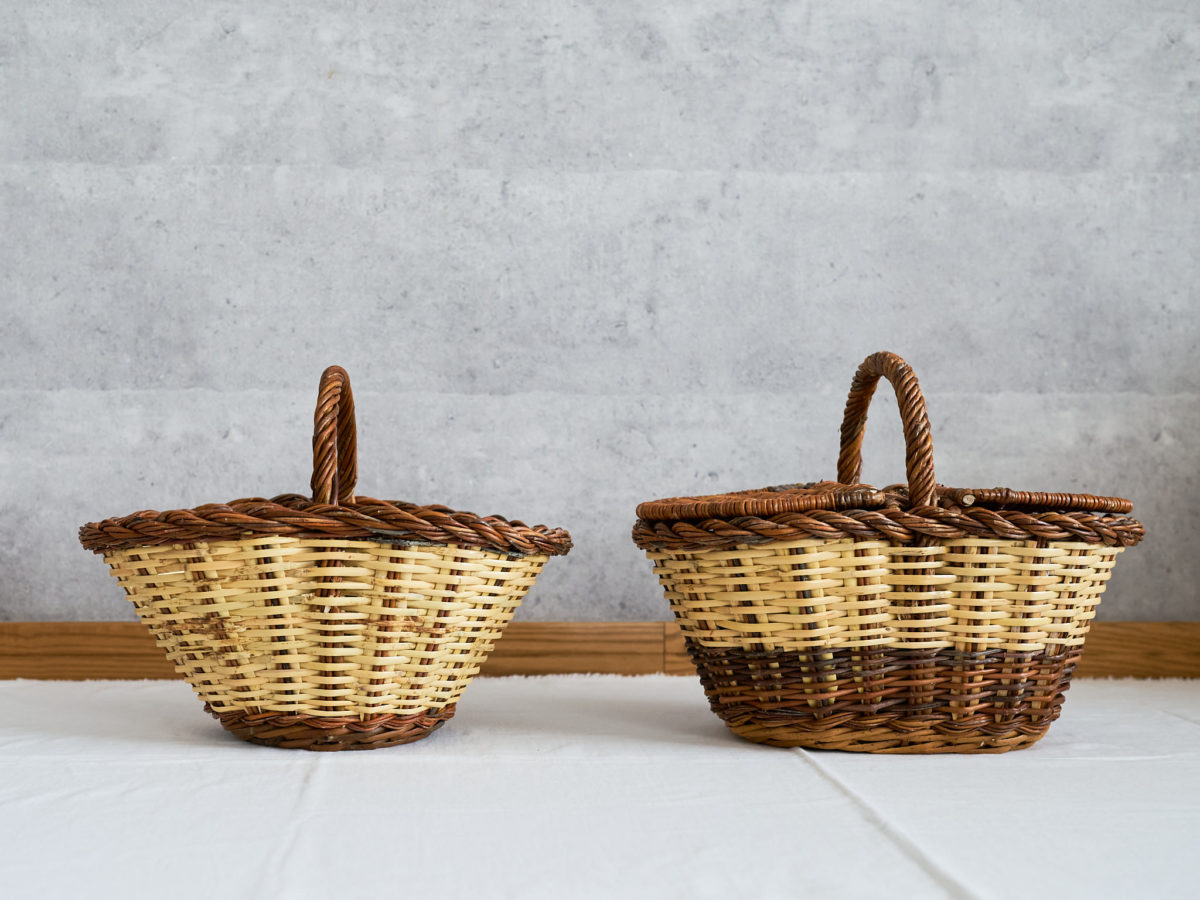
All of these baskets were born from the culture and everyday life of the Catalonia region of Spain.
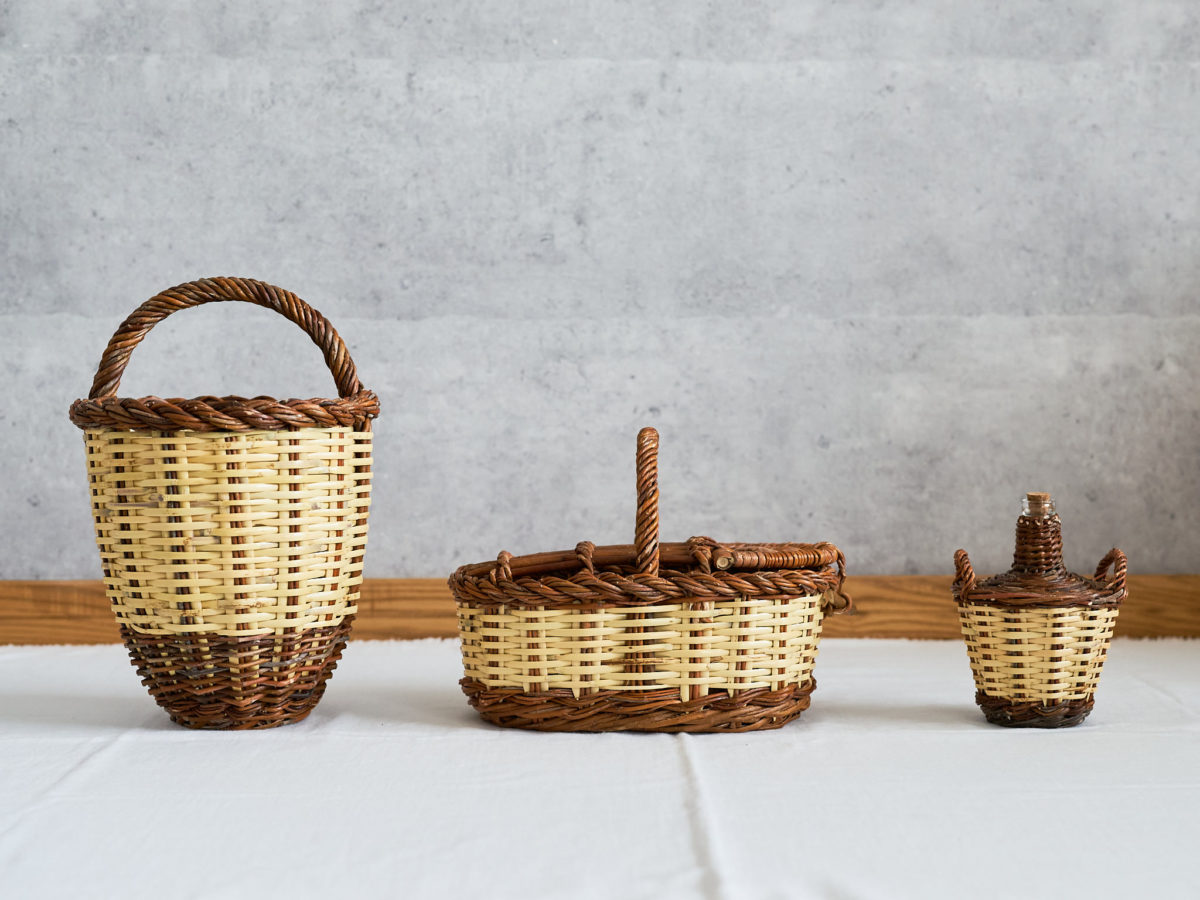
The baskets made by Pau are carefully and precisely crafted.
We invite you to take them in your hands and have a closer look.
The Germany Business Trip journal will continue a little longer.